1947
1. When Did Pakistan Come Into Existence?
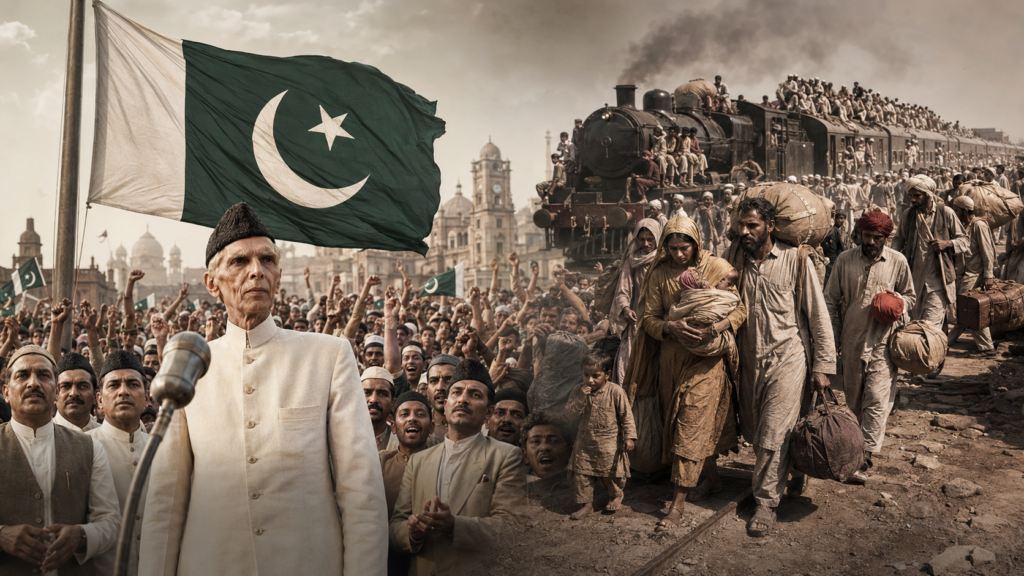
Pakistan came into existence on 14 August 1947 after the partition of British India. The creation of Pakistan was the result of a long political struggle led by the Muslims of the subcontinent.
2. What Was the Legal Basis for the Creation of Pakistan?
Pakistan was established under the Indian Independence Act of 1947. This Act was passed by the British Parliament and divided British India into two independent dominions, Pakistan and India.
3. Who Was the Founder of Pakistan?
Muhammad Ali Jinnah, popularly known as Quaid-e-Azam, was the founder of Pakistan. He led the All-India Muslim League and successfully achieved a separate homeland for Muslims.
4. Who Became the First Governor-General of Pakistan?
Muhammad Ali Jinnah became the first Governor-General of Pakistan. He supervised the transfer of power and helped establish the foundations of the new state.
5. Who Was the First Prime Minister of Pakistan?
Liaquat Ali Khan was appointed as the first Prime Minister of Pakistan. He played a vital role in forming the country’s first government and setting its initial policies.
6. What Was the First Capital of Pakistan?
Karachi was selected as the first federal capital of Pakistan. It served as the political and administrative center of the country during its early years.
7. Who Was the Last Viceroy of British India?
Lord Louis Mountbatten was the last Viceroy of British India. He supervised the partition process and the transfer of power to Pakistan and India.
8. When Was the Partition Plan Announced?
The Partition Plan was announced on 3 June 1947. It outlined the division of British India and paved the way for the creation of Pakistan.
9. What Was the Radcliffe Commission?
The Radcliffe Commission was established to determine the boundaries between Pakistan and India. It was responsible for dividing Punjab and Bengal.
10. Who Was Sir Cyril Radcliffe?
Sir Cyril Radcliffe was the chairman of the Boundary Commission. He was given the task of drawing the borders between the two newly independent states.
11. When Was the Radcliffe Award Announced?
The Radcliffe Award was announced on 17 August 1947. It officially defined the borders between Pakistan and India.
12. Why Is Quaid-e-Azam’s 11 August 1947 Speech Important?
In his historic speech, Jinnah emphasized religious freedom, equality of citizens, and the rule of law. It remains one of the most important speeches in Pakistan’s history.
13. What Was the Purpose of the First Constituent Assembly?
The First Constituent Assembly was responsible for drafting Pakistan’s constitution and performing legislative functions. It laid the foundation of the country’s political system.
14. Who Was Pakistan’s First Foreign Minister?
Sir Muhammad Zafarullah Khan was Pakistan’s first Foreign Minister. He represented Pakistan internationally and played a key role in foreign affairs.
15. Who Was Jogendra Nath Mandal?
Jogendra Nath Mandal was Pakistan’s first Law Minister. He belonged to the Hindu community and was an important member of the first cabinet.
16. Who Was the First Commander-in-Chief of Pakistan?
General Sir Frank Messervy was the first Commander-in-Chief of the Pakistan Army. He helped organize and manage the newly established military.
17. What Territories Made Up Pakistan in 1947?
Pakistan consisted of East Pakistan and West Pakistan. The two wings were separated by approximately 1,600 kilometers of Indian territory.
18. What Is East Pakistan Known As Today?
East Pakistan became Bangladesh in 1971. In 1947, it was the most populous region of Pakistan.
19. What Was the Biggest Humanitarian Challenge After Partition?
The largest challenge was the mass migration of people across the new borders. Millions of Muslims moved to Pakistan while millions of Hindus and Sikhs migrated to India.
20. Why Was Refugee Settlement a Major Challenge for Pakistan?
Pakistan had limited resources and infrastructure at independence. The government had to provide housing, food, and employment to millions of refugees.
21. Why Did Pakistan Face Financial Difficulties in 1947?
The new state inherited limited financial resources and faced delays in receiving its share of assets from India. This created significant economic challenges.
22. What Administrative Problems Did Pakistan Face at Independence?
Pakistan lacked many government offices, records, and administrative institutions. Building an effective bureaucracy became an immediate priority.
23. When Was Pakistan’s National Flag Adopted?
Pakistan’s national flag was adopted shortly before independence by the Constituent Assembly. It became the official symbol of the new nation.
24. What Do the Crescent and Star on Pakistan’s Flag Represent?
The crescent symbolizes progress, while the star represents light and knowledge. Together they reflect the ideals of the nation.
25. Why Was Pakistan’s First Cabinet Important?
The first cabinet was responsible for running the affairs of the newly established state. It played a key role in building governmental institutions.
26. Who Was Sardar Abdur Rab Nishtar?
Sardar Abdur Rab Nishtar was a prominent Muslim League leader and a member of Pakistan’s first cabinet. He played an important role in the Pakistan Movement and the early administration of the country.
27. Who Was Chaudhry Muhammad Ali?
Chaudhry Muhammad Ali served as Pakistan’s first Secretary-General. He was instrumental in organizing the country’s administrative and financial structure after independence.
28. Why Was the Partition of Punjab Important?
The partition of Punjab led to one of the largest migrations in human history. It also resulted in widespread communal violence and significant loss of life.
29. What Was the Impact of the Partition of Bengal?
Bengal was divided into East Bengal and West Bengal. East Bengal became part of Pakistan, while West Bengal remained part of India.
30. Why Did Pakistan Raise Objections to the Radcliffe Award?
Pakistani leaders believed that several Muslim-majority areas were unfairly allocated to India. The decision regarding Gurdaspur became particularly controversial.
31. Why Was the Gurdaspur Decision Important?
The allocation of Gurdaspur to India provided a land route to Kashmir. This decision later became a major factor in the Kashmir dispute.
32. Why Did the Kashmir Dispute Begin in 1947?
The dispute began because Jammu and Kashmir was a Muslim-majority state ruled by a Hindu Maharaja. Both Pakistan and India sought its accession.
33. Who Was the Ruler of Jammu and Kashmir in 1947?
Maharaja Hari Singh was the ruler of Jammu and Kashmir. Initially, he attempted to remain independent before deciding to accede to India.
34. When Did the First Indo-Pakistani War Begin?
The first Indo-Pakistani War began in late 1947 over the Kashmir issue. It marked the beginning of a long-standing conflict between the two countries.
35. What Role Did Tribal Fighters Play in the Kashmir Conflict?
Tribal fighters from the northwest entered Kashmir in support of local Muslims. Their involvement significantly influenced the early stages of the conflict.
36. How Did the Kashmir Issue Reach the United Nations?
Although officially referred to the United Nations in 1948, the roots of the issue lay in the events of 1947. The conflict quickly gained international attention.
37. What Were Pakistan’s Early Foreign Policy Priorities?
Pakistan focused on gaining international recognition and establishing diplomatic relations. The Kashmir issue also became a central foreign policy concern.
38. What Military Challenges Did Pakistan Face in 1947?
Pakistan inherited limited military equipment and infrastructure. The division of armed forces and military assets created additional difficulties.
39. How Was the Pakistan Air Force Established?
The Pakistan Air Force was formed at the time of independence with limited aircraft and personnel. It gradually developed into an organized defense force.
40. What Was the Condition of the Pakistan Navy at Independence?
The Pakistan Navy started with very limited resources and facilities. Despite these challenges, it began building the country’s maritime defense capabilities.
41. What Were Quaid-e-Azam’s Main Priorities After Independence?
His primary concerns included national unity, refugee rehabilitation, administrative stability, and economic development. He aimed to build a strong and modern state.
42. What Economic Problems Did Pakistan Inherit?
Pakistan inherited a weak industrial base and limited financial resources. Most major industries remained in India after partition.
43. Which Sector Employed Most Pakistanis in 1947?
Agriculture was the backbone of Pakistan’s economy at independence. A large majority of the population depended on farming and related activities.
44. What Was Pakistan’s Biggest Political Challenge in 1947?
The country needed to establish an effective political and constitutional system. Creating stable institutions was one of the government’s greatest challenges.
45. When Did the Constitution-Making Process Begin in Pakistan?
The process began immediately after independence through the Constituent Assembly. However, Pakistan’s first constitution was not adopted until 1956.
46. What Role Did the All-India Muslim League Play in the Creation of Pakistan?
The Muslim League was the leading political organization advocating for a separate Muslim homeland. It successfully led the movement that resulted in Pakistan’s creation.
47. Why Is the Lahore Resolution of 1940 Important?
The Lahore Resolution formally called for separate states for Muslims in the subcontinent. It later became the ideological foundation for Pakistan.
48. Why Is Muhammad Ali Jinnah Called the Father of the Nation?
Jinnah provided leadership, vision, and political direction to the Pakistan Movement. His efforts were crucial in achieving independence for Pakistan.
49. Why Is 1947 Considered the Most Important Year in Pakistan’s History?
It was the year Pakistan emerged as an independent and sovereign state. The foundations of its political, administrative, and military institutions were established during this period.
50. What Is the Greatest Historical Significance of 1947 for Pakistan?
The year 1947 marked the realization of the Muslims’ demand for a separate homeland. It represents the birth of Pakistan as an independent nation on the world map.
1948
1. Why Was 1948 Important in Pakistan’s History?
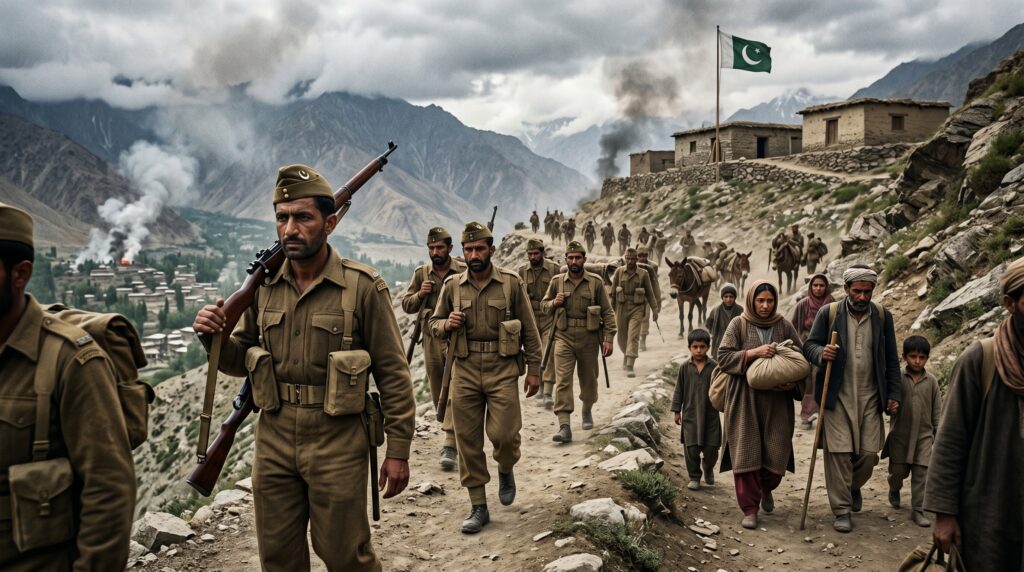
1948 was Pakistan’s first full year after independence. The country faced major challenges, including refugee rehabilitation, economic instability, administrative development, and the Kashmir conflict.
2. Who Was the Governor-General of Pakistan in 1948?
Muhammad Ali Jinnah remained the Governor-General of Pakistan in 1948 until his death. He continued guiding the new state through its early political and administrative difficulties.
3. When Did Quaid-e-Azam Muhammad Ali Jinnah Die?
Quaid-e-Azam Muhammad Ali Jinnah died on 11 September 1948. His death was a major national tragedy because Pakistan lost its founding leader only one year after independence.
4. Where Did Quaid-e-Azam Die?
Quaid-e-Azam died in Karachi, Pakistan. He had been seriously ill before his death and had spent time in Ziarat for health reasons.
5. Who Became Governor-General After Jinnah’s Death?
Khawaja Nazimuddin became the Governor-General of Pakistan after Jinnah’s death. His appointment marked the first major leadership transition in Pakistan’s history.
6. Who Was the Prime Minister of Pakistan in 1948?
Liaquat Ali Khan was the Prime Minister of Pakistan in 1948. He led the government during a period of political uncertainty and national reconstruction.
7. What Was the Biggest Political Shock of 1948?
The death of Muhammad Ali Jinnah was the biggest political shock of 1948. Pakistan lost its founder at a time when the country was still building its basic institutions.
8. What Was the Status of the Kashmir War in 1948?
The Kashmir War continued between Pakistan and India in 1948. The conflict became one of the most important disputes in South Asian history.
9. When Did India Take the Kashmir Issue to the United Nations?
India took the Kashmir issue to the United Nations in January 1948. This internationalized the dispute and made Kashmir a major global diplomatic issue.
10. What Did the United Nations Do About Kashmir in 1948?
The United Nations passed resolutions calling for a ceasefire and a future plebiscite in Kashmir. These resolutions became central to Pakistan’s position on the Kashmir dispute.
11. What Was Pakistan’s Position on Kashmir in 1948?
Pakistan argued that the people of Kashmir should be allowed to decide their future through a plebiscite. Pakistan considered Kashmir’s Muslim-majority character important in the dispute.
12. What Was the Condition of Refugees in 1948?
Millions of refugees were still being settled in Pakistan during 1948. The government had to provide shelter, food, jobs, and basic support to displaced families.
13. Why Was Refugee Rehabilitation Difficult in 1948?
Pakistan had limited financial and administrative resources. Managing such a large population movement placed enormous pressure on the new government.
14. When Was the State Bank of Pakistan Established?
The State Bank of Pakistan was established on 1 July 1948. It became the central bank responsible for managing the country’s monetary system.
15. Who Inaugurated the State Bank of Pakistan?
Quaid-e-Azam Muhammad Ali Jinnah inaugurated the State Bank of Pakistan. This was one of his last major public appearances before his death.
16. Why Was the State Bank Important for Pakistan?
The State Bank gave Pakistan financial independence. It helped regulate currency, banking, credit, and monetary policy for the new country.
17. What Currency Was Used in Pakistan in 1948?
Pakistan initially used Indian currency stamped with the word “Pakistan.” Gradually, the country moved toward its own currency system under the State Bank.
18. What Was the Economic Condition of Pakistan in 1948?
Pakistan’s economy was weak and largely agricultural. The country had limited industries, financial reserves, and administrative infrastructure.
19. What Was the Main Source of Pakistan’s Economy in 1948?
Agriculture was the main source of Pakistan’s economy. Most people depended on farming, and agricultural exports were important for earning revenue.
20. What Administrative Challenges Did Pakistan Face in 1948?
Pakistan had to build government departments, courts, offices, and administrative systems almost from the beginning. Many records and offices had remained in India after partition.
21. What Was the Role of Karachi in 1948?
Karachi remained Pakistan’s capital and administrative center. It hosted federal ministries, foreign missions, and major government offices.
22. What Happened to Princely States in 1948?
Several princely states completed their accession to Pakistan around this period. Their integration was important for Pakistan’s territorial and political consolidation.
23. Which Important Princely State Acceded to Pakistan in 1948?
The State of Kalat formally acceded to Pakistan in 1948. This was significant because Kalat was a major princely state in Balochistan.
24. Why Was Kalat’s Accession Important?
Kalat’s accession helped strengthen Pakistan’s control over Balochistan. It was also important for national integration and territorial unity.
25. What Was the Situation in Balochistan in 1948?
Balochistan was going through political adjustment after independence. The accession of princely states created new administrative and political challenges.
26. What Was the Condition of Pakistan’s Armed Forces in 1948?
Pakistan’s armed forces were still being organized after partition. They faced shortages of equipment, officers, and infrastructure while also dealing with the Kashmir conflict.
27. Who Was Pakistan’s Commander-in-Chief in 1948?
General Sir Frank Messervy served as Commander-in-Chief until early 1948. Later, General Sir Douglas Gracey became Commander-in-Chief of the Pakistan Army.
28. Why Was Military Organization Important in 1948?
Pakistan needed a strong military structure because of the Kashmir War and security concerns with India. Building defense institutions became a national priority.
29. What Was Pakistan’s Foreign Policy Focus in 1948?
Pakistan focused on gaining international recognition, building diplomatic relations, and presenting the Kashmir issue globally. Foreign policy became closely linked with national security.
30. What Role Did Sir Zafarullah Khan Play in 1948?
Sir Muhammad Zafarullah Khan represented Pakistan as Foreign Minister. He played an important role in presenting Pakistan’s case on Kashmir at international forums.
31. What Was Pakistan’s Relationship With India Like in 1948?
Relations between Pakistan and India were tense due to Kashmir, refugee issues, financial assets, and border disputes. The two new states struggled to build stable relations.
32. What Was the Issue of Financial Assets With India?
Pakistan claimed its agreed share of financial assets from undivided India. Delays and disputes over these payments created early economic pressure on Pakistan.
33. Why Was Water an Emerging Issue in 1948?
Canal water disputes began creating tension between Pakistan and India. Since Pakistan’s agriculture depended heavily on river waters, this became a serious concern.
34. What Was the Canal Water Dispute?
The canal water dispute involved control over rivers and irrigation systems after partition. It later became one of the major reasons for the Indus Waters negotiations.
35. What Was the Condition of East Pakistan in 1948?
East Pakistan was politically important because it had a large population. However, geographical distance and administrative differences created early governance problems.
36. What Language Issue Emerged in 1948?
The language question became an important issue in 1948. The demand for Bengali recognition grew stronger in East Pakistan after Urdu was promoted as the national language.
37. What Did Jinnah Say About the National Language?
Jinnah stated that Urdu would be the state language of Pakistan. This statement created debate in East Pakistan, where Bengali was spoken by the majority.
38. Why Was the Language Issue Important?
The language issue showed early tensions between East and West Pakistan. It later became a major political factor in Pakistan’s history.
39. What Was the Role of the Constituent Assembly in 1948?
The Constituent Assembly continued working on constitution-making and legislation. However, Pakistan still did not have a permanent constitution in 1948.
40. Why Was Constitution-Making Difficult in 1948?
Pakistan had to balance Islamic principles, democracy, federalism, and provincial rights. These debates made the constitution-making process slow and complicated.
41. What Was Pakistan’s Main National Priority in 1948?
National survival and state-building were the main priorities. The country had to manage refugees, defense, finances, diplomacy, and administration at the same time.
42. How Did Jinnah’s Death Affect Pakistan?
Jinnah’s death created a leadership vacuum. Pakistan lost the one leader who had unmatched authority and unity among different political groups.
43. What Was the Public Reaction to Jinnah’s Death?
The public reaction was one of deep grief and shock. People saw Jinnah as the father of the nation and the symbol of Pakistan’s independence.
44. Who Became the Most Powerful Political Leader After Jinnah?
After Jinnah’s death, Prime Minister Liaquat Ali Khan became the most powerful political leader. He carried the responsibility of guiding Pakistan’s government.
45. What Was the Importance of Ziarat in 1948?
Ziarat became historically important because Jinnah spent his final days there due to illness. It is closely associated with the last phase of his life.
46. What Was Pakistan’s Biggest Security Concern in 1948?
The Kashmir conflict was Pakistan’s biggest security concern. It shaped Pakistan’s defense policy and relations with India from the very beginning.
47. What Was the Importance of 1 July 1948?
On 1 July 1948, the State Bank of Pakistan was inaugurated. This date is important because it marked the beginning of Pakistan’s independent financial system.
48. What Was Pakistan Trying to Build in 1948?
Pakistan was trying to build a functioning state with its own institutions, economy, military, and constitution. The process was difficult due to limited resources.
49. Why Is 1948 Considered a Difficult Year for Pakistan?
1948 was difficult because Pakistan faced war, refugee crises, economic shortages, administrative problems, and the death of its founder. These challenges tested the new state’s survival.
50. What Is the Historical Significance of 1948 for Pakistan?
1948 was the year Pakistan moved from independence toward state-building. It was marked by major institutional developments, national crises, and the loss of Quaid-e-Azam.
1949
1. Why Was 1949 Important in Pakistan’s History?
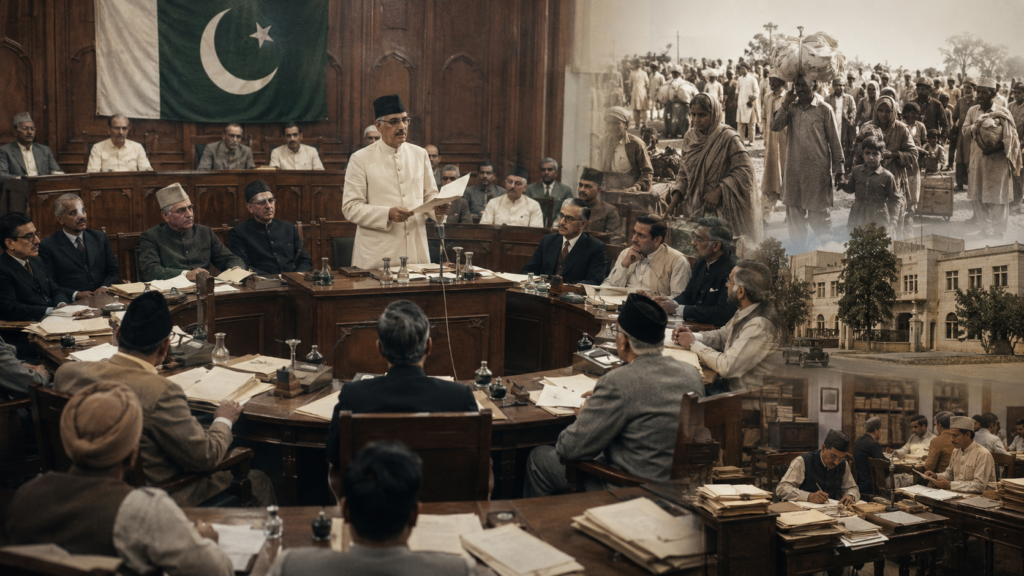
1949 was important because Pakistan adopted the Objectives Resolution. This resolution became the ideological foundation for Pakistan’s future constitutions and defined the relationship between Islam, democracy, and state authority.
2. What Was the Objectives Resolution?
The Objectives Resolution was a constitutional document passed by Pakistan’s Constituent Assembly. It declared that sovereignty belongs to Allah and that state authority would be exercised through the chosen representatives of the people.
3. When Was the Objectives Resolution Passed?
The Objectives Resolution was passed on 12 March 1949. It became one of the most significant constitutional developments in Pakistan’s early history.
4. Who Presented the Objectives Resolution?
Prime Minister Liaquat Ali Khan presented the Objectives Resolution in the Constituent Assembly. He described it as a guiding framework for Pakistan’s future constitution.
5. Why Was the Objectives Resolution Important?
It provided Pakistan with an ideological and constitutional direction. Later, it was included as a preamble in the constitutions of Pakistan and became a substantive part of the Constitution in 1985.
6. What Did the Objectives Resolution Say About Sovereignty?
The resolution stated that sovereignty over the entire universe belongs to Allah Almighty. It also said that authority would be exercised by the people of Pakistan within the limits prescribed by Him.
7. What Did the Objectives Resolution Say About Democracy?
The resolution supported democracy, freedom, equality, tolerance, and social justice. It presented these principles as values consistent with Islamic teachings.
8. What Did the Objectives Resolution Say About Minorities?
The resolution promised that minorities would be free to practice their religions and develop their cultures. This clause was important for defining the rights of non-Muslim citizens.
9. What Was the Reaction to the Objectives Resolution?
Many Muslim members supported it as an Islamic constitutional foundation. Some minority members expressed concerns that it could affect equal citizenship and secular rights.
10. Who Was the Prime Minister of Pakistan in 1949?
Liaquat Ali Khan was the Prime Minister of Pakistan in 1949. He played a central role in shaping Pakistan’s constitutional and political direction.
11. Who Was the Governor-General of Pakistan in 1949?
Khawaja Nazimuddin was the Governor-General of Pakistan in 1949. He had taken office after the death of Quaid-e-Azam Muhammad Ali Jinnah in 1948.
12. What Was the Role of the Constituent Assembly in 1949?
The Constituent Assembly continued working on Pakistan’s constitution. Its most important achievement in 1949 was the adoption of the Objectives Resolution.
13. Did Pakistan Have a Permanent Constitution in 1949?
No, Pakistan did not have a permanent constitution in 1949. The country was still governed under adapted colonial laws while the constitution-making process continued.
14. What Was the Government System of Pakistan in 1949?
Pakistan was still a dominion within the British Commonwealth. The Governor-General represented the Crown, while the Prime Minister headed the government.
15. Why Was Constitution-Making Slow in 1949?
Constitution-making was slow because Pakistan had to balance Islamic principles, federalism, democracy, provincial rights, and representation between East and West Pakistan.
16. What Was the Status of the Kashmir Issue in 1949?
The Kashmir issue remained Pakistan’s most important foreign policy concern. The ceasefire between Pakistan and India came into effect in 1949, but the dispute remained unresolved.
17. When Did the Kashmir Ceasefire Come Into Effect?
The United Nations-brokered ceasefire came into effect on 1 January 1949. It stopped active fighting between Pakistan and India in Kashmir but did not settle the dispute.
18. What Was the Ceasefire Line in Kashmir?
The ceasefire line divided the areas controlled by Pakistan and India in Jammu and Kashmir. It later became the basis for the Line of Control after the Simla Agreement of 1972.
19. What Role Did the United Nations Play in Kashmir in 1949?
The United Nations monitored the ceasefire and continued discussions on a plebiscite. Pakistan supported the idea that Kashmiris should decide their future through a vote.
20. Why Did Kashmir Remain Unresolved in 1949?
Kashmir remained unresolved because Pakistan and India disagreed over the conditions for a plebiscite. Military withdrawal, political control, and public opinion became major points of disagreement.
21. What Was Pakistan’s Position on a Kashmir Plebiscite?
Pakistan supported a plebiscite under international supervision. It argued that the people of Kashmir should be allowed to decide whether to join Pakistan or India.
22. What Was Pakistan’s Foreign Policy Focus in 1949?
Pakistan focused on Kashmir, diplomatic recognition, relations with Muslim countries, and membership in international organizations. Security concerns shaped much of its foreign policy.
23. What Was Pakistan’s Relationship With India in 1949?
Relations remained tense because of Kashmir, refugees, financial assets, and water disputes. The two countries were still adjusting to the consequences of partition.
24. What Was the Refugee Situation in 1949?
Refugee rehabilitation continued to be a major national issue. Pakistan had to provide homes, employment, and basic facilities to millions of displaced people.
25. Why Was Refugee Rehabilitation Still Difficult in 1949?
The government had limited resources, land, housing, and administrative capacity. Many refugees had lost property and needed long-term support.
26. What Was Pakistan’s Economic Condition in 1949?
Pakistan’s economy was still weak and mostly agricultural. The country was trying to stabilize finances, expand trade, and build basic economic institutions.
27. What Was the Role of Agriculture in 1949?
Agriculture remained the backbone of Pakistan’s economy. Most people lived in rural areas and depended on farming for income and survival.
28. What Financial Challenges Did Pakistan Face in 1949?
Pakistan faced shortages of revenue, limited industrial capacity, and pressure from refugee settlement. The government also had to manage defense spending due to the Kashmir conflict.
29. What Was the Role of the State Bank in 1949?
The State Bank of Pakistan continued developing the country’s monetary system after its establishment in 1948. It helped manage currency, credit, banking, and financial stability.
30. What Was the Main Administrative Challenge in 1949?
Pakistan had to strengthen its civil service, courts, ministries, and provincial administration. Many institutions were still being built after independence.
31. What Was the Status of East Pakistan in 1949?
East Pakistan was politically important because it had a large population. However, distance from West Pakistan and language concerns created early tensions.
32. Why Was the Language Issue Important in 1949?
The language issue remained sensitive because Bengali-speaking people wanted recognition for Bengali. This became an early sign of political dissatisfaction in East Pakistan.
33. What Was the Main Debate About National Language?
The main debate was whether Urdu alone should be the national language or whether Bengali should also receive recognition. This debate later became a major political issue.
34. What Was the Role of Liaquat Ali Khan in 1949?
Liaquat Ali Khan led the government and presented the Objectives Resolution. His leadership shaped Pakistan’s constitutional direction after Jinnah’s death.
35. What Was the Political Situation After Jinnah’s Death?
Pakistan was still adjusting to the loss of its founder. Liaquat Ali Khan became the most powerful political leader, while institutions were still developing.
36. What Was the Importance of Islamic Identity in 1949?
Islamic identity became more clearly connected to Pakistan’s constitutional development. The Objectives Resolution formally linked state principles with Islamic values.
37. Did the Objectives Resolution Support Fundamental Rights?
Yes, the resolution supported fundamental rights, including equality, freedom, and justice. It also promised protection for minorities and religious freedom.
38. What Was the Importance of Social Justice in the Objectives Resolution?
Social justice was presented as a core principle of the state. The resolution connected justice with Islamic teachings and democratic governance.
39. What Was the Role of Minorities in the Constituent Assembly?
Minority members participated in constitutional debates. Some supported state-building, while others raised concerns about religious wording in the Objectives Resolution.
40. Why Did Some Minority Members Oppose the Objectives Resolution?
Some minority members feared that religious language could weaken equal citizenship. They wanted stronger guarantees for minority rights and a more inclusive constitutional framework.
41. What Was Pakistan Trying to Achieve in 1949?
Pakistan was trying to establish constitutional direction, stabilize administration, settle refugees, manage Kashmir, and strengthen its economy. It was still in the early stage of state-building.
42. What Was the Biggest Constitutional Development of 1949?
The biggest constitutional development was the passage of the Objectives Resolution. It became the guiding document for Pakistan’s future constitution-making.
43. What Was the Biggest Security Concern of 1949?
Kashmir remained Pakistan’s biggest security concern. Even after the ceasefire, the dispute continued to shape defense and foreign policy.
44. What Was the Biggest Social Challenge in 1949?
The biggest social challenge was refugee rehabilitation. Millions of displaced people needed permanent settlement and economic support.
45. What Was the Biggest Economic Challenge in 1949?
The biggest economic challenge was building a stable economy with limited resources. Pakistan needed revenue, trade, industry, and financial institutions.
46. How Did 1949 Shape Pakistan’s Future Politics?
1949 shaped Pakistan’s future politics by defining the ideological basis of the state. The Objectives Resolution influenced later debates about Islam, democracy, and constitutional authority.
47. Why Is 1949 Important for Pakistan’s Constitution?
1949 is important because the Objectives Resolution became the foundation of constitutional thought in Pakistan. It influenced the 1956, 1962, and 1973 constitutions.
48. What Was Pakistan’s Main Diplomatic Issue in 1949?
Kashmir was Pakistan’s main diplomatic issue. Pakistan continued to seek international support for a UN-supervised plebiscite.
49. Why Was 1949 a Year of State-Building?
Pakistan focused on building institutions, defining constitutional principles, managing refugees, and protecting national security. These efforts shaped the country’s early direction.
50. What Is the Historical Significance of 1949 for Pakistan?
1949 is historically significant because Pakistan adopted the Objectives Resolution and moved closer to defining its ideological identity. The year also marked the beginning of a long constitutional journey.
1950
1. Why Was 1950 Important in Pakistan’s History?
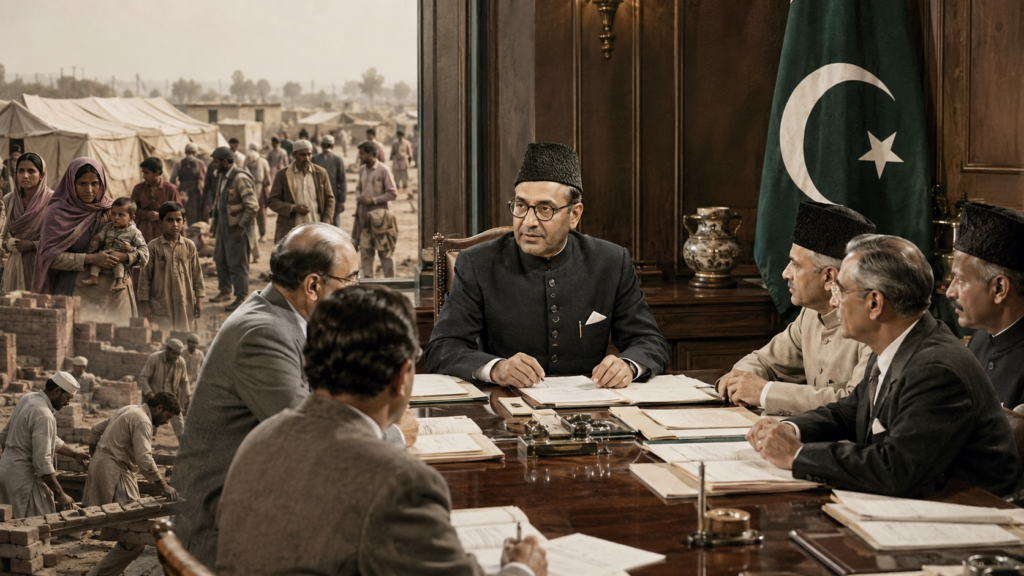
1950 was important because Pakistan continued to strengthen its state institutions after independence. The year was marked by refugee settlement, constitutional debates, economic planning, and important relations with India.
2. Who Was the Prime Minister of Pakistan in 1950?
Liaquat Ali Khan was the Prime Minister of Pakistan in 1950. He continued leading the country through its early political, economic, and diplomatic challenges.
3. Who Was the Governor-General of Pakistan in 1950?
Khawaja Nazimuddin was the Governor-General of Pakistan in 1950. He served as the constitutional head of the state while the Prime Minister led the government.
4. What Was the Most Important Pakistan-India Agreement of 1950?
The Liaquat-Nehru Pact was the most important agreement between Pakistan and India in 1950. It focused on the protection of minorities in both countries.
5. When Was the Liaquat-Nehru Pact Signed?
The Liaquat-Nehru Pact was signed on 8 April 1950. It was signed by Pakistan’s Prime Minister Liaquat Ali Khan and India’s Prime Minister Jawaharlal Nehru.
6. What Was the Main Purpose of the Liaquat-Nehru Pact?
The main purpose was to protect minorities in Pakistan and India. It aimed to reduce communal violence, restore confidence, and secure basic rights for displaced communities.
7. Why Was the Liaquat-Nehru Pact Needed?
The pact was needed because communal tensions and migration continued after partition. Both governments wanted to prevent further violence and reassure minority communities.
8. What Did the Liaquat-Nehru Pact Promise to Minorities?
The pact promised security, religious freedom, property rights, and equal citizenship for minorities. It also allowed displaced persons to return and reclaim property under certain conditions.
9. How Did the Liaquat-Nehru Pact Affect Pakistan-India Relations?
The pact temporarily reduced tensions between Pakistan and India. However, deeper disputes such as Kashmir and water issues remained unresolved.
10. What Was the Refugee Situation in Pakistan in 1950?
Refugee rehabilitation remained a major challenge in 1950. Pakistan continued to settle millions of migrants who had moved from India after partition.
11. Why Was Refugee Rehabilitation Still Difficult in 1950?
The government had limited housing, jobs, land, and funds. Refugee settlement placed heavy pressure on Pakistan’s cities, especially Karachi and Lahore.
12. What Was the Condition of Karachi in 1950?
Karachi remained Pakistan’s capital and absorbed a large refugee population. The city expanded rapidly and became the center of administration, politics, and migration.
13. What Was the Status of Constitution-Making in 1950?
Pakistan was still preparing its first constitution in 1950. The Constituent Assembly continued debating federalism, Islamic principles, representation, and provincial rights.
14. Why Was Constitution-Making Difficult in 1950?
Constitution-making was difficult because Pakistan had two geographically separated wings. Balancing East Pakistan’s population majority with West Pakistan’s political concerns created serious debate.
15. What Was the Basic Principles Committee?
The Basic Principles Committee was formed to recommend the main principles for Pakistan’s future constitution. Its work was central to the constitution-making process.
16. What Did the Basic Principles Committee Do in 1950?
The committee worked on proposals for Pakistan’s constitutional structure. Its recommendations addressed the legislature, executive authority, federal system, and Islamic provisions.
17. What Was the First Basic Principles Committee Report?
The first report of the Basic Principles Committee was presented in 1950. It proposed a constitutional framework but faced criticism, especially from East Pakistan.
18. Why Was the First Basic Principles Committee Report Criticized?
It was criticized because many people in East Pakistan believed it did not fairly represent their population majority. The issue of equal representation became highly controversial.
19. What Was the Representation Issue Between East and West Pakistan?
East Pakistan had a larger population, while West Pakistan wanted political balance between the two wings. This disagreement became a major constitutional problem.
20. What Was the Role of East Pakistan in 1950 Politics?
East Pakistan was politically significant because it had the largest population. Demands for fair representation and recognition of Bengali identity became stronger.
21. What Was the National Language Issue in 1950?
The national language issue remained unresolved. Bengali-speaking citizens demanded recognition of Bengali alongside Urdu, while the central government emphasized Urdu.
22. Why Was the Bengali Language Movement Important?
The Bengali Language Movement reflected the political and cultural concerns of East Pakistan. It later became one of the major causes of tension between East and West Pakistan.
23. What Was Pakistan’s Economic Condition in 1950?
Pakistan’s economy was still developing and largely dependent on agriculture. The country faced shortages of industry, capital, infrastructure, and trained professionals.
24. What Was the Main Economic Sector of Pakistan in 1950?
Agriculture remained the main economic sector. Most Pakistanis lived in rural areas and depended on farming, livestock, and agricultural trade.
25. What Industrial Challenges Did Pakistan Face in 1950?
Pakistan had a weak industrial base because most major industries remained in India after partition. The government needed to build factories, infrastructure, and trade networks.
26. What Was Pakistan’s Trade Situation in 1950?
Pakistan relied heavily on exports of agricultural products such as jute and cotton. The country needed foreign exchange to import machinery and industrial goods.
27. Why Was Jute Important for Pakistan in 1950?
Jute from East Pakistan was one of Pakistan’s most valuable export products. It helped the country earn foreign exchange and support early economic development.
28. Why Was Cotton Important for Pakistan in 1950?
Cotton from West Pakistan was a major agricultural and export product. It became important for the textile industry and Pakistan’s future industrial growth.
29. What Was Pakistan’s Main Foreign Policy Concern in 1950?
Kashmir remained Pakistan’s main foreign policy concern. Pakistan continued to support a plebiscite under international supervision.
30. What Was the Status of the Kashmir Dispute in 1950?
The Kashmir dispute remained unresolved despite the ceasefire of 1949. Pakistan and India continued to disagree over demilitarization and the proposed plebiscite.
31. What Role Did the United Nations Play in Kashmir in 1950?
The United Nations continued efforts to resolve the Kashmir dispute. It focused on ceasefire supervision, demilitarization, and the possibility of a plebiscite.
32. What Was Pakistan’s Relationship With India in 1950?
Pakistan’s relationship with India remained tense but also included diplomatic engagement. The Liaquat-Nehru Pact showed cooperation, while Kashmir and water disputes caused conflict.
33. What Was the Canal Water Issue in 1950?
The canal water issue involved disputes over river and irrigation water between Pakistan and India. Since Pakistan’s agriculture depended on these waters, the issue was extremely important.
34. Why Was Water Important for Pakistan’s Economy?
Pakistan’s economy depended heavily on agriculture, which required reliable irrigation. Any disruption in river water supplies threatened crops, food security, and rural livelihoods.
35. What Was Pakistan’s Defense Situation in 1950?
Pakistan continued strengthening its armed forces after the Kashmir War. Security concerns with India made defense organization a national priority.
36. What Was the Role of the Pakistan Army in 1950?
The Pakistan Army focused on security, organization, and border defense. The experience of the Kashmir conflict increased its importance in national policy.
37. What Was the Political Role of Liaquat Ali Khan in 1950?
Liaquat Ali Khan remained Pakistan’s central political leader. He guided constitutional debates, foreign policy, economic planning, and relations with India.
38. What Was Pakistan’s Status in the Commonwealth in 1950?
Pakistan remained a dominion within the British Commonwealth. The Governor-General represented the Crown, while Pakistan managed its internal and external affairs.
39. Did Pakistan Have a President in 1950?
No, Pakistan did not have a president in 1950. The country had a Governor-General because it was still a dominion, not yet an Islamic republic.
40. When Did Pakistan Become an Islamic Republic?
Pakistan became an Islamic Republic in 1956 after the adoption of its first constitution. Before that, it was governed under a dominion system.
41. What Was the Role of the Civil Service in 1950?
The civil service played a major role in running the new state. It helped manage administration, finance, refugee settlement, and law and order.
42. What Was the Law and Order Situation in 1950?
Law and order remained a concern due to refugee settlement, communal tension, and administrative weakness. The government worked to stabilize internal security.
43. What Was the Social Impact of Partition in 1950?
Partition continued to affect society through migration, property disputes, family separation, and communal trauma. These issues shaped Pakistan’s early social conditions.
44. What Was the Property Issue After Partition?
Many refugees left property behind in India, while migrants arriving in Pakistan needed homes and land. Managing evacuee property became a major administrative challenge.
45. What Was Evacuee Property?
Evacuee property referred to property left behind by people who migrated during partition. The government used such property for refugee settlement and compensation.
46. What Was Pakistan Trying to Achieve in 1950?
Pakistan was trying to stabilize its government, protect minorities, settle refugees, develop the economy, and draft a constitution. These goals reflected the challenges of a young state.
47. Why Was 1950 Important for Minority Rights?
The Liaquat-Nehru Pact made minority protection a major official concern. It showed that both Pakistan and India recognized the seriousness of communal insecurity.
48. What Was the Biggest Constitutional Issue in 1950?
The biggest constitutional issue was representation between East and West Pakistan. This debate delayed the creation of a permanent constitution.
49. Why Is 1950 Considered a Year of Political Negotiation?
1950 involved negotiations over minority rights, constitutional principles, representation, and Pakistan-India relations. The government had to manage internal and external pressures at the same time.
50. What Is the Historical Significance of 1950 for Pakistan?
1950 was significant because Pakistan dealt with minority protection, constitution-making, refugee rehabilitation, and economic recovery. It was a year of consolidation after the immediate crisis of independence.
1951
1. Why Was 1951 Important in Pakistan’s History?
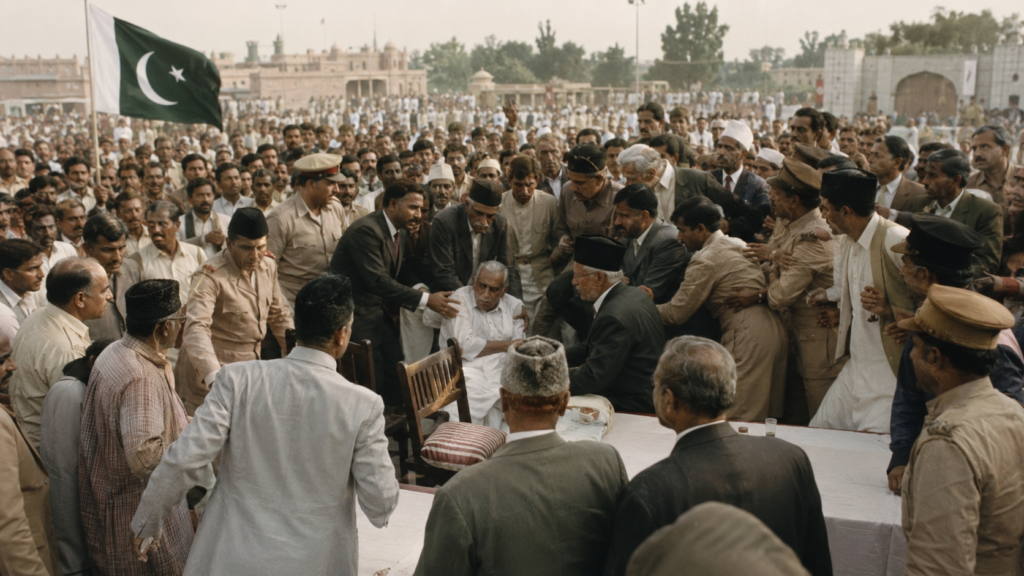
The year 1951 was significant because Pakistan experienced its first major political crisis after independence. It witnessed the assassination of Prime Minister Liaquat Ali Khan, which deeply affected the country’s political stability.
2. Who Was the Prime Minister of Pakistan in Early 1951?
Liaquat Ali Khan served as the Prime Minister of Pakistan during most of 1951. He was one of the founding leaders of the country and played a central role in its early development.
3. What Was the Most Important Political Event of 1951?
The assassination of Prime Minister Liaquat Ali Khan was the most important political event of 1951. His death created a leadership vacuum in Pakistan.
4. When Was Liaquat Ali Khan Assassinated?
Liaquat Ali Khan was assassinated on 16 October 1951. The incident took place during a public gathering in Rawalpindi.
5. Where Was Liaquat Ali Khan Assassinated?
He was assassinated at Company Bagh in Rawalpindi, which was later renamed Liaquat Bagh in his honor.
6. Who Assassinated Liaquat Ali Khan?
Liaquat Ali Khan was shot by Said Akbar, an Afghan national. The assassin was immediately killed by police, leaving many questions about the conspiracy unanswered.
7. Why Is Liaquat Ali Khan’s Assassination Considered Historic?
His assassination removed Pakistan’s most experienced political leader after Jinnah. Many historians consider it one of the most mysterious events in Pakistan’s history.
8. What Was the Public Reaction to Liaquat Ali Khan’s Death?
The nation was shocked and mourned deeply. Large crowds attended memorial ceremonies, and his death created uncertainty about Pakistan’s future leadership.
9. Where Was Liaquat Ali Khan Buried?
Liaquat Ali Khan was buried in Karachi near the mausoleum of Quaid-e-Azam Muhammad Ali Jinnah.
10. Who Became Prime Minister After Liaquat Ali Khan?
Khawaja Nazimuddin became the Prime Minister after Liaquat Ali Khan’s assassination. He left the office of Governor-General to assume the role.
11. Who Became Governor-General After Khawaja Nazimuddin?
Ghulam Muhammad became the Governor-General of Pakistan in 1951. He had previously served as Pakistan’s Finance Minister.
12. Why Was the Change in Leadership Important?
It marked Pakistan’s first major transfer of power after independence. The political balance of the country changed significantly after Liaquat Ali Khan’s death.
13. What Was the Rawalpindi Conspiracy Case?
The Rawalpindi Conspiracy Case was Pakistan’s first major alleged coup plot. It involved military officers and left-wing intellectuals accused of planning to overthrow the government.
14. When Was the Rawalpindi Conspiracy Case Discovered?
The conspiracy was uncovered in March 1951. The government quickly arrested those allegedly involved in the plot.
15. Who Was the Main Military Figure in the Rawalpindi Conspiracy Case?
Major General Akbar Khan was the central military figure accused in the conspiracy. He was a senior officer in the Pakistan Army.
16. Who Was Faiz Ahmed Faiz and How Was He Connected to the Rawalpindi Conspiracy Case?
Faiz Ahmed Faiz was one of Pakistan’s most famous poets and intellectuals. He was accused of being linked to the Rawalpindi Conspiracy Case and was arrested along with several others.
17. Why Was the Rawalpindi Conspiracy Case Important?
It was Pakistan’s first major alleged coup attempt. The case highlighted tensions between political leaders and some military officers in the early years of the state.
18. What Was Pakistan’s Political Situation in 1951?
Pakistan was facing political uncertainty due to constitutional delays and leadership challenges. The assassination of Liaquat Ali Khan further increased instability.
19. What Was the Status of Constitution-Making in 1951?
The Constituent Assembly continued working on a permanent constitution. However, disagreements over representation and constitutional principles slowed progress.
20. What Was the Main Constitutional Debate in 1951?
The major debate concerned representation between East Pakistan and West Pakistan. East Pakistan demanded representation based on population, while West Pakistan sought parity.
21. Who Was the Governor-General of Pakistan at the End of 1951?
Ghulam Muhammad became Governor-General after Khawaja Nazimuddin became Prime Minister. He later became one of the most influential political figures in Pakistan.
22. What Role Did Ghulam Muhammad Play in Pakistan’s Politics?
As Governor-General, Ghulam Muhammad gained considerable influence over state affairs. His role later contributed to important constitutional developments.
23. What Was the Position of East Pakistan in 1951?
East Pakistan remained the most populous region of the country. Its demands for political representation continued to grow.
24. Why Was East Pakistan Dissatisfied in 1951?
Many people in East Pakistan believed they were not receiving fair political representation. Language and constitutional issues also contributed to dissatisfaction.
25. What Was the Language Issue in 1951?
The debate over Urdu and Bengali continued throughout the year. Bengali-speaking citizens demanded equal recognition for their language.
26. What Was Pakistan’s Economic Condition in 1951?
Pakistan’s economy was still largely agricultural and developing. The government focused on improving trade, agriculture, and financial stability.
27. What Was the Main Export of Pakistan in 1951?
Jute and cotton were among Pakistan’s most important exports. These products generated valuable foreign exchange earnings.
28. Why Was Jute Important for Pakistan?
Jute from East Pakistan was one of the country’s leading export commodities. It played a major role in supporting the national economy.
29. Why Was Cotton Important for Pakistan?
Cotton was a major agricultural crop and the foundation of Pakistan’s growing textile industry. It remained a key export product.
30. What Was Pakistan’s Relationship With India in 1951?
Relations with India remained tense due to Kashmir and other unresolved issues. Diplomatic efforts continued, but significant disputes persisted.
31. What Was the Status of the Kashmir Dispute in 1951?
The Kashmir dispute remained unresolved despite United Nations involvement. Pakistan continued to support a plebiscite for the people of Kashmir.
32. What Role Did the United Nations Play in Kashmir During 1951?
The United Nations continued discussions and mediation efforts. However, disagreements between Pakistan and India prevented a final settlement.
33. What Was Pakistan’s Main Foreign Policy Objective in 1951?
Pakistan’s primary foreign policy objective was securing international support on Kashmir. The country also worked to strengthen diplomatic relations worldwide.
34. What Was the Condition of Refugees in 1951?
Many refugees had been settled, but challenges remained. Housing, employment, and property disputes continued to affect thousands of families.
35. Why Were Property Disputes Important in 1951?
Many refugees had left behind assets during partition. The government had to manage claims and distribute evacuee property fairly.
36. What Was Evacuee Property?
Evacuee property referred to land, homes, and businesses left behind by migrants. These assets were used to help resettle refugees.
37. What Was the Role of the Civil Service in 1951?
The civil service played a crucial role in governance and administration. It helped maintain stability during a period of political uncertainty.
38. What Was Pakistan’s Defense Situation in 1951?
Pakistan continued strengthening its armed forces after the Kashmir conflict. National security remained a top priority.
39. Why Was Military Development Important in 1951?
The country faced security concerns from regional disputes. Building a capable military was considered essential for national defense.
40. What Was the Impact of Liaquat Ali Khan’s Death on Pakistan?
His death weakened political stability and removed one of the country’s most respected leaders. It also increased the influence of bureaucratic and administrative institutions.
41. What Challenges Faced Khawaja Nazimuddin as Prime Minister?
He inherited a politically fragile country facing constitutional delays, economic challenges, and unresolved international disputes.
42. What Was the Biggest Political Challenge of 1951?
The biggest challenge was maintaining stability after the assassination of the Prime Minister. Leadership transition became a critical issue.
43. What Was the Biggest Security Event of 1951?
The Rawalpindi Conspiracy Case was the most significant security event. It raised concerns about political and military relations within the country.
44. What Was the Biggest Constitutional Issue of 1951?
The most important constitutional issue was representation between East and West Pakistan. This debate continued to delay the constitution-making process.
45. Did Pakistan Have a Permanent Constitution in 1951?
No, Pakistan still did not have a permanent constitution. The country continued to operate under constitutional arrangements inherited from the colonial period.
46. Why Is 1951 Considered a Turning Point in Pakistan’s Politics?
The assassination of Liaquat Ali Khan changed the country’s political landscape. New leaders emerged, and power dynamics began to shift.
47. What Was the Importance of Khawaja Nazimuddin’s Appointment as Prime Minister?
His appointment ensured continuity in government after a national crisis. He became responsible for guiding Pakistan through a difficult transition period.
48. How Did 1951 Influence Pakistan’s Future?
The events of 1951 affected political institutions, civil-military relations, and constitutional development. Many later developments can be traced back to this period.
49. Why Is the Rawalpindi Conspiracy Case Still Remembered?
It remains one of the most controversial cases in Pakistan’s history. Historians continue to debate its causes, participants, and long-term impact.
50. What Is the Historical Significance of 1951 for Pakistan?
1951 is remembered as the year Pakistan lost its first Prime Minister and faced its first major political crisis. The events of the year had a lasting impact on the country’s political evolution.
1952
1. Why Was 1952 Important in Pakistan’s History?
1952 was important because the Bengali Language Movement reached a critical stage in East Pakistan. The year highlighted the growing political and cultural tensions between East Pakistan and West Pakistan.
2. Who Was the Prime Minister of Pakistan in 1952?
Khawaja Nazimuddin was the Prime Minister of Pakistan in 1952. He had taken office after the assassination of Liaquat Ali Khan in 1951.
3. Who Was the Governor-General of Pakistan in 1952?
Ghulam Muhammad was the Governor-General of Pakistan in 1952. He held significant constitutional authority under the dominion system.
4. What Was the Most Important Event of 1952?
The most important event of 1952 was the Bengali Language Movement in East Pakistan. It became a major turning point in Pakistan’s political and cultural history.
5. What Was the Bengali Language Movement?
The Bengali Language Movement was a political and cultural movement demanding recognition of Bengali as one of Pakistan’s state languages. It reflected the concerns of the Bengali-speaking majority in East Pakistan.
6. Why Did the Bengali Language Movement Begin?
The movement began because many people in East Pakistan opposed the idea of Urdu being the only state language. They demanded equal recognition for Bengali due to its widespread use.
7. Why Was Bengali Important in East Pakistan?
Bengali was the mother tongue of the majority of people in East Pakistan. Because East Pakistan had a large population, language recognition became a major political issue.
8. What Happened on 21 February 1952?
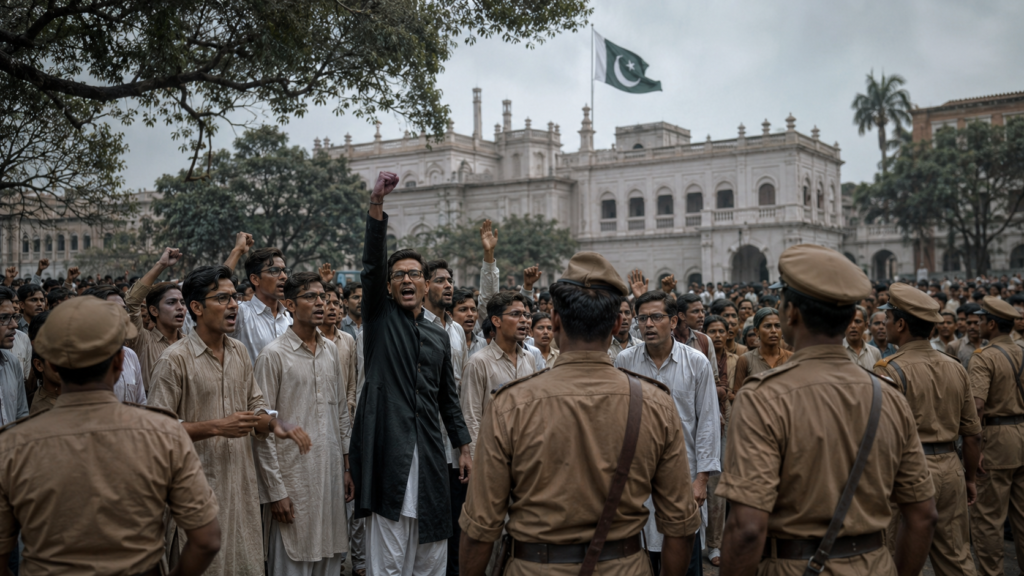
On 21 February 1952, students in Dhaka protested for the recognition of Bengali. Police opened fire on demonstrators, and several students were killed.
9. Why Is 21 February 1952 Important?
21 February became a symbol of language rights and cultural identity. It is remembered as a historic day in the struggle for Bengali language recognition.
10. Who Were the Language Movement Martyrs?
The martyrs included students and activists who were killed during the protests in Dhaka. Names such as Salam, Barkat, Rafiq, Jabbar, and Shafiur became strongly associated with the movement.
11. Where Did the 1952 Language Protests Take Place?
The major protests took place in Dhaka, especially around the University of Dhaka. The city became the center of the Bengali Language Movement.
12. What Was the Government’s Response to the Language Protests?
The government tried to control the protests through restrictions and police action. The firing on students intensified public anger and strengthened the movement.
13. Why Did the Language Movement Become Politically Important?
The movement showed that language was not only a cultural issue but also a political issue. It increased demands for provincial rights and fair representation in East Pakistan.
14. How Did the Language Movement Affect East-West Pakistan Relations?
It deepened mistrust between East Pakistan and the central government. Many Bengalis felt that their cultural identity and political rights were being ignored.
15. What Was the Long-Term Impact of the Bengali Language Movement?
The movement eventually led to Bengali being recognized as a state language. It also contributed to the rise of Bengali nationalism in later years.
16. Did Pakistan Have a Permanent Constitution in 1952?
No, Pakistan still did not have a permanent constitution in 1952. The country continued to operate under temporary constitutional arrangements inherited from British rule.
17. What Was the Status of Constitution-Making in 1952?
The Constituent Assembly continued debating Pakistan’s future constitution. Major disagreements remained over representation, federalism, Islamic provisions, and provincial autonomy.
18. What Was the Main Constitutional Problem in 1952?
The main problem was the representation balance between East Pakistan and West Pakistan. East Pakistan wanted representation based on population, while West Pakistan supported parity.
19. Why Was Representation a Sensitive Issue in 1952?
East Pakistan had a larger population than West Pakistan. If representation was based strictly on population, East Pakistan would dominate the national legislature.
20. What Was the Role of the Constituent Assembly in 1952?
The Constituent Assembly worked on laws and constitutional proposals. However, it failed to produce a final constitution during the year.
21. What Was Pakistan’s Political Situation in 1952?
Pakistan faced political uncertainty due to constitutional delays, economic pressures, and growing regional dissatisfaction. The language issue made the political atmosphere more tense.
22. What Challenges Did Khawaja Nazimuddin Face as Prime Minister?
Khawaja Nazimuddin faced language protests, economic difficulties, food shortages, constitutional deadlock, and political opposition. His government struggled to maintain stability.
23. Why Was Khawaja Nazimuddin’s Position Difficult?
He came from East Pakistan but led a central government that was criticized by many Bengalis. This made his political position complicated during the language crisis.
24. What Was Pakistan’s Economic Condition in 1952?
Pakistan’s economy remained weak and largely agricultural. The country faced problems such as limited industry, food shortages, inflation, and dependence on agricultural exports.
25. What Was the Food Situation in Pakistan in 1952?
Food shortages became an important issue during this period. The government faced pressure to manage supply, prices, and distribution.
26. Why Were Food Shortages Politically Important?
Food shortages increased public dissatisfaction and criticism of the government. Economic hardship weakened confidence in the ruling leadership.
27. What Was the Role of Agriculture in 1952?
Agriculture remained the backbone of Pakistan’s economy. Most people depended on farming, and agricultural production affected food supply, exports, and national income.
28. Why Was Jute Important in 1952?
Jute from East Pakistan remained one of Pakistan’s most valuable exports. It provided foreign exchange and supported the national economy.
29. Why Was Cotton Important in 1952?
Cotton from West Pakistan was important for exports and the textile sector. It contributed to Pakistan’s early industrial and economic development.
30. What Was Pakistan’s Relationship With India in 1952?
Relations between Pakistan and India remained tense due to Kashmir, refugees, water issues, and border concerns. Diplomatic engagement continued, but major disputes were unresolved.
31. What Was the Status of the Kashmir Dispute in 1952?
The Kashmir dispute remained unresolved despite United Nations involvement. Pakistan continued to demand a plebiscite for the people of Jammu and Kashmir.
32. What Role Did the United Nations Play in Kashmir in 1952?
The United Nations continued diplomatic efforts regarding Kashmir. However, Pakistan and India could not agree on key conditions for a plebiscite.
33. What Was Pakistan’s Foreign Policy Focus in 1952?
Pakistan focused on Kashmir, international recognition, relations with Muslim countries, and security concerns. Regional tensions strongly influenced foreign policy.
34. What Was Pakistan’s Defense Situation in 1952?
Pakistan continued strengthening its defense institutions. Security concerns with India kept military preparedness an important national priority.
35. What Was the Role of the Pakistan Army in 1952?
The army focused on national defense, border security, and internal organization. The experience of the Kashmir conflict increased its importance in state policy.
36. What Was the Refugee Situation in 1952?
Refugee settlement continued, although many migrants had already been placed in urban and rural areas. Property claims and employment remained major concerns.
37. What Was Evacuee Property in 1952?
Evacuee property referred to homes, land, and businesses left behind by people who migrated during partition. It remained important for refugee settlement and compensation.
38. Why Were Property Claims Still Important in 1952?
Many refugees wanted compensation for property lost during partition. Managing claims fairly was a difficult administrative and legal task.
39. What Was the Status of East Pakistan in 1952?
East Pakistan was politically active and increasingly dissatisfied with central policies. The language movement strengthened demands for cultural and political rights.
40. Why Did East Pakistan Demand Greater Rights?
East Pakistan had a majority population but felt underrepresented in political power, administration, and decision-making. Language became a symbol of wider political concerns.
41. How Did 1952 Influence Bengali Nationalism?
The language movement gave Bengali identity a powerful political expression. It later became one of the foundations of Bengali nationalism.
42. What Was the Importance of Dhaka University in 1952?
Dhaka University became the center of student activism during the language movement. Students played a leading role in protests and political mobilization.
43. What Was the Shaheed Minar?
The Shaheed Minar was built to honor those killed in the language movement. It became a powerful symbol of sacrifice, language rights, and Bengali identity.
44. Why Is 21 February Observed Internationally Today?
21 February is now observed as International Mother Language Day. It recognizes the importance of linguistic rights and cultural diversity worldwide.
45. Did Bengali Become a State Language Immediately in 1952?
No, Bengali was not immediately accepted as a state language in 1952. The movement continued and Bengali was later recognized constitutionally.
46. When Was Bengali Recognized as a State Language of Pakistan?
Bengali was recognized as one of Pakistan’s state languages in the 1956 Constitution. This recognition came after years of political struggle.
47. What Was the Biggest Social Issue of 1952?
The biggest social issue was the demand for linguistic recognition and cultural rights. The Bengali Language Movement brought these concerns to the national level.
48. What Was the Biggest Political Challenge of 1952?
The biggest political challenge was managing regional dissatisfaction while continuing constitution-making. The central government struggled to balance national unity and provincial demands.
49. Why Is 1952 Considered a Turning Point?
1952 is considered a turning point because the language movement transformed cultural demands into political resistance. It changed the future direction of Pakistan’s politics.
50. What Is the Historical Significance of 1952 for Pakistan?
1952 is historically significant because it exposed deep tensions between East and West Pakistan. The Bengali Language Movement became one of the most important events in Pakistan’s early history.
1953
1. Why Was 1953 Important in Pakistan’s History?
1953 was important because Pakistan faced one of its first major internal political and religious crises. The year saw anti-Ahmadi agitation, martial law in Lahore, and the dismissal of Prime Minister Khawaja Nazimuddin.
2. Who Was the Prime Minister of Pakistan at the Start of 1953?
Khawaja Nazimuddin was the Prime Minister of Pakistan at the start of 1953. His government was under pressure due to food shortages, political opposition, and religious agitation.
3. Who Was the Governor-General of Pakistan in 1953?
Ghulam Muhammad was the Governor-General of Pakistan in 1953. He played a decisive role in the political crisis by dismissing Prime Minister Khawaja Nazimuddin.
4. What Was the Most Important Political Event of 1953?
The dismissal of Prime Minister Khawaja Nazimuddin was one of the most important political events of 1953. It showed the growing power of the Governor-General over elected political leadership.
5. When Was Khawaja Nazimuddin Dismissed?
Khawaja Nazimuddin was dismissed by Governor-General Ghulam Muhammad in April 1953. This event created a major constitutional and political controversy in Pakistan.
6. Why Was Khawaja Nazimuddin Dismissed?
He was dismissed after criticism over economic problems, food shortages, and political unrest. However, many historians view the dismissal as an early example of weak parliamentary authority in Pakistan.
7. Who Became Prime Minister After Khawaja Nazimuddin?
Muhammad Ali Bogra became Prime Minister after Khawaja Nazimuddin. He was serving as Pakistan’s ambassador to the United States before being called back to lead the government.
8. Who Was Muhammad Ali Bogra?
Muhammad Ali Bogra was a Pakistani diplomat and politician. In 1953, he became Prime Minister and later introduced an important constitutional proposal known as the Bogra Formula.
9. What Was the Anti-Ahmadi Movement of 1953?
The anti-Ahmadi movement was a religious-political agitation demanding that Ahmadis be declared non-Muslims. It became a major law and order crisis, especially in Punjab.
10. Which Groups Were Involved in the 1953 Agitation?
Religious groups and political organizations were involved in the agitation. The movement gained strength in Punjab and created serious pressure on the central and provincial governments.
11. What Were the Main Demands of the Anti-Ahmadi Agitation?
The main demands included declaring Ahmadis non-Muslims, removing Sir Zafarullah Khan from the foreign ministry, and restricting Ahmadis from key state positions. These demands became central to the unrest.
12. Who Was Sir Zafarullah Khan in 1953?
Sir Muhammad Zafarullah Khan was Pakistan’s Foreign Minister. He was an Ahmadi, which made him a major target of the anti-Ahmadi agitation.
13. Where Was Martial Law Imposed in 1953?
Martial law was imposed in Lahore in March 1953. It was one of the earliest uses of martial law in Pakistan’s internal political history.
14. Why Was Martial Law Imposed in Lahore?
Martial law was imposed because the law and order situation had deteriorated due to riots and violent protests. The civilian administration was unable to control the unrest.
15. Who Administered Martial Law in Lahore?
Major General Azam Khan was appointed to administer martial law in Lahore. His role became significant in restoring order during the crisis.
16. Why Were the 1953 Lahore Riots Important?
The Lahore riots showed how religious agitation could become a major political force in Pakistan. They also revealed weaknesses in civil administration and law enforcement.
17. What Was the Punjab Disturbances Court of Inquiry?
The Punjab Disturbances Court of Inquiry was established to investigate the 1953 riots. It examined the causes of unrest and the role of political and religious leaders.
18. Who Headed the Inquiry Into the 1953 Punjab Disturbances?
Justice Muhammad Munir and Justice M. R. Kayani led the inquiry. Their report later became known as the Munir Report.
19. What Was the Munir Report?
The Munir Report was the official inquiry report on the 1953 Punjab disturbances. It analyzed religious politics, state authority, and the difficulty of defining who is a Muslim in legal terms.
20. Why Is the Munir Report Important?
The Munir Report is important because it became a landmark document in Pakistan’s legal and political history. It highlighted the dangers of religious extremism and weak governance.
21. What Was the Food Crisis of 1953?
Pakistan faced serious food shortages, especially wheat shortages, during this period. The crisis increased public anger against Khawaja Nazimuddin’s government.
22. Why Was the Food Crisis Politically Damaging?
The food crisis damaged the government’s credibility because people blamed it for poor economic management. It became one of the reasons used to justify the dismissal of the Prime Minister.
23. What Was Pakistan’s Economic Condition in 1953?
Pakistan’s economy was still developing and heavily dependent on agriculture. Food shortages, limited industry, and administrative weaknesses created pressure on the government.
24. What Was the Role of Agriculture in 1953?
Agriculture remained the backbone of Pakistan’s economy. Problems in food production and distribution had direct political consequences.
25. What Was the Status of Constitution-Making in 1953?
Pakistan still did not have a permanent constitution in 1953. Constitutional debates continued, especially over representation, federalism, and the relationship between Islam and the state.
26. What Was the Main Constitutional Problem in 1953?
The main problem was balancing representation between East Pakistan and West Pakistan. This issue continued to delay the framing of Pakistan’s first constitution.
27. What Was East Pakistan’s Position in 1953?
East Pakistan continued to demand fair representation based on population. Its political importance remained high because it had the majority of Pakistan’s population.
28. Why Was Representation Between East and West Pakistan Controversial?
East Pakistan wanted representation according to population, while many leaders in West Pakistan supported parity. This disagreement became one of the central constitutional conflicts.
29. What Was the Language Issue in 1953?
The language issue remained politically important after the 1952 Bengali Language Movement. Bengali recognition continued to be a major demand in East Pakistan.
30. What Was Pakistan’s Relationship With India in 1953?
Relations with India remained tense due to Kashmir and other partition-related disputes. Diplomatic contact continued, but no permanent settlement was achieved.
31. What Was the Status of the Kashmir Dispute in 1953?
The Kashmir dispute remained unresolved. Pakistan continued to support a plebiscite under United Nations supervision.
32. What Role Did the United Nations Play in Kashmir in 1953?
The United Nations continued to discuss the Kashmir issue, but Pakistan and India could not agree on a final settlement. The dispute remained central to Pakistan’s foreign policy.
33. What Was Pakistan’s Main Foreign Policy Concern in 1953?
Kashmir remained Pakistan’s most important foreign policy concern. Relations with the United States and other countries also became increasingly important.
34. Why Was Muhammad Ali Bogra’s Appointment Significant?
His appointment showed the influence of the Governor-General in selecting national leadership. It also brought a diplomat with international experience into Pakistan’s highest political office.
35. What Was the Bogra Formula?
The Bogra Formula was a constitutional proposal introduced by Prime Minister Muhammad Ali Bogra. It aimed to resolve the representation issue between East and West Pakistan.
36. Why Was the Bogra Formula Important?
The Bogra Formula was important because it attempted to create a compromise between population-based representation and parity. It became one of the most discussed constitutional proposals of the period.
37. What Did the Bogra Formula Propose?
It proposed a bicameral legislature with a balance between East and West Pakistan. The formula tried to satisfy both wings by combining equal and population-based representation.
38. Did the Bogra Formula Become Pakistan’s Constitution?
No, the Bogra Formula did not become the final constitution. However, it influenced later constitutional discussions and showed an effort to solve Pakistan’s federal problem.
39. What Was the Political Role of Ghulam Muhammad in 1953?
Ghulam Muhammad used his authority as Governor-General to dismiss the Prime Minister. This strengthened the role of the executive head over parliamentary leadership.
40. Why Is 1953 Seen as a Weakening of Parliamentary Democracy?
The dismissal of an elected Prime Minister by the Governor-General weakened parliamentary norms. It set a precedent for future executive interventions in politics.
41. What Was the Role of Bureaucracy in 1953 Politics?
The bureaucracy became increasingly powerful during this period. Senior officials gained influence as political parties remained weak and divided.
42. What Was the Role of Religious Politics in 1953?
Religious politics became highly visible through the anti-Ahmadi agitation. The events showed how religious demands could influence national politics and law and order.
43. What Was the Biggest Law and Order Challenge of 1953?
The anti-Ahmadi riots and Lahore disturbances were the biggest law and order challenge. The crisis led to the imposition of martial law in Lahore.
44. How Did 1953 Affect Civil-Military Relations?
The use of martial law in Lahore increased the military’s role in internal security. It showed that the army could be called upon when civilian authority failed.
45. What Was the Biggest Social Issue of 1953?
The biggest social issue was religious tension and communal agitation. The anti-Ahmadi movement created serious divisions in society.
46. What Was the Biggest Economic Issue of 1953?
The biggest economic issue was food shortage, especially wheat scarcity. This crisis contributed to public dissatisfaction and political pressure on the government.
47. What Was the Biggest Constitutional Development of 1953?
The Bogra Formula was the biggest constitutional development of the year. It attempted to address the representation dispute between Pakistan’s two wings.
48. Why Is 1953 Considered a Crisis Year?
1953 is considered a crisis year because Pakistan faced political dismissal, religious riots, food shortages, martial law in Lahore, and constitutional uncertainty.
49. How Did 1953 Influence Pakistan’s Future Politics?
The events of 1953 strengthened executive authority, increased the role of bureaucracy, and showed the political power of religious movements. These trends shaped Pakistan’s later history.
50. What Is the Historical Significance of 1953 for Pakistan?
1953 is historically significant because it exposed deep weaknesses in Pakistan’s early political system. The year marked a turning point in religious politics, constitutional development, and executive power.
1954
1. Why Was 1954 Important in Pakistan’s History?
1954 was important because Pakistan’s first Constituent Assembly was dissolved, East Bengal saw a major United Front election victory, and Pakistan moved closer to Western security alliances.
2. Who Was the Governor-General of Pakistan in 1954?
Governor-General Ghulam Muhammad was Pakistan’s head of state in 1954.
3. Who Was the Prime Minister of Pakistan in 1954?
Muhammad Ali Bogra was the Prime Minister of Pakistan in 1954.
4. What Was the Biggest Political Event of 1954?
The biggest political event was the dissolution of Pakistan’s first Constituent Assembly by Governor-General Ghulam Muhammad.
5. Why Was the Constituent Assembly Dissolved in 1954?
It was dissolved because of a power struggle between the Governor-General and the Assembly over constitution-making and state authority.
6. What Was the Constituent Assembly Working On in 1954?
The Assembly was working on Pakistan’s first full constitution before it was dissolved.
7. Did Pakistan Have a Constitution in 1954?
No, Pakistan still did not have a permanent constitution in 1954.
8. Why Was 1954 a Constitutional Crisis?
It created a constitutional crisis because the Governor-General’s power to dissolve the Assembly was strongly challenged.
9. Who Challenged the Assembly’s Dissolution?
Maulvi Tamizuddin Khan challenged the dissolution in court.
10. Who Was Maulvi Tamizuddin Khan?
Maulvi Tamizuddin Khan was the President of Pakistan’s Constituent Assembly.
11. Why Was the Maulvi Tamizuddin Case Important?
The case became one of Pakistan’s most important early constitutional and legal disputes.
12. What Was the Main Problem in Pakistan’s Politics in 1954?
The main problem was the lack of stable democratic institutions and a permanent constitution.
13. Did Democracy Become Stronger in 1954?
No, democracy became weaker because executive power increased over parliamentary authority.
14. What Happened in East Bengal in 1954?
The United Front won a major victory in the East Bengal provincial election.
15. What Was the United Front?
The United Front was an alliance of opposition parties in East Bengal against the Muslim League.
16. Who Were the Main Leaders of the United Front?
A. K. Fazlul Huq, Huseyn Shaheed Suhrawardy, and Maulana Bhashani were major leaders.
17. Why Did the United Front Become Popular?
It became popular because it supported Bengali rights, provincial autonomy, and recognition of the Bengali language.
18. What Was the United Front’s Election Program?
The United Front campaigned on a 21-point program focused on autonomy, language rights, economic justice, and democratic reforms.
19. What Was the Result of the 1954 East Bengal Election?
The United Front won a landslide victory, while the Muslim League suffered a major defeat.
20. Why Was the Muslim League Defeated in East Bengal?
The Muslim League lost support because many people were unhappy with centralization, language policy, and economic inequality.
21. Who Became Chief Minister of East Bengal in 1954?
A. K. Fazlul Huq became Chief Minister of East Bengal after the United Front victory.
22. Was the United Front Government Stable?
No, the United Front government was short-lived.
23. Why Was the United Front Government Dismissed?
The central government dismissed it, accusing it of mismanagement and political instability.
24. What Did the United Front Victory Show?
It showed growing political awareness and dissatisfaction in East Pakistan.
25. Why Was East Pakistan Important in 1954?
East Pakistan was important because it had a majority population and strong political demands.
26. What Were East Pakistan’s Main Demands in 1954?
East Pakistan demanded provincial autonomy, language recognition, fair representation, and economic justice.
27. What Was the Bengali Language Issue in 1954?
Recognition of Bengali as a state language remained a major political demand in East Pakistan.
28. How Did 1954 Affect East-West Pakistan Relations?
It increased mistrust between East Pakistan and the central government in West Pakistan.
29. What Was the One Unit Idea in 1954?
The One Unit idea aimed to merge West Pakistan’s provinces into one administrative unit.
30. Why Was One Unit Discussed in 1954?
It was discussed to balance East Pakistan’s population majority with West Pakistan’s combined political weight.
31. Was One Unit Implemented in 1954?
No, One Unit was discussed in 1954 but formally implemented later in 1955.
32. What Was Pakistan’s Foreign Policy Direction in 1954?
Pakistan moved closer to the United States and Western defense alliances.
33. Did Pakistan Join SEATO in 1954?
Yes, Pakistan joined SEATO in 1954.
34. What Was SEATO?
SEATO was a Western-backed defense alliance formed during the Cold War.
35. Why Did Pakistan Join SEATO?
Pakistan joined SEATO to gain security support, military assistance, and closer ties with Western powers.
36. How Did the Cold War Affect Pakistan in 1954?
The Cold War influenced Pakistan to align more closely with the Western bloc.
37. What Was Pakistan’s Relationship With the United States in 1954?
Pakistan’s relationship with the United States became stronger through defense and diplomatic cooperation.
38. What Was Pakistan’s Relationship With India in 1954?
Relations with India remained tense, especially because of the Kashmir dispute.
39. Was the Kashmir Issue Solved in 1954?
No, the Kashmir issue remained unresolved.
40. What Was the Role of Bureaucracy in 1954?
The bureaucracy became increasingly powerful in Pakistan’s political and administrative system.
41. What Was the Role of the Governor-General in 1954?
The Governor-General played a dominant role in government and constitutional decisions.
42. Did Political Parties Function Freely in 1954?
Political parties existed, but political instability and central control limited democratic development.
43. What Was the Condition of the Muslim League in 1954?
The Muslim League became weaker, especially after its defeat in East Bengal.
44. Why Was 1954 Important for Constitutional Development?
It delayed constitution-making and exposed the weakness of Pakistan’s political institutions.
45. What Was the Biggest Political Criticism of 1954?
The biggest criticism was that democratic institutions were weakened by executive interference.
46. What Was the Biggest Regional Issue in 1954?
The biggest regional issue was the growing political gap between East Pakistan and West Pakistan.
47. What Did 1954 Reveal About Pakistan’s Federation?
It revealed that Pakistan’s federal structure was unstable and needed a fair balance between provinces.
48. How Did 1954 Influence Future Politics?
It increased constitutional uncertainty, regional tensions, and distrust of central authority.
49. Why Is 1954 Called a Turning Point?
1954 is called a turning point because it changed Pakistan’s constitutional path and strengthened regional political movements.
50. What Is the Historical Significance of 1954 for Pakistan?
1954 was a landmark year of constitutional crisis, East Bengal’s political awakening, Muslim League decline, and Pakistan’s shift toward Western alliances.
1955
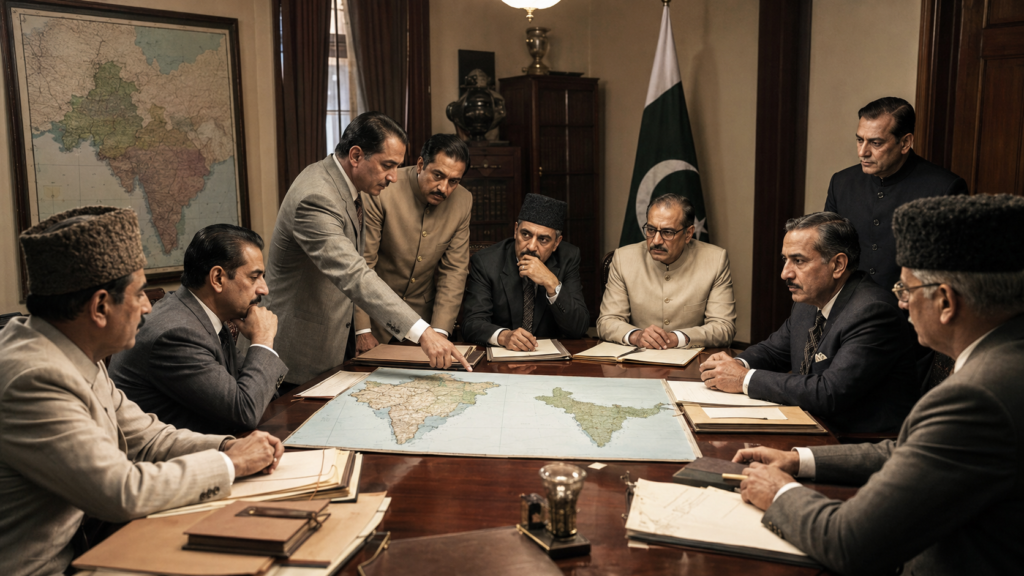
1. Why Was 1955 Important in Pakistan’s History?
1955 was important because the One Unit scheme was introduced, the Second Constituent Assembly began work, and Pakistan moved closer to its first constitution.
2. Who Was the Governor-General of Pakistan in 1955?
Ghulam Muhammad was Governor-General for most of 1955, but Iskander Mirza later replaced him.
3. Who Became Governor-General After Ghulam Muhammad?
Iskander Mirza became Governor-General of Pakistan in 1955.
4. Who Was the Prime Minister of Pakistan in 1955?
Muhammad Ali Bogra served as Prime Minister until August 1955, after which Chaudhry Muhammad Ali became Prime Minister.
5. Who Became Prime Minister in August 1955?
Chaudhry Muhammad Ali became Prime Minister of Pakistan in August 1955.
6. Why Was Chaudhry Muhammad Ali Important?
He played a major role in Pakistan’s constitution-making process and later helped finalize the 1956 Constitution.
7. What Was the Biggest Political Event of 1955?
The biggest political event was the formation of One Unit in West Pakistan.
8. What Was the One Unit Scheme?
The One Unit scheme merged the provinces and princely states of West Pakistan into one administrative unit.
9. When Was One Unit Introduced?
One Unit was introduced in 1955.
10. Why Was One Unit Created?
It was created to balance East Pakistan’s population majority with West Pakistan’s combined political weight.
11. Which Areas Were Merged Under One Unit?
Punjab, Sindh, NWFP, Balochistan areas, and several princely states were merged into West Pakistan.
12. What Was West Pakistan After One Unit?
West Pakistan became a single province under the One Unit system.
13. What Was East Pakistan’s Position in 1955?
East Pakistan remained one province and had a larger population than West Pakistan.
14. Why Was One Unit Controversial?
It was controversial because smaller provinces feared loss of identity, autonomy, and local political rights.
15. Did One Unit Solve Pakistan’s Political Problems?
No, it created temporary administrative balance but increased resentment in many regions.
16. What Was the Second Constituent Assembly?
The Second Constituent Assembly was formed after the first Assembly was dissolved in 1954.
17. Why Was the Second Constituent Assembly Important?
It restarted the constitution-making process and worked toward Pakistan’s first constitution.
18. Did Pakistan Have a Constitution in 1955?
No, Pakistan still did not have a permanent constitution in 1955.
19. What Was the Main Constitutional Goal in 1955?
The main goal was to create a workable constitution for Pakistan.
20. How Did 1955 Help the 1956 Constitution?
The political arrangements and debates of 1955 helped prepare the ground for the 1956 Constitution.
21. What Was the Political System in 1955?
Pakistan had a parliamentary system, but real power was strongly influenced by the Governor-General, bureaucracy, and ruling elites.
22. Was Democracy Stable in 1955?
No, democracy remained unstable because of frequent leadership changes and weak institutions.
23. What Was the Role of Bureaucracy in 1955?
The bureaucracy remained very powerful in administration and political decision-making.
24. What Was the Role of Iskander Mirza in 1955?
Iskander Mirza became Governor-General and emerged as a powerful figure in Pakistan’s politics.
25. Why Was Ghulam Muhammad Removed?
Ghulam Muhammad’s health and political pressure weakened his position, leading to his replacement.
26. What Was East Pakistan’s Main Concern in 1955?
East Pakistan was concerned about representation, autonomy, language rights, and economic inequality.
27. Did East Pakistan Support One Unit?
Many political voices in East Pakistan viewed One Unit as a way to reduce the effect of East Pakistan’s population majority.
28. What Was the Parity Principle?
The parity principle gave equal political representation to East Pakistan and West Pakistan despite East Pakistan’s larger population.
29. Why Was Parity Controversial?
It was controversial because East Pakistan had more people but was given equal representation with West Pakistan.
30. What Was the Main Regional Issue in 1955?
The main regional issue was the balance of power between East Pakistan and West Pakistan.
31. What Was Pakistan’s Foreign Policy Direction in 1955?
Pakistan continued moving closer to the Western bloc during the Cold War.
32. Did Pakistan Join the Baghdad Pact in 1955?
Yes, Pakistan joined the Baghdad Pact in 1955.
33. What Was the Baghdad Pact?
The Baghdad Pact was a Western-backed security alliance created during the Cold War.
34. Why Did Pakistan Join the Baghdad Pact?
Pakistan joined to gain security support, military aid, and stronger relations with Western powers.
35. What Was Pakistan’s Relationship With the United States in 1955?
Pakistan’s relationship with the United States became stronger through military and diplomatic cooperation.
36. What Was Pakistan’s Relationship With India in 1955?
Relations with India remained tense, mainly because of the Kashmir dispute.
37. Was the Kashmir Issue Solved in 1955?
No, the Kashmir dispute remained unresolved.
38. What Was Pakistan’s Economic Condition in 1955?
Pakistan was still developing its economy, with agriculture, trade, and early industrial growth playing important roles.
39. What Was the Role of Agriculture in 1955?
Agriculture remained the backbone of Pakistan’s economy.
40. What Was the Industrial Situation in 1955?
Pakistan’s industrial sector was growing slowly, supported by government planning and private investment.
41. What Was the Condition of Karachi in 1955?
Karachi remained Pakistan’s capital and main commercial center.
42. Was Islamabad the Capital in 1955?
No, Islamabad had not yet been developed as the capital in 1955.
43. What Was the Condition of Political Parties in 1955?
Political parties existed, but they were weak, divided, and affected by central political control.
44. What Was the Muslim League’s Condition in 1955?
The Muslim League had lost much of its earlier strength, especially after its defeat in East Bengal.
45. What Was the Main Political Problem in 1955?
The main political problem was the lack of stable leadership and a permanent constitution.
46. Why Was 1955 Important for Federalism?
1955 reshaped Pakistan’s federal structure by merging West Pakistan under One Unit.
47. Did One Unit Affect Smaller Provinces?
Yes, smaller provinces feared that their culture, language, and political rights would be weakened.
48. How Did 1955 Influence Future Politics?
It increased centralization and deepened regional tensions between different parts of Pakistan.
49. Why Is 1955 Considered a Turning Point?
1955 is considered a turning point because One Unit changed Pakistan’s administrative structure and constitution-making moved forward.
50. What Is the Historical Significance of 1955 for Pakistan?
1955 was a landmark year of political restructuring, constitutional progress, leadership change, and stronger alignment with Western alliances.
1956
1. Why Was 1956 Important in Pakistan’s History?
1956 was important because Pakistan adopted its first Constitution and officially became the Islamic Republic of Pakistan.
2. What Was the Biggest Event in Pakistan in 1956?
The biggest event was the enforcement of Pakistan’s first Constitution on 23 March 1956.
3. When Did Pakistan Adopt Its First Constitution?
Pakistan adopted its first Constitution on 23 March 1956.
4. What Was Pakistan Called Before 1956?
Before 1956, Pakistan was known as the Dominion of Pakistan.
5. What Was Pakistan Called After the 1956 Constitution?
Pakistan became the Islamic Republic of Pakistan.
6. Who Was the Governor-General of Pakistan in Early 1956?
Iskander Mirza served as Governor-General before the Constitution came into effect.
7. Who Became Pakistan’s First President?
Iskander Mirza became Pakistan’s first President in 1956.
8. Why Did Pakistan Need a Constitution?
Pakistan needed a Constitution to establish a permanent legal and political framework for governance.
9. How Long Did It Take Pakistan to Get Its First Constitution?
It took nearly nine years after independence for Pakistan to adopt its first Constitution.
10. What Type of Government Did the 1956 Constitution Establish?
The Constitution established a parliamentary form of government.
11. Who Was the Head of State Under the 1956 Constitution?
The President became the head of state.
12. Who Was the Head of Government Under the 1956 Constitution?
The Prime Minister remained the head of government.
13. Who Was Prime Minister When the Constitution Was Adopted?
Chaudhry Muhammad Ali was Prime Minister when the Constitution was adopted.
14. Why Was Chaudhry Muhammad Ali Important in 1956?
He played a key role in drafting and implementing Pakistan’s first Constitution.
15. What Religion Did the Constitution Recognize?
The Constitution declared Islam as an important foundation of the state.
16. Did the Constitution Declare Pakistan an Islamic Republic?
Yes, the Constitution officially declared Pakistan an Islamic Republic.
17. What Was the Official Language Issue in 1956?
Both Urdu and Bengali were recognized as state languages.
18. Why Was Bengali Recognized?
Bengali was recognized because East Pakistan had the majority of Pakistan’s population.
19. What Was the Principle of Parity?
Parity gave equal representation to East Pakistan and West Pakistan in the national legislature.
20. Why Was Parity Controversial?
Many East Pakistanis believed it ignored their population majority.
21. What Was the One Unit System in 1956?
West Pakistan remained a single administrative unit under the One Unit scheme.
22. Did East Pakistan Remain a Separate Province?
Yes, East Pakistan remained a separate province.
23. What Was the Main Constitutional Achievement of 1956?
The adoption of Pakistan’s first Constitution was the main achievement.
24. Was Pakistan a Republic Before 1956?
No, Pakistan became a republic only after the Constitution came into force.
25. What Happened to the Office of Governor-General?
The office of Governor-General was abolished and replaced by the Presidency.
26. Who Was Pakistan’s President in 1956?
Iskander Mirza was Pakistan’s President in 1956.
27. Did Political Stability Improve in 1956?
The Constitution created hope for stability, but political challenges remained.
28. What Was the Main Political Debate in 1956?
The main debate involved provincial representation and the balance of power between East and West Pakistan.
29. What Was East Pakistan’s Main Concern in 1956?
East Pakistan wanted greater political representation and economic equality.
30. Did the Constitution Fully Solve East-West Tensions?
No, many regional and political tensions remained unresolved.
31. What Was Pakistan’s Relationship With the United States in 1956?
Pakistan maintained close relations with the United States.
32. What Was Pakistan’s Position in the Cold War?
Pakistan remained aligned with Western security alliances.
33. Was Pakistan a Member of SEATO in 1956?
Yes, Pakistan remained a member of SEATO.
34. Was Pakistan a Member of the Baghdad Pact in 1956?
Yes, Pakistan continued participating in the Baghdad Pact.
35. Why Were These Alliances Important?
They provided military cooperation, economic assistance, and strategic support.
36. What Was Pakistan’s Relationship With India in 1956?
Relations remained tense because of the Kashmir dispute and other regional issues.
37. Was the Kashmir Dispute Resolved in 1956?
No, the Kashmir dispute remained unresolved.
38. What Was Pakistan’s Economic Situation in 1956?
Pakistan continued focusing on economic development, agriculture, and industrial growth.
39. What Role Did Agriculture Play in 1956?
Agriculture remained the foundation of Pakistan’s economy.
40. What Was the Condition of Industry in 1956?
Industrial development continued under government planning and private investment.
41. What Was the Role of Bureaucracy in 1956?
The bureaucracy remained influential in governance and administration.
42. What Was the Role of the Military in 1956?
The military remained an important institution, though civilian government formally existed.
43. Did Pakistan Have Democratic Elections in 1956?
The constitutional system was democratic, but political instability limited democratic progress.
44. What Was the Main Challenge Facing the New Constitution?
The main challenge was ensuring political stability and effective implementation.
45. Why Was the Constitution of 1956 Historic?
It was Pakistan’s first permanent Constitution after independence.
46. Did the Constitution Guarantee Fundamental Rights?
Yes, it included provisions for fundamental rights and civil liberties.
47. What Was the Significance of 23 March 1956?
It marked Pakistan’s transition from a dominion to an Islamic republic.
48. How Did 1956 Influence Future Politics?
It established constitutional principles that influenced later political developments.
49. Why Is 1956 Considered a Landmark Year?
It was the year Pakistan finally achieved constitutional government.
50. What Is the Historical Significance of 1956 for Pakistan?
1956 is historically significant because Pakistan adopted its first Constitution, became an Islamic Republic, and established its first constitutional system of governance.
1957
1. Why Was 1957 Important in Pakistan’s History?
1957 was important because Pakistan faced serious political instability, frequent leadership changes, and growing weakness in its parliamentary system.
2. Who Was the President of Pakistan in 1957?
Iskander Mirza was the President of Pakistan in 1957.
3. Who Was the Prime Minister of Pakistan at the Start of 1957?
Huseyn Shaheed Suhrawardy was the Prime Minister of Pakistan at the start of 1957.
4. Who Was Huseyn Shaheed Suhrawardy?
Huseyn Shaheed Suhrawardy was a prominent Bengali politician and Prime Minister of Pakistan from 1956 to 1957.
5. Why Was Suhrawardy Important in 1957?
He tried to strengthen parliamentary democracy and maintain political balance between East Pakistan and West Pakistan.
6. Did Suhrawardy Remain Prime Minister Throughout 1957?
No, Suhrawardy resigned as Prime Minister in October 1957.
7. Why Did Suhrawardy Resign in 1957?
He resigned after losing political support and facing pressure from President Iskander Mirza and opposition groups.
8. Who Became Prime Minister After Suhrawardy?
Ibrahim Ismail Chundrigar became Prime Minister after Suhrawardy resigned.
9. When Did I. I. Chundrigar Become Prime Minister?
I. I. Chundrigar became Prime Minister in October 1957.
10. Who Was I. I. Chundrigar?
Ibrahim Ismail Chundrigar was a Pakistani politician who briefly served as Prime Minister in 1957.
11. How Long Did I. I. Chundrigar Serve as Prime Minister?
He served for a very short period, from October to December 1957.
12. Why Was Chundrigar’s Government Short-Lived?
His coalition government collapsed because of disagreements among political parties.
13. Who Became Prime Minister After I. I. Chundrigar?
Feroz Khan Noon became Prime Minister after I. I. Chundrigar.
14. When Did Feroz Khan Noon Become Prime Minister?
Feroz Khan Noon became Prime Minister in December 1957.
15. Who Was Feroz Khan Noon?
Feroz Khan Noon was a senior Pakistani politician who became Prime Minister in late 1957.
16. How Many Prime Ministers Did Pakistan Have in 1957?
Pakistan had three Prime Ministers during 1957: Suhrawardy, I. I. Chundrigar, and Feroz Khan Noon.
17. What Did Frequent Prime Minister Changes Show?
They showed deep political instability and weakness in Pakistan’s parliamentary system.
18. What Was the Main Political Problem in 1957?
The main problem was unstable coalition politics and lack of strong democratic institutions.
19. Was the 1956 Constitution Still in Force in 1957?
Yes, the 1956 Constitution was still in force during 1957.
20. Did the 1956 Constitution Bring Stability by 1957?
No, the Constitution existed, but political instability continued.
21. What Type of Government Did Pakistan Have in 1957?
Pakistan had a parliamentary republic under the 1956 Constitution.
22. What Was the Role of President Iskander Mirza in 1957?
President Iskander Mirza played a powerful role in political changes and government formation.
23. Did the President Have Strong Influence in 1957?
Yes, the President had strong influence over political developments and prime ministerial changes.
24. What Was the Role of Political Parties in 1957?
Political parties were active but divided, making stable government difficult.
25. Why Were Coalition Governments Weak in 1957?
Coalition governments were weak because parties had conflicting interests and lacked long-term unity.
26. What Was the Condition of the Muslim League in 1957?
The Muslim League remained weakened and divided after losing much of its earlier dominance.
27. What Was the Role of the Awami League in 1957?
The Awami League remained an important political force, especially in East Pakistan.
28. What Was East Pakistan’s Political Role in 1957?
East Pakistan played a major role because many national leaders and parties had strong support there.
29. What Were East Pakistan’s Main Concerns in 1957?
East Pakistan remained concerned about autonomy, representation, language rights, and economic inequality.
30. Did East-West Pakistan Tensions Continue in 1957?
Yes, tensions between East Pakistan and West Pakistan continued.
31. What Was the One Unit System in 1957?
West Pakistan continued to function as one province under the One Unit system.
32. Was One Unit Still Controversial in 1957?
Yes, One Unit remained controversial among smaller provinces and regional groups.
33. Why Did Smaller Provinces Oppose One Unit?
They feared loss of identity, provincial rights, and local political power.
34. What Was Pakistan’s Foreign Policy Direction in 1957?
Pakistan remained aligned with Western security alliances during the Cold War.
35. Was Pakistan Still a Member of SEATO in 1957?
Yes, Pakistan remained a member of SEATO in 1957.
36. Was Pakistan Still Part of the Baghdad Pact in 1957?
Yes, Pakistan continued its participation in the Baghdad Pact.
37. What Was Pakistan’s Relationship With the United States in 1957?
Pakistan maintained close relations with the United States through defense and strategic cooperation.
38. What Was Pakistan’s Relationship With India in 1957?
Relations with India remained tense because of the Kashmir dispute and other regional issues.
39. Was the Kashmir Issue Resolved in 1957?
No, the Kashmir issue remained unresolved.
40. What Was Pakistan’s Economic Situation in 1957?
Pakistan continued economic development, but political instability affected long-term planning.
41. What Was the Role of Agriculture in 1957?
Agriculture remained central to Pakistan’s economy and employment.
42. What Was the Industrial Situation in 1957?
Industrial growth continued gradually, supported by state planning and private investment.
43. What Was the Role of Bureaucracy in 1957?
The bureaucracy remained highly influential in administration and governance.
44. What Was the Role of the Military in 1957?
The military remained an important institution and its political influence was growing.
45. Did Pakistan Hold General Elections in 1957?
No, Pakistan did not hold national general elections in 1957.
46. Why Were General Elections Important in 1957?
General elections were important because Pakistan needed democratic legitimacy under the 1956 Constitution.
47. Did Political Instability Delay Elections?
Yes, political instability contributed to delays in holding national elections.
48. What Did 1957 Reveal About Pakistan’s Democracy?
It revealed that constitutional democracy was fragile and vulnerable to political conflict.
49. Why Is 1957 Considered a Year of Instability?
1957 is considered unstable because Pakistan had three Prime Ministers in one year and no strong political continuity.
50. What Is the Historical Significance of 1957 for Pakistan?
1957 is historically significant because it exposed the weakness of Pakistan’s early parliamentary system and prepared the ground for the political crisis of 1958.
1958
1. Why Was 1958 Important in Pakistan’s History?
1958 was important because Pakistan’s first Constitution was abrogated, martial law was imposed, and military rule began under General Ayub Khan.
2. Who Was the President of Pakistan in 1958?
Iskander Mirza was President at the beginning of the crisis, but General Ayub Khan later became President.
3. Who Was the Prime Minister of Pakistan in 1958?
Feroz Khan Noon was the Prime Minister of Pakistan before martial law was imposed.
4. What Was the Biggest Political Event of 1958?
The biggest political event was the imposition of martial law on 7 October 1958.
5. Who Imposed Martial Law in Pakistan in 1958?
President Iskander Mirza imposed martial law in 1958.
6. Who Was Appointed Chief Martial Law Administrator?
General Muhammad Ayub Khan was appointed Chief Martial Law Administrator.
7. When Was Martial Law Imposed in Pakistan?
Martial law was imposed on 7 October 1958.
8. Why Was Martial Law Imposed in 1958?
Martial law was imposed because of political instability, weak governments, delayed elections, and conflict among political leaders.
9. What Happened to the 1956 Constitution in 1958?
The 1956 Constitution was abrogated after martial law was declared.
10. Why Was the 1956 Constitution Abrogated?
It was abrogated because President Iskander Mirza claimed the political system had failed.
11. What Happened to the National Assembly in 1958?
The National Assembly was dissolved after martial law was imposed.
12. What Happened to Provincial Governments in 1958?
Provincial governments were dismissed under martial law.
13. Were Political Parties Allowed After Martial Law?
No, political parties were banned after martial law was declared.
14. What Happened to Civil Liberties in 1958?
Civil liberties were restricted as military rule replaced normal constitutional government.
15. Who Was General Ayub Khan?
General Muhammad Ayub Khan was Pakistan’s Commander-in-Chief of the Army and later became President.
16. Why Was Ayub Khan Important in 1958?
He became the central figure in Pakistan’s first military government.
17. What Happened Between Iskander Mirza and Ayub Khan?
After imposing martial law, Ayub Khan removed Iskander Mirza from power.
18. When Was Iskander Mirza Removed?
Iskander Mirza was removed from office on 27 October 1958.
19. Who Became President After Iskander Mirza?
General Ayub Khan became President of Pakistan after removing Iskander Mirza.
20. Why Was Iskander Mirza Forced Out?
He was forced out because Ayub Khan and the military leadership took full control of the state.
21. What Was the Role of the Army in 1958?
The army took direct control of Pakistan’s government for the first time.
22. Was 1958 Pakistan’s First Martial Law?
Yes, 1958 marked Pakistan’s first nationwide martial law.
23. How Did 1958 Change Pakistan’s Political System?
It ended parliamentary democracy and started military-led rule.
24. What Was the Condition of Democracy in 1958?
Democracy collapsed after the Constitution was abrogated and elected institutions were dissolved.
25. Why Were Political Parties Criticized in 1958?
Political parties were criticized for instability, internal divisions, and failure to provide effective government.
26. Did Pakistan Hold General Elections in 1958?
No, planned general elections were cancelled after martial law was imposed.
27. Why Were Elections Important in 1958?
Elections were important because Pakistan needed democratic legitimacy after years of instability.
28. What Was the Elected Bodies Disqualification Order?
It was a law used by the martial law government to disqualify many politicians from public office.
29. What Was the Purpose of Political Disqualification?
The purpose was to remove political figures accused of corruption, mismanagement, or abuse of power.
30. What Was the Public Reaction to Martial Law?
Some people welcomed martial law due to frustration with political instability, while others feared the end of democracy.
31. What Was Ayub Khan’s Main Promise?
Ayub Khan promised discipline, stability, reform, and efficient administration.
32. What Was the Main Criticism of Martial Law?
The main criticism was that it destroyed constitutional democracy and gave power to the military.
33. What Was the One Unit System in 1958?
West Pakistan continued under the One Unit system.
34. Did One Unit Remain Controversial in 1958?
Yes, One Unit remained controversial among smaller provinces and regional groups.
35. What Was East Pakistan’s Position in 1958?
East Pakistan remained politically important but increasingly dissatisfied with central control.
36. What Were East Pakistan’s Concerns in 1958?
East Pakistan was concerned about autonomy, representation, economic inequality, and political centralization.
37. How Did Martial Law Affect East Pakistan?
Martial law further centralized power and weakened provincial political expression.
38. What Was Pakistan’s Foreign Policy Direction in 1958?
Pakistan remained aligned with Western security alliances during the Cold War.
39. Was Pakistan Still a Member of SEATO in 1958?
Yes, Pakistan remained a member of SEATO.
40. Was Pakistan Still in the Baghdad Pact in 1958?
Yes, Pakistan continued its involvement in the Baghdad Pact.
41. What Was Pakistan’s Relationship With the United States in 1958?
Pakistan maintained close military and diplomatic relations with the United States.
42. What Was Pakistan’s Relationship With India in 1958?
Relations with India remained tense because of Kashmir and other disputes.
43. Was the Kashmir Issue Resolved in 1958?
No, the Kashmir dispute remained unresolved.
44. What Was Pakistan’s Economic Situation in 1958?
Pakistan’s economy needed stability, planning, and administrative reform.
45. What Was the Role of Bureaucracy in 1958?
The bureaucracy remained powerful and worked closely with the military-led government.
46. What Was the Role of the Judiciary in 1958?
The judiciary later became important in legal debates around martial law and constitutional authority.
47. Why Is 1958 Called a Turning Point?
1958 is called a turning point because it marked the beginning of direct military rule in Pakistan.
48. How Did 1958 Influence Future Politics?
It established a pattern of military intervention in Pakistan’s political system.
49. What Was the Biggest Political Lesson of 1958?
The biggest lesson was that weak democratic institutions can create space for authoritarian rule.
50. What Is the Historical Significance of 1958 for Pakistan?
1958 is historically significant because Pakistan’s first Constitution was abolished, martial law was imposed, and military rule began under Ayub Khan.
1959
1. Why Was 1959 Important in Pakistan’s History?
1959 was important because Pakistan was under martial law, Ayub Khan strengthened his control, and major administrative and social reforms were introduced.
2. Who Was the President of Pakistan in 1959?
General Muhammad Ayub Khan was the President of Pakistan in 1959.
3. Who Was the Chief Martial Law Administrator in 1959?
General Ayub Khan was the Chief Martial Law Administrator in 1959.
4. What Type of Government Did Pakistan Have in 1959?
Pakistan had a military-led government under martial law.
5. Was the 1956 Constitution Active in 1959?
No, the 1956 Constitution had been abrogated in 1958.
6. Did Pakistan Have a Parliament in 1959?
No, Pakistan did not have a functioning elected parliament in 1959.
7. Were Political Parties Active in 1959?
No, political parties were banned or heavily restricted under martial law.
8. What Was Ayub Khan’s Main Goal in 1959?
Ayub Khan’s main goal was to create political stability, administrative discipline, and economic development.
9. What Was the Basic Democracies System?
Basic Democracies was a local government system introduced by Ayub Khan to create controlled political participation.
10. When Was Basic Democracies Introduced?
Basic Democracies was introduced in 1959.
11. Why Did Ayub Khan Introduce Basic Democracies?
He introduced it to build a controlled local political system and reduce the influence of traditional political parties.
12. How Did Basic Democracies Work?
It created elected local representatives who later formed an electoral college for higher political offices.
13. What Was the Purpose of Basic Democrats?
Basic Democrats were meant to connect local communities with the central government.
14. Was Basic Democracies a Full Democratic System?
No, it was a limited and controlled form of democracy under military rule.
15. What Was the Public Offices Disqualification Order?
The Public Offices Disqualification Order was used to remove or disqualify officials accused of misconduct or corruption.
16. What Was EBDO?
EBDO stands for Elective Bodies Disqualification Order.
17. When Was EBDO Introduced?
EBDO was introduced in 1959.
18. What Was the Purpose of EBDO?
EBDO was used to disqualify many politicians from holding public office.
19. Why Was EBDO Controversial?
It was controversial because it weakened political opposition and helped the military government control politics.
20. What Happened to Politicians Under EBDO?
Many politicians were removed from public life or forced to stay away from politics.
21. What Was Ayub Khan’s View of Political Parties?
Ayub Khan believed political parties had caused instability and corruption.
22. What Was the Role of the Military in 1959?
The military directly controlled the state and played the central role in governance.
23. What Was the Role of Bureaucracy in 1959?
The bureaucracy became highly powerful and worked closely with the military government.
24. What Administrative Reforms Were Introduced in 1959?
The government introduced reforms aimed at discipline, efficiency, anti-corruption, and better public administration.
25. What Was the Land Reform Policy of 1959?
Ayub Khan introduced land reforms to limit large landholdings and modernize agriculture.
26. Why Were Land Reforms Important?
They were important because land ownership was highly unequal and agriculture was central to Pakistan’s economy.
27. Did Land Reforms Fully Solve Rural Inequality?
No, the reforms had limits and did not fully end the power of large landowners.
28. What Was the Agricultural Situation in 1959?
Agriculture remained the backbone of Pakistan’s economy and was a major focus of reform.
29. What Was Pakistan’s Economic Direction in 1959?
Pakistan moved toward centralized planning, industrial growth, infrastructure development, and agricultural modernization.
30. What Was the Industrial Situation in 1959?
Industrial development continued under state-supported policies and private investment.
31. What Was the Role of Foreign Aid in 1959?
Foreign aid supported development projects, defense needs, and economic planning.
32. What Was Pakistan’s Relationship With the United States in 1959?
Pakistan maintained close relations with the United States during the Cold War.
33. What Was Pakistan’s Position in the Cold War in 1959?
Pakistan remained aligned with Western-led security alliances.
34. Was Pakistan Still a Member of SEATO in 1959?
Yes, Pakistan remained a member of SEATO.
35. Was Pakistan Still Part of the Baghdad Pact in 1959?
Yes, Pakistan continued its association with the Baghdad Pact, which later became CENTO.
36. What Was CENTO?
CENTO was the Central Treaty Organization, formed after the Baghdad Pact was reorganized.
37. What Was Pakistan’s Relationship With India in 1959?
Relations with India remained tense, mainly because of Kashmir and regional security issues.
38. Was the Kashmir Dispute Resolved in 1959?
No, the Kashmir dispute remained unresolved.
39. What Was East Pakistan’s Position in 1959?
East Pakistan remained politically important but had limited political expression under martial law.
40. What Were East Pakistan’s Main Concerns in 1959?
East Pakistan remained concerned about autonomy, economic inequality, and political representation.
41. Did Martial Law Reduce Regional Tensions?
No, martial law controlled political activity but did not solve regional grievances.
42. What Was the One Unit System in 1959?
West Pakistan continued as one administrative province under the One Unit system.
43. Was One Unit Still Controversial in 1959?
Yes, One Unit remained controversial among smaller provinces and regional communities.
44. What Was the Condition of Civil Liberties in 1959?
Civil liberties were restricted under martial law and centralized state control.
45. What Was the Role of the Judiciary in 1959?
The judiciary functioned under the new political environment shaped by martial law.
46. Did Pakistan Hold General Elections in 1959?
No, Pakistan did not hold national general elections in 1959.
47. What Was the Biggest Political Criticism of 1959?
The biggest criticism was the absence of full democracy and restriction of political freedoms.
48. How Did 1959 Influence Future Politics?
1959 helped establish Ayub Khan’s controlled political system, which shaped Pakistan’s politics in the early 1960s.
49. Why Is 1959 Important in Ayub Khan’s Era?
1959 was important because Ayub Khan introduced Basic Democracies, political disqualifications, and administrative reforms.
50. What Is the Historical Significance of 1959 for Pakistan?
1959 is historically significant because it marked the consolidation of military rule, the beginning of Basic Democracies, and the start of Ayub Khan’s reform-driven political system.
1960
1. Why Was 1960 Important in Pakistan’s History?
1960 was important because Ayub Khan strengthened his rule through a presidential referendum. The year also saw major developments such as the Indus Waters Treaty and the beginning of Islamabad’s development as the future capital.
2. Who Was the President of Pakistan in 1960?
General Muhammad Ayub Khan was the President of Pakistan in 1960. He had taken power after the 1958 martial law and became the dominant political authority in the country.
3. What Was the Most Important Political Event of 1960?
The most important political event was Ayub Khan’s presidential referendum. Through this referendum, he sought public approval for his leadership under the Basic Democracies system.
4. When Was Ayub Khan’s Referendum Held?
Ayub Khan’s referendum was held in 1960. It was conducted through Basic Democrats rather than a direct vote of the entire adult population.
5. What Was the Basic Democracies System?
Basic Democracies was a local government system introduced by Ayub Khan. It created elected local representatives who also formed an electoral college for higher political offices.
6. Why Did Ayub Khan Introduce Basic Democracies?
Ayub Khan introduced the system to create controlled political participation. It allowed local representation while keeping national political power centralized.
7. What Was the Result of the 1960 Referendum?
Ayub Khan received support from the Basic Democrats and became confirmed as President. The result strengthened his political legitimacy under the military-led system.
8. Did Pakistan Have a Parliamentary Democracy in 1960?
No, Pakistan did not have a parliamentary democracy in 1960. The country was under Ayub Khan’s controlled presidential and military-influenced system.
9. Was Martial Law Still Important in 1960?
Yes, martial law still shaped Pakistan’s political system. Although Ayub Khan was moving toward civilian-style institutions, real power remained highly centralized.
10. What Was the Indus Waters Treaty?
The Indus Waters Treaty was a water-sharing agreement between Pakistan and India. It divided the use of the Indus river system between the two countries.
11. When Was the Indus Waters Treaty Signed?
The Indus Waters Treaty was signed in 1960. It became one of the most important agreements between Pakistan and India.
12. Who Signed the Indus Waters Treaty?
The treaty was signed by Pakistan’s President Ayub Khan and India’s Prime Minister Jawaharlal Nehru. The World Bank helped mediate the agreement.
13. Why Was the Indus Waters Treaty Important for Pakistan?
The treaty was vital because Pakistan’s agriculture depended heavily on river irrigation. It helped secure Pakistan’s water rights and reduce the risk of water conflict with India.
14. Which Rivers Were Given to Pakistan Under the Treaty?
Pakistan received control over the western rivers: Indus, Jhelum, and Chenab. These rivers became essential for Pakistan’s irrigation and agriculture.
15. Which Rivers Were Allocated to India Under the Treaty?
India received control over the eastern rivers: Ravi, Beas, and Sutlej. Pakistan was allowed a transition period to build replacement irrigation works.
16. What Was the Role of the World Bank in 1960?
The World Bank played a major mediating role in the Indus Waters Treaty. It helped Pakistan and India reach a technical and financial settlement.
17. Why Was Water a Major Issue Between Pakistan and India?
Water was a major issue because Pakistan’s agriculture depended on rivers originating or flowing through Indian territory. Control over river waters directly affected food production and economic stability.
18. What Was the Capital Issue in 1960?
Pakistan decided to develop a new capital city away from Karachi. This decision led to the planning and development of Islamabad.
19. Why Was Islamabad Chosen as the New Capital?
Islamabad was chosen because of its strategic location, planned environment, and proximity to Rawalpindi. The government wanted a modern administrative capital.
20. What Was Karachi’s Status in 1960?
Karachi had served as Pakistan’s capital since independence. However, the government decided to shift the capital because Karachi was overcrowded and commercially focused.
21. What Role Did Rawalpindi Play in 1960?
Rawalpindi became an interim administrative center while Islamabad was being developed. Its military and administrative importance increased during Ayub Khan’s rule.
22. What Was Pakistan’s Economic Policy in 1960?
Pakistan focused on industrialization, infrastructure, agriculture, and economic planning. Ayub Khan’s government promoted centralized economic development.
23. What Was the Second Five-Year Plan?
The Second Five-Year Plan was an economic development plan launched during Ayub Khan’s era. It focused on industrial growth, agriculture, infrastructure, and modernization.
24. Why Was the Second Five-Year Plan Important?
It became one of Pakistan’s most ambitious early development programs. It helped accelerate industrial and economic growth during the early 1960s.
25. What Was Pakistan’s Agricultural Situation in 1960?
Agriculture remained the backbone of Pakistan’s economy. Water management, irrigation, and crop production were major national priorities.
26. Why Was Irrigation Important in 1960?
Irrigation was essential because Pakistan’s major crops depended on canal water. The Indus Waters Treaty made irrigation planning even more important.
27. What Was Pakistan’s Industrial Condition in 1960?
Pakistan’s industrial sector was expanding under state-supported policies. The government encouraged private investment, manufacturing, and infrastructure development.
28. What Was the Role of Foreign Aid in 1960?
Foreign aid supported Pakistan’s development projects and economic planning. Western assistance became important during Ayub Khan’s government.
29. What Was Pakistan’s Relationship With the United States in 1960?
Pakistan had close relations with the United States during this period. Security alliances and development assistance strengthened the relationship.
30. What Was Pakistan’s Relationship With India in 1960?
Relations with India remained tense due to Kashmir, but the Indus Waters Treaty showed that cooperation was possible. The treaty became a rare example of successful negotiation.
31. What Was the Status of the Kashmir Dispute in 1960?
The Kashmir dispute remained unresolved. Pakistan continued to support the idea of a plebiscite, while India maintained its own position on the region.
32. What Was Pakistan’s Foreign Policy Focus in 1960?
Pakistan focused on security alliances, economic aid, relations with Muslim countries, and disputes with India. The Cold War also influenced its foreign policy.
33. What Was Pakistan’s Role in Cold War Politics?
Pakistan was aligned with Western-led security arrangements. Its foreign policy was influenced by regional security concerns and the global rivalry between the United States and the Soviet Union.
34. What Was the Condition of East Pakistan in 1960?
East Pakistan remained politically important because of its large population. However, economic and political grievances between East and West Pakistan continued.
35. What Were East Pakistan’s Main Concerns in 1960?
East Pakistan was concerned about political representation, economic inequality, and administrative centralization. These issues later became stronger political demands.
36. What Was the Political System Under Ayub Khan?
Ayub Khan’s system was centralized and presidential in nature. Political parties were restricted, and controlled local democracy was promoted through Basic Democracies.
37. Were Political Parties Fully Active in 1960?
No, political parties did not operate freely as they had before martial law. Ayub Khan’s government limited political activity to maintain control.
38. What Was the Role of the Military in 1960?
The military remained highly influential in governance. Ayub Khan’s rule marked a major shift toward military dominance in Pakistan’s political system.
39. What Was the Role of Bureaucracy in 1960?
The bureaucracy played a powerful role in administration and development planning. Civil servants worked closely with the military-led government.
40. What Was the Law and Order Situation in 1960?
The government emphasized discipline, stability, and administrative control. Political opposition was limited, and state authority was strongly enforced.
41. What Was the Social Impact of Ayub Khan’s Rule in 1960?
Ayub Khan’s rule promoted modernization, development, and centralized governance. However, political freedoms remained restricted.
42. What Was the Main Development Vision of Ayub Khan?
Ayub Khan wanted to modernize Pakistan through economic growth, industrial expansion, administrative reform, and controlled political stability.
43. What Was the Biggest Constitutional Issue in 1960?
Pakistan still needed a new constitutional framework after the abrogation of the 1956 Constitution. Ayub Khan’s government was preparing the ground for a new political system.
44. Did Pakistan Have the 1956 Constitution in 1960?
No, the 1956 Constitution had been abrogated after the 1958 martial law. Pakistan was being governed under Ayub Khan’s military-led authority.
45. What Was the Biggest Economic Achievement of 1960?
The Indus Waters Treaty and development planning were major achievements. They supported long-term irrigation, agriculture, and economic growth.
46. What Was the Biggest Political Criticism of 1960?
The biggest criticism was the lack of full democracy. Power was concentrated in the hands of Ayub Khan and his administrative system.
47. Why Is 1960 Important for Islamabad?
1960 is important because Islamabad was selected and developed as Pakistan’s future capital. This decision reshaped Pakistan’s administrative geography.
48. Why Is 1960 Important for Pakistan-India Relations?
1960 is important because Pakistan and India signed the Indus Waters Treaty. Despite political tensions, both countries reached a lasting water-sharing agreement.
49. Why Is 1960 Considered Important in Ayub Khan’s Era?
1960 strengthened Ayub Khan’s authority through the referendum and institutional reforms. It also marked the start of major development planning under his rule.
50. What Is the Historical Significance of 1960 for Pakistan?
1960 was a year of political consolidation, economic planning, and major institutional decisions. The Indus Waters Treaty, Basic Democracies, and Islamabad’s development made it a landmark year in Pakistan’s history.
1961
1. Why Was 1961 Important in Pakistan’s History?
1961 was important because Pakistan continued major development and reform programs under President Ayub Khan. The year reflected his focus on modernization, centralized governance, economic planning, family law reform, and the development of Islamabad.
2. Who Was the President of Pakistan in 1961?
General Muhammad Ayub Khan was the President of Pakistan in 1961. He ruled through a centralized presidential system after taking power following the 1958 martial law.
3. What Was Pakistan’s Political System in 1961?
Pakistan was governed under Ayub Khan’s military-backed presidential system. Political power remained centralized, and the Basic Democracies system was used as the main structure for controlled political participation.
4. Did Pakistan Have a Parliamentary Democracy in 1961?
No, Pakistan did not have a full parliamentary democracy in 1961. The 1956 Constitution had been abrogated, and the country was being governed under Ayub Khan’s controlled political framework.
5. What Was the Basic Democracies System in 1961?
Basic Democracies was a local government system introduced by Ayub Khan. It created local representatives who also served as an electoral college for higher political offices.
6. Why Was the Basic Democracies System Important in 1961?
The system was important because it became the foundation of Ayub Khan’s political structure. It allowed limited local participation while keeping national decision-making under centralized control.
7. What Was Ayub Khan’s Main Political Goal in 1961?
Ayub Khan’s main political goal was to create a stable and controlled political system. He wanted to replace unstable parliamentary politics with a strong presidential model.
8. What Was the Status of Martial Law in 1961?
Martial law continued to influence governance in 1961. Although Ayub Khan promoted administrative reforms, real political power remained closely tied to military authority.
9. What Was the Biggest Reform of 1961?
One of the biggest reforms of 1961 was the Muslim Family Laws Ordinance. It became a major legal reform affecting marriage, divorce, polygamy, and family rights.
10. What Was the Muslim Family Laws Ordinance?
The Muslim Family Laws Ordinance was a legal reform introduced in 1961. It regulated family matters such as marriage registration, divorce procedures, polygamy, and inheritance rights for orphaned grandchildren.
11. Why Was the Muslim Family Laws Ordinance Important?
It was important because it modernized parts of Muslim family law in Pakistan. The ordinance aimed to protect women’s rights and create legal procedures for family matters.
12. What Did the 1961 Family Law Say About Marriage Registration?
The ordinance required proper registration of marriages. This helped create legal proof of marriage and reduced disputes related to marital status.
13. What Did the 1961 Family Law Say About Divorce?
The ordinance introduced formal procedures for divorce notification. It required that divorce be reported to local authorities, making the process more regulated.
14. What Did the 1961 Family Law Say About Polygamy?
The law placed restrictions on polygamy by requiring permission from an Arbitration Council. This made second marriages legally more controlled than before.
15. Why Was the Family Law Controversial?
The ordinance was controversial because some religious groups opposed state regulation of family matters. However, supporters viewed it as an important step toward legal reform and social protection.
16. What Was Pakistan’s Economic Policy in 1961?
Pakistan continued to focus on industrialization, agriculture, infrastructure, and planned development. Ayub Khan’s government promoted economic growth through centralized planning and private investment.
17. What Was the Second Five-Year Plan?
The Second Five-Year Plan was a national development plan active during this period. It focused on industrial expansion, agricultural improvement, transport, energy, and infrastructure.
18. Why Was the Second Five-Year Plan Important in 1961?
It was important because it guided Pakistan’s development priorities during Ayub Khan’s era. The plan helped accelerate economic growth and modernization in the early 1960s.
19. What Was Pakistan’s Industrial Condition in 1961?
Pakistan’s industrial sector was expanding during 1961. The government encouraged manufacturing, private enterprise, and investment in modern industries.
20. What Was Pakistan’s Agricultural Situation in 1961?
Agriculture remained the backbone of Pakistan’s economy. Irrigation, crop production, and rural development continued to be major national concerns.
21. Why Was Irrigation Important in 1961?
Irrigation was vital because Pakistan’s agriculture depended heavily on canal water. After the Indus Waters Treaty of 1960, Pakistan focused more on water management and replacement works.
22. What Was the Impact of the Indus Waters Treaty in 1961?
The Indus Waters Treaty influenced Pakistan’s water and irrigation planning. Pakistan began developing projects to make better use of the western rivers allocated to it.
23. What Were Replacement Works Under the Indus Waters Treaty?
Replacement works were irrigation and water projects designed to compensate for the loss of eastern rivers. These projects were essential for sustaining agriculture in Pakistan.
24. What Was the Role of the World Bank After the Indus Waters Treaty?
The World Bank supported the treaty framework and helped arrange financial assistance for water development projects. Its role remained important in Pakistan’s irrigation planning.
25. What Was the Status of Islamabad in 1961?
Islamabad was under development as Pakistan’s future capital. The government wanted to build a modern, planned administrative city near Rawalpindi.
26. Why Was Islamabad Developed as a New Capital?
Islamabad was developed to replace Karachi as the federal capital. Its location was considered more strategic, secure, and suitable for a planned administrative center.
27. What Role Did Rawalpindi Play in 1961?
Rawalpindi served as an interim administrative center while Islamabad was being built. Its military and administrative importance increased during this period.
28. What Was Karachi’s Role in 1961?
Karachi remained an important commercial and port city. Although the capital shift process had begun, Karachi continued to play a major economic role.
29. What Was Pakistan’s Relationship With India in 1961?
Relations with India remained tense because of the Kashmir dispute. However, the Indus Waters Treaty of 1960 showed that both countries could cooperate on technical issues.
30. What Was the Status of the Kashmir Dispute in 1961?
The Kashmir dispute remained unresolved in 1961. Pakistan continued to support the demand for a plebiscite under international supervision.
31. What Was Pakistan’s Foreign Policy Focus in 1961?
Pakistan focused on security alliances, economic aid, relations with Muslim countries, and the Kashmir issue. Cold War politics continued to influence Pakistan’s diplomacy.
32. What Was Pakistan’s Relationship With the United States in 1961?
Pakistan maintained close relations with the United States. Military and economic cooperation with the West remained an important part of Pakistan’s foreign policy.
33. What Was Pakistan’s Role in Cold War Politics in 1961?
Pakistan was aligned with Western-led security arrangements. Its foreign policy was shaped by regional security concerns and the global rivalry between the United States and the Soviet Union.
34. What Was the Condition of East Pakistan in 1961?
East Pakistan remained politically significant due to its large population. However, concerns over economic inequality, political representation, and centralization continued.
35. What Were East Pakistan’s Main Concerns in 1961?
East Pakistan’s main concerns included economic disparity, political underrepresentation, and centralized decision-making. These concerns later became major political issues.
36. What Was the Language Issue in 1961?
The language issue had formally reduced after Bengali’s recognition in the 1956 Constitution, but cultural and political tensions remained. Bengali identity continued to be important in East Pakistan.
37. What Was the Role of Bureaucracy in 1961?
The bureaucracy played a powerful role in governance and development planning. Civil servants worked closely with Ayub Khan’s centralized administration.
38. What Was the Role of the Military in 1961?
The military remained highly influential in Pakistan’s political system. Ayub Khan’s government represented a strong link between military authority and state governance.
39. Were Political Parties Active in 1961?
Political parties were not fully free to operate in 1961. Ayub Khan’s government limited party politics and promoted controlled political participation.
40. What Was the Law and Order Situation in 1961?
The government emphasized stability, discipline, and administrative control. Political opposition was limited, and state authority remained strong.
41. What Was Ayub Khan’s Development Vision in 1961?
Ayub Khan aimed to modernize Pakistan through industrial growth, agricultural development, infrastructure, family law reform, and centralized planning.
42. What Was the Social Impact of the Muslim Family Laws Ordinance?
The ordinance affected family life by making marriage, divorce, and polygamy more legally regulated. It also introduced reforms viewed as protective for women and families.
43. Why Is 1961 Important for Women’s Rights in Pakistan?
1961 is important because the Muslim Family Laws Ordinance introduced protections related to marriage, divorce, and polygamy. It remains one of Pakistan’s most notable family law reforms.
44. What Was the Biggest Legal Development of 1961?
The Muslim Family Laws Ordinance was the biggest legal development of 1961. It changed how family matters were regulated under Pakistani law.
45. What Was the Biggest Economic Priority of 1961?
Economic modernization was the biggest priority. The government focused on industrial growth, agricultural improvement, infrastructure, and development planning.
46. What Was the Biggest Political Criticism of 1961?
The biggest criticism was the lack of full democratic freedom. Power remained concentrated under Ayub Khan’s centralized presidential-military system.
47. Why Is 1961 Important for Islamabad?
1961 was important because Islamabad’s planning and development continued as the future capital. The project symbolized Ayub Khan’s vision of a modern administrative state.
48. How Did 1961 Shape Pakistan’s Legal System?
The year shaped Pakistan’s legal system through family law reform. The Muslim Family Laws Ordinance became a lasting part of Pakistan’s legal framework.
49. Why Is 1961 Considered a Reform Year?
1961 is considered a reform year because of major legal, administrative, and development initiatives. Ayub Khan’s government pushed modernization through state-led planning.
50. What Is the Historical Significance of 1961 for Pakistan?
1961 is historically significant because it strengthened Ayub Khan’s reform agenda. The Muslim Family Laws Ordinance, economic planning, and Islamabad’s development made it an important year in Pakistan’s early 1960s history.
1962
1. Why Was 1962 Important in Pakistan’s History?
1962 was important because Pakistan adopted its second constitution. This constitution introduced a presidential form of government and legally shaped Ayub Khan’s political system.
2. Who Was the President of Pakistan in 1962?
General Muhammad Ayub Khan was the President of Pakistan in 1962. He remained the central political authority and used the new constitution to strengthen his presidential rule.
3. What Was the Most Important Constitutional Event of 1962?
The most important constitutional event was the introduction of the 1962 Constitution. It replaced the temporary arrangements created after the abrogation of the 1956 Constitution.
4. When Was the 1962 Constitution Promulgated?
The 1962 Constitution was promulgated on 1 March 1962. It came into effect later the same year and provided a new constitutional framework for Pakistan.
5. When Did the 1962 Constitution Come Into Force?
The 1962 Constitution came into force on 8 June 1962. From this date, Pakistan formally operated under Ayub Khan’s new presidential constitutional system.
6. What Type of Government Did the 1962 Constitution Introduce?
The 1962 Constitution introduced a presidential system of government. Executive authority was concentrated in the office of the President rather than in a parliamentary cabinet.
7. Why Was the 1962 Constitution Different From the 1956 Constitution?
The 1956 Constitution had established a parliamentary system, while the 1962 Constitution created a presidential system. This shift reflected Ayub Khan’s preference for strong centralized leadership.
8. Did the 1962 Constitution Restore Full Democracy?
No, the 1962 Constitution did not restore full direct democracy. Political participation remained controlled through the Basic Democracies system.
9. What Was the Basic Democracies System Under the 1962 Constitution?
The Basic Democracies system used local representatives as an electoral college. These Basic Democrats played an important role in electing the President and legislatures.
10. Why Were Basic Democrats Important in 1962?
Basic Democrats were important because they became the foundation of Ayub Khan’s controlled political system. Instead of direct adult voting for top offices, local representatives formed the electoral base.
11. Did Pakistan Have Direct Presidential Elections Under the 1962 Constitution?
No, presidential elections were not based on direct voting by all citizens. The President was elected through an indirect system involving Basic Democrats.
12. What Was the Role of the President Under the 1962 Constitution?
The President had strong executive powers, including control over the cabinet and administration. This made the presidency the most powerful institution in the state.
13. Was There a Prime Minister Under the 1962 Constitution?
No, the 1962 Constitution did not create a parliamentary office of Prime Minister. The President served as both head of state and chief executive.
14. What Was the Role of the National Assembly in 1962?
The National Assembly was responsible for legislation, but its powers were limited compared to the President. The system favored executive authority over parliamentary control.
15. Was Pakistan Still an Islamic Republic in 1962?
Initially, the 1962 Constitution used the name “Republic of Pakistan.” Later, the term “Islamic Republic of Pakistan” was restored through constitutional amendment.
16. Why Was the Name “Islamic Republic” Important?
The name reflected Pakistan’s ideological identity and the role of Islam in state principles. Its temporary omission caused criticism from religious and political circles.
17. What Was the Role of Islam in the 1962 Constitution?
The constitution included Islamic provisions but gave strong authority to the state and President. It maintained Islamic identity while emphasizing centralized governance.
18. What Was the Advisory Council of Islamic Ideology?
The Advisory Council of Islamic Ideology was designed to advise on whether laws were consistent with Islamic principles. It reflected the constitutional role of Islam in legislation.
19. Did the 1962 Constitution Include Fundamental Rights?
Fundamental rights were not fully included in the original form of the constitution. Later amendments restored important rights due to criticism and political pressure.
20. Why Were Fundamental Rights Controversial in 1962?
Critics argued that the constitution gave too much power to the executive and did not sufficiently protect citizens’ rights. This became a major constitutional criticism.
21. What Was the Political Parties Act of 1962?
The Political Parties Act allowed political parties to operate under certain legal restrictions. It marked a limited revival of party politics under Ayub Khan’s system.
22. Were Political Parties Fully Free in 1962?
Political parties were allowed but remained restricted. The government closely controlled political activity and limited opposition influence.
23. What Was Pakistan’s Political Environment in 1962?
The political environment was controlled, centralized, and dominated by Ayub Khan. The new constitution created formal institutions but kept real power concentrated.
24. What Was the Biggest Criticism of the 1962 Constitution?
The biggest criticism was that it reduced parliamentary democracy and concentrated power in the presidency. Many opponents saw it as a constitution designed to legitimize Ayub Khan’s rule.
25. What Was the Biggest Support Argument for the 1962 Constitution?
Supporters argued that it created political stability and ended constitutional uncertainty. They believed a strong presidential system was necessary for development and order.
26. What Was the Status of Martial Law in 1962?
Martial law formally ended after the new constitution came into force. However, Ayub Khan’s centralized authority continued through constitutional means.
27. Why Was the End of Martial Law Important?
The end of martial law gave Pakistan a formal constitutional structure again. However, the political system remained highly controlled by the President.
28. What Was the Role of the Supreme Court in 1962?
The judiciary continued to function under the new constitutional framework. However, the concentration of executive power affected the balance between institutions.
29. What Was Pakistan’s Economic Policy in 1962?
Pakistan continued its focus on industrialization, infrastructure, agricultural development, and planned economic growth. Ayub Khan’s government promoted modernization through centralized planning.
30. What Was the Second Five-Year Plan in 1962?
The Second Five-Year Plan remained a key development program. It emphasized industrial growth, agricultural productivity, infrastructure, and economic modernization.
31. Why Was 1962 Important for Economic Development?
1962 was part of the period often associated with rapid economic growth under Ayub Khan. Industrial expansion, foreign aid, and development planning shaped the economy.
32. What Was the Role of Foreign Aid in 1962?
Foreign aid helped finance development projects, infrastructure, and industrial growth. Pakistan’s close ties with Western countries supported its economic planning.
33. What Was Pakistan’s Relationship With the United States in 1962?
Pakistan maintained close relations with the United States. Military and economic cooperation remained important parts of Pakistan’s foreign policy.
34. What Was Pakistan’s Foreign Policy Focus in 1962?
Pakistan focused on security alliances, economic aid, Kashmir, and regional diplomacy. Cold War politics continued to influence its international position.
35. What Was the Status of the Kashmir Dispute in 1962?
The Kashmir dispute remained unresolved. Pakistan continued to call for a plebiscite while India maintained its control over much of Jammu and Kashmir.
36. What Was Pakistan’s Relationship With India in 1962?
Relations with India remained tense because of Kashmir and other disputes. However, the Indus Waters Treaty of 1960 continued to function as a major bilateral agreement.
37. Why Was the Sino-Indian War of 1962 Important for Pakistan?
The Sino-Indian War weakened India’s regional position and changed South Asian geopolitics. Pakistan watched the conflict closely because of its own dispute with India over Kashmir.
38. How Did the Sino-Indian War Affect Pakistan’s Strategic Thinking?
The war encouraged Pakistan to reassess regional alignments. It later contributed to closer Pakistan-China relations in the 1960s.
39. What Was Pakistan’s Relationship With China in 1962?
Pakistan’s relationship with China began to gain strategic importance around this period. The changing regional situation helped bring both countries closer in later years.
40. What Was the Status of East Pakistan in 1962?
East Pakistan remained politically important because of its population. However, concerns over economic inequality, representation, and centralization continued.
41. What Were East Pakistan’s Concerns Under the 1962 Constitution?
East Pakistanis were concerned that the presidential system and Basic Democracies reduced their democratic influence. Centralized authority remained a major issue.
42. Did the 1962 Constitution Solve East-West Pakistan Tensions?
No, the constitution did not fully solve tensions between East and West Pakistan. Issues of autonomy, representation, and economic disparity continued.
43. What Was the Role of Bureaucracy in 1962?
The bureaucracy remained powerful under Ayub Khan’s system. Civil servants played a major role in administration, planning, and policy implementation.
44. What Was the Role of the Military in 1962?
The military remained influential even after the formal end of martial law. Ayub Khan’s leadership kept military influence close to the center of power.
45. What Was the Role of Islamabad in 1962?
Islamabad continued to develop as Pakistan’s future capital. The project symbolized centralized planning and the modernization vision of Ayub Khan’s government.
46. What Was the Biggest Legal Development of 1962?
The biggest legal development was the promulgation and enforcement of the 1962 Constitution. It redefined Pakistan’s political and constitutional system.
47. What Was the Biggest Political Change of 1962?
The biggest political change was the shift from martial law to a presidential constitutional system. Ayub Khan remained powerful, but his rule now had a constitutional framework.
48. Why Is 1962 Considered a Constitutional Turning Point?
1962 is considered a turning point because Pakistan adopted a new constitution that replaced parliamentary democracy with a presidential model. This shaped politics for the rest of Ayub Khan’s rule.
49. How Did 1962 Influence Pakistan’s Future Politics?
The 1962 Constitution strengthened executive power and weakened parliamentary traditions. Its centralized structure influenced later debates about democracy and federalism.
50. What Is the Historical Significance of 1962 for Pakistan?
1962 is historically significant because Pakistan adopted its second constitution and entered a new phase of Ayub Khan’s rule. The year marked the formal beginning of presidential constitutionalism in Pakistan.
1963
1. Why Was 1963 Important in Pakistan’s History?
1963 was important because Pakistan continued economic development, infrastructure expansion, and consolidation of Ayub Khan’s presidential system. It was also marked by continued tension over East-West Pakistan relations and strategic foreign policy decisions.
2. Who Was the President of Pakistan in 1963?
General Muhammad Ayub Khan was the President of Pakistan in 1963. He maintained strong executive authority and centralized control under the 1962 Constitution.
3. What Was the Status of East Pakistan in 1963?
East Pakistan remained the most populous province, but tensions over political representation and economic inequality persisted. East Pakistanis demanded greater autonomy and attention to regional development.
4. What Was Pakistan’s Economic Situation in 1963?
Pakistan focused on industrial growth, infrastructure development, and agricultural improvements. Economic policies emphasized state planning and modernization programs.
5. What Was the Role of the Second Five-Year Plan in 1963?
The Second Five-Year Plan guided development priorities. It promoted industrialization, energy projects, road construction, and expansion of agriculture to strengthen Pakistan’s economy.
6. What Were Major Industrial Developments in 1963?
Pakistan expanded its manufacturing sector, including textiles, cement, and fertilizer industries. New factories and state-led projects increased employment and industrial output.
7. What Infrastructure Projects Were Undertaken in 1963?
Major infrastructure projects included roads, bridges, dams, and energy installations. The government focused on connecting urban and rural areas to promote development.
8. What Was Pakistan’s Agricultural Situation in 1963?
Agriculture remained the backbone of Pakistan’s economy. Irrigation systems, crop production, and new farming techniques were promoted to increase food supply and exports.
9. How Was Irrigation Managed in 1963?
After the 1960 Indus Waters Treaty, Pakistan invested in canals, dams, and reservoirs. Efficient water management became essential for sustaining agriculture in both wings of the country.
10. What Was Pakistan’s Political System in 1963?
Pakistan was governed under Ayub Khan’s presidential system. Political parties were limited, and the Basic Democracies system provided controlled participation.
11. Were Political Parties Active in 1963?
Political parties existed but operated under restrictions. National-level politics was heavily influenced by the president and his appointed representatives.
12. What Was the Role of Basic Democrats in 1963?
Basic Democrats formed the electoral college for electing the President and provincial councils. They provided a controlled mechanism for citizen participation in politics.
13. What Was the Status of Parliamentary Democracy in 1963?
Parliamentary democracy was largely inactive. The National Assembly had limited powers, and executive authority was concentrated in the President.
14. What Was Pakistan’s Foreign Policy Focus in 1963?
Pakistan focused on security alliances, Kashmir, relations with the United States, and engagement with Muslim countries. Cold War dynamics influenced strategic decisions.
15. What Was Pakistan’s Relationship With the United States in 1963?
Pakistan maintained close relations with the United States, including military and economic cooperation. The country received aid and training programs to strengthen defense and infrastructure.
16. What Was Pakistan’s Relationship With India in 1963?
Relations with India remained tense due to the Kashmir dispute. Diplomatic communication continued, but no major settlement occurred.
17. What Was the Status of the Kashmir Dispute in 1963?
The Kashmir dispute remained unresolved. Pakistan continued to demand a plebiscite while India maintained its administration over the majority of the territory.
18. How Did the Sino-Indian War of 1962 Affect Pakistan in 1963?
The aftermath of the Sino-Indian War encouraged Pakistan to strengthen defense preparedness and re-evaluate regional security policies.
19. How Was Pakistan’s Defense Situation in 1963?
Pakistan’s military remained central to national security. Defense spending and military training were prioritized due to regional tensions.
20. What Was the Role of the Military in 1963?
The military exercised influence in politics, security, and governance. Ayub Khan’s rule maintained strong military involvement in state affairs.
21. What Social Reforms Occurred in 1963?
Social reforms included continued enforcement of the Muslim Family Laws Ordinance and educational initiatives aimed at modernization.
22. What Was Pakistan’s Educational Policy in 1963?
The government promoted literacy, school construction, and professional training. Education was seen as critical for economic development and modernization.
23. What Role Did Women’s Rights Play in 1963?
Women’s rights were partially advanced through the Muslim Family Laws Ordinance. Efforts were made to improve legal protections for women in marriage, divorce, and inheritance.
24. What Was the Biggest Social Challenge in 1963?
The biggest social challenge was balancing modernization with traditional cultural and religious norms. Managing economic inequality and regional disparities was also critical.
25. What Was the Status of East-West Pakistan Relations in 1963?
Tensions continued over political representation, language, and economic priorities. East Pakistan felt underrepresented in central decisions despite its population majority.
26. What Was Pakistan’s Economic Focus in 1963?
Pakistan focused on industrial expansion, agriculture, infrastructure, and foreign investment. The goal was to modernize the economy and reduce dependence on foreign imports.
27. What Was Pakistan’s Industrial Growth in 1963?
Industrial growth accelerated, particularly in textiles, fertilizers, cement, and energy sectors. State-led and private sector investment increased manufacturing capacity.
28. What Was Pakistan’s Agricultural Policy in 1963?
The government promoted crop diversification, irrigation development, and increased production of staple crops like wheat, rice, and cotton.
29. What Was the Status of the Capital Development in 1963?
Islamabad’s planning and construction continued. It was designed as a modern administrative city to replace Karachi as the federal capital.
30. Why Was Islamabad’s Development Important?
The development symbolized Pakistan’s modernization and administrative planning. It provided a strategic location and a well-planned center for government.
31. What Infrastructure Projects Were Completed in 1963?
Road networks, bridges, energy plants, and irrigation works were completed or under construction. These projects facilitated industrial and agricultural growth.
32. How Did the Basic Democracies System Function in 1963?
Local councils elected representatives who formed the electoral college. This system allowed controlled participation while keeping national power centralized.
33. How Did Political Centralization Affect Pakistan in 1963?
Centralized authority reduced the influence of political parties and provincial autonomy. Real power remained concentrated with Ayub Khan and his administrative system.
34. What Was Pakistan’s Foreign Aid Situation in 1963?
Pakistan received foreign aid from the United States and other Western countries. Aid supported development projects, infrastructure, and military strengthening.
35. How Did Pakistan Prepare for Regional Security in 1963?
Pakistan strengthened the army, air force, and navy. Defense preparedness was increased due to the unresolved Kashmir issue and regional tensions.
36. What Was Pakistan’s Foreign Policy Toward Muslim Countries in 1963?
Pakistan sought to build alliances, promote trade, and gain diplomatic support. Relations with Middle Eastern countries were strengthened for political and strategic reasons.
37. What Was the Biggest Constitutional Feature in 1963?
The presidential system, reinforced through the Basic Democracies, was the biggest constitutional feature. It concentrated power in the presidency while limiting parliamentary influence.
38. Did Pakistan Have a Prime Minister in 1963?
Yes, Muhammad Ayub Khan’s system allowed a ceremonial Prime Minister role, but real power remained with the President.
39. How Was Pakistan’s Judiciary Functioning in 1963?
The judiciary functioned under the 1962 Constitution. However, executive power often influenced judicial and administrative decisions.
40. What Was Pakistan’s Social Development Focus in 1963?
Social development focused on education, literacy, legal reform, and women’s rights under the Muslim Family Laws Ordinance.
41. What Was the Importance of the Muslim Family Laws Ordinance in 1963?
The ordinance continued to regulate marriage, divorce, polygamy, and family rights. It was a landmark legal framework for social reform.
42. How Did the Government Address Food Shortages in 1963?
Government policies promoted improved agricultural productivity, distribution systems, and irrigation projects to address food security.
43. What Was Pakistan’s Water Policy in 1963?
Pakistan focused on implementing projects under the Indus Waters Treaty. Water management became critical for agriculture and rural development.
44. How Did Industrial Expansion Affect Urban Centers in 1963?
Urban centers grew as new industries attracted labor. Cities like Karachi and Lahore expanded due to industrial employment opportunities.
45. What Was the Biggest Political Criticism in 1963?
Critics argued that the presidential system limited political freedoms and reduced the role of elected representatives in governance.
46. How Did Ayub Khan Maintain Political Stability in 1963?
Ayub Khan maintained stability through centralized authority, Basic Democracies, controlled opposition, and promotion of development projects.
47. Why Was 1963 Important for Modernization?
1963 was important for modernization because of continued industrial growth, urban infrastructure, legal reforms, and Islamabad’s development as a planned capital.
48. What Was Pakistan’s International Standing in 1963?
Pakistan maintained close alliances with the United States, participated in regional diplomacy, and worked on strategic partnerships due to Cold War considerations.
49. How Did East Pakistan View Central Policies in 1963?
East Pakistan remained concerned about economic inequality and limited political representation. These issues foreshadowed future tensions and demands for autonomy.
50. What Is the Historical Significance of 1963 for Pakistan?
1963 is historically significant for consolidating Ayub Khan’s presidential system, advancing development and industrialization, and continuing the political and economic foundation for Pakistan’s modernization.
1964
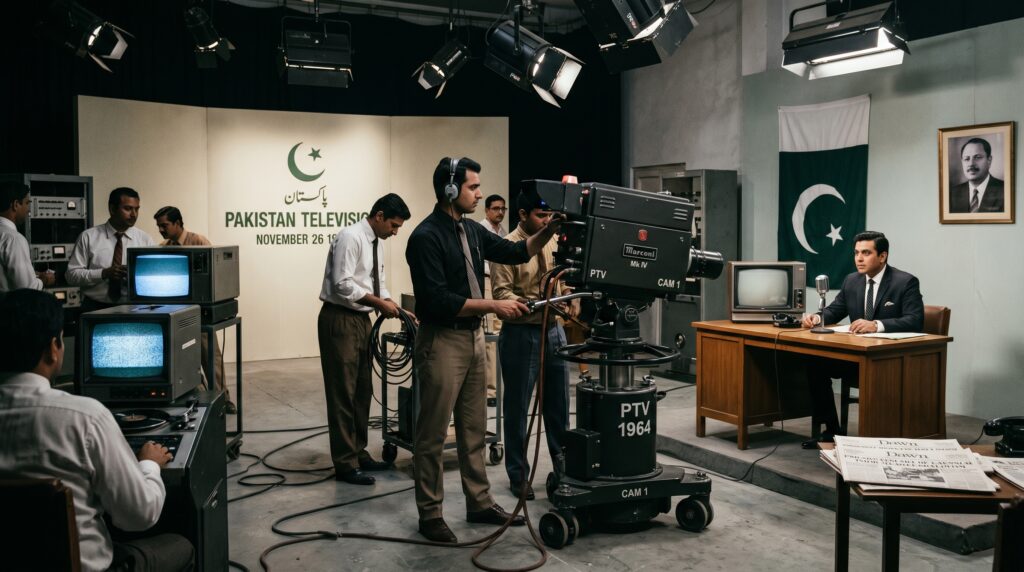
1. Why Was 1964 Important in Pakistan’s History?
1964 was important because Pakistan entered a major presidential election period under Ayub Khan’s system. The year also saw growing political opposition, especially with Fatima Jinnah emerging as a powerful challenger.
2. Who Was the President of Pakistan in 1964?
General Muhammad Ayub Khan was the President of Pakistan in 1964. He continued to rule under the 1962 Constitution and the Basic Democracies system.
3. What Was Pakistan’s Political System in 1964?
Pakistan was governed under a presidential system introduced by the 1962 Constitution. Real political power remained concentrated in the office of the President.
4. What Was the Most Important Political Development of 1964?
The most important political development was the preparation for the presidential election. Ayub Khan faced organized opposition for the first time in a major national contest.
5. Who Was Ayub Khan’s Main Opponent in the 1964 Election Campaign?
Fatima Jinnah became Ayub Khan’s main opponent in the presidential election campaign. She was the sister of Quaid-e-Azam Muhammad Ali Jinnah and became a symbol of democratic opposition.
6. Why Was Fatima Jinnah Important in 1964?
Fatima Jinnah was important because she united opposition parties against Ayub Khan. Her political role gave moral strength to the movement for democracy.
7. What Was Fatima Jinnah Commonly Called?
Fatima Jinnah was commonly called Madar-e-Millat, meaning Mother of the Nation. Her connection with Quaid-e-Azam gave her great respect among the people.
8. Which Opposition Alliance Supported Fatima Jinnah?
Fatima Jinnah was supported by the Combined Opposition Parties. This alliance challenged Ayub Khan’s centralized rule and demanded democratic restoration.
9. What Were the Combined Opposition Parties?
The Combined Opposition Parties were a group of political parties united against Ayub Khan. They supported Fatima Jinnah as their presidential candidate.
10. Why Did Opposition Parties Unite in 1964?
Opposition parties united because they opposed Ayub Khan’s authoritarian style of governance. They wanted more democratic rights, political freedom, and representative government.
11. What Was the Basic Democracies Electoral System?
The Basic Democracies system used elected local representatives as the electoral college. These representatives voted in presidential and legislative elections instead of direct voting by all citizens.
12. Why Was the Basic Democracies System Criticized?
It was criticized because ordinary citizens did not directly vote for the President. Critics argued that the system favored Ayub Khan and limited real democratic choice.
13. Did the People Directly Elect the President in 1964?
No, the President was not directly elected by the entire adult population. The election was conducted through Basic Democrats, who formed the electoral college.
14. What Was Ayub Khan’s Campaign Based On?
Ayub Khan’s campaign emphasized stability, economic development, modernization, and strong leadership. He presented his rule as necessary for national progress.
15. What Was Fatima Jinnah’s Campaign Based On?
Fatima Jinnah’s campaign focused on democracy, constitutional rights, political freedom, and opposition to authoritarian rule. She attracted support from many groups dissatisfied with Ayub Khan.
16. Why Was the 1964 Election Campaign Historically Significant?
It was significant because it gave political opposition a national platform. It also showed that Ayub Khan’s rule faced serious criticism despite economic development claims.
17. What Was the Role of East Pakistan in the 1964 Campaign?
East Pakistan played an important role because many people there were dissatisfied with centralization and economic inequality. Fatima Jinnah gained notable support in parts of East Pakistan.
18. Why Did Many People in East Pakistan Support Fatima Jinnah?
Many East Pakistanis supported her because they wanted greater democracy, provincial rights, and fairer economic treatment. Her campaign reflected their dissatisfaction with central rule.
19. What Were East Pakistan’s Main Concerns in 1964?
East Pakistan’s concerns included economic inequality, limited political autonomy, and centralized decision-making. These issues continued to deepen regional dissatisfaction.
20. What Was the Status of West Pakistan in 1964?
West Pakistan remained the main base of Ayub Khan’s political and administrative power. However, opposition groups also gained support in several urban centers.
21. What Was Pakistan’s Economic Situation in 1964?
Pakistan continued to experience industrial and infrastructure growth under Ayub Khan’s development policies. However, critics argued that benefits were unevenly distributed.
22. What Was the Main Economic Criticism in 1964?
The main criticism was that economic growth benefited certain regions and business groups more than ordinary citizens. Inequality became a growing political issue.
23. What Was the Role of the Second Five-Year Plan in 1964?
The Second Five-Year Plan continued to guide Pakistan’s development priorities. It supported industrial expansion, infrastructure, agriculture, and modernization.
24. What Was Pakistan’s Industrial Condition in 1964?
Pakistan’s industrial sector expanded during Ayub Khan’s rule. Textiles, manufacturing, cement, and other industries contributed to economic growth.
25. What Was Pakistan’s Agricultural Situation in 1964?
Agriculture remained central to Pakistan’s economy. Irrigation, crop production, and modernization of farming continued as government priorities.
26. What Was the Role of Foreign Aid in 1964?
Foreign aid supported Pakistan’s economic and defense programs. The United States and other Western partners provided assistance for development and security.
27. What Was Pakistan’s Relationship With the United States in 1964?
Pakistan maintained close relations with the United States. Military and economic cooperation remained important under Cold War alliances.
28. What Was Pakistan’s Relationship With China in 1964?
Pakistan’s relationship with China was becoming stronger during this period. Regional tensions after the Sino-Indian War helped bring Pakistan and China closer.
29. Why Were Pakistan-China Relations Growing in 1964?
Pakistan and China found common strategic interests, especially due to India’s regional role. Their cooperation later became a key part of Pakistan’s foreign policy.
30. What Was Pakistan’s Relationship With India in 1964?
Relations with India remained tense because of the Kashmir dispute. The political environment in South Asia remained unstable despite earlier agreements like the Indus Waters Treaty.
31. What Was the Status of the Kashmir Dispute in 1964?
The Kashmir dispute remained unresolved. Pakistan continued to call for a plebiscite, while India maintained control over most of Jammu and Kashmir.
32. What Was Pakistan’s Foreign Policy Focus in 1964?
Pakistan focused on Kashmir, relations with the United States, growing ties with China, and regional security. Cold War politics shaped much of its diplomacy.
33. What Was the Role of the Military in 1964?
The military remained influential in politics and governance. Ayub Khan’s rule was closely connected with the military establishment.
34. What Was the Role of Bureaucracy in 1964?
The bureaucracy played a major role in administration and development planning. Civil servants helped implement Ayub Khan’s centralized policies.
35. Were Political Parties Free in 1964?
Political parties were active but faced restrictions. The political system was controlled, and the ruling structure favored Ayub Khan.
36. What Was the Convention Muslim League?
The Convention Muslim League was the pro-Ayub faction of the Muslim League. It supported Ayub Khan’s government and presidential system.
37. What Was the Council Muslim League?
The Council Muslim League was an opposition faction of the Muslim League. It opposed Ayub Khan and supported broader democratic politics.
38. Why Did Muslim League Split During Ayub Khan’s Era?
The Muslim League split due to disagreements over Ayub Khan’s leadership and political system. One faction supported the government, while the other moved toward opposition politics.
39. What Was the Biggest Political Criticism of Ayub Khan in 1964?
The biggest criticism was that his system limited democratic participation. Opponents argued that the Basic Democracies system was controlled and unfair.
40. What Was the Biggest Support Argument for Ayub Khan in 1964?
Supporters argued that Ayub Khan brought stability, economic growth, modernization, and stronger administration. They viewed his rule as necessary after earlier political instability.
41. What Was the Role of Media in the 1964 Election Campaign?
Media was important in shaping public opinion, but it operated under restrictions. Government influence limited the space available for opposition voices.
42. What Was the Social Impact of the Election Campaign?
The campaign increased political awareness among the public. It brought debates about democracy, development, women’s leadership, and authoritarian rule into national discussion.
43. Why Was Fatima Jinnah’s Candidacy Symbolic?
Her candidacy was symbolic because she represented the legacy of Quaid-e-Azam and democratic resistance. Many people saw her as a moral alternative to military-backed rule.
44. What Was the Importance of Women’s Political Participation in 1964?
Fatima Jinnah’s campaign showed that women could play a major role in national politics. Her leadership inspired political participation and debate.
45. What Was the Biggest Political Challenge of 1964?
The biggest political challenge was the growing opposition to Ayub Khan’s centralized rule. The presidential election campaign exposed political divisions across the country.
46. What Was the Biggest Regional Issue in 1964?
The biggest regional issue was dissatisfaction in East Pakistan over political and economic inequality. These concerns continued to shape Pakistan’s future politics.
47. Why Is 1964 Considered an Election Year?
1964 is considered an election year because presidential election campaigning dominated politics. The contest between Ayub Khan and Fatima Jinnah became historically important.
48. How Did 1964 Influence Pakistan’s Future Politics?
The year strengthened opposition politics and exposed limits of Ayub Khan’s popularity. It prepared the ground for stronger political resistance in later years.
49. Why Is 1964 Important for Democratic History?
1964 is important because Fatima Jinnah’s campaign challenged authoritarian rule through a national political movement. It became a key moment in Pakistan’s democratic struggle.
50. What Is the Historical Significance of 1964 for Pakistan?
1964 is historically significant because it marked the rise of organized opposition against Ayub Khan. The presidential campaign of Fatima Jinnah became a landmark event in Pakistan’s political history.
1965
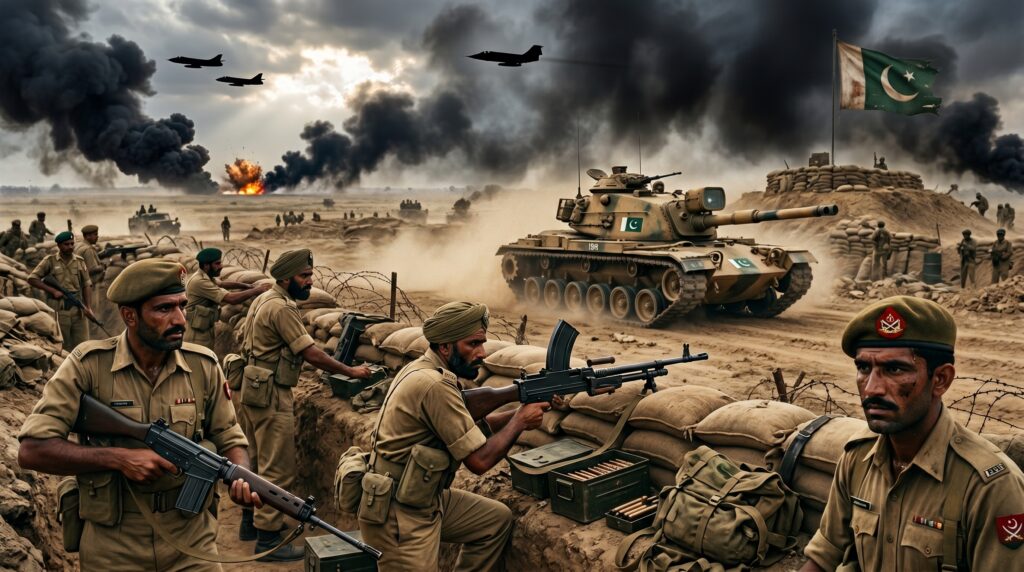
1. Why Was 1965 Important in Pakistan’s History?
1965 was one of the most important years in Pakistan’s history because it witnessed the Second Indo-Pak War. The conflict became a defining moment in Pakistan’s military, political, and national history.
2. Who Was the President of Pakistan in 1965?
Field Marshal Muhammad Ayub Khan was the President of Pakistan in 1965. He led the country during the presidential election and the Indo-Pak War.
3. What Was the Most Important Event of 1965?
The most important event was the Indo-Pak War of 1965. The war brought Pakistan and India into full-scale military conflict.
4. When Was the Presidential Election Held in 1965?
The presidential election was held in January 1965. It was conducted through the Basic Democracies electoral system.
5. Who Contested the Presidential Election Against Ayub Khan?
Fatima Jinnah contested the presidential election against Ayub Khan. She was supported by a coalition of opposition parties.
6. Who Was Fatima Jinnah?
Fatima Jinnah was the sister of Quaid-e-Azam Muhammad Ali Jinnah. She became the leading opposition figure challenging Ayub Khan’s rule.
7. Who Won the Presidential Election of 1965?
Ayub Khan won the presidential election of 1965. However, the opposition questioned the fairness of the electoral process.
8. Why Was the 1965 Presidential Election Controversial?
The election was controversial because it was conducted through Basic Democrats rather than direct voting. Opposition parties alleged misuse of state resources and political influence.
9. What Was the Basic Democracies System?
The Basic Democracies System was a local government structure introduced by Ayub Khan. Its elected representatives formed the electoral college for presidential elections.
10. What Was the Political Impact of the 1965 Election?
The election strengthened opposition movements and increased criticism of Ayub Khan’s government. It exposed growing dissatisfaction with centralized rule.
11. What Was Operation Gibraltar?
Operation Gibraltar was a military operation launched by Pakistan in Kashmir during 1965. Its objective was to encourage resistance against Indian administration in Kashmir.
12. Why Was Operation Gibraltar Important?
Operation Gibraltar was important because it became one of the major events leading to the Indo-Pak War of 1965. The operation significantly increased tensions between the two countries.
13. What Was Operation Grand Slam?
Operation Grand Slam was a military operation launched by Pakistan in September 1965. It targeted the Akhnoor sector in Indian-administered Kashmir.
14. Why Was Akhnoor Strategically Important?
Akhnoor was considered strategically important because it served as a communication route for Indian military forces in Kashmir. Control of the area could affect military operations.
15. When Did the Indo-Pak War of 1965 Begin?
The full-scale war began in September 1965. Fighting expanded beyond Kashmir and reached several sectors along the international border.
16. Why Did the 1965 War Start?
The war developed from escalating tensions in Kashmir and military operations conducted by both countries. The conflict eventually expanded into a conventional war.
17. Which Countries Were Involved in the 1965 War?
The war was fought between Pakistan and India. It became one of the largest military conflicts in South Asia after independence.
18. What Was the Lahore Front in the 1965 War?
The Lahore Front became one of the most important battle areas of the war. Indian forces advanced toward Lahore while Pakistani forces defended the city.
19. Why Is the Defense of Lahore Remembered?
The defense of Lahore is remembered because Pakistani forces successfully resisted Indian advances. The city became a symbol of national resistance.
20. What Was the Battle of Burki?
The Battle of Burki was one of the major engagements fought near Lahore. It was an important confrontation during the defense of the Lahore sector.
21. What Was the Battle of Chawinda?
The Battle of Chawinda was one of the largest tank battles fought after World War II. It took place in the Sialkot sector during the 1965 war.
22. Why Is the Battle of Chawinda Important?
The battle is important because it stopped major advances and became a significant military engagement in the war. It remains one of the most discussed battles in Pakistan’s military history.
23. What Role Did the Pakistan Air Force Play in 1965?
The Pakistan Air Force played a crucial role during the war. It conducted defensive and offensive operations and earned significant recognition for its performance.
24. Who Was Air Marshal Nur Khan?
Air Marshal Nur Khan was the Commander-in-Chief of the Pakistan Air Force during the war. He is widely respected for his leadership and strategic planning.
25. Who Was MM Alam?
Muhammad Mahmood Alam was a Pakistan Air Force fighter pilot. He became famous for his aerial achievements during the 1965 war.
26. Why Is MM Alam Remembered in Pakistan?
MM Alam is remembered for his combat performance and bravery during aerial engagements. He became one of Pakistan’s most celebrated war heroes.
27. What Role Did the Pakistan Navy Play in 1965?
The Pakistan Navy played a supporting role in the conflict. It remained prepared for maritime operations and defense responsibilities.
28. What Was Pakistan’s Public Response to the War?
The public strongly supported the armed forces during the war. National unity and patriotic sentiment increased throughout the country.
29. What Was Radio Pakistan’s Role During the War?
Radio Pakistan played an important role in informing the public and boosting national morale. It became a major source of wartime information.
30. Why Is Noor Jehan Associated With the 1965 War?
Noor Jehan sang patriotic songs that inspired soldiers and civilians. Her contributions became a memorable part of Pakistan’s wartime culture.
31. What Was the Significance of Patriotic Songs in 1965?
Patriotic songs strengthened national morale and unity. They became an important symbol of public support for the armed forces.
32. What Was Pakistan’s Relationship With China During the War?
China provided diplomatic support to Pakistan during the conflict. This period contributed to the strengthening of Pakistan-China relations.
33. What Was Pakistan’s Relationship With the United States During the War?
Pakistan was disappointed by restrictions on military supplies during the conflict. The war affected expectations regarding Western alliances.
34. What Was the Role of the United Nations in the 1965 War?
The United Nations called for a ceasefire and diplomatic resolution. International pressure helped bring active fighting to an end.
35. When Did the Ceasefire Take Effect?
A UN-sponsored ceasefire came into effect on 23 September 1965. This officially ended large-scale military operations.
36. Did Either Side Achieve a Decisive Military Victory?
Neither Pakistan nor India achieved a decisive military victory. Both countries claimed success while maintaining different interpretations of the war’s outcome.
37. How Did the War Affect Pakistan’s Economy?
The war increased defense spending and created economic challenges. Development priorities were affected by military expenditures.
38. What Was the Impact of the War on Ayub Khan’s Government?
Initially, Ayub Khan’s popularity increased due to wartime leadership. However, political criticism and dissatisfaction grew in the years that followed.
39. What Was the Situation in East Pakistan During the War?
East Pakistan remained vulnerable because most military operations occurred in West Pakistan. This raised concerns about defense and security arrangements.
40. Why Did East Pakistanis Feel Concerned During the War?
Many people in East Pakistan believed that the region was inadequately protected. This perception contributed to future political grievances.
41. What Was the Biggest Political Issue of 1965 Besides the War?
The presidential election and the challenge from Fatima Jinnah were major political issues. They highlighted growing opposition to Ayub Khan’s rule.
42. What Was Pakistan’s Main Foreign Policy Concern in 1965?
The Kashmir dispute remained Pakistan’s primary foreign policy concern. It was closely linked to the outbreak of war.
43. How Did the 1965 War Affect Pakistan-India Relations?
The war deepened hostility between the two countries. Trust declined further, making future negotiations more difficult.
44. What Was the Role of the Military in Pakistani Society After the War?
The military gained greater prestige and public recognition after the war. Military achievements became an important part of national identity.
45. What Was the Biggest Military Achievement Claimed by Pakistan in 1965?
Pakistan highlighted its defense of Lahore, the performance of its air force, and resistance in key battle sectors as major achievements.
46. What Was the Biggest Social Impact of the War?
The war created a strong sense of national unity and patriotism. Citizens across the country participated in supporting the war effort.
47. Why Is September 1965 Important in Pakistan’s History?
September 1965 marks the period of the Indo-Pak War. It is remembered for military operations, national mobilization, and patriotic unity.
48. How Did the 1965 War Influence Pakistan’s Future Politics?
The war shaped defense policies, foreign relations, and political debates. It also influenced public perceptions of leadership and national security.
49. Why Is 1965 Considered a Landmark Year?
1965 is considered a landmark year because it combined a major presidential election with a full-scale war against India. Both events had long-term consequences for Pakistan.
50. What Is the Historical Significance of 1965 for Pakistan?
1965 is historically significant because it was the year of the Second Indo-Pak War, the Ayub Khan–Fatima Jinnah election contest, and a major test of Pakistan’s military and political institutions.
1966
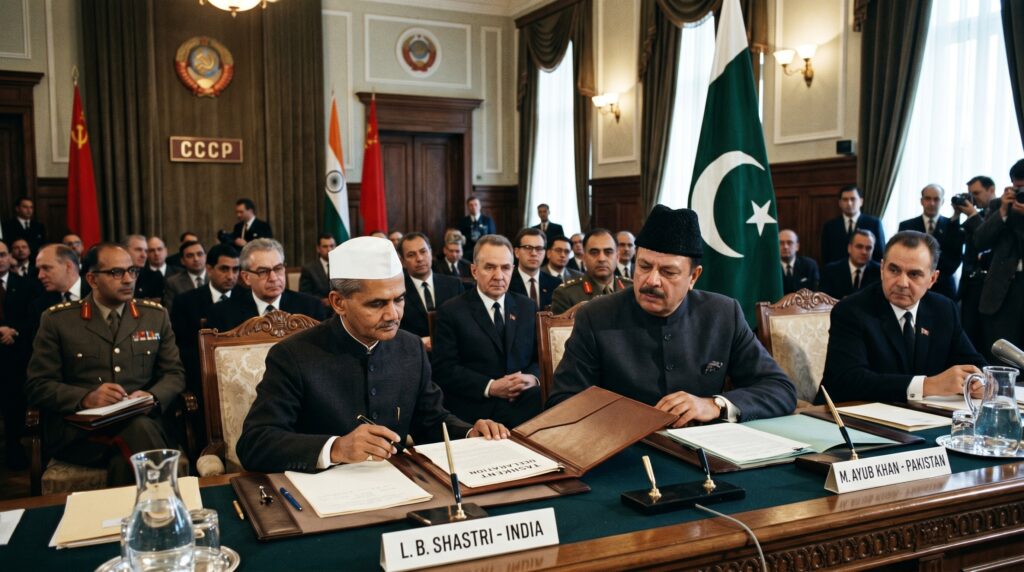
1. Why Was 1966 Important in Pakistan’s History?
1966 was important because it was the year of the Tashkent Agreement and the emergence of Sheikh Mujibur Rahman’s Six Points. Both events had a major impact on Pakistan’s future political development.
2. Who Was the President of Pakistan in 1966?
Field Marshal Muhammad Ayub Khan was the President of Pakistan in 1966. He remained the most powerful political figure in the country.
3. What Was the Most Important Event of 1966?
The most important event was the signing of the Tashkent Agreement between Pakistan and India after the 1965 war.
4. What Was the Tashkent Agreement?
The Tashkent Agreement was a peace accord signed between Pakistan and India. It aimed to restore normal relations after the Indo-Pak War of 1965.
5. When Was the Tashkent Agreement Signed?
The Tashkent Agreement was signed on 10 January 1966. It officially ended the diplomatic consequences of the 1965 war.
6. Where Was the Tashkent Agreement Signed?
The agreement was signed in Tashkent, which was then part of the Soviet Union. Today, Tashkent is the capital of Uzbekistan.
7. Who Signed the Tashkent Agreement?
President Ayub Khan signed the agreement on behalf of Pakistan, while Prime Minister Lal Bahadur Shastri signed it on behalf of India.
8. Who Mediated the Tashkent Agreement?
The Soviet Union acted as the mediator. Soviet Premier Alexei Kosygin played a key role in bringing both sides together.
9. Why Was the Tashkent Agreement Important?
The agreement ended active hostilities and restored diplomatic relations. It also demonstrated the role of international mediation in South Asian conflicts.
10. What Were the Main Terms of the Tashkent Agreement?
Both countries agreed to withdraw forces to pre-war positions and restore diplomatic relations. They also committed to resolving disputes through peaceful means.
11. How Did Pakistanis React to the Tashkent Agreement?
Many Pakistanis were disappointed because they believed military gains had been surrendered without achieving a Kashmir settlement.
12. Why Did the Tashkent Agreement Become Controversial?
The agreement became controversial because many people expected a stronger Pakistani position on Kashmir. Critics believed Pakistan did not gain enough from the negotiations.
13. What Role Did Zulfikar Ali Bhutto Play in 1966?
Zulfikar Ali Bhutto was Pakistan’s Foreign Minister and emerged as a major political figure. He criticized aspects of the Tashkent Agreement and gained popularity among the public.
14. Why Did Bhutto Oppose the Tashkent Agreement?
Bhutto argued that Pakistan had missed an opportunity to secure progress on Kashmir. His criticism increased his political influence.
15. How Did the Tashkent Agreement Affect Ayub Khan’s Popularity?
The agreement reduced Ayub Khan’s popularity among some segments of society. Many people viewed it as a diplomatic disappointment.
16. Who Was Lal Bahadur Shastri?
Lal Bahadur Shastri was the Prime Minister of India during the 1965 war. He signed the Tashkent Agreement with Ayub Khan.
17. What Happened to Lal Bahadur Shastri After the Agreement?
Lal Bahadur Shastri died in Tashkent shortly after signing the agreement. His sudden death attracted international attention.
18. What Was the Biggest Political Development in East Pakistan During 1966?
The biggest political development was the presentation of Sheikh Mujibur Rahman’s Six-Point Program.
19. Who Was Sheikh Mujibur Rahman?
Sheikh Mujibur Rahman was the leader of the Awami League. He later became the central figure in the movement for East Pakistan’s autonomy.
20. What Were the Six Points?
The Six Points were political demands presented by Sheikh Mujibur Rahman. They called for greater autonomy for East Pakistan within a federal structure.
21. When Were the Six Points Presented?
The Six Points were formally presented in February 1966. They quickly became the foundation of East Pakistan’s political movement.
22. Why Were the Six Points Important?
The Six Points became the most influential political program in East Pakistan. They highlighted demands for autonomy and constitutional reform.
23. What Was the Main Objective of the Six Points?
The main objective was to grant East Pakistan greater control over its political and economic affairs while remaining part of Pakistan.
24. Why Did West Pakistani Leaders Oppose the Six Points?
Many leaders believed the Six Points would weaken the central government and threaten national unity.
25. How Did the Six Points Affect Pakistani Politics?
The Six Points increased political tensions between East and West Pakistan. They became a major issue in national politics.
26. What Was the Status of East Pakistan in 1966?
East Pakistan continued to feel politically and economically disadvantaged. Demands for greater autonomy became stronger.
27. What Were East Pakistan’s Main Complaints in 1966?
The main complaints involved political representation, economic inequality, and centralized decision-making in West Pakistan.
28. What Was Pakistan’s Political Situation in 1966?
Pakistan experienced increasing political opposition. Criticism of Ayub Khan grew after the Tashkent Agreement and the rise of the Six Points movement.
29. What Was the Role of the Awami League in 1966?
The Awami League became the leading political force advocating East Pakistani rights. The party strongly supported the Six Points.
30. What Was Pakistan’s Economic Condition in 1966?
Pakistan continued to experience economic growth. However, debates about unequal distribution of wealth became more common.
31. Why Was Economic Inequality a Political Issue in 1966?
Many people in East Pakistan believed that economic growth mainly benefited West Pakistan. This perception increased regional dissatisfaction.
32. What Was the Status of the Second Five-Year Plan in 1966?
The Second Five-Year Plan was nearing completion. It was often cited as a period of economic growth under Ayub Khan.
33. What Was Pakistan’s Industrial Situation in 1966?
Industrial production continued to expand. Major industries included textiles, cement, fertilizers, and manufacturing.
34. What Was Pakistan’s Agricultural Situation in 1966?
Agriculture remained important, but modernization efforts were expanding. New technologies and irrigation improvements were increasingly emphasized.
35. What Was the Green Revolution?
The Green Revolution referred to agricultural modernization through improved seeds, fertilizers, and irrigation methods. Pakistan began benefiting from these developments during the 1960s.
36. Why Was the Green Revolution Important?
It increased agricultural productivity and food production. It also helped improve rural economic performance.
37. What Was Pakistan’s Relationship With China in 1966?
Pakistan continued strengthening relations with China. Strategic cooperation between the two countries became increasingly important.
38. What Was Pakistan’s Relationship With the United States in 1966?
Relations with the United States remained important but became more complicated after the 1965 war. Pakistan began diversifying its foreign policy partnerships.
39. What Was Pakistan’s Foreign Policy Focus in 1966?
Pakistan focused on Kashmir, regional security, relations with China, and maintaining international support after the 1965 war.
40. What Was the Status of the Kashmir Dispute in 1966?
The Kashmir dispute remained unresolved. Pakistan continued to advocate for a plebiscite and international attention to the issue.
41. What Was the Role of the Military in 1966?
The military remained influential in national politics. Ayub Khan’s government continued to rely on military-backed authority.
42. What Was the Role of Bureaucracy in 1966?
The bureaucracy remained powerful and worked closely with the executive branch. Administrative institutions continued to support centralized governance.
43. What Was the Biggest Political Challenge for Ayub Khan in 1966?
The biggest challenge was growing opposition from both East and West Pakistan. Criticism intensified after the Tashkent Agreement.
44. Why Did Ayub Khan Face Increasing Opposition?
Many people were dissatisfied with centralized rule, political restrictions, and regional inequalities. Opposition leaders became more vocal.
45. What Was the Biggest Regional Issue in 1966?
The biggest regional issue was East Pakistan’s demand for greater autonomy through the Six Points.
46. How Did 1966 Influence East-West Relations?
The Six Points deepened political divisions between East and West Pakistan. They highlighted growing disagreements over the future structure of the state.
47. Why Is 1966 Considered a Turning Point?
1966 is considered a turning point because it marked the rise of the autonomy movement in East Pakistan and the decline of Ayub Khan’s political dominance.
48. What Was the Long-Term Impact of the Six Points?
The Six Points later became the foundation of East Pakistan’s political struggle. They played a major role in events leading to 1971.
49. What Was the Long-Term Impact of the Tashkent Agreement?
The agreement weakened Ayub Khan politically and contributed to the rise of opposition leaders such as Zulfikar Ali Bhutto.
50. What Is the Historical Significance of 1966 for Pakistan?
1966 is historically significant because it combined the aftermath of the 1965 war, the Tashkent Agreement, and the launch of the Six-Point Movement. These developments reshaped Pakistan’s political future and laid the groundwork for major events in the following years.
1967
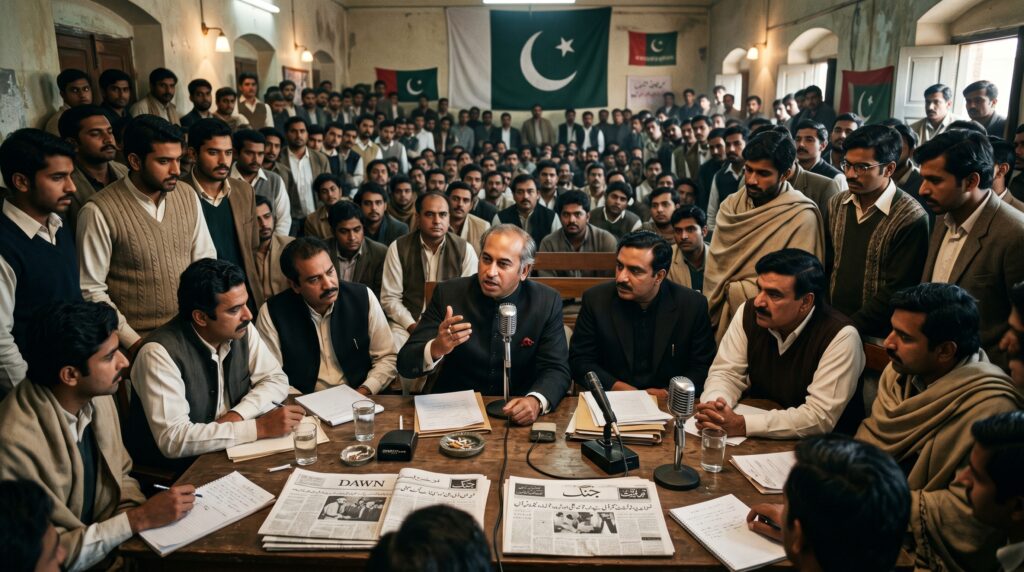
1. Why Was 1967 Important in Pakistan’s History?
1967 was important because opposition politics gained strength against Ayub Khan’s government. It was also the year when Zulfikar Ali Bhutto founded the Pakistan Peoples Party (PPP), which later became one of Pakistan’s most influential political parties.
2. Who Was the President of Pakistan in 1967?
Field Marshal Muhammad Ayub Khan was the President of Pakistan in 1967. He continued to govern under the 1962 Constitution and the Basic Democracies system.
3. What Was the Most Important Political Event of 1967?
The most important political event was the formation of the Pakistan Peoples Party (PPP). The party would later play a major role in shaping Pakistan’s political future.
4. Who Founded the Pakistan Peoples Party?
The Pakistan Peoples Party was founded by Zulfikar Ali Bhutto. He emerged as one of the most influential opposition leaders of the era.
5. When Was the Pakistan Peoples Party Founded?
The Pakistan Peoples Party was founded on 30 November 1967. The party was established at a political convention in Lahore.
6. Where Was the Pakistan Peoples Party Founded?
The party was founded in Lahore. The meeting brought together intellectuals, political activists, and opposition leaders.
7. Why Was the Pakistan Peoples Party Created?
The party was created to challenge Ayub Khan’s government and promote democratic reforms. It also sought to address social and economic inequalities.
8. What Was the Slogan of the Pakistan Peoples Party?
One of the most famous slogans associated with the PPP was “Islam is our faith, democracy is our politics, socialism is our economy, and all power to the people.”
9. Why Did Zulfikar Ali Bhutto Become Popular in 1967?
Bhutto became popular because of his criticism of the Tashkent Agreement and Ayub Khan’s policies. Many people saw him as a strong nationalist leader.
10. What Was Bhutto’s Position Before Becoming an Opposition Leader?
Before becoming an opposition leader, Bhutto served as Pakistan’s Foreign Minister. He resigned after disagreements with Ayub Khan.
11. Why Did Bhutto Leave Ayub Khan’s Government?
Bhutto disagreed with Ayub Khan over the Tashkent Agreement and foreign policy issues. These differences eventually led to his resignation.
12. How Did the Tashkent Agreement Continue to Affect Politics in 1967?
The agreement remained controversial and was often used by opposition leaders to criticize Ayub Khan. It continued to influence public opinion.
13. What Was Pakistan’s Political Situation in 1967?
Political opposition was growing across the country. Ayub Khan’s popularity was declining, while new opposition movements were becoming stronger.
14. What Was the Main Challenge Facing Ayub Khan in 1967?
The main challenge was increasing opposition from political parties, students, labor groups, and regional movements.
15. What Was the Status of East Pakistan in 1967?
East Pakistan continued to demand greater political and economic rights. Support for Sheikh Mujibur Rahman and the Six-Point Program increased.
16. Who Was Sheikh Mujibur Rahman?
Sheikh Mujibur Rahman was the leader of the Awami League and the main advocate of East Pakistan’s autonomy movement.
17. What Were the Six Points in 1967?
The Six Points were constitutional demands seeking greater autonomy for East Pakistan. They remained the central political program of the Awami League.
18. Why Did the Six Points Remain Important in 1967?
The Six Points represented East Pakistan’s demands for self-government and economic control. They became increasingly popular among Bengalis.
19. How Did Ayub Khan View the Six Points?
Ayub Khan viewed the Six Points as a threat to national unity. His government opposed the movement and its demands.
20. What Was the Role of the Awami League in 1967?
The Awami League became the leading political force in East Pakistan. It mobilized public support around autonomy and constitutional reform.
21. What Was Pakistan’s Economic Situation in 1967?
Pakistan continued to experience economic growth, but concerns about inequality became more prominent. Critics argued that wealth was concentrated among a small group.
22. What Was the “22 Families” Debate?
Critics claimed that much of Pakistan’s wealth was controlled by a small number of powerful business families. This issue became a symbol of economic inequality.
23. Why Did Economic Inequality Become a Political Issue?
Many people believed that economic growth was benefiting only a limited elite. Opposition parties used this issue to criticize the government.
24. What Was Pakistan’s Industrial Situation in 1967?
Industrial development continued under Ayub Khan’s policies. However, debates about unequal distribution of industrial benefits increased.
25. What Was Pakistan’s Agricultural Situation in 1967?
Agriculture benefited from modernization efforts and the Green Revolution. Improved seeds, fertilizers, and irrigation increased production.
26. What Was the Green Revolution?
The Green Revolution involved modern farming methods and technologies. It significantly increased agricultural productivity in Pakistan.
27. Why Was the Green Revolution Important?
It helped increase food production and improve agricultural output. The policy supported economic growth during the 1960s.
28. What Was Pakistan’s Relationship With China in 1967?
Relations with China continued to strengthen. Pakistan increasingly viewed China as an important strategic partner.
29. Why Were Pakistan-China Relations Growing?
Both countries shared strategic interests and concerns regarding regional security. Their cooperation expanded in diplomatic and defense areas.
30. What Was Pakistan’s Relationship With the United States in 1967?
Pakistan maintained relations with the United States but was becoming less dependent on Western support than before.
31. What Was Pakistan’s Foreign Policy Focus in 1967?
Pakistan focused on Kashmir, relations with China, regional security, and maintaining international diplomatic support.
32. What Was the Status of the Kashmir Dispute in 1967?
The Kashmir dispute remained unresolved. Pakistan continued advocating for a plebiscite and international attention to the issue.
33. What Was the Role of Students in 1967 Politics?
Students became increasingly active in political movements. They played an important role in criticizing the government and demanding reforms.
34. Why Did Student Movements Become Important?
Students were dissatisfied with political restrictions and economic inequalities. Their activism later contributed to nationwide protests.
35. What Was the Role of Labor Unions in 1967?
Labor unions became more active in demanding better wages and working conditions. Many workers supported opposition movements.
36. What Was the Biggest Social Issue in 1967?
Economic inequality and political dissatisfaction were major social issues. Public frustration was growing in both East and West Pakistan.
37. What Was the Role of the Military in 1967?
The military remained influential in governance. Ayub Khan’s authority was closely connected to military support.
38. What Was the Role of Bureaucracy in 1967?
The bureaucracy continued to play a central role in administration and policy implementation. It remained a key pillar of Ayub Khan’s system.
39. Were Political Parties Free in 1967?
Political parties operated under restrictions, but opposition activity increased. New political movements became more visible.
40. What Was the Biggest Political Criticism of Ayub Khan in 1967?
Critics argued that Ayub Khan’s system limited democracy and concentrated power in the presidency. They also criticized economic inequality.
41. What Was the Biggest Support Argument for Ayub Khan?
Supporters highlighted economic growth, modernization, and political stability. They argued that strong leadership was necessary for development.
42. What Was the Importance of Lahore in 1967?
Lahore became a major center of opposition politics. The founding of the PPP there increased its political significance.
43. Why Is 1967 Important for Pakistani Democracy?
The year marked the rise of organized opposition movements. Political leaders began openly challenging Ayub Khan’s authority.
44. What Was the Importance of Bhutto’s Political Rise?
Bhutto’s rise introduced a powerful new political force into Pakistan. His leadership reshaped opposition politics.
45. How Did 1967 Affect East-West Pakistan Relations?
Political tensions continued to increase due to disagreements over autonomy, representation, and economic policies.
46. What Was the Biggest Regional Issue in 1967?
The biggest regional issue was East Pakistan’s demand for greater autonomy through the Six-Point Program.
47. Why Is 1967 Considered a Turning Point?
1967 marked the emergence of strong opposition leaders and movements. It signaled the beginning of serious political challenges to Ayub Khan.
48. How Did 1967 Influence Future Political Events?
The developments of 1967 helped lay the groundwork for the mass protests of 1968–69 and the political transformations that followed.
49. What Was the Long-Term Impact of the PPP’s Formation?
The PPP became one of Pakistan’s largest political parties. It later formed governments and played a major role in national politics.
50. What Is the Historical Significance of 1967 for Pakistan?
1967 is historically significant because it witnessed the birth of the Pakistan Peoples Party, the rise of Zulfikar Ali Bhutto as a major opposition leader, and the continued growth of political movements challenging Ayub Khan’s rule.
1968
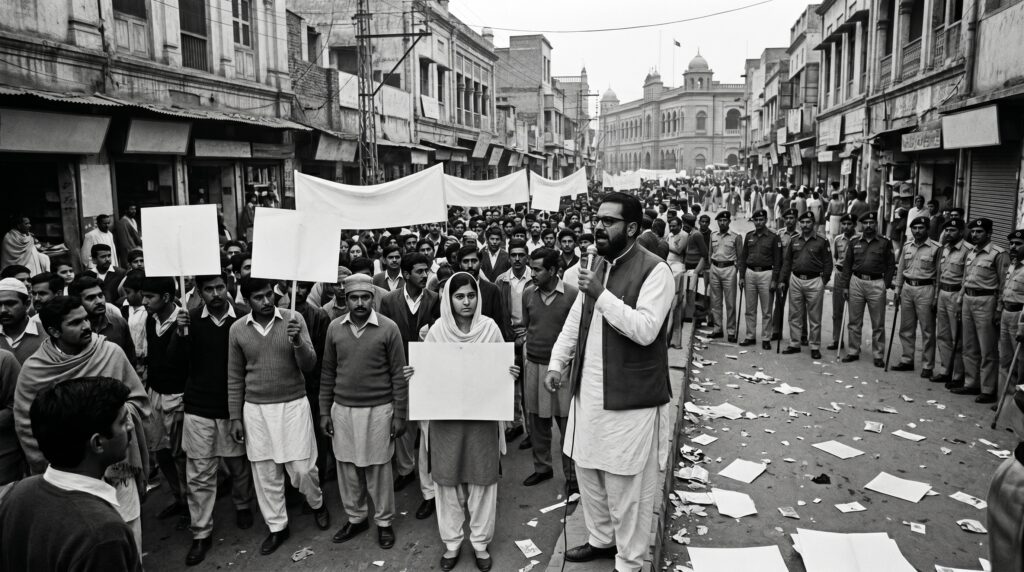
1. Why Was 1968 Important in Pakistan’s History?
1968 was important because it marked the beginning of a nationwide protest movement against Ayub Khan’s government. The year is often considered the start of the political crisis that eventually ended Ayub Khan’s rule.
2. Who Was the President of Pakistan in 1968?
Field Marshal Muhammad Ayub Khan was the President of Pakistan in 1968. He had been ruling Pakistan since 1958 and was facing increasing opposition.
3. What Was the Most Important Political Event of 1968?
The most important political event was the nationwide anti-Ayub movement. Students, workers, opposition parties, and ordinary citizens participated in protests against the government.
4. Why Did Protests Begin Against Ayub Khan in 1968?
The protests began because many people were dissatisfied with political restrictions, economic inequality, and centralized rule. Opposition leaders used these issues to mobilize public support.
5. What Was the Main Demand of the Protest Movement?
The main demand was the restoration of democracy and an end to Ayub Khan’s authoritarian rule. Protesters also demanded political reforms and fair elections.
6. Which Groups Participated in the Anti-Ayub Movement?
Students, labor unions, political parties, lawyers, and civil society groups participated in the movement. The protests spread across both East and West Pakistan.
7. Why Were Students Important in the 1968 Movement?
Students played a leading role in organizing demonstrations and rallies. Their activism helped turn local protests into a nationwide movement.
8. What Role Did Labor Unions Play in 1968?
Labor unions organized strikes and demonstrations against the government. Workers demanded better wages, improved conditions, and political reforms.
9. Why Did Workers Join the Protest Movement?
Workers believed that economic growth had mainly benefited wealthy elites. Many were dissatisfied with wage levels and social inequality.
10. What Was the “Decade of Development” Celebration?
The government celebrated 1968 as the completion of Ayub Khan’s “Decade of Development.” It highlighted economic achievements made during his ten years in power.
11. Why Was the “Decade of Development” Criticized?
Opposition leaders argued that development benefits were not shared equally. They claimed that wealth was concentrated among a small group of influential families.
12. What Was the “22 Families” Controversy?
The controversy referred to claims that a small number of business families controlled much of Pakistan’s economy. It became a symbol of economic inequality.
13. Who Raised the Issue of the “22 Families”?
Economists, journalists, and opposition politicians highlighted the issue. It became an effective criticism of Ayub Khan’s economic policies.
14. What Was Pakistan’s Economic Situation in 1968?
Pakistan continued to experience economic growth. However, concerns about inequality and uneven distribution of wealth became increasingly important.
15. Why Did Economic Growth Become a Political Issue?
Many people believed that economic gains mainly benefited industrialists and wealthy elites. This perception increased support for opposition movements.
16. What Was the Role of Zulfikar Ali Bhutto in 1968?
Zulfikar Ali Bhutto emerged as one of the most popular opposition leaders. His speeches and political campaigns attracted large crowds across Pakistan.
17. Why Was Bhutto Popular Among the Public?
Bhutto criticized Ayub Khan’s government and promised democratic reforms. His strong nationalist message appealed to many Pakistanis.
18. What Was the Role of the Pakistan Peoples Party in 1968?
The Pakistan Peoples Party became a major opposition force. It organized rallies and supported the movement against Ayub Khan’s rule.
19. What Was the Main Slogan of Bhutto’s Politics?
Bhutto promoted democracy, social justice, and greater public participation in government. His message resonated with students and workers.
20. What Was the Role of Sheikh Mujibur Rahman in 1968?
Sheikh Mujibur Rahman continued leading the Awami League and advocating the Six-Point Program. He became the most important political leader in East Pakistan.
21. What Was the Six-Point Program?
The Six-Point Program called for greater autonomy for East Pakistan. It remained the central demand of the Awami League.
22. Why Did the Six Points Remain Important in 1968?
The Six Points reflected East Pakistan’s demands for political and economic rights. Support for the program continued to grow.
23. What Was the Agartala Conspiracy Case?
The Agartala Conspiracy Case was a case filed by the government against Sheikh Mujibur Rahman and others. They were accused of conspiring against Pakistan with Indian support.
24. Why Was the Agartala Conspiracy Case Important?
The case became highly controversial and increased support for Sheikh Mujibur Rahman. Many people believed the charges were politically motivated.
25. When Was the Agartala Conspiracy Case Publicized?
The case gained major attention during 1968. It became one of the most discussed political issues in East Pakistan.
26. How Did East Pakistan React to the Agartala Case?
Many people in East Pakistan viewed the case as an attack on their political leadership. Public support for Mujib increased significantly.
27. What Was the Political Situation in East Pakistan in 1968?
Political dissatisfaction was growing rapidly. Many Bengalis demanded autonomy and greater representation in national affairs.
28. Why Was East Pakistan Dissatisfied?
People in East Pakistan believed they faced economic discrimination and limited political power. These concerns fueled support for autonomy movements.
29. What Was Pakistan’s Foreign Policy Focus in 1968?
Pakistan focused on Kashmir, relations with China, the United States, and regional security issues.
30. What Was Pakistan’s Relationship With China in 1968?
Relations with China remained strong and continued to expand. China was becoming one of Pakistan’s closest strategic partners.
31. What Was Pakistan’s Relationship With the United States in 1968?
Relations remained important but were not as strong as before. Pakistan increasingly diversified its foreign policy partnerships.
32. What Was the Status of the Kashmir Dispute in 1968?
The Kashmir dispute remained unresolved. Pakistan continued advocating for international attention to the issue.
33. What Was Pakistan’s Relationship With India in 1968?
Relations with India remained tense after the 1965 war. The Kashmir dispute continued to dominate bilateral relations.
34. What Was the Role of the Military in 1968?
The military remained a powerful institution in Pakistan. Ayub Khan’s government continued to rely on military support.
35. What Was the Role of Bureaucracy in 1968?
The bureaucracy remained influential in governance and administration. However, public criticism of centralized rule was increasing.
36. What Was the Main Political Criticism of Ayub Khan?
Critics argued that Ayub Khan had weakened democracy and concentrated power in the presidency. They also criticized economic inequality.
37. What Was the Main Support Argument for Ayub Khan?
Supporters pointed to economic growth, modernization, and infrastructure development. They argued that strong leadership had brought stability.
38. What Was the Role of the Media in 1968?
Media coverage helped spread awareness of political events and protests. Newspapers became important platforms for public debate.
39. Were Political Parties Active in 1968?
Yes, opposition political parties became increasingly active. They coordinated efforts to challenge Ayub Khan’s government.
40. What Was the Biggest Social Issue in 1968?
The biggest social issue was dissatisfaction with inequality and lack of political freedom. Many groups demanded reforms and greater participation.
41. What Was the Biggest Economic Issue in 1968?
Economic inequality became the most debated issue. The benefits of growth were seen as unevenly distributed.
42. What Was the Biggest Political Challenge for Ayub Khan?
The biggest challenge was the growing nationwide opposition movement. Protests continued to expand throughout the year.
43. How Did the Protest Movement Affect Ayub Khan’s Authority?
The movement weakened Ayub Khan’s political authority. His government increasingly struggled to maintain public support.
44. What Was the Importance of Student Demonstrations in 1968?
Student demonstrations energized the opposition movement. They helped spread protests to different cities and regions.
45. What Was the Importance of Labor Strikes in 1968?
Labor strikes increased pressure on the government and demonstrated widespread dissatisfaction among workers.
46. Why Is 1968 Considered the Beginning of Ayub Khan’s Decline?
The nationwide protest movement significantly weakened Ayub Khan’s position. His authority was challenged more seriously than ever before.
47. How Did 1968 Affect East-West Pakistan Relations?
Political divisions between East and West Pakistan became more visible. Autonomy demands in East Pakistan gained additional support.
48. What Was the Long-Term Impact of the Agartala Conspiracy Case?
The case increased Sheikh Mujibur Rahman’s popularity and strengthened the Awami League’s political position.
49. How Did 1968 Influence Pakistan’s Future Politics?
The events of 1968 prepared the ground for the political changes of 1969, including Ayub Khan’s resignation and the rise of new political leaders.
50. What Is the Historical Significance of 1968 for Pakistan?
1968 is historically significant because it marked the beginning of the mass movement that ended Ayub Khan’s rule. The year transformed Pakistan’s political landscape and accelerated demands for democracy and regional autonomy.
1969
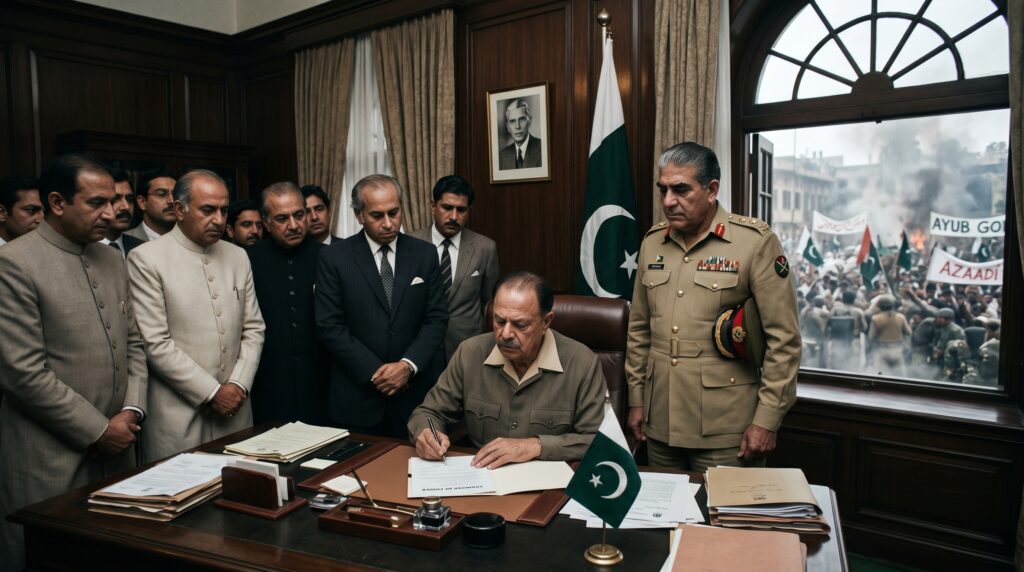
1. Why Was 1969 Important in Pakistan’s History?
1969 was important because it marked the end of Ayub Khan’s rule and the beginning of General Yahya Khan’s government. The year represented a major political transition in Pakistan.
2. Who Was the President of Pakistan at the Start of 1969?
Field Marshal Muhammad Ayub Khan was the President of Pakistan at the beginning of 1969. However, growing protests and political unrest weakened his authority.
3. What Was the Most Important Political Event of 1969?
The most important political event was Ayub Khan’s resignation and the transfer of power to General Yahya Khan.
4. Why Did Ayub Khan Face a Political Crisis in 1969?
Ayub Khan faced a political crisis because of nationwide protests, economic inequality, demands for democracy, and growing opposition in both East and West Pakistan.
5. What Was the Anti-Ayub Movement?
The Anti-Ayub Movement was a nationwide protest campaign against Ayub Khan’s government. Students, workers, lawyers, and political parties participated in the movement.
6. Why Were Students Important in the 1969 Movement?
Students organized demonstrations and protests across the country. They played a major role in mobilizing public opposition.
7. What Role Did Workers Play in the 1969 Movement?
Workers organized strikes and demonstrations demanding economic reforms and political change. Their participation increased pressure on the government.
8. What Was the Main Demand of the Protesters?
The main demand was the restoration of democracy and an end to Ayub Khan’s centralized rule.
9. What Was the Round Table Conference of 1969?
The Round Table Conference was a meeting organized by Ayub Khan to discuss political reforms with opposition leaders. It was an attempt to resolve the political crisis.
10. When Was the Round Table Conference Held?
The Round Table Conference was held in early 1969 amid increasing political unrest throughout the country.
11. Why Was the Round Table Conference Important?
It brought together major political leaders from East and West Pakistan. However, it failed to solve the growing political crisis.
12. Who Participated in the Round Table Conference?
Major opposition leaders, including Zulfikar Ali Bhutto and Sheikh Mujibur Rahman, were among the prominent figures involved in political negotiations.
13. Why Did the Round Table Conference Fail?
The conference failed because the government and opposition could not agree on constitutional reforms and political power-sharing.
14. What Happened to the Agartala Conspiracy Case in 1969?
The Agartala Conspiracy Case was withdrawn in 1969. The government released Sheikh Mujibur Rahman and other accused individuals.
15. Why Was the Withdrawal of the Agartala Case Important?
The withdrawal increased Sheikh Mujibur Rahman’s popularity and strengthened the Awami League’s political position in East Pakistan.
16. What Title Did Sheikh Mujibur Rahman Receive in 1969?
Sheikh Mujibur Rahman received the title “Bangabandhu,” meaning “Friend of Bengal.” The title reflected his growing popularity among Bengalis.
17. Why Did Sheikh Mujibur Rahman Become More Popular in 1969?
Many people viewed him as a symbol of Bengali rights and autonomy. The withdrawal of the Agartala Case further increased public support.
18. What Was the Six-Point Program in 1969?
The Six-Point Program remained the main political platform of the Awami League. It demanded extensive autonomy for East Pakistan.
19. Why Was the Six-Point Program Controversial?
Many West Pakistani leaders believed it would weaken the central government and threaten national unity.
20. What Was the Political Situation in East Pakistan in 1969?
Political mobilization increased rapidly. Support for Sheikh Mujibur Rahman and the Awami League continued to grow.
21. What Was the Political Situation in West Pakistan in 1969?
Political opposition to Ayub Khan intensified. Parties such as the Pakistan Peoples Party gained popularity.
22. Who Was Zulfikar Ali Bhutto in 1969?
Bhutto was the leader of the Pakistan Peoples Party and one of the most prominent opposition politicians in Pakistan.
23. Why Was Bhutto Popular in 1969?
Bhutto appealed to students, workers, and the middle class through his criticism of Ayub Khan and his promises of political reform.
24. What Was the Pakistan Peoples Party’s Role in 1969?
The PPP became a major opposition force and actively participated in movements demanding democratic change.
25. Why Did Ayub Khan Lose Popularity?
Many people criticized political restrictions, economic inequality, and centralized governance under his administration.
26. When Did Ayub Khan Resign?
Ayub Khan resigned on 25 March 1969 after failing to control the political crisis.
27. Why Did Ayub Khan Resign?
He resigned because widespread protests and political opposition made it difficult for him to continue governing effectively.
28. To Whom Did Ayub Khan Transfer Power?
Ayub Khan transferred power to General Agha Muhammad Yahya Khan, the Commander-in-Chief of the Pakistan Army.
29. Who Was Yahya Khan?
Agha Muhammad Yahya Khan was a senior military officer who became Pakistan’s President after Ayub Khan’s resignation.
30. Why Was Yahya Khan’s Rise Important?
His rise marked the beginning of Pakistan’s second period of direct military rule.
31. What Happened After Yahya Khan Took Power?
Yahya Khan imposed martial law and suspended the 1962 Constitution.
32. When Was Martial Law Imposed in 1969?
Martial law was imposed on 25 March 1969 after Yahya Khan assumed power.
33. Why Did Yahya Khan Impose Martial Law?
He argued that political instability required military intervention to restore order and prepare for constitutional reforms.
34. What Happened to the 1962 Constitution?
The 1962 Constitution was suspended after Yahya Khan took power.
35. Why Was the Suspension of the Constitution Important?
It ended Ayub Khan’s constitutional system and returned Pakistan to direct military administration.
36. What Was Yahya Khan’s Main Political Promise?
Yahya Khan promised free and fair elections and a return to civilian government.
37. Why Were Elections Important in 1969?
Pakistan had not experienced fully representative national elections under universal adult franchise. Elections were expected to address political grievances.
38. What Was Pakistan’s Economic Situation in 1969?
Pakistan continued to experience economic growth, but inequality and regional disparities remained major concerns.
39. Why Was Economic Inequality a Political Issue?
Many people believed economic benefits were concentrated among wealthy groups and certain regions, especially in West Pakistan.
40. What Was the “22 Families” Debate in 1969?
The debate focused on claims that a small number of families controlled a large share of Pakistan’s wealth and industry.
41. What Was the Status of East-West Pakistan Relations in 1969?
Relations were increasingly strained because of disputes over autonomy, political representation, and economic resources.
42. What Was the Biggest Regional Issue in 1969?
The biggest regional issue was East Pakistan’s demand for greater autonomy under the Six-Point Program.
43. What Was Pakistan’s Relationship With India in 1969?
Relations remained tense because of the unresolved Kashmir dispute and the legacy of the 1965 war.
44. What Was the Status of the Kashmir Dispute in 1969?
The Kashmir dispute remained unresolved and continued to be Pakistan’s primary foreign policy concern.
45. What Was Pakistan’s Relationship With China in 1969?
Pakistan maintained strong relations with China, which had become one of its most important strategic partners.
46. What Was the Role of the Military in 1969?
The military became the dominant political institution after Yahya Khan assumed power and imposed martial law.
47. Why Is 1969 Considered a Turning Point in Pakistan’s History?
1969 marked the collapse of Ayub Khan’s political system and the beginning of a new phase of military rule under Yahya Khan.
48. How Did 1969 Influence Future Events?
The political developments of 1969 paved the way for the first general elections of 1970 and the major constitutional crisis that followed.
49. What Was the Long-Term Impact of Ayub Khan’s Resignation?
His resignation ended more than a decade of rule and opened a new chapter of political uncertainty and constitutional change.
50. What Is the Historical Significance of 1969 for Pakistan?
1969 is historically significant because it witnessed Ayub Khan’s resignation, Yahya Khan’s takeover, the return of martial law, and the rise of political forces that would shape the dramatic events of 1970 and 1971.
1970
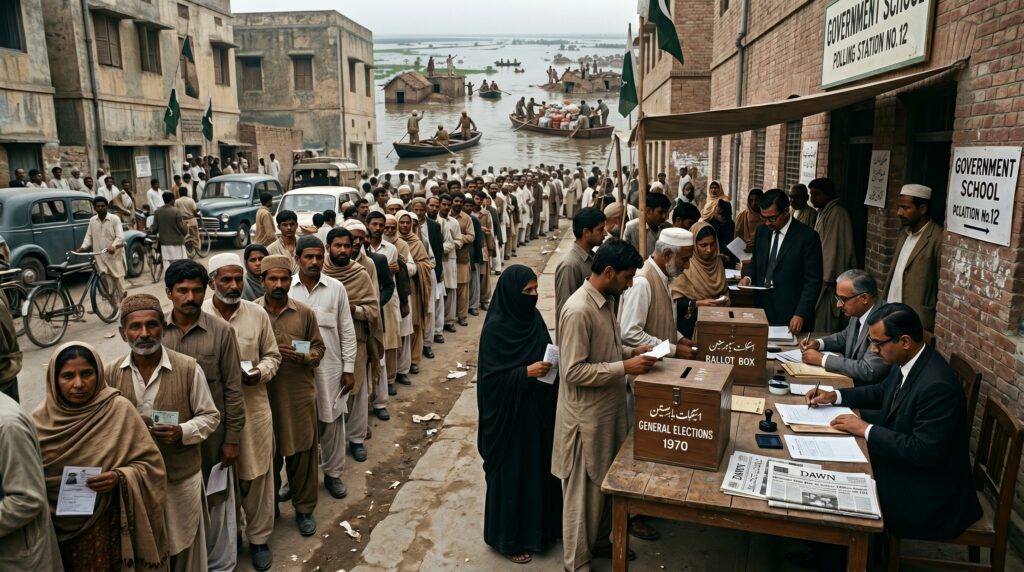
1. Why Was 1970 Important in Pakistan’s History?
1970 was one of the most important years in Pakistan’s history because it witnessed the country’s first general elections based on universal adult franchise. The year also saw the devastating Bhola Cyclone and the rise of a major constitutional crisis.
2. Who Was the President of Pakistan in 1970?
Agha Muhammad Yahya Khan was the President of Pakistan in 1970. He ruled under martial law and supervised preparations for the country’s first general elections.
3. What Was the Most Important Political Event of 1970?
The most important political event was the General Election of 1970. It was the first nationwide election based on the principle of one person, one vote.
4. Why Was the 1970 Election Historic?
The election was historic because it allowed direct participation of the people in choosing their representatives. It was Pakistan’s first truly national democratic election.
5. When Were the General Elections Held?
The General Elections were held on 7 December 1970. They were conducted under the Legal Framework Order issued by Yahya Khan.
6. What Was the Legal Framework Order (LFO)?
The Legal Framework Order was issued by Yahya Khan to provide rules for the elections and constitution-making process. It outlined how elected representatives would frame a new constitution.
7. Why Was the Legal Framework Order Important?
The LFO created the framework for Pakistan’s first general elections. It was intended to facilitate a transition from military rule to civilian government.
8. What Was Universal Adult Franchise?
Universal adult franchise meant that all eligible adult citizens could vote regardless of wealth, status, or social background. This was a major democratic development.
9. Which Party Won the 1970 Elections in East Pakistan?
The Awami League won an overwhelming majority in East Pakistan. It secured most of the seats allocated to the province.
10. Who Led the Awami League in 1970?
Sheikh Mujibur Rahman led the Awami League. He became the most successful political leader in the election.
11. Which Party Won the Most Seats in West Pakistan?
The Pakistan Peoples Party won the largest number of seats in West Pakistan. It emerged as the dominant political force in the western wing.
12. Who Led the Pakistan Peoples Party in 1970?
Zulfikar Ali Bhutto led the Pakistan Peoples Party. He became the most influential political leader in West Pakistan.
13. How Many National Assembly Seats Did the Awami League Win?
The Awami League won 160 out of 162 National Assembly seats allocated to East Pakistan. This gave it an absolute majority in the National Assembly.
14. Why Was the Awami League’s Victory Important?
The victory gave the Awami League the constitutional right to form the federal government. It also demonstrated strong support for the Six-Point Program.
15. What Was the Six-Point Program?
The Six-Point Program was Sheikh Mujibur Rahman’s political platform demanding greater autonomy for East Pakistan. It became the basis of the Awami League’s election campaign.
16. Why Did the Six-Point Program Attract Support?
Many East Pakistanis believed it would provide political rights, economic control, and greater provincial autonomy.
17. What Was the Pakistan Peoples Party’s Performance in the Election?
The PPP won the largest number of seats in West Pakistan but did not secure a majority in the National Assembly.
18. Why Was Bhutto’s Victory Significant?
Bhutto emerged as the most important political leader in West Pakistan. His party became a key player in the post-election political crisis.
19. What Was the Main Constitutional Issue After the Election?
The main issue was the transfer of power to the Awami League. Political disagreements emerged regarding the future constitution and distribution of authority.
20. Why Did Political Tensions Increase After the Election?
Tensions increased because the Awami League expected to form the government, while many leaders in West Pakistan opposed aspects of its constitutional agenda.
21. What Was the Bhola Cyclone?
The Bhola Cyclone was one of the deadliest tropical cyclones in recorded history. It struck East Pakistan in November 1970.
22. When Did the Bhola Cyclone Occur?
The cyclone struck on 12 November 1970. It devastated large parts of coastal East Pakistan.
23. Why Was the Bhola Cyclone Important?
The disaster caused massive loss of life and property. It also increased political dissatisfaction with the central government’s response.
24. How Many People Were Affected by the Bhola Cyclone?
Hundreds of thousands of people were killed or displaced. The cyclone became one of the worst natural disasters in South Asian history.
25. Why Was the Government Criticized After the Cyclone?
Many people believed that relief efforts were slow and inadequate. This criticism increased support for the Awami League.
26. What Was the Political Impact of the Bhola Cyclone?
The cyclone strengthened anti-government sentiment in East Pakistan. It contributed to the Awami League’s overwhelming electoral success.
27. What Was the Situation in East Pakistan in 1970?
East Pakistan experienced growing political awareness and demands for autonomy. Support for Sheikh Mujibur Rahman reached unprecedented levels.
28. What Was the Situation in West Pakistan in 1970?
West Pakistan was politically dominated by the Pakistan Peoples Party. Bhutto became a central figure in national politics.
29. What Was Yahya Khan’s Main Objective in 1970?
Yahya Khan wanted to organize elections and transfer power to an elected government. However, political disagreements complicated this process.
30. What Was the Role of Martial Law in 1970?
Pakistan remained under martial law throughout 1970. Yahya Khan exercised supreme authority as President and Chief Martial Law Administrator.
31. What Was the Status of the Constitution in 1970?
Pakistan did not have a permanent constitution at the time. The elected National Assembly was expected to draft a new one.
32. Why Was Constitution-Making Important in 1970?
The new constitution was expected to resolve political disputes and establish a democratic framework for governance.
33. What Was Pakistan’s Economic Situation in 1970?
Pakistan faced economic challenges, including regional inequality and concerns about resource distribution between East and West Pakistan.
34. Why Was Economic Inequality a Political Issue?
Many East Pakistanis believed that their region contributed significantly to the economy but received fewer benefits in return.
35. What Was Pakistan’s Foreign Policy Focus in 1970?
Pakistan focused on relations with China, the United States, India, and regional security concerns.
36. What Was Pakistan’s Relationship With China in 1970?
Relations with China remained strong and strategic. China continued to be one of Pakistan’s closest allies.
37. What Was Pakistan’s Relationship With the United States in 1970?
Pakistan maintained diplomatic relations with the United States and remained an important regional partner during the Cold War.
38. What Was Pakistan’s Relationship With India in 1970?
Relations remained tense due to the Kashmir dispute and regional rivalries. Political developments in East Pakistan also attracted Indian attention.
39. What Was the Status of the Kashmir Dispute in 1970?
The Kashmir dispute remained unresolved and continued to be Pakistan’s primary foreign policy concern.
40. What Was the Role of the Military in 1970?
The military remained the most powerful institution in the country. Yahya Khan’s government relied heavily on military authority.
41. What Was the Role of the Awami League After the Election?
The Awami League demanded the transfer of power according to election results. It expected to lead the federal government.
42. What Was the Role of the PPP After the Election?
The PPP sought a greater role in constitutional negotiations. Bhutto became a key figure in discussions about Pakistan’s future political structure.
43. Why Did the Election Results Create a Crisis?
The election produced different political majorities in East and West Pakistan. This made agreement on a new constitution more difficult.
44. What Was the Biggest Political Challenge of 1970?
The biggest challenge was achieving a peaceful transfer of power while balancing competing political demands from East and West Pakistan.
45. What Was the Biggest Regional Issue in 1970?
The biggest regional issue was East Pakistan’s demand for autonomy under the Six-Point Program.
46. Why Is the 1970 Election Considered Historic?
It was Pakistan’s first election based on universal adult franchise and produced a clear democratic mandate.
47. How Did the 1970 Election Influence Pakistan’s Future?
The election directly influenced the constitutional crisis of 1971 and the political developments that followed.
48. What Was the Long-Term Impact of the Bhola Cyclone?
The cyclone intensified dissatisfaction in East Pakistan and increased demands for political change.
49. Why Is 1970 Considered a Turning Point?
1970 marked the rise of democratic politics, the success of the Awami League, and the beginning of the final constitutional crisis between East and West Pakistan.
50. What Is the Historical Significance of 1970 for Pakistan?
1970 is historically significant because it witnessed Pakistan’s first general elections, the Bhola Cyclone disaster, the rise of Sheikh Mujibur Rahman and Zulfikar Ali Bhutto as dominant political leaders, and the beginning of the events that led to the dramatic developments of 1971.
1971
1. Why Was 1971 Important in Pakistan’s History?
1971 was one of the most significant and tragic years in Pakistan’s history. It witnessed a political crisis, civil conflict, the Indo-Pak War of 1971, and the separation of East Pakistan, which became Bangladesh.
2. Who Was the President of Pakistan in 1971?
Agha Muhammad Yahya Khan was the President of Pakistan during most of 1971. He led the country during the political crisis and war.
3. What Was the Most Important Event of 1971?
The most important event was the separation of East Pakistan and the creation of Bangladesh on 16 December 1971.
4. Why Did the Crisis of 1971 Begin?
The crisis began after disagreements over the transfer of power following the 1970 General Elections. Political negotiations between major leaders failed.
5. Which Party Won the 1970 Elections?
The Awami League won a majority of seats in the National Assembly, giving it the constitutional right to form the government.
6. Who Led the Awami League in 1971?
Sheikh Mujibur Rahman led the Awami League and became the most influential political leader in East Pakistan.
7. Why Was Sheikh Mujibur Rahman Important in 1971?
He represented the democratic mandate of East Pakistan and demanded implementation of his party’s political program.
8. Who Was the Main Political Leader in West Pakistan?
Zulfikar Ali Bhutto was the most influential political leader in West Pakistan and head of the Pakistan Peoples Party.
9. What Was the Pakistan Peoples Party’s Position in 1971?
The PPP sought a major role in the future government and constitutional negotiations after the 1970 elections.
10. Why Was the National Assembly Session Important?
The National Assembly was expected to draft a new constitution and transfer power to elected representatives.
11. When Was the National Assembly Session Scheduled?
The first session was scheduled for March 1971 in Dhaka.
12. Why Was the National Assembly Session Postponed?
President Yahya Khan postponed the session, leading to widespread protests and anger in East Pakistan.
13. What Was the Reaction in East Pakistan to the Postponement?
The postponement triggered massive demonstrations, strikes, and civil disobedience movements throughout East Pakistan.
14. What Was the Civil Disobedience Movement of 1971?
It was a large-scale political movement led by Sheikh Mujibur Rahman demanding recognition of the election results and transfer of power.
15. What Happened on 7 March 1971?
Sheikh Mujibur Rahman delivered his famous speech at the Racecourse Ground in Dhaka, calling for resistance and political unity.
16. Why Is the 7 March Speech Important?
The speech became one of the most influential political speeches in South Asian history and inspired the Bengali nationalist movement.
17. What Was Operation Searchlight?
Operation Searchlight was a military operation launched on 25 March 1971 in East Pakistan to restore government control.
18. When Did Operation Searchlight Begin?
Operation Searchlight began on the night of 25 March 1971.
19. Why Was Operation Searchlight Launched?
The government aimed to suppress political unrest and restore state authority in East Pakistan.
20. What Was the Immediate Impact of Operation Searchlight?
The operation led to widespread violence, displacement, and escalation of the conflict throughout East Pakistan.
21. What Happened to Sheikh Mujibur Rahman After Operation Searchlight?
Sheikh Mujibur Rahman was arrested and taken into custody by the Pakistani authorities.
22. What Was the Mukti Bahini?
The Mukti Bahini was a Bengali resistance force that fought against Pakistani military rule during the conflict.
23. Why Was the Mukti Bahini Important?
The Mukti Bahini became the main armed resistance movement in East Pakistan and later cooperated with Indian forces.
24. What Was the Bangladesh Independence Movement?
It was a movement seeking the separation of East Pakistan and the creation of an independent state of Bangladesh.
25. When Was Bangladesh’s Independence Declared?
The declaration of independence was associated with the events of March 1971 following the military operation.
26. What Was the Refugee Crisis of 1971?
Millions of people fled from East Pakistan into India during the conflict, creating a major humanitarian crisis.
27. Why Was the Refugee Crisis Important?
The refugee crisis increased international attention and influenced India’s involvement in the conflict.
28. What Role Did India Play in 1971?
India provided support to the Bengali resistance movement and later became directly involved in the war.
29. When Did the Indo-Pak War of 1971 Begin?
The full-scale Indo-Pak War began in December 1971.
30. Why Did the 1971 War Begin?
The war began after months of conflict in East Pakistan and increasing tensions between Pakistan and India.
31. What Was the Eastern Front in the 1971 War?
The Eastern Front was the main theater of military operations in East Pakistan.
32. Who Commanded Pakistani Forces in East Pakistan?
Lieutenant General A. A. K. Niazi commanded Pakistani forces in East Pakistan.
33. What Was the Role of the Pakistan Air Force in 1971?
The Pakistan Air Force participated in military operations on both eastern and western fronts.
34. What Was the Role of the Pakistan Navy in 1971?
The Pakistan Navy conducted maritime operations and defended Pakistan’s coastal areas during the conflict.
35. What Was Operation Trident?
Operation Trident was an Indian naval attack on Karachi during the war.
36. Why Is Operation Trident Important?
It caused significant damage to naval and fuel facilities and became one of the major naval operations of the conflict.
37. What Was Operation Python?
Operation Python was another Indian naval attack against Karachi conducted during the war.
38. What Was the Situation in Dhaka in December 1971?
Dhaka became the center of final military operations as Indian forces and the Mukti Bahini advanced toward the city.
39. When Did Pakistani Forces Surrender in East Pakistan?
Pakistani forces surrendered on 16 December 1971.
40. Where Did the Surrender Take Place?
The surrender took place in Dhaka on 16 December 1971.
41. Who Accepted the Pakistani Surrender?
Indian and Bangladesh forces accepted the surrender of Pakistani forces in Dhaka.
42. What Happened on 16 December 1971?
East Pakistan formally separated and Bangladesh emerged as an independent state.
43. Why Is 16 December 1971 Important?
It marks the end of the war and the creation of Bangladesh.
44. How Did the War Affect Pakistan?
Pakistan lost its eastern wing, faced political instability, and experienced a major national crisis.
45. What Happened to Yahya Khan After the War?
Yahya Khan resigned from power after Pakistan’s defeat in December 1971.
46. Who Took Power After Yahya Khan?
Zulfikar Ali Bhutto assumed leadership of Pakistan after Yahya Khan stepped down.
47. What Position Did Bhutto Hold After Taking Power?
Bhutto became President and Chief Martial Law Administrator of Pakistan.
48. What Was the Biggest Political Consequence of 1971?
The biggest consequence was the breakup of Pakistan and the emergence of Bangladesh as an independent country.
49. Why Is 1971 Considered a Turning Point?
1971 transformed Pakistan politically, geographically, and constitutionally. It changed the course of South Asian history.
50. What Is the Historical Significance of 1971 for Pakistan?
1971 is historically significant because it witnessed the country’s greatest political and military crisis, the separation of East Pakistan, the creation of Bangladesh, the end of Yahya Khan’s rule, and the rise of Zulfikar Ali Bhutto as Pakistan’s new leader.
1972
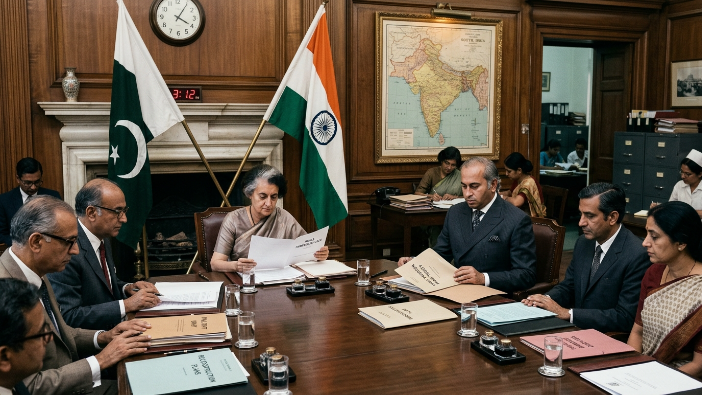
1. Why Was 1972 Important in Pakistan’s History?
1972 was important because Pakistan was rebuilding after the separation of East Pakistan and the 1971 war. The year saw major political, constitutional, diplomatic, and economic changes under Zulfikar Ali Bhutto.
2. Who Was the President of Pakistan in 1972?
Zulfikar Ali Bhutto was the President of Pakistan in 1972. He assumed power after the resignation of Yahya Khan in December 1971.
3. What Was the Most Important Event of 1972?
The most important event was the signing of the Simla Agreement between Pakistan and India. It shaped future relations between the two countries after the 1971 war.
4. What Was Pakistan’s Biggest Challenge in 1972?
Pakistan’s biggest challenge was recovering from the loss of East Pakistan and rebuilding national confidence after the 1971 war.
5. What Position Did Bhutto Hold in 1972?
Bhutto served as President and Chief Martial Law Administrator. He became the most powerful political leader in Pakistan.
6. Why Was Bhutto Important in 1972?
Bhutto led Pakistan during one of the most difficult periods in its history. He introduced reforms and worked to restore political stability.
7. What Was the Simla Agreement?
The Simla Agreement was a peace agreement signed between Pakistan and India after the 1971 war.
8. When Was the Simla Agreement Signed?
The Simla Agreement was signed on 2 July 1972.
9. Where Was the Simla Agreement Signed?
The agreement was signed in Simla, India.
10. Who Signed the Simla Agreement?
The agreement was signed by Zulfikar Ali Bhutto and Indira Gandhi.
11. Why Was the Simla Agreement Important?
It restored diplomatic relations and established a framework for resolving disputes through bilateral negotiations.
12. What Was the Main Objective of the Simla Agreement?
The main objective was to reduce tensions and promote peaceful relations between Pakistan and India.
13. What Happened to the Ceasefire Line After the Simla Agreement?
The Ceasefire Line in Kashmir was renamed the Line of Control (LoC).
14. What Is the Line of Control (LoC)?
The Line of Control is the military control line dividing Pakistani-administered and Indian-administered parts of Kashmir.
15. Why Is the Line of Control Important?
It became the principal military boundary in Kashmir and remains important in Pakistan-India relations.
16. What Was the Prisoners of War Issue in 1972?
Pakistan sought the release of thousands of Pakistani prisoners of war held by India after the 1971 conflict.
17. Why Were Prisoners of War Important?
The return of prisoners was a major national concern and an important diplomatic objective for Pakistan.
18. What Was Pakistan’s Political Situation in 1972?
Pakistan was transitioning from military rule to civilian leadership. Political institutions were being reorganized.
19. What Happened to Martial Law in 1972?
Martial law continued during part of the year, but Bhutto gradually moved toward constitutional and democratic reforms.
20. What Was the Interim Constitution of 1972?
The Interim Constitution provided a temporary constitutional framework until a permanent constitution could be drafted.
21. Why Was the Interim Constitution Important?
It helped restore civilian governance and established a legal basis for government operations.
22. When Was the Interim Constitution Introduced?
The Interim Constitution came into effect in April 1972.
23. What Was the Main Purpose of the Interim Constitution?
Its purpose was to guide Pakistan until a permanent constitution could be agreed upon by political leaders.
24. What Was the National Assembly’s Role in 1972?
The National Assembly worked on constitutional development and legislative reforms.
25. Why Was Constitution-Making Important in 1972?
Pakistan needed a new constitutional framework after the political crisis and breakup of 1971.
26. What Was the Status of the Pakistan Peoples Party in 1972?
The Pakistan Peoples Party became the ruling party and dominated national politics.
27. What Was Bhutto’s Main Political Goal?
His main goal was to rebuild Pakistan, strengthen democracy, and restore public confidence.
28. What Was the Nationalization Policy of 1972?
Nationalization was a policy through which major industries and institutions were brought under government control.
29. Why Did Bhutto Introduce Nationalization?
Bhutto believed state control would reduce economic inequality and strengthen national development.
30. Which Sectors Were Nationalized in 1972?
Major industries, banks, educational institutions, and other important sectors came under increased government control.
31. Why Was Nationalization Controversial?
Supporters viewed it as social justice, while critics argued it reduced efficiency and discouraged private investment.
32. What Was Pakistan’s Economic Situation in 1972?
Pakistan faced economic difficulties after the 1971 war, including reconstruction costs and development challenges.
33. What Was the Main Economic Challenge in 1972?
The main challenge was rebuilding the economy after the loss of East Pakistan and addressing unemployment and inflation.
34. What Was Pakistan’s Foreign Policy Focus in 1972?
Pakistan focused on improving international relations, securing the return of prisoners of war, and strengthening ties with friendly countries.
35. What Was Pakistan’s Relationship With China in 1972?
Relations with China remained strong and strategic. China continued supporting Pakistan diplomatically.
36. What Was Pakistan’s Relationship With the United States in 1972?
Pakistan maintained relations with the United States while also strengthening ties with China and the Muslim world.
37. What Was Pakistan’s Relationship With the Muslim World in 1972?
Pakistan actively sought support from Muslim countries and worked to strengthen Islamic cooperation.
38. What Was the Status of Kashmir in 1972?
The Kashmir dispute remained unresolved despite the Simla Agreement.
39. How Did the Simla Agreement Affect the Kashmir Issue?
The agreement emphasized bilateral negotiations instead of international mediation.
40. What Was the Role of the Armed Forces in 1972?
The armed forces focused on reorganization and rebuilding after the defeat in the 1971 war.
41. Why Was Military Reorganization Important?
Pakistan needed to strengthen its defense capabilities and restore military effectiveness.
42. What Happened to National Morale in 1972?
The government worked to restore national confidence after the traumatic events of 1971.
43. What Was the Biggest Political Challenge for Bhutto?
The biggest challenge was maintaining unity and stability after the country’s breakup.
44. What Was the Biggest Constitutional Development of 1972?
The Interim Constitution was the most important constitutional development of the year.
45. What Was the Biggest Diplomatic Achievement of 1972?
The Simla Agreement was Pakistan’s most significant diplomatic achievement.
46. Why Is 1972 Considered a Reconstruction Year?
Pakistan spent much of the year rebuilding political institutions, the economy, and international relationships.
47. How Did 1972 Influence Pakistan’s Future Constitution?
The constitutional work of 1972 laid the foundation for the Constitution of 1973.
48. What Was the Long-Term Impact of Nationalization?
Nationalization became one of the defining policies of Bhutto’s government and influenced Pakistan’s economy for decades.
49. Why Is 1972 Considered a Turning Point?
It marked Pakistan’s transition from military rule to civilian leadership after the 1971 crisis.
50. What Is the Historical Significance of 1972 for Pakistan?
1972 is historically significant because Pakistan began rebuilding after the loss of East Pakistan, signed the Simla Agreement, introduced the Interim Constitution, launched nationalization policies, and started the constitutional process that led to the Constitution of 1973.
1973
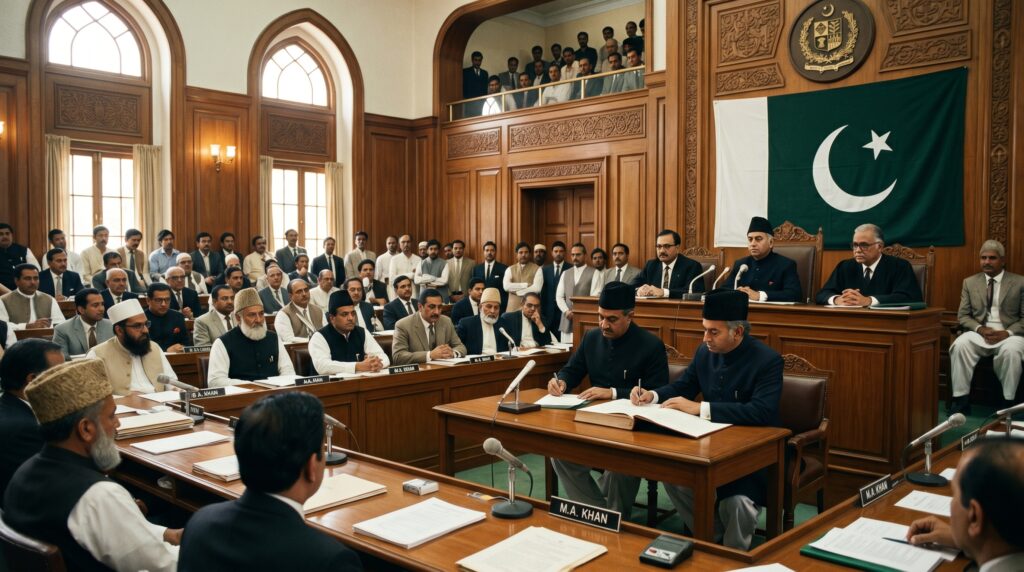
1. Why Was 1973 Important in Pakistan’s History?
1973 is considered one of the most important years in Pakistan’s history because the country adopted the Constitution of 1973, which remains Pakistan’s current constitution.
2. Who Was the President of Pakistan at the Beginning of 1973?
Zulfikar Ali Bhutto was serving as President of Pakistan at the beginning of 1973.
3. What Was the Most Important Event of 1973?
The most important event was the adoption of the Constitution of 1973.
4. When Was the Constitution of 1973 Passed?
The Constitution was passed by the National Assembly on 10 April 1973.
5. When Did the Constitution of 1973 Come Into Force?
The Constitution came into force on 14 August 1973.
6. Why Is the Constitution of 1973 Important?
It established a parliamentary democratic system and became the most durable constitution in Pakistan’s history.
7. What Type of Government Did the 1973 Constitution Introduce?
The Constitution introduced a parliamentary form of government.
8. What Is a Parliamentary System?
A parliamentary system is a system where the Prime Minister is the head of government and exercises executive authority.
9. Who Became the First Prime Minister Under the 1973 Constitution?
Zulfikar Ali Bhutto became the first Prime Minister under the new Constitution.
10. Who Became President After Bhutto Became Prime Minister?
Fazal Ilahi Chaudhry became President of Pakistan.
11. Why Did Bhutto Leave the Presidency?
Under the new Constitution, executive powers belonged to the Prime Minister, so Bhutto became Prime Minister.
12. Who Was Fazal Ilahi Chaudhry?
Fazal Ilahi Chaudhry was a senior politician who served as President of Pakistan from 1973.
13. What Was the Main Objective of the 1973 Constitution?
The main objective was to establish democracy, federalism, and parliamentary governance.
14. What Is Federalism?
Federalism is a system in which powers are divided between the federal government and provinces.
15. Why Was Federalism Important in 1973?
Federalism was important because Pakistan needed a balanced relationship between the center and provinces after the events of 1971.
16. What Was the Official Name of Pakistan Under the Constitution?
The official name remained the Islamic Republic of Pakistan.
17. What Religion Was Declared the State Religion?
Islam was declared the state religion of Pakistan.
18. What Was the Role of Islam in the Constitution?
The Constitution included Islamic provisions while maintaining democratic institutions.
19. What Was the Council of Islamic Ideology?
The Council of Islamic Ideology was established to advise whether laws were consistent with Islamic teachings.
20. Why Was the Council of Islamic Ideology Important?
It provided guidance on Islamic matters related to legislation and governance.
21. Did the Constitution Include Fundamental Rights?
Yes, the Constitution guaranteed fundamental rights to citizens.
22. What Are Fundamental Rights?
Fundamental rights include freedoms such as speech, religion, equality before law, and protection of life and liberty.
23. Why Were Fundamental Rights Important?
They provided constitutional protection for citizens against abuse of power.
24. What Was the Role of the National Assembly?
The National Assembly became the main legislative body of Pakistan.
25. What Was the Role of the Senate?
The Senate was established to provide equal representation to the provinces.
26. Why Was the Senate Important?
The Senate strengthened federalism and protected provincial interests.
27. What Was the Structure of Parliament Under the 1973 Constitution?
Pakistan adopted a bicameral parliament consisting of the National Assembly and Senate.
28. What Is a Bicameral Legislature?
A bicameral legislature has two houses instead of one.
29. What Was Pakistan’s Political Situation in 1973?
Pakistan was moving from post-war reconstruction toward constitutional democracy.
30. What Was Bhutto’s Main Political Achievement in 1973?
His greatest achievement was securing consensus on the Constitution of 1973.
31. Why Is the Constitution Called a Consensus Constitution?
Because most major political parties agreed upon its provisions.
32. What Was Pakistan’s Economic Policy in 1973?
The government continued nationalization and state-led economic reforms.
33. What Was Nationalization?
Nationalization involved bringing major industries and institutions under government control.
34. Why Did Bhutto Continue Nationalization?
He believed it would reduce inequality and strengthen the economy.
35. What Was Pakistan’s Foreign Policy Focus in 1973?
Pakistan focused on rebuilding international relations after the 1971 war.
36. What Was Pakistan’s Relationship With the Muslim World in 1973?
Relations improved as Pakistan increased cooperation with Muslim countries.
37. What Was Pakistan’s Relationship With China in 1973?
China remained one of Pakistan’s closest allies and strategic partners.
38. What Was Pakistan’s Relationship With the United States in 1973?
Pakistan maintained diplomatic relations while pursuing a more independent foreign policy.
39. What Was the Status of Kashmir in 1973?
The Kashmir dispute remained unresolved and continued to be a major foreign policy issue.
40. What Was the Role of the Armed Forces in 1973?
The armed forces focused on rebuilding and modernization after the 1971 war.
41. What Was the Biggest Constitutional Achievement of 1973?
The adoption of the Constitution of 1973 was the biggest constitutional achievement.
42. What Was the Biggest Political Development of 1973?
The transition from presidential rule to parliamentary democracy was the biggest political development.
43. What Was the Biggest Legal Development of 1973?
The enforcement of a permanent democratic constitution was the biggest legal development.
44. Why Is 14 August 1973 Important?
The Constitution of 1973 came into force on this date.
45. How Did the Constitution Change Pakistan’s Political System?
It transferred executive authority from the President to the Prime Minister.
46. Why Was Provincial Representation Important in 1973?
Provincial representation helped address concerns about centralization and regional inequality.
47. What Was the Long-Term Impact of the 1973 Constitution?
It became the foundation of Pakistan’s constitutional and political system for decades.
48. Why Is the Constitution of 1973 Still Important Today?
Because it remains the governing constitution of Pakistan, despite amendments over the years.
49. Why Is 1973 Considered a Turning Point in Pakistan’s History?
It marked the restoration of democratic governance through a broadly accepted constitutional framework.
50. What Is the Historical Significance of 1973 for Pakistan?
1973 is historically significant because Pakistan adopted the Constitution of 1973, established a parliamentary system, created a bicameral legislature, strengthened federalism, and provided the country with a constitutional framework that continues to govern Pakistan today.
1974
1. Why Was 1974 Important in Pakistan’s History?
1974 was important because Pakistan hosted the Second Islamic Summit Conference, recognized Bangladesh, and passed the Second Constitutional Amendment regarding the Ahmadiyya community.
2. Who Was the Prime Minister of Pakistan in 1974?
Zulfikar Ali Bhutto was the Prime Minister of Pakistan in 1974.
3. Who Was the President of Pakistan in 1974?
Fazal Ilahi Chaudhry was the President of Pakistan in 1974.
4. What Was the Most Important Political Event of 1974?
One of the most important political events was the passage of the Second Constitutional Amendment.
5. What Was the Second Constitutional Amendment?
The Second Constitutional Amendment declared Ahmadis as non-Muslims under Pakistan’s Constitution.
6. When Was the Second Constitutional Amendment Passed?
The amendment was passed by Parliament on 7 September 1974.
7. Why Was the Second Constitutional Amendment Important?
It became one of the most significant constitutional and religious developments in Pakistan’s history.
8. What Incident Led to the Debate on the Ahmadi Issue?
The Rabwah Railway Station incident in May 1974 increased public and political attention on the issue.
9. What Was the Rabwah Incident?
The incident involved clashes between students and members of the Ahmadi community near Rabwah (now Chenab Nagar).
10. Why Did Parliament Discuss the Ahmadi Issue?
The issue became a national political and religious debate, leading Parliament to hold extensive discussions.
11. What Was Parliament’s Decision Regarding Ahmadis?
Parliament declared Ahmadis a non-Muslim minority through a constitutional amendment.
12. Why Is the Second Amendment Historically Significant?
It was the first time Parliament constitutionally defined the religious status of a community.
13. What Was the Biggest Foreign Policy Event of 1974?
The Second Islamic Summit Conference held in Lahore was the biggest foreign policy event.
14. What Was the Islamic Summit Conference?
It was a major gathering of leaders from Muslim countries to discuss cooperation and international issues.
15. When Was the Islamic Summit Conference Held?
The conference was held in February 1974.
16. Where Was the Islamic Summit Conference Held?
The conference was held in Lahore, Pakistan.
17. Why Was the Islamic Summit Conference Important?
It increased Pakistan’s prestige in the Muslim world and strengthened relations with Islamic countries.
18. Which Major Muslim Leaders Attended the Summit?
Many prominent Muslim leaders attended, including leaders from Saudi Arabia, Libya, Egypt, and other Islamic nations.
19. Who Hosted the Islamic Summit Conference?
Prime Minister Zulfikar Ali Bhutto hosted the conference.
20. Why Is the Lahore Summit Considered a Diplomatic Success?
It demonstrated Pakistan’s leadership role in the Muslim world after the setback of 1971.
21. What Happened Regarding Bangladesh in 1974?
Pakistan officially recognized Bangladesh as an independent country.
22. Why Was Recognition of Bangladesh Important?
It helped normalize relations and reduced tensions resulting from the events of 1971.
23. When Did Pakistan Recognize Bangladesh?
Pakistan recognized Bangladesh in February 1974.
24. Why Did Pakistan Delay Recognition Until 1974?
Political and diplomatic issues after the 1971 war delayed formal recognition.
25. How Did Recognition Affect Pakistan’s Foreign Relations?
It improved Pakistan’s standing internationally and facilitated participation in Islamic diplomatic initiatives.
26. What Was Pakistan’s Political Situation in 1974?
The country was relatively stable under Bhutto’s leadership, although political opposition continued to exist.
27. What Was the Status of the Constitution in 1974?
The Constitution of 1973 remained fully operational and guided Pakistan’s parliamentary system.
28. What Was the Role of Parliament in 1974?
Parliament played an active role in constitutional amendments and national policy decisions.
29. What Was Pakistan’s Economic Policy in 1974?
The government continued state-led economic policies and nationalization programs.
30. What Was Nationalization in 1974?
Nationalization involved transferring important industries and institutions into government ownership.
31. Why Did Bhutto Support Nationalization?
He believed state control would promote social justice and reduce economic inequality.
32. What Was Pakistan’s Economic Situation in 1974?
Pakistan faced inflation and economic challenges, partly due to international economic conditions.
33. What Global Economic Event Affected Pakistan in 1974?
The international oil crisis increased economic pressures on many countries, including Pakistan.
34. What Was the Oil Crisis?
The oil crisis caused sharp increases in global petroleum prices, affecting economies worldwide.
35. How Did the Oil Crisis Affect Pakistan?
It increased import costs and created inflationary pressures in the economy.
36. What Was Pakistan’s Relationship With Saudi Arabia in 1974?
Relations with Saudi Arabia strengthened significantly through Islamic cooperation and diplomacy.
37. What Was Pakistan’s Relationship With China in 1974?
China remained one of Pakistan’s closest strategic allies.
38. What Was Pakistan’s Relationship With the United States in 1974?
Pakistan maintained diplomatic relations while pursuing a more independent foreign policy.
39. What Was Pakistan’s Position in the Muslim World in 1974?
Pakistan gained influence and respect through the successful hosting of the Islamic Summit.
40. What Was the Main Objective of Bhutto’s Foreign Policy?
Bhutto aimed to strengthen relations with Muslim countries and increase Pakistan’s international influence.
41. What Was the Status of Kashmir in 1974?
The Kashmir dispute remained unresolved and continued to be a central foreign policy issue.
42. What Was the Role of the Armed Forces in 1974?
The armed forces continued rebuilding and modernization efforts after the 1971 war.
43. What Was the Biggest Constitutional Development of 1974?
The Second Constitutional Amendment was the biggest constitutional development.
44. What Was the Biggest Diplomatic Achievement of 1974?
Hosting the Islamic Summit Conference was Pakistan’s biggest diplomatic achievement.
45. Why Is the Lahore Islamic Summit Important in Exams?
It is considered one of Pakistan’s greatest diplomatic successes and a landmark event in Islamic cooperation.
46. What Was the Biggest Religious Development of 1974?
The constitutional declaration of Ahmadis as a non-Muslim minority was the biggest religious development.
47. Why Is 1974 Considered a Turning Point in Pakistan’s Foreign Policy?
The year strengthened Pakistan’s ties with the Muslim world and improved its international standing.
48. How Did 1974 Influence Pakistan’s Future Politics?
The constitutional and religious decisions of 1974 continued to influence political debates for decades.
49. What Was the Long-Term Impact of the Islamic Summit Conference?
It enhanced Pakistan’s diplomatic reputation and strengthened relations with Muslim countries.
50. What Is the Historical Significance of 1974 for Pakistan?
1974 is historically significant because Pakistan hosted the Islamic Summit Conference, recognized Bangladesh, passed the Second Constitutional Amendment, strengthened ties with the Muslim world, and enhanced its international diplomatic standing.
1975
1. Why Was 1975 Important in Pakistan’s History?
1975 was important because Pakistan faced political tension, constitutional changes, opposition crackdowns, and continuing economic reforms under Zulfikar Ali Bhutto. The year reflected both the strength and controversy of Bhutto’s civilian government.
2. Who Was the Prime Minister of Pakistan in 1975?
Zulfikar Ali Bhutto was the Prime Minister of Pakistan in 1975. He remained the most powerful political figure in the country and continued his reform-focused policies.
3. Who Was the President of Pakistan in 1975?
Fazal Ilahi Chaudhry was the President of Pakistan in 1975. Under the 1973 Constitution, the President was the head of state, while executive power was mainly held by the Prime Minister.
4. What Was the Political System of Pakistan in 1975?
Pakistan had a parliamentary system under the Constitution of 1973. The Prime Minister was the head of government, while Parliament had legislative authority.
5. What Was the Most Important Political Development of 1975?
One of the most important political developments was the growing conflict between the government and opposition parties. Political tensions increased, especially after the banning of the National Awami Party.
6. What Was the National Awami Party?
The National Awami Party, also known as NAP, was an important opposition party. It had influence in provinces such as NWFP and Balochistan and supported provincial autonomy.
7. Why Was the National Awami Party Banned in 1975?
The government banned NAP after accusing it of anti-state activities. The ban became one of the most controversial political decisions of Bhutto’s rule.
8. Why Was the Ban on NAP Important?
The ban weakened organized opposition and increased tensions between the federal government and nationalist political leaders. It also raised concerns about democratic freedoms.
9. Who Were the Main Leaders Associated With NAP?
Important NAP leaders included Khan Abdul Wali Khan, Ghaus Bakhsh Bizenjo, Ataullah Mengal, and other nationalist figures. They were prominent voices for provincial rights.
10. Who Was Khan Abdul Wali Khan?
Khan Abdul Wali Khan was a major opposition leader and head of the National Awami Party. He was known for advocating democracy, federalism, and provincial autonomy.
11. What Was the Hyderabad Tribunal?
The Hyderabad Tribunal was established to try several opposition leaders after the ban on NAP. It became one of the most politically significant legal cases of the period.
12. Why Was the Hyderabad Tribunal Controversial?
The tribunal was controversial because many opposition supporters believed the cases were politically motivated. It deepened mistrust between the government and opposition.
13. What Was the Hyderabad Conspiracy Case?
The Hyderabad Conspiracy Case involved charges against opposition leaders accused of working against the state. It became a major political and legal issue during Bhutto’s government.
14. Who Was Hayat Muhammad Khan Sherpao?
Hayat Muhammad Khan Sherpao was a senior leader of the Pakistan Peoples Party. He was an important political figure from NWFP and a close associate of Zulfikar Ali Bhutto.
15. What Happened to Hayat Muhammad Khan Sherpao in 1975?
Hayat Muhammad Khan Sherpao was assassinated in 1975. His death became a major political event and increased tensions between the government and opposition.
16. Why Was Sherpao’s Assassination Important?
His assassination gave the government a reason to take strong action against opposition forces. It became linked with the decision to ban the National Awami Party.
17. What Was the Third Constitutional Amendment?
The Third Constitutional Amendment was passed in 1975. It expanded the government’s powers regarding preventive detention and internal security matters.
18. Why Was the Third Constitutional Amendment Controversial?
It was controversial because critics believed it strengthened state power at the expense of civil liberties. Supporters argued that it was needed for national security.
19. What Did Preventive Detention Mean?
Preventive detention allowed the government to detain individuals before trial if they were considered a threat to public order or national security.
20. Why Was Preventive Detention Important in 1975?
Preventive detention became important because the government was dealing with political unrest and security concerns. However, it also raised concerns about human rights and political repression.
21. What Was the Status of the 1973 Constitution in 1975?
The Constitution of 1973 remained in force. However, amendments were being made to strengthen state authority and address political challenges.
22. What Was the Role of Parliament in 1975?
Parliament continued to pass laws and constitutional amendments. It also supported the government’s political and economic agenda.
23. What Was the Role of the Pakistan Peoples Party in 1975?
The Pakistan Peoples Party was the ruling party. It continued to dominate national politics under the leadership of Zulfikar Ali Bhutto.
24. What Was Bhutto’s Main Political Challenge in 1975?
Bhutto’s main political challenge was managing opposition criticism, provincial unrest, and demands for greater democratic freedoms.
25. What Was the Situation in Balochistan in 1975?
Balochistan remained politically tense due to nationalist demands and conflict with the federal government. The province was a major focus of internal security concerns.
26. Why Was Balochistan Important in 1975?
Balochistan was important because of its strategic location, natural resources, and nationalist politics. Federal-provincial relations remained difficult.
27. What Was the Balochistan Insurgency?
The Balochistan insurgency was an armed and political conflict involving nationalist groups and the federal government. It reflected disputes over autonomy, resources, and state authority.
28. How Did the Government Respond to Balochistan Unrest?
The government used political, legal, and security measures to control unrest. This approach strengthened federal authority but increased resentment among nationalist groups.
29. What Was the Status of NWFP Politics in 1975?
NWFP politics became tense after Sherpao’s assassination and the crackdown on NAP. The province became an important center of opposition politics.
30. What Was Pakistan’s Economic Policy in 1975?
Pakistan continued state-led economic policies under Bhutto. Nationalization and government control remained important parts of the economic system.
31. What Was Nationalization in 1975?
Nationalization meant bringing industries, banks, schools, and other institutions under government control. Bhutto believed this would reduce inequality and promote social justice.
32. Why Was Nationalization Criticized?
Critics argued that nationalization reduced efficiency and discouraged private investment. Supporters believed it protected workers and reduced capitalist control.
33. What Was Pakistan’s Economic Condition in 1975?
Pakistan faced inflation, development challenges, and pressure from global economic conditions. The economy was still recovering from the effects of the 1971 crisis.
34. How Did the Global Oil Crisis Affect Pakistan?
The global rise in oil prices increased Pakistan’s import costs and contributed to inflation. This created pressure on the government and ordinary citizens.
35. What Was the Role of Agriculture in 1975?
Agriculture remained a major part of Pakistan’s economy. Food production, irrigation, and rural development continued to be national priorities.
36. What Was the Role of Industry in 1975?
Industry remained important, but many major industrial units were under state control. The government tried to use public-sector industry for national development.
37. What Was Pakistan’s Foreign Policy Focus in 1975?
Pakistan focused on strengthening relations with Muslim countries, China, and other international partners. It also worked to recover diplomatically after the 1971 crisis.
38. What Was Pakistan’s Relationship With China in 1975?
Pakistan’s relationship with China remained strong and strategic. China continued to be one of Pakistan’s closest allies.
39. What Was Pakistan’s Relationship With the Muslim World in 1975?
Pakistan maintained close ties with Muslim countries after the 1974 Islamic Summit. Bhutto’s government continued to emphasize Islamic unity and cooperation.
40. What Was Pakistan’s Relationship With India in 1975?
Relations with India remained cautious after the Simla Agreement. The Kashmir dispute continued to affect bilateral relations.
41. What Was the Status of Kashmir in 1975?
The Kashmir dispute remained unresolved. Pakistan continued to view Kashmir as a central issue in relations with India.
42. What Was the Role of the Armed Forces in 1975?
The armed forces continued rebuilding after the 1971 war. Internal security issues, especially in Balochistan, also kept the military important.
43. What Was Pakistan’s Nuclear Policy in 1975?
Pakistan continued developing its nuclear program during this period. The program gained importance after India’s nuclear test in 1974.
44. Why Did Pakistan Focus on Nuclear Development?
Pakistan viewed nuclear development as important for national security and strategic balance, especially after India demonstrated nuclear capability.
45. What Was the Biggest Constitutional Development of 1975?
The Third Constitutional Amendment was the biggest constitutional development. It expanded the state’s powers in matters of detention and security.
46. What Was the Biggest Political Controversy of 1975?
The banning of the National Awami Party and the Hyderabad Conspiracy Case were among the biggest political controversies of the year.
47. What Was the Biggest Internal Security Issue in 1975?
The biggest internal security issue was unrest in Balochistan and political tensions linked to nationalist movements.
48. Why Is 1975 Considered a Year of Political Tension?
1975 is considered a year of political tension because opposition parties faced pressure, constitutional powers were expanded, and provincial unrest continued.
49. How Did 1975 Influence Pakistan’s Future Politics?
The events of 1975 deepened divisions between the government and opposition. They also influenced later debates about democracy, federalism, and civil liberties.
50. What Is the Historical Significance of 1975 for Pakistan?
1975 is historically significant because it reflected the growing conflict between centralized authority and opposition politics. The year included the Third Constitutional Amendment, the banning of NAP, the Hyderabad Tribunal, Balochistan tensions, and continued economic reforms under Bhutto.
1976
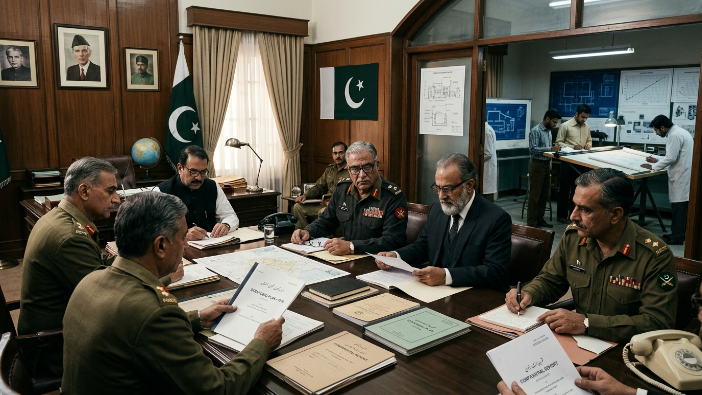
1. Why Was 1976 Important in Pakistan’s History?
1976 was important because Pakistan continued under Zulfikar Ali Bhutto’s civilian government, but political tensions, constitutional amendments, opposition criticism, and military appointments shaped the country’s future direction.
2. Who Was the Prime Minister of Pakistan in 1976?
Zulfikar Ali Bhutto was the Prime Minister of Pakistan in 1976. He remained the most powerful political leader and continued his policies of state control, reforms, and centralized governance.
3. Who Was the President of Pakistan in 1976?
Fazal Ilahi Chaudhry was the President of Pakistan in 1976. Under the parliamentary system of the 1973 Constitution, his role was largely ceremonial compared to the Prime Minister.
4. What Was the Political System of Pakistan in 1976?
Pakistan had a parliamentary system under the Constitution of 1973. The Prime Minister held executive authority, while Parliament was responsible for legislation.
5. What Was the Most Important Political Development of 1976?
One of the most important developments was the growing political tension between Bhutto’s government and opposition parties. These tensions later contributed to the crisis of 1977.
6. What Was Bhutto’s Political Position in 1976?
Bhutto was politically strong, but opposition criticism was increasing. His government controlled Parliament and administration, yet public dissatisfaction was growing in some sections of society.
7. Why Was 1976 Important for Pakistan’s Military Leadership?
1976 was important because General Zia-ul-Haq was appointed Chief of Army Staff. This appointment later became highly significant in Pakistan’s political history.
8. Who Was Appointed Chief of Army Staff in 1976?
General Muhammad Zia-ul-Haq was appointed Chief of Army Staff in 1976. He was selected by Prime Minister Zulfikar Ali Bhutto.
9. Why Was Zia-ul-Haq’s Appointment Important?
Zia-ul-Haq’s appointment became historically important because he later imposed martial law in 1977. His rise changed Pakistan’s political direction for more than a decade.
10. Why Did Bhutto Choose Zia-ul-Haq?
Bhutto chose Zia-ul-Haq because he appeared loyal and less politically threatening than some senior generals. However, this decision later became one of the most debated choices of Bhutto’s career.
11. What Was the Status of the 1973 Constitution in 1976?
The Constitution of 1973 remained in force during 1976. However, constitutional amendments were introduced that affected the balance between state power, courts, and citizens’ rights.
12. What Was the Fifth Constitutional Amendment?
The Fifth Constitutional Amendment was passed during Bhutto’s rule. It affected the powers of the judiciary and strengthened the authority of Parliament and the executive.
13. Why Was the Fifth Constitutional Amendment Important?
It was important because it changed the relationship between the judiciary and the government. Critics believed it reduced judicial independence, while supporters argued it strengthened parliamentary authority.
14. What Was the Sixth Constitutional Amendment?
The Sixth Constitutional Amendment was also introduced during this period. It dealt mainly with matters related to the judiciary and tenure of judges.
15. Why Were Constitutional Amendments Controversial in 1976?
They were controversial because opposition leaders and legal experts argued that they weakened checks and balances. The government defended them as necessary for political stability and administrative control.
16. What Was the Role of Parliament in 1976?
Parliament passed laws and constitutional amendments under the leadership of the ruling Pakistan Peoples Party. It supported Bhutto’s political and economic agenda.
17. What Was the Role of the Pakistan Peoples Party in 1976?
The Pakistan Peoples Party was the ruling party and dominated national politics. It supported Bhutto’s reforms, nationalization policies, and centralized political control.
18. What Was the Status of Opposition Politics in 1976?
Opposition parties were active but faced restrictions and pressure. Many opposition leaders criticized Bhutto’s government for authoritarian methods.
19. Why Was Opposition Dissatisfaction Increasing in 1976?
Opposition dissatisfaction increased because of political arrests, restrictions, economic problems, and concerns over government control. These issues later became central in the 1977 election crisis.
20. What Was the National Awami Party Issue in 1976?
The National Awami Party remained banned after the government’s action in 1975. Its leaders continued to face legal and political pressure.
21. What Was the Hyderabad Tribunal in 1976?
The Hyderabad Tribunal continued proceedings against opposition leaders accused of anti-state activities. It remained one of the most controversial political cases of Bhutto’s period.
22. Why Was the Hyderabad Tribunal Important?
It was important because it represented the conflict between the federal government and nationalist opposition leaders. Many critics considered it politically motivated.
23. What Was the Situation in Balochistan in 1976?
Balochistan remained politically tense due to nationalist unrest and conflict with the federal government. Security operations and political disputes continued during this period.
24. Why Was Balochistan a Major Issue in 1976?
Balochistan was important because of its strategic location, natural resources, and strong demands for provincial autonomy. Federal-provincial tensions remained high.
25. What Was the Balochistan Insurgency?
The Balochistan insurgency involved armed resistance and political conflict between nationalist groups and the federal government. It reflected disputes over autonomy, resources, and political control.
26. How Did the Government Handle Balochistan Unrest?
The government used security operations, political pressure, and legal measures to control unrest. This policy strengthened federal authority but increased resentment among nationalist groups.
27. What Was Pakistan’s Economic Policy in 1976?
Pakistan continued state-led economic policies under Bhutto. Nationalization, public-sector control, and social justice remained central themes of the government’s economic approach.
28. What Was Nationalization in 1976?
Nationalization meant that major industries, banks, and institutions were controlled by the government. Bhutto believed this would reduce inequality and increase public ownership.
29. Why Was Nationalization Criticized in 1976?
Critics argued that nationalization reduced efficiency, discouraged private investment, and increased bureaucratic control. Supporters believed it protected workers and reduced elite economic dominance.
30. What Was Pakistan’s Economic Condition in 1976?
Pakistan faced inflation, unemployment concerns, and pressure from global economic conditions. The economy was still adjusting after the effects of the 1971 crisis and oil price shocks.
31. How Did the Oil Crisis Affect Pakistan in 1976?
The global oil crisis increased import costs and created inflationary pressure. Higher fuel prices affected transport, industry, and everyday living costs.
32. What Was the Role of Agriculture in 1976?
Agriculture remained one of the main pillars of Pakistan’s economy. Food production, irrigation, land reforms, and rural development remained important policy areas.
33. What Was the Role of Industry in 1976?
Industry remained important, but many major units were under state control. The government wanted public-sector industry to support national development.
34. What Were Bhutto’s Land Reforms?
Bhutto’s land reforms aimed to reduce large landholdings and redistribute land. The goal was to weaken feudal power and support small farmers.
35. Why Were Land Reforms Important?
Land reforms were important because rural inequality had long been a major social and economic issue. However, implementation remained difficult and controversial.
36. What Was Pakistan’s Nuclear Policy in 1976?
Pakistan continued strengthening its nuclear program in 1976. The program became more important after India’s 1974 nuclear test.
37. Why Was Nuclear Development Important for Pakistan?
Pakistan viewed nuclear development as essential for national security and strategic balance in South Asia. It became a major long-term defense priority.
38. What Was the Role of Dr. Abdul Qadeer Khan in 1976?
Dr. Abdul Qadeer Khan became increasingly important in Pakistan’s nuclear program. His work later became central to Pakistan’s nuclear capability.
39. What Was Kahuta’s Importance in 1976?
Kahuta became associated with Pakistan’s nuclear development efforts. It later became one of the most important centers of Pakistan’s nuclear program.
40. What Was Pakistan’s Foreign Policy Focus in 1976?
Pakistan focused on strengthening relations with China, Muslim countries, and other international partners. Bhutto also continued efforts to rebuild Pakistan’s global position after 1971.
41. What Was Pakistan’s Relationship With China in 1976?
Pakistan’s relationship with China remained strong and strategic. China continued to be one of Pakistan’s closest allies.
42. What Was Pakistan’s Relationship With the Muslim World in 1976?
Pakistan maintained close relations with Muslim countries. Cooperation with the Middle East and Islamic states remained an important part of Bhutto’s foreign policy.
43. What Was Pakistan’s Relationship With the United States in 1976?
Pakistan maintained diplomatic relations with the United States, but Bhutto pursued a more independent foreign policy. Nuclear development also became an emerging area of concern in relations.
44. What Was Pakistan’s Relationship With India in 1976?
Relations with India remained cautious after the Simla Agreement. The Kashmir dispute continued to be a major unresolved issue.
45. What Was the Status of Kashmir in 1976?
The Kashmir dispute remained unresolved. Pakistan continued to consider Kashmir a central issue in its foreign policy.
46. What Was the Biggest Political Challenge of 1976?
The biggest political challenge was increasing opposition pressure against Bhutto’s government. Questions about democracy, civil liberties, and state authority became more serious.
47. What Was the Biggest Constitutional Development of 1976?
The biggest constitutional developments were amendments affecting the judiciary and state authority. These changes became part of the wider debate over Bhutto’s style of governance.
48. What Was the Biggest Security Issue of 1976?
The biggest security issue was internal unrest, especially in Balochistan. The government continued to deal with nationalist resistance and law-and-order problems.
49. How Did 1976 Influence Pakistan’s Future Politics?
1976 influenced future politics by increasing tensions between the government and opposition. The appointment of Zia-ul-Haq also became a major factor in the events of 1977.
50. What Is the Historical Significance of 1976 for Pakistan?
1976 is historically significant because it was a year of political centralization, constitutional amendments, opposition pressure, Balochistan unrest, nuclear development, and the appointment of General Zia-ul-Haq as Chief of Army Staff, which later had a major impact on Pakistan’s history.
1977
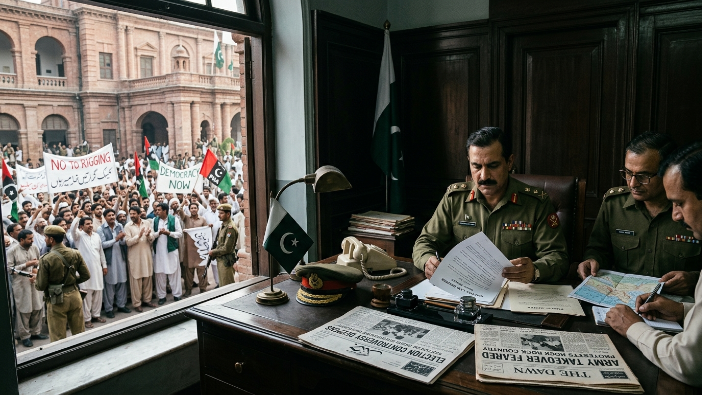
1. Why Was 1977 Important in Pakistan’s History?
1977 was one of the most decisive years in Pakistan’s political history. It witnessed general elections, a nationwide protest movement, the fall of Zulfikar Ali Bhutto’s government, and the imposition of martial law by General Zia-ul-Haq.
2. Who Was the Prime Minister of Pakistan at the Start of 1977?
Zulfikar Ali Bhutto was the Prime Minister of Pakistan at the beginning of 1977. He led the Pakistan Peoples Party and was seeking another term through general elections.
3. Who Was the President of Pakistan in 1977?
Fazal Ilahi Chaudhry was the President of Pakistan in 1977. Under the parliamentary system, his role was mostly ceremonial, while real executive power belonged to the Prime Minister.
4. What Was the Political System of Pakistan in Early 1977?
Pakistan was operating under the parliamentary system established by the 1973 Constitution. The Prime Minister was the head of government, and Parliament was responsible for legislation.
5. What Was the Most Important Political Event of 1977?
The most important event was the military coup of 5 July 1977. General Zia-ul-Haq overthrew Bhutto’s government and imposed martial law.
6. When Were the 1977 General Elections Held?
The National Assembly elections were held on 7 March 1977. Provincial Assembly elections were scheduled shortly after, but the opposition rejected the election process.
7. Which Party Won the 1977 Elections?
The Pakistan Peoples Party won the 1977 elections according to official results. However, the opposition rejected the results and accused the government of rigging.
8. What Was the Pakistan National Alliance?
The Pakistan National Alliance, also called PNA, was an opposition alliance formed to contest the 1977 elections against Bhutto’s PPP. It included religious, conservative, and anti-Bhutto political groups.
9. Why Was the Pakistan National Alliance Formed?
The PNA was formed to unite opposition parties against Zulfikar Ali Bhutto. Its goal was to challenge the PPP in elections and demand a more democratic political system.
10. What Was the Main Slogan of the PNA Movement?
The PNA movement used the slogan of “Nizam-e-Mustafa,” meaning the system of the Prophet. This slogan gave the movement a religious and political identity.
11. Why Did the 1977 Elections Become Controversial?
The elections became controversial because the opposition alleged widespread rigging and misuse of state power. These accusations triggered mass protests across the country.
12. What Was the Opposition’s Main Demand After the Election?
The opposition demanded fresh elections under a neutral setup. It argued that the official results did not reflect the true will of the people.
13. Why Did the PNA Boycott Provincial Elections?
The PNA boycotted the provincial elections because it rejected the National Assembly election results. The boycott increased political tension and weakened trust in the electoral process.
14. What Was the Anti-Bhutto Movement?
The Anti-Bhutto Movement was a nationwide protest campaign launched by the PNA after the 1977 elections. It included demonstrations, strikes, public rallies, and civil disobedience.
15. Which Groups Participated in the 1977 Protest Movement?
Religious parties, opposition activists, students, traders, lawyers, and sections of the urban middle class participated in the movement. The protests became one of the largest challenges to Bhutto’s rule.
16. Why Did the Protest Movement Become Strong?
The movement became strong because it combined election-rigging allegations with religious slogans and public dissatisfaction. Economic pressures and political grievances also helped the movement grow.
17. What Was the Role of Religious Parties in 1977?
Religious parties played an important role in the PNA movement. They used the demand for Nizam-e-Mustafa to mobilize public support against Bhutto’s government.
18. What Was the Role of Students in the 1977 Movement?
Students participated in demonstrations and rallies in several cities. Their activism helped spread the protest movement and increase pressure on the government.
19. What Was the Role of Traders in the 1977 Protests?
Many traders supported strikes and shutdowns during the protest movement. Their participation gave the movement economic pressure and urban strength.
20. What Was the Government’s Response to the Protests?
The government used police action, arrests, and emergency measures to control the protests. However, repression increased public anger and deepened the crisis.
21. What Was the Law and Order Situation in 1977?
The law and order situation deteriorated as protests, clashes, and strikes spread across the country. Major cities experienced serious political unrest.
22. Why Did Bhutto Start Negotiations With the PNA?
Bhutto started negotiations because the protest movement had created a serious political crisis. Both sides discussed possible fresh elections and political compromise.
23. What Were the Bhutto-PNA Negotiations?
The Bhutto-PNA negotiations were talks between the government and opposition to end the political crisis. They focused on election reforms, fresh elections, and political guarantees.
24. Why Did the Negotiations Fail?
The negotiations failed because trust between the government and opposition was weak. Before a lasting settlement could be implemented, the military intervened.
25. Who Was the Chief of Army Staff in 1977?
General Muhammad Zia-ul-Haq was the Chief of Army Staff in 1977. He had been appointed by Bhutto in 1976.
26. When Was Martial Law Imposed in 1977?
Martial law was imposed on 5 July 1977. This event ended Bhutto’s civilian government and began Zia-ul-Haq’s military rule.
27. What Was Operation Fair Play?
Operation Fair Play was the name commonly associated with the military coup of 5 July 1977. Through this operation, General Zia-ul-Haq removed Bhutto’s government from power.
28. Who Imposed Martial Law in 1977?
General Muhammad Zia-ul-Haq imposed martial law in Pakistan. He became the Chief Martial Law Administrator after removing Bhutto’s government.
29. Why Did Zia-ul-Haq Justify the Coup?
Zia justified the coup by claiming that political chaos and lawlessness required military intervention. He said the army had acted to restore order and hold fair elections.
30. What Happened to Zulfikar Ali Bhutto After the Coup?
Bhutto was removed from office and taken into custody. His political career entered a legal and political crisis after the imposition of martial law.
31. Did Zia-ul-Haq Promise Elections?
Yes, Zia-ul-Haq promised to hold elections within 90 days. However, these elections were postponed, and military rule continued for many years.
32. Why Were the Promised Elections Delayed?
The elections were delayed due to political uncertainty, legal cases, and Zia’s consolidation of power. The delay became a major criticism of the military regime.
33. What Happened to the 1973 Constitution in 1977?
The 1973 Constitution was not completely abolished, but it was held in abeyance under martial law. Civilian constitutional rule was suspended in practice.
34. What Was the Role of the Judiciary in 1977?
The judiciary became important because martial law and Bhutto’s legal cases entered the courts. Legal decisions during this period had major political consequences.
35. What Was the Bhutto Murder Case?
The Bhutto murder case involved accusations related to the killing of Nawab Muhammad Ahmed Khan Kasuri. This case later became central to Bhutto’s trial.
36. Why Was the Bhutto Trial Important?
The trial became one of the most controversial legal cases in Pakistan’s history. It had major political consequences and remains debated by historians and legal experts.
37. What Was the Political Impact of Martial Law?
Martial law ended civilian democratic rule and gave the military direct control over the state. Political parties and elected institutions faced restrictions.
38. What Happened to Political Parties After Martial Law?
Political parties came under pressure after martial law. Political activity was restricted, and many leaders were arrested or controlled by the military regime.
39. What Was the Impact of 1977 on the Pakistan Peoples Party?
The PPP lost power after the coup and entered a period of repression and legal struggle. Bhutto’s removal deeply affected the party’s future politics.
40. What Was the Impact of 1977 on the Pakistan National Alliance?
The PNA achieved its immediate goal of weakening Bhutto, but military rule also reduced civilian political space. Some PNA elements later cooperated with Zia’s regime.
41. What Was Pakistan’s Economic Situation in 1977?
Pakistan faced inflation, political instability, and pressure from earlier nationalization policies. The political crisis also affected economic confidence.
42. How Did Political Unrest Affect the Economy?
Strikes, protests, uncertainty, and administrative disruption affected business activity. Political instability made economic planning more difficult.
43. What Was Pakistan’s Foreign Policy Situation in 1977?
Pakistan maintained relations with China, Muslim countries, the United States, and other partners. However, internal political crisis dominated national attention.
44. What Was Pakistan’s Relationship With India in 1977?
Relations with India remained cautious after the Simla Agreement. The Kashmir dispute continued to be a central unresolved issue.
45. What Was Pakistan’s Relationship With China in 1977?
Pakistan’s relationship with China remained strong and strategic. China continued to be viewed as one of Pakistan’s most reliable allies.
46. What Was Pakistan’s Nuclear Policy in 1977?
Pakistan’s nuclear program continued to develop. National security concerns and India’s earlier nuclear test kept the program important.
47. What Was the Biggest Constitutional Crisis of 1977?
The biggest constitutional crisis was the suspension of civilian democratic rule through martial law. This disrupted the parliamentary system created by the 1973 Constitution.
48. Why Is 1977 Considered a Turning Point?
1977 is considered a turning point because it ended Bhutto’s elected government and began Zia-ul-Haq’s long military rule. It changed Pakistan’s political, legal, and religious direction.
49. How Did 1977 Influence Pakistan’s Future Politics?
The events of 1977 shaped Pakistan’s future through military rule, Islamization policies, restrictions on political parties, and the long-term weakening of democratic institutions.
50. What Is the Historical Significance of 1977 for Pakistan?
1977 is historically significant because it witnessed disputed elections, the PNA protest movement, the fall of Zulfikar Ali Bhutto’s government, Operation Fair Play, and the beginning of General Zia-ul-Haq’s martial law, which transformed Pakistan’s political history.
1978
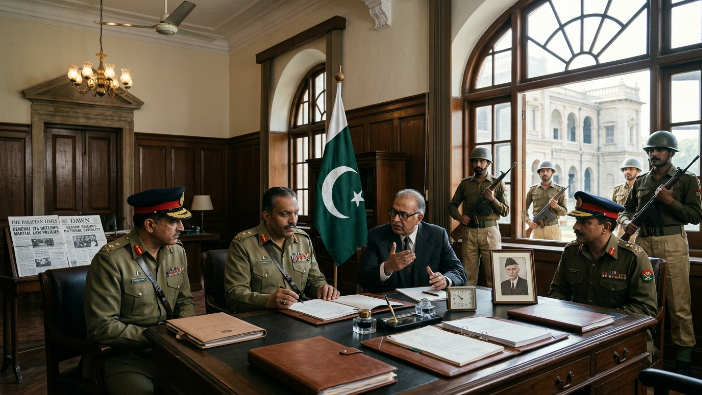
1. Why Was 1978 Important in Pakistan’s History?
1978 was important because General Zia-ul-Haq consolidated military rule after the 1977 coup. The year also witnessed the death sentence of Zulfikar Ali Bhutto, Zia’s assumption of the presidency, and growing political restrictions.
2. Who Was the Chief Martial Law Administrator in 1978?
General Muhammad Zia-ul-Haq was the Chief Martial Law Administrator in 1978. He controlled the government after removing Zulfikar Ali Bhutto from power in July 1977.
3. Who Was the President of Pakistan at the Start of 1978?
Fazal Ilahi Chaudhry was the President of Pakistan at the start of 1978. However, real power was held by General Zia-ul-Haq under martial law.
4. Who Became President of Pakistan in 1978?
General Zia-ul-Haq became President of Pakistan on 16 September 1978. He took over the office after Fazal Ilahi Chaudhry completed his term.
5. Why Was Zia-ul-Haq Becoming President Important?
Zia’s assumption of the presidency strengthened his control over both military and civilian institutions. It marked a deeper consolidation of military rule.
6. What Was the Political System of Pakistan in 1978?
Pakistan was under martial law in 1978. The 1973 Constitution existed but civilian democratic rule was suspended in practice.
7. What Was the Status of the 1973 Constitution in 1978?
The 1973 Constitution was held in abeyance under martial law. Many constitutional protections and democratic procedures were restricted.
8. What Was the Most Important Legal Event of 1978?
The most important legal event was the death sentence given to Zulfikar Ali Bhutto by the Lahore High Court. This case became one of the most controversial trials in Pakistan’s history.
9. When Was Zulfikar Ali Bhutto Sentenced to Death?
Zulfikar Ali Bhutto was sentenced to death by the Lahore High Court in March 1978. The sentence was related to the murder case of Nawab Muhammad Ahmed Khan Kasuri.
10. Why Was Bhutto’s Death Sentence Controversial?
The sentence was controversial because Bhutto was a former Prime Minister and leader of the Pakistan Peoples Party. Many supporters believed the case had strong political dimensions.
11. What Was the Bhutto Murder Case?
The case involved allegations that Bhutto had ordered the murder of Nawab Muhammad Ahmed Khan Kasuri. It became a central legal and political issue during Zia’s rule.
12. Who Was Nawab Muhammad Ahmed Khan Kasuri?
Nawab Muhammad Ahmed Khan Kasuri was the father of Ahmad Raza Kasuri. His murder case became the basis of the trial against Zulfikar Ali Bhutto.
13. What Was Bhutto’s Political Status in 1978?
Bhutto was in prison and facing legal proceedings. Despite imprisonment, he remained the most important civilian political figure for his supporters.
14. What Was the Role of the Pakistan Peoples Party in 1978?
The Pakistan Peoples Party remained under pressure after the coup. Many of its leaders and workers faced restrictions, arrests, and political limitations.
15. What Was the Situation of Political Parties in 1978?
Political parties faced severe restrictions under martial law. Political activities, rallies, and public mobilization were controlled by the military government.
16. Did Zia-ul-Haq Hold Elections in 1978?
No, elections were not held in 1978. Although Zia had earlier promised elections, the military government delayed the return to civilian rule.
17. Why Were Elections Delayed in 1978?
Elections were delayed because Zia’s regime claimed that political stability and accountability were needed first. Critics argued that the delay helped the military regime remain in power.
18. What Was the Main Political Promise of Zia-ul-Haq?
Zia had promised to hold free and fair elections and return power to elected representatives. However, this promise was not fulfilled in 1978.
19. What Was the Public Reaction to Martial Law in 1978?
Public opinion was divided. Some people supported martial law for restoring order, while others opposed it because it suspended democracy and restricted political freedoms.
20. What Was the Role of the Judiciary in 1978?
The judiciary played a major role because Bhutto’s legal case was before the courts. Judicial decisions during this period had major political consequences.
21. Why Was the Judiciary Under Pressure in 1978?
The judiciary operated in a highly political environment under martial law. The Bhutto case placed the courts at the center of national attention.
22. What Was the Role of Military Courts in 1978?
Military courts were used under martial law to handle certain political and security-related cases. They reflected the military government’s control over law and order.
23. What Was the Law and Order Situation in 1978?
The government maintained strict control through martial law regulations. Political opposition and public protest were restricted.
24. What Was Press Censorship in 1978?
Press censorship meant that newspapers and media outlets operated under government restrictions. The martial law regime controlled political reporting and criticism.
25. Why Was Press Censorship Important in 1978?
Press censorship limited public debate and criticism of the military government. It became a major concern for journalists and political activists.
26. What Was Zia-ul-Haq’s Islamization Policy in 1978?
Zia began promoting Islamization as a central theme of his rule. Although major Islamization laws came later, the ideological direction became visible during this period.
27. Why Did Zia Promote Islamization?
Zia used Islamization to gain religious legitimacy and public support. It also helped him present military rule as part of a moral and religious reform agenda.
28. What Was the Role of Religious Parties in 1978?
Religious parties gained importance because Zia’s government used Islamic language and policies. Some religious groups supported parts of his agenda.
29. What Was the Situation of Civil Liberties in 1978?
Civil liberties were restricted under martial law. Political speech, public meetings, and party activities were controlled by the state.
30. What Was the Biggest Political Challenge for Zia in 1978?
Zia’s biggest political challenge was managing Bhutto’s popularity and controlling opposition to military rule. The Bhutto case remained central to national politics.
31. What Was Pakistan’s Economic Condition in 1978?
Pakistan faced economic difficulties, including inflation, unemployment concerns, and the effects of earlier nationalization policies. The military government tried to stabilize the economy.
32. What Was the Impact of Nationalization in 1978?
The effects of Bhutto’s nationalization policies continued in 1978. Many industries and institutions remained under state control.
33. Did Zia Reverse Nationalization in 1978?
Zia did not immediately reverse all nationalization policies. However, his government gradually moved toward encouraging private-sector confidence.
34. What Was Pakistan’s Agricultural Situation in 1978?
Agriculture remained a major part of the economy. Food production, irrigation, and rural development remained important national concerns.
35. What Was Pakistan’s Industrial Situation in 1978?
Industry was still affected by state control and economic uncertainty. The government focused on restoring investor confidence and administrative stability.
36. What Was Pakistan’s Foreign Policy Focus in 1978?
Pakistan focused on relations with China, the United States, Muslim countries, India, and Afghanistan. Regional security became increasingly important.
37. What Was Pakistan’s Relationship With China in 1978?
Pakistan maintained strong and friendly relations with China. China remained one of Pakistan’s closest strategic partners.
38. Why Was the Karakoram Highway Important in 1978?
The Karakoram Highway was officially opened in 1978. It strengthened Pakistan-China connectivity and became a major symbol of friendship between the two countries.
39. What Was the Karakoram Highway?
The Karakoram Highway is a major road link connecting Pakistan with China through the northern areas. It became one of the highest paved international roads in the world.
40. What Was Pakistan’s Relationship With the United States in 1978?
Pakistan’s relationship with the United States was cautious. Nuclear concerns and internal political developments affected the relationship.
41. What Was Pakistan’s Nuclear Policy in 1978?
Pakistan continued developing its nuclear program. The program remained important for national security, especially after India’s 1974 nuclear test.
42. Why Was Pakistan’s Nuclear Program Important in 1978?
The nuclear program was seen as a strategic response to India’s nuclear capability. It became one of Pakistan’s most sensitive national security projects.
43. What Was Pakistan’s Relationship With India in 1978?
Pakistan’s relations with India remained cautious and shaped by the unresolved Kashmir dispute. The Simla Agreement still guided formal relations.
44. What Was the Status of Kashmir in 1978?
The Kashmir dispute remained unresolved. Pakistan continued to consider Kashmir a central issue in its foreign policy.
45. What Happened in Afghanistan in 1978 That Affected Pakistan?
The Saur Revolution took place in Afghanistan in 1978, bringing a communist government to power. This development increased Pakistan’s security concerns on its western border.
46. Why Was Afghanistan Important for Pakistan in 1978?
Afghanistan was important because political instability there could affect Pakistan’s border security. The rise of a communist government created new regional concerns.
47. What Was the Role of the Armed Forces in 1978?
The armed forces controlled the state under Zia-ul-Haq. The military became the dominant political and administrative institution.
48. What Was the Biggest Political Controversy of 1978?
The biggest controversy was the trial and death sentence of Zulfikar Ali Bhutto. It divided public opinion and shaped Pakistan’s political future.
49. Why Is 1978 Considered a Year of Military Consolidation?
1978 is considered a year of military consolidation because Zia strengthened his rule, became President, restricted political activity, and delayed elections.
50. What Is the Historical Significance of 1978 for Pakistan?
1978 is historically significant because General Zia-ul-Haq consolidated martial law, became President, delayed democratic elections, continued restrictions on political parties, and oversaw the controversial death sentence of Zulfikar Ali Bhutto.
1979
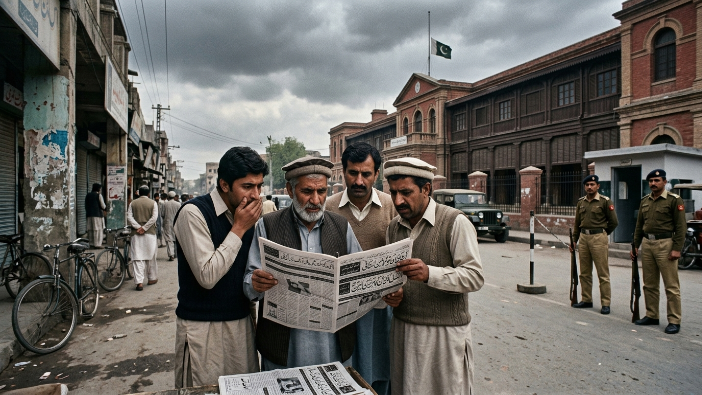
1. Why Was 1979 Important in Pakistan’s History?
1979 was one of the most critical years in Pakistan’s history. It witnessed the execution of Zulfikar Ali Bhutto, the expansion of Zia-ul-Haq’s Islamization policies, the Soviet invasion of Afghanistan, and major changes in Pakistan’s regional security environment.
2. Who Was the President of Pakistan in 1979?
General Muhammad Zia-ul-Haq was the President of Pakistan in 1979. He also served as Chief Martial Law Administrator and controlled the country through military rule.
3. What Was the Political System of Pakistan in 1979?
Pakistan was under martial law in 1979. Civilian democratic institutions were restricted, and real political power remained in the hands of General Zia-ul-Haq and the military administration.
4. What Was the Most Important Political Event of 1979?
The most important political event was the execution of former Prime Minister Zulfikar Ali Bhutto. His death deeply affected Pakistan’s politics and created a lasting division in national political memory.
5. When Was Zulfikar Ali Bhutto Executed?
Zulfikar Ali Bhutto was executed on 4 April 1979. He was hanged in Rawalpindi Central Jail after a highly controversial murder trial.
6. Why Was Bhutto’s Execution Controversial?
Bhutto’s execution was controversial because many people believed his trial was politically influenced. His supporters considered him a victim of military rule and judicial injustice.
7. What Was the Case Against Zulfikar Ali Bhutto?
Bhutto was convicted in a murder case related to the killing of Nawab Muhammad Ahmed Khan Kasuri. The case became one of the most debated legal and political cases in Pakistan’s history.
8. Who Was Nawab Muhammad Ahmed Khan Kasuri?
Nawab Muhammad Ahmed Khan Kasuri was the father of Ahmad Raza Kasuri. His murder case became the legal basis for the trial against Zulfikar Ali Bhutto.
9. What Was the Role of the Supreme Court in Bhutto’s Case?
The Supreme Court of Pakistan upheld Bhutto’s death sentence by a narrow majority. The decision remains one of the most discussed judgments in Pakistan’s judicial history.
10. How Did Bhutto’s Execution Affect the Pakistan Peoples Party?
Bhutto’s execution turned him into a political symbol for the Pakistan Peoples Party. The party entered a long period of struggle against Zia-ul-Haq’s military regime.
11. Who Led the PPP After Bhutto’s Execution?
Begum Nusrat Bhutto and Benazir Bhutto became central figures in the Pakistan Peoples Party after Bhutto’s execution. They continued political resistance against the Zia regime.
12. What Was the Public Reaction to Bhutto’s Execution?
Public reaction was deeply divided. His supporters mourned him as a democratic leader, while the military regime defended the execution as a legal decision.
13. Why Is 4 April Important in Pakistan’s Political History?
4 April is remembered as the day Zulfikar Ali Bhutto was executed. It became a major date in the political history of the PPP and Pakistan’s democratic struggle.
14. What Was Zia-ul-Haq’s Main Political Goal in 1979?
Zia’s main goal was to consolidate military rule and reshape Pakistan according to his political and religious vision. He delayed elections and expanded state control over politics.
15. Did Zia-ul-Haq Hold General Elections in 1979?
No, general elections were not held in 1979. Although Zia had promised elections earlier, he postponed them and continued martial law.
16. Why Were Elections Delayed in 1979?
Elections were delayed because the military regime wanted to maintain control and prevent the return of strong civilian opposition. Critics argued that the delay weakened democracy.
17. What Happened to Political Parties in 1979?
Political parties faced restrictions under martial law. Public rallies, political campaigns, and organized opposition activities were limited by the state.
18. What Was the Role of Martial Law Regulations in 1979?
Martial law regulations controlled political activity, media reporting, public gatherings, and legal procedures. These regulations strengthened the military government’s authority.
19. What Was Zia-ul-Haq’s Islamization Policy?
Zia’s Islamization policy aimed to introduce laws and social practices based on Islamic principles as interpreted by his regime. It became a major feature of his rule.
20. Why Did Zia Promote Islamization?
Zia used Islamization to gain religious legitimacy and support from conservative groups. It also helped him justify military rule as a moral and ideological project.
21. What Were the Hudood Ordinances?
The Hudood Ordinances were a set of Islamic criminal laws introduced by Zia-ul-Haq in 1979. They dealt with offences such as theft, adultery, false accusation, and prohibition of alcohol.
22. When Were the Hudood Ordinances Introduced?
The Hudood Ordinances were introduced in 1979. They became one of the most controversial legal reforms of Zia-ul-Haq’s Islamization program.
23. Why Were the Hudood Ordinances Important?
They significantly changed Pakistan’s criminal law framework by adding religious punishments and procedures. Their social and legal impact remained controversial for decades.
24. Why Were the Hudood Ordinances Criticized?
Critics argued that the laws created serious problems for women, minorities, and vulnerable citizens. Supporters viewed them as necessary Islamic legal reforms.
25. What Was the Prohibition Order of 1979?
The Prohibition Order restricted the use, sale, and consumption of alcohol for Muslims in Pakistan. It was part of Zia-ul-Haq’s Islamization agenda.
26. What Was the Zina Ordinance?
The Zina Ordinance dealt with offences related to adultery and fornication. It became one of the most controversial parts of the Hudood laws.
27. What Was the Qazf Ordinance?
The Qazf Ordinance dealt with false accusations of adultery. It was introduced as part of the Hudood legal framework.
28. What Was the Offences Against Property Ordinance?
This ordinance dealt with theft and related property crimes under the Hudood framework. It introduced Islamic legal concepts into criminal punishment.
29. What Was the Role of Religious Parties in 1979?
Religious parties gained influence because Zia’s regime promoted Islamic laws and symbols. Some religious groups supported his Islamization agenda.
30. What Was the Condition of Civil Liberties in 1979?
Civil liberties were restricted under martial law. Political expression, press freedom, public gatherings, and opposition activities were tightly controlled.
31. What Was the Situation of the Press in 1979?
The press operated under censorship and restrictions. Newspapers and journalists faced pressure if they criticized the military government or sensitive political issues.
32. What Was Pakistan’s Economic Condition in 1979?
Pakistan’s economy faced inflation, unemployment concerns, and uncertainty under martial law. However, foreign aid and regional developments soon began affecting economic policy.
33. What Was the Role of Remittances in 1979?
Remittances from Pakistani workers in the Middle East became increasingly important. They helped support household incomes and contributed to foreign exchange earnings.
34. What Was Pakistan’s Nuclear Policy in 1979?
Pakistan continued developing its nuclear program in 1979. The program remained a major national security priority, especially after India’s 1974 nuclear test.
35. Why Was Pakistan’s Nuclear Program Under International Pressure?
Western countries were concerned about Pakistan’s nuclear ambitions. This created diplomatic pressure, especially in relations with the United States.
36. What Was Pakistan’s Relationship With the United States in 1979?
Relations with the United States were tense during much of 1979 due to nuclear concerns. However, the Soviet invasion of Afghanistan later changed Pakistan’s strategic importance.
37. What Happened in Afghanistan in 1979?
The Soviet Union invaded Afghanistan in December 1979. This event dramatically changed Pakistan’s security environment and made Afghanistan a central foreign policy issue.
38. Why Was the Soviet Invasion of Afghanistan Important for Pakistan?
The invasion brought a superpower conflict to Pakistan’s western border. Pakistan became a frontline state in the Cold War and later hosted millions of Afghan refugees.
39. How Did the Afghan Crisis Affect Pakistan?
The Afghan crisis increased Pakistan’s strategic importance but also created security, social, and economic challenges. It shaped Pakistan’s politics and foreign policy for years.
40. What Was Pakistan’s Relationship With Afghanistan in 1979?
Relations became highly tense after the Soviet-backed Afghan government and later Soviet military presence. Pakistan grew concerned about border security and regional instability.
41. What Was Pakistan’s Relationship With China in 1979?
Pakistan maintained strong relations with China. China remained one of Pakistan’s most reliable strategic partners during this period.
42. What Was Pakistan’s Relationship With India in 1979?
Relations with India remained cautious and shaped by the unresolved Kashmir dispute. Regional security remained a major concern for Pakistan.
43. What Was the Status of Kashmir in 1979?
The Kashmir dispute remained unresolved in 1979. Pakistan continued to consider Kashmir a central issue in its relations with India.
44. What Happened to the United States Embassy in Islamabad in 1979?
The United States Embassy in Islamabad was attacked and burned by a mob in November 1979. The incident occurred after false rumors linked the United States to the seizure of the Grand Mosque in Makkah.
45. Why Was the Attack on the U.S. Embassy Important?
The attack became a major diplomatic crisis between Pakistan and the United States. It showed how regional and religious tensions could affect international relations.
46. What Was Pakistan’s Relationship With the Muslim World in 1979?
Pakistan maintained close relations with many Muslim countries. The Afghan crisis and Islamic identity became increasingly important in Pakistan’s foreign policy.
47. What Was the Role of the Armed Forces in 1979?
The armed forces controlled the state under Zia-ul-Haq. The military dominated governance, internal security, and national decision-making.
48. What Was the Biggest Legal Development of 1979?
The Hudood Ordinances were the biggest legal development of 1979. They became central to Zia-ul-Haq’s Islamization program.
49. Why Is 1979 Considered a Turning Point?
1979 is considered a turning point because Bhutto was executed, Islamization expanded, and the Soviet invasion of Afghanistan changed Pakistan’s regional role.
50. What Is the Historical Significance of 1979 for Pakistan?
1979 is historically significant because it combined major internal and external transformations. The execution of Zulfikar Ali Bhutto, the Hudood Ordinances, martial law consolidation, the U.S. Embassy attack, and the Soviet invasion of Afghanistan made it one of the most consequential years in Pakistan’s history.
1980
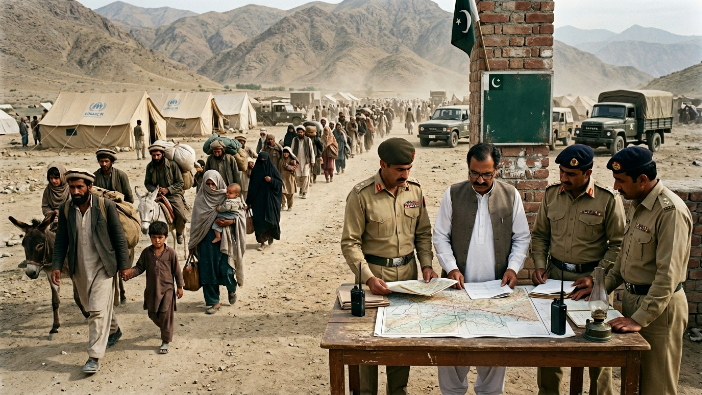
1. Why Was 1980 Important in Pakistan’s History?
1980 was important because Pakistan became deeply involved in the Afghan conflict after the Soviet invasion of Afghanistan. The year also saw major Islamization measures under General Zia-ul-Haq, including the Zakat and Ushr Ordinance and the establishment of the Federal Shariat Court.
2. Who Was the President of Pakistan in 1980?
General Muhammad Zia-ul-Haq was the President of Pakistan in 1980. He also remained Chief Martial Law Administrator and controlled the country through military rule.
3. What Was Pakistan’s Political System in 1980?
Pakistan was under martial law in 1980. Civilian democratic institutions were restricted, and political power remained concentrated in the hands of General Zia-ul-Haq and the military government.
4. Did Pakistan Have a Prime Minister in 1980?
No, Pakistan did not have an elected Prime Minister in 1980. The country was being governed directly by the military regime under President Zia-ul-Haq.
5. What Was the Status of the 1973 Constitution in 1980?
The 1973 Constitution was held in abeyance under martial law. Many democratic and constitutional protections were suspended or limited.
6. What Was the Most Important International Issue for Pakistan in 1980?
The most important international issue was the Soviet invasion of Afghanistan. This event turned Pakistan into a frontline state in the Cold War.
7. Why Did Afghanistan Become Important for Pakistan in 1980?
Afghanistan became important because Soviet troops had entered the country in December 1979. Pakistan feared that Soviet influence near its western border could threaten its national security.
8. What Was Pakistan’s Response to the Soviet Invasion of Afghanistan?
Pakistan opposed the Soviet invasion and supported Afghan resistance groups. It also received international attention as a key state bordering Soviet-occupied Afghanistan.
9. What Was the Afghan Jihad?
The Afghan Jihad refers to the armed resistance against Soviet forces in Afghanistan. Pakistan became a major base for Afghan fighters, refugees, and international support networks.
10. Why Was Pakistan Called a Frontline State in 1980?
Pakistan was called a frontline state because it directly bordered Afghanistan during the Soviet occupation. Its location made it central to the anti-Soviet strategy of the United States and its allies.
11. What Was the Role of Afghan Refugees in 1980?
Large numbers of Afghan refugees entered Pakistan after the Soviet invasion. Most settled in refugee camps in areas such as Khyber Pakhtunkhwa and Balochistan.
12. Why Was the Afghan Refugee Crisis Important?
The refugee crisis created major social, economic, and administrative challenges for Pakistan. It also changed the demographic and security situation in border regions.
13. What Was the Role of Peshawar in the Afghan Conflict?
Peshawar became a major center for Afghan political groups, refugees, and resistance activities. It played a key role during the Afghan war period.
14. How Did the Afghan War Affect Pakistan’s Foreign Policy?
The Afghan war shifted Pakistan’s foreign policy toward closer cooperation with the United States, Saudi Arabia, and other anti-Soviet countries.
15. What Was Pakistan’s Relationship With the United States in 1980?
Pakistan’s relationship with the United States began improving after the Soviet invasion of Afghanistan. The United States viewed Pakistan as an important partner against Soviet expansion.
16. Why Did the United States Need Pakistan in 1980?
The United States needed Pakistan because of its strategic location next to Afghanistan. Pakistan became important for supporting Afghan resistance and containing Soviet influence.
17. What Was Pakistan’s Relationship With Saudi Arabia in 1980?
Pakistan’s relationship with Saudi Arabia strengthened during this period. Saudi Arabia supported Pakistan diplomatically and financially in relation to the Afghan conflict and Islamic cooperation.
18. What Was Pakistan’s Relationship With China in 1980?
Pakistan maintained strong relations with China. China remained one of Pakistan’s closest strategic partners and shared concerns about Soviet influence in the region.
19. What Was Pakistan’s Relationship With India in 1980?
Relations with India remained cautious and shaped by historical disputes such as Kashmir. The Afghan crisis also changed the broader regional security environment.
20. What Was the Status of the Kashmir Dispute in 1980?
The Kashmir dispute remained unresolved. Pakistan continued to treat Kashmir as a central issue in its foreign policy toward India.
21. What Was Zia-ul-Haq’s Islamization Policy in 1980?
Zia-ul-Haq’s Islamization policy aimed to reshape Pakistan’s legal, social, and economic systems according to Islamic principles as interpreted by his regime.
22. What Was the Zakat and Ushr Ordinance?
The Zakat and Ushr Ordinance was introduced in 1980 as part of Zia’s Islamization program. It created a state-administered system for collecting Zakat and Ushr.
23. Why Was the Zakat and Ushr Ordinance Important?
It was important because it brought Islamic taxation into the state system. The ordinance became one of the most visible economic and religious reforms of Zia’s rule.
24. What Is Zakat?
Zakat is an Islamic obligation involving a fixed portion of wealth given for welfare and social support. Under the 1980 ordinance, the state became involved in its collection and distribution.
25. What Is Ushr?
Ushr is an Islamic levy related to agricultural produce. The 1980 ordinance included Ushr as part of the wider Islamization of economic practices.
26. Why Did Some Groups Oppose the Zakat Ordinance?
Some groups opposed the ordinance because they disagreed with compulsory state collection of Zakat. Shia groups especially objected due to differences in religious interpretation.
27. What Was the Shia Protest Movement of 1980?
Shia groups protested against compulsory Zakat deduction under the state system. Their protests led the government to make exemptions for Shia citizens.
28. Why Was the Shia Protest Important?
The protest was important because it showed that Islamization policies could create sectarian and legal debates. It also forced the government to modify its policy.
29. What Was the Federal Shariat Court?
The Federal Shariat Court was established in 1980. Its purpose was to examine whether laws were in accordance with Islamic injunctions.
30. Why Was the Federal Shariat Court Important?
The court became a major institution in Zia-ul-Haq’s Islamization program. It gave a formal judicial role to Islamic legal review within Pakistan’s legal system.
31. How Did the Federal Shariat Court Affect Pakistan’s Legal System?
It introduced a new layer of Islamic judicial review. Laws could be challenged if they were considered inconsistent with Islamic principles.
32. What Was the Role of the Judiciary in 1980?
The judiciary operated under the pressure of martial law and Islamization reforms. Courts dealt with legal changes introduced by the military regime.
33. What Was the Status of Political Parties in 1980?
Political parties remained restricted under martial law. Public political activity, rallies, and opposition mobilization were controlled by the government.
34. What Was the Situation of the Pakistan Peoples Party in 1980?
The Pakistan Peoples Party remained under pressure after the execution of Zulfikar Ali Bhutto in 1979. Its leaders and workers continued to face restrictions under the Zia regime.
35. Who Were the Main PPP Leaders After Bhutto’s Death?
Begum Nusrat Bhutto and Benazir Bhutto became important figures in the PPP after Zulfikar Ali Bhutto’s execution. They represented political resistance against military rule.
36. What Was the Condition of Civil Liberties in 1980?
Civil liberties were limited under martial law. Freedom of speech, press freedom, public assembly, and political organization were restricted.
37. What Was the Condition of the Press in 1980?
The press operated under censorship and government pressure. Newspapers had to be careful when reporting on politics, martial law, and opposition activities.
38. What Was the Role of Military Courts in 1980?
Military courts continued to function under martial law regulations. They were used for cases linked to security, political control, and law and order.
39. What Was Pakistan’s Economic Condition in 1980?
Pakistan’s economy faced inflation, political uncertainty, and the effects of regional conflict. However, foreign assistance and remittances became increasingly important.
40. Why Were Remittances Important in 1980?
Remittances from Pakistani workers in the Middle East helped support the economy. They provided foreign exchange and improved household incomes.
41. What Was the Role of the Middle East in Pakistan’s Economy?
The Middle East became important because many Pakistanis worked there and sent money home. These remittances became a major source of economic support.
42. What Was Pakistan’s Nuclear Policy in 1980?
Pakistan continued developing its nuclear program. The program remained a sensitive national security priority, especially due to India’s nuclear capability.
43. Why Was Pakistan’s Nuclear Program Under International Concern?
Western countries were concerned that Pakistan was moving toward nuclear weapons capability. This created pressure in Pakistan’s relations with some foreign powers.
44. How Did the Afghan War Affect Pakistan’s Nuclear Issue?
The Afghan war increased Pakistan’s strategic value to the United States. Because Pakistan became important against the Soviet Union, Western pressure over the nuclear issue became more complicated.
45. What Was the Role of the Armed Forces in 1980?
The armed forces controlled the state under Zia-ul-Haq. They played the central role in governance, security policy, and decisions related to Afghanistan.
46. What Was the Role of the Inter-Services Intelligence in 1980?
The Inter-Services Intelligence became increasingly important due to the Afghan conflict. It later played a major role in coordinating support for Afghan resistance groups.
47. What Was the Biggest Legal Development of 1980?
The establishment of the Federal Shariat Court and the introduction of the Zakat and Ushr Ordinance were the biggest legal developments of the year.
48. What Was the Biggest Foreign Policy Development of 1980?
The biggest foreign policy development was Pakistan’s growing role in the Afghan conflict after the Soviet invasion. This changed Pakistan’s international importance.
49. Why Is 1980 Considered a Turning Point?
1980 is considered a turning point because Pakistan became central to the Afghan war and Zia’s Islamization program expanded through major legal reforms.
50. What Is the Historical Significance of 1980 for Pakistan?
1980 is historically significant because Pakistan became a frontline state in the Afghan conflict, strengthened relations with anti-Soviet powers, received Afghan refugees, introduced the Zakat and Ushr Ordinance, and established the Federal Shariat Court under Zia-ul-Haq’s military regime.
1981
1. Why Was 1981 Important in Pakistan’s History?
1981 was important because General Zia-ul-Haq strengthened military rule through constitutional and legal measures. The year also saw the formation of the Movement for the Restoration of Democracy, the PIA hijacking crisis, and Pakistan’s growing role in the Afghan war.
2. Who Was the President of Pakistan in 1981?
General Muhammad Zia-ul-Haq was the President of Pakistan in 1981. He also remained the Chief Martial Law Administrator and controlled the state through military authority.
3. What Was Pakistan’s Political System in 1981?
Pakistan was under martial law in 1981. Civilian democratic rule remained suspended, and political parties faced serious restrictions.
4. Did Pakistan Have an Elected Prime Minister in 1981?
No, Pakistan did not have an elected Prime Minister in 1981. The country was ruled directly by General Zia-ul-Haq and the military administration.
5. What Was the Status of the 1973 Constitution in 1981?
The 1973 Constitution was held in abeyance under martial law. Constitutional rule was limited, and many democratic protections were suspended.
6. What Was the Most Important Constitutional Development of 1981?
The most important constitutional development was the Provisional Constitutional Order, commonly known as the PCO. It changed the legal and judicial environment under Zia’s martial law regime.
7. What Was the Provisional Constitutional Order of 1981?
The Provisional Constitutional Order was a legal order issued by General Zia-ul-Haq. It required judges to take a new oath under the military regime.
8. Why Was the PCO Important?
The PCO strengthened Zia-ul-Haq’s control over the judiciary. It also limited the ability of courts to challenge martial law actions.
9. How Did the PCO Affect the Judiciary?
Judges were required to take a fresh oath under the PCO. Some judges who did not take the oath were removed or excluded from judicial office.
10. Why Was the PCO Controversial?
The PCO was controversial because it weakened judicial independence. Critics believed it placed the courts under the authority of the military regime.
11. What Was the Main Political Opposition Development in 1981?
The main opposition development was the formation of the Movement for the Restoration of Democracy. It became a major alliance against Zia-ul-Haq’s military rule.
12. What Was the Movement for the Restoration of Democracy?
The Movement for the Restoration of Democracy, or MRD, was an alliance of opposition parties. Its main demand was the end of martial law and restoration of the 1973 Constitution.
13. When Was the MRD Formed?
The MRD was formed in 1981. It brought together several political groups opposed to General Zia-ul-Haq’s rule.
14. Why Was the MRD Important?
The MRD became the most important organized opposition movement against Zia’s dictatorship. It later played a major role in protests for democracy.
15. Which Party Was Central to the MRD?
The Pakistan Peoples Party was one of the central parties in the MRD. After Zulfikar Ali Bhutto’s execution, the PPP became a major force of resistance against Zia’s regime.
16. Who Were the Main PPP Leaders in 1981?
Begum Nusrat Bhutto and Benazir Bhutto were important PPP leaders in 1981. They symbolized opposition to martial law and continued Bhutto’s political legacy.
17. What Was Benazir Bhutto’s Political Role in 1981?
Benazir Bhutto became increasingly important as an opposition figure. She faced imprisonment and restrictions but remained a symbol of democratic resistance.
18. What Was Nusrat Bhutto’s Role in 1981?
Nusrat Bhutto led the Pakistan Peoples Party after Zulfikar Ali Bhutto’s death. She helped keep the party active despite repression under martial law.
19. What Was the Status of Political Parties in 1981?
Political parties were restricted under martial law. Public meetings, rallies, and political activities were controlled by the government.
20. Why Were Political Parties Restricted in 1981?
The military regime restricted parties to prevent organized resistance and maintain control. The government argued that restrictions were needed for stability.
21. What Was the PIA Hijacking Crisis of 1981?
In 1981, a Pakistan International Airlines aircraft was hijacked by members of Al-Zulfikar. The incident became one of the most serious security crises of the year.
22. What Was Al-Zulfikar?
Al-Zulfikar was a militant organization associated with anti-Zia resistance. It was linked to radical opposition after the execution of Zulfikar Ali Bhutto.
23. Why Was the PIA Hijacking Important?
The hijacking drew international attention and created pressure on the Zia government. It also intensified the regime’s crackdown on opposition-linked groups.
24. How Did the Government Respond to the Hijacking?
The government treated the hijacking as a major act of terrorism. It increased security measures and used the incident to justify stronger action against opponents.
25. What Was the Law and Order Situation in 1981?
The law and order situation remained tense due to political repression, security concerns, and the Afghan conflict. Martial law authorities maintained strict control.
26. What Was the Condition of Civil Liberties in 1981?
Civil liberties were limited under martial law. Freedom of speech, press freedom, political organization, and public protest were heavily restricted.
27. What Was the Condition of the Press in 1981?
The press operated under censorship and pressure from the military government. Newspapers had to avoid strong criticism of martial law and sensitive political matters.
28. What Was Zia-ul-Haq’s Islamization Policy in 1981?
Zia’s Islamization policy continued in 1981. The regime promoted Islamic laws, religious institutions, and moral regulations as part of its political identity.
29. What Was the Role of the Federal Shariat Court in 1981?
The Federal Shariat Court continued to function after its creation in 1980. It reviewed laws to determine whether they were consistent with Islamic principles.
30. Why Was the Federal Shariat Court Important?
It gave formal legal authority to Islamic review of legislation. This made it a key institution in Zia-ul-Haq’s Islamization program.
31. What Was the Zakat and Ushr System in 1981?
The Zakat and Ushr system continued after its introduction in 1980. It involved state-administered collection and distribution of Islamic welfare contributions.
32. Why Was the Zakat System Controversial?
The system was controversial because some religious groups objected to compulsory state collection. It also raised sectarian and administrative concerns.
33. What Was Pakistan’s Economic Situation in 1981?
Pakistan’s economy was affected by martial law policies, Afghan war pressures, inflation, and dependence on foreign assistance. Remittances from overseas workers also became increasingly important.
34. Why Were Remittances Important in 1981?
Remittances from Pakistani workers in the Middle East helped support families and provided foreign exchange. They became a major source of economic stability.
35. What Was Pakistan’s Relationship With the United States in 1981?
Pakistan’s relationship with the United States improved significantly in 1981 because of the Afghan war. The Reagan administration viewed Pakistan as a key partner against Soviet influence.
36. Why Did the United States Support Pakistan in 1981?
The United States supported Pakistan because it was strategically located next to Soviet-occupied Afghanistan. Pakistan became important for supporting Afghan resistance groups.
37. What Was the U.S. Aid Package to Pakistan in 1981?
In 1981, Pakistan and the United States moved toward a major military and economic assistance package. This aid was connected to Pakistan’s frontline role in the Afghan conflict.
38. Why Was U.S. Aid Important for Pakistan?
U.S. aid helped strengthen Pakistan’s economy and defense capabilities. It also increased Pakistan’s international importance during the Cold War.
39. What Was Pakistan’s Role in the Afghan War in 1981?
Pakistan supported Afghan resistance against Soviet forces. It became a base for refugees, political groups, and international assistance networks.
40. What Was the Afghan Refugee Situation in 1981?
Large numbers of Afghan refugees continued to enter Pakistan. Refugee camps expanded in areas such as Khyber Pakhtunkhwa and Balochistan.
41. Why Was the Afghan Refugee Crisis Important?
The refugee crisis placed pressure on Pakistan’s resources and administration. It also changed the social and security environment of border regions.
42. What Was the Role of Peshawar in 1981?
Peshawar became a major center for Afghan refugees and resistance-related political activity. Its strategic importance increased during the Afghan war.
43. What Was Pakistan’s Relationship With Saudi Arabia in 1981?
Pakistan’s relations with Saudi Arabia remained strong. Saudi Arabia supported Pakistan diplomatically and financially, especially in the context of Islamic cooperation and the Afghan conflict.
44. What Was Pakistan’s Relationship With China in 1981?
Pakistan maintained strong relations with China. China remained an important strategic partner, especially in regional security matters.
45. What Was Pakistan’s Relationship With India in 1981?
Relations with India remained cautious and shaped by the unresolved Kashmir dispute. Regional security concerns continued to influence Pakistan’s foreign policy.
46. What Was the Status of Kashmir in 1981?
The Kashmir dispute remained unresolved in 1981. Pakistan continued to consider Kashmir a central issue in relations with India.
47. What Was Pakistan’s Nuclear Policy in 1981?
Pakistan continued developing its nuclear program. The program remained a sensitive national security priority and attracted international attention.
48. Why Was Pakistan’s Nuclear Program Important in 1981?
Pakistan viewed nuclear development as necessary for strategic balance with India. At the same time, international concerns created diplomatic pressure.
49. Why Is 1981 Considered a Year of Military Consolidation?
1981 is considered a year of military consolidation because Zia strengthened his authority through the PCO, restricted political activity, and delayed democratic restoration.
50. What Is the Historical Significance of 1981 for Pakistan?
1981 is historically significant because the Provisional Constitutional Order strengthened military control, the MRD emerged as a democratic opposition alliance, the PIA hijacking crisis intensified security concerns, and Pakistan’s role in the Afghan war increased its international importance.
1982
1. Why Was 1982 Important in Pakistan’s History?
1982 was important because General Zia-ul-Haq continued to consolidate military rule. The year was marked by Islamization policies, political restrictions, the Afghan war, refugee pressure, and Pakistan’s growing strategic importance during the Cold War.
2. Who Was the President of Pakistan in 1982?
General Muhammad Zia-ul-Haq was the President of Pakistan in 1982. He also remained the central military ruler and controlled the country through martial law.
3. What Was Pakistan’s Political System in 1982?
Pakistan was under military rule in 1982. Democratic institutions were restricted, and real authority remained with General Zia-ul-Haq and the martial law administration.
4. Did Pakistan Have an Elected Prime Minister in 1982?
No, Pakistan did not have an elected Prime Minister in 1982. The country was governed directly by the military regime under President Zia-ul-Haq.
5. What Was the Status of the 1973 Constitution in 1982?
The 1973 Constitution was still held in abeyance under martial law. Its democratic framework existed in theory but was not fully operational.
6. What Was the Most Important Political Feature of 1982?
The most important political feature was the continuation of Zia-ul-Haq’s controlled political system. Instead of restoring full democracy, the regime used advisory bodies and martial law powers.
7. What Was the Majlis-e-Shoora?
Majlis-e-Shoora was a nominated advisory council introduced under Zia-ul-Haq. It was not an elected parliament but was presented as a consultative body.
8. Why Was Majlis-e-Shoora Important in 1982?
It was important because Zia used it to create a civilian-looking political structure without holding general elections. Critics saw it as a substitute for real parliamentary democracy.
9. Was Majlis-e-Shoora Democratically Elected?
No, Majlis-e-Shoora was not elected through general elections. Its members were nominated, which limited its democratic legitimacy.
10. Why Did Zia-ul-Haq Avoid General Elections in 1982?
Zia avoided general elections because political parties, especially the PPP, still had strong public support. The regime preferred controlled political participation instead of open electoral competition.
11. What Was the Status of Political Parties in 1982?
Political parties remained restricted under martial law. Public meetings, rallies, and party-based political activity were closely controlled by the state.
12. What Was the Movement for the Restoration of Democracy in 1982?
The Movement for the Restoration of Democracy, or MRD, was an opposition alliance demanding the end of martial law and restoration of the 1973 Constitution.
13. Why Was the MRD Important in 1982?
The MRD was important because it represented organized civilian resistance against Zia-ul-Haq’s dictatorship. It kept the demand for democracy alive during military rule.
14. Which Party Was Most Important in the MRD?
The Pakistan Peoples Party was one of the most important parties in the MRD. After Zulfikar Ali Bhutto’s execution, the PPP became a major symbol of opposition to Zia’s regime.
15. Who Were the Main PPP Leaders in 1982?
Begum Nusrat Bhutto and Benazir Bhutto were among the key PPP leaders. They continued to represent resistance against martial law despite arrests, restrictions, and political pressure.
16. What Was Benazir Bhutto’s Role in 1982?
Benazir Bhutto was emerging as a major opposition figure. Her political identity was strongly connected to the struggle against Zia-ul-Haq’s military regime.
17. What Was Nusrat Bhutto’s Role in 1982?
Nusrat Bhutto remained an important leader of the Pakistan Peoples Party. She helped maintain the party’s political presence during a period of severe repression.
18. What Was the Condition of Civil Liberties in 1982?
Civil liberties were limited under martial law. Freedom of speech, political organization, public protest, and press freedom were heavily restricted.
19. What Was the Condition of the Press in 1982?
The press continued to face censorship and government pressure. Newspapers and journalists had to operate carefully under martial law restrictions.
20. What Was Zia-ul-Haq’s Islamization Policy in 1982?
Zia’s Islamization policy continued to shape Pakistan’s laws, institutions, and public life. The regime promoted Islamic legal reforms and religious identity as part of state policy.
21. Why Was Islamization Important for Zia’s Rule?
Islamization helped Zia present his military government as morally and religiously legitimate. It also attracted support from conservative and religious groups.
22. What Was the Role of the Federal Shariat Court in 1982?
The Federal Shariat Court continued to review laws according to Islamic principles. It remained one of the key institutions of Zia’s Islamization program.
23. Why Was the Federal Shariat Court Important?
It gave the judiciary a formal role in examining whether laws were compatible with Islamic injunctions. This changed the legal structure of Pakistan.
24. What Was the Zakat and Ushr System in 1982?
The Zakat and Ushr system continued after its introduction in 1980. It involved state-administered collection and distribution of Islamic welfare contributions.
25. Why Was the Zakat System Controversial?
The system was controversial because some religious groups objected to compulsory state collection. It also raised sectarian and administrative concerns.
26. What Was Pakistan’s Role in the Afghan War in 1982?
Pakistan played a central role in the Afghan war after the Soviet invasion of Afghanistan. It supported Afghan resistance groups and hosted a large refugee population.
27. Why Was Pakistan Called a Frontline State in 1982?
Pakistan was called a frontline state because it bordered Soviet-occupied Afghanistan. Its geography made it central to the anti-Soviet strategy of the United States and its allies.
28. What Was the Afghan Refugee Situation in 1982?
Large numbers of Afghan refugees continued to live in Pakistan. Refugee camps expanded in Khyber Pakhtunkhwa, Balochistan, and other border areas.
29. Why Was the Afghan Refugee Crisis Important?
The refugee crisis placed heavy pressure on Pakistan’s economy, administration, and security. It also changed the social structure of many border regions.
30. What Was the Role of Peshawar in 1982?
Peshawar became a major center for Afghan refugees, resistance groups, aid networks, and political activity related to the Afghan war.
31. What Was the Role of the Inter-Services Intelligence in 1982?
The Inter-Services Intelligence became increasingly important due to the Afghan conflict. It played a major role in security coordination and support networks linked to the Afghan resistance.
32. What Was Pakistan’s Relationship With the United States in 1982?
Pakistan’s relationship with the United States became stronger because of the Afghan war. The United States viewed Pakistan as an important ally against Soviet influence.
33. Why Did the United States Support Pakistan in 1982?
The United States supported Pakistan because it needed a regional partner next to Afghanistan. Pakistan’s location made it essential for supporting anti-Soviet efforts.
34. What Was the Importance of U.S. Aid in 1982?
U.S. aid helped Pakistan strengthen its defense and economy. It also increased Pakistan’s strategic importance during the Cold War.
35. What Was Pakistan’s Relationship With Saudi Arabia in 1982?
Pakistan’s relations with Saudi Arabia remained strong. Saudi support was important in religious, financial, and Afghan war-related cooperation.
36. What Was Pakistan’s Relationship With China in 1982?
Pakistan maintained close strategic relations with China. China remained one of Pakistan’s most reliable regional partners.
37. What Was Pakistan’s Relationship With India in 1982?
Relations with India remained cautious and shaped by the Kashmir dispute, regional mistrust, and security concerns.
38. What Was the Status of the Kashmir Dispute in 1982?
The Kashmir dispute remained unresolved. Pakistan continued to consider Kashmir a central issue in its relations with India.
39. What Was Pakistan’s Nuclear Policy in 1982?
Pakistan continued to develop its nuclear program. The program was viewed as essential for national security and strategic balance with India.
40. Why Was Pakistan’s Nuclear Program Under International Pressure?
Western countries were concerned about Pakistan’s nuclear ambitions. However, Pakistan’s importance in the Afghan war complicated international pressure.
41. What Was Pakistan’s Economic Situation in 1982?
Pakistan’s economy benefited from foreign aid, remittances, and Afghan war-related strategic importance. However, inflation, inequality, and martial law restrictions remained important issues.
42. Why Were Remittances Important in 1982?
Remittances from Pakistani workers in the Middle East supported families and increased foreign exchange reserves. They became a major source of economic stability.
43. What Was the Role of the Middle East in Pakistan’s Economy?
The Middle East provided employment opportunities for Pakistani workers. Money sent home by these workers became vital for Pakistan’s economy.
44. What Was Pakistan’s Industrial Situation in 1982?
Industry operated under a mixed environment of state control and gradual private-sector encouragement. The Zia regime tried to restore business confidence after the nationalization era.
45. What Was Pakistan’s Agricultural Situation in 1982?
Agriculture remained a major part of Pakistan’s economy. Irrigation, crop production, rural development, and food supply continued to be important national concerns.
46. What Was the Role of the Armed Forces in 1982?
The armed forces remained the dominant institution in Pakistan. They controlled national politics, internal security, and major decisions related to Afghanistan.
47. What Was the Biggest Political Challenge for Zia in 1982?
The biggest political challenge was controlling opposition while delaying democratic elections. The MRD and PPP kept pressure on the military regime.
48. What Was the Biggest Foreign Policy Issue of 1982?
The biggest foreign policy issue was the Afghan war. Pakistan’s role in the conflict shaped its relations with the United States, Saudi Arabia, China, and the wider Muslim world.
49. Why Is 1982 Considered a Year of Military Consolidation?
1982 is considered a year of military consolidation because Zia continued martial law, restricted political parties, used nominated advisory institutions, and strengthened state control.
50. What Is the Historical Significance of 1982 for Pakistan?
1982 is historically significant because Pakistan remained under Zia-ul-Haq’s military rule, expanded its role in the Afghan war, hosted Afghan refugees, continued Islamization policies, restricted democratic politics, and relied on strategic foreign alliances during the Cold War.
1983
1. Why Was 1983 Important in Pakistan’s History?
1983 was important because the Movement for the Restoration of Democracy launched a major protest campaign against General Zia-ul-Haq’s military rule. The year also reflected continued martial law, political repression, Islamization policies, and Pakistan’s expanding role in the Afghan war.
2. Who Was the President of Pakistan in 1983?
General Muhammad Zia-ul-Haq was the President of Pakistan in 1983. He also remained the Chief Martial Law Administrator and controlled the country through military authority.
3. What Was Pakistan’s Political System in 1983?
Pakistan was under military rule in 1983. Democratic institutions were restricted, political parties faced limitations, and the 1973 Constitution was not fully restored.
4. Did Pakistan Have an Elected Prime Minister in 1983?
No, Pakistan did not have an elected Prime Minister in 1983. General Zia-ul-Haq ruled directly through martial law and military-backed administrative structures.
5. What Was the Status of the 1973 Constitution in 1983?
The 1973 Constitution remained held in abeyance under martial law. Although it existed as Pakistan’s constitutional framework, its democratic provisions were not fully operational.
6. What Was the Most Important Political Event of 1983?
The most important political event was the MRD protest movement against Zia-ul-Haq’s rule. It became one of the strongest civilian challenges to the military regime.
7. What Was the Movement for the Restoration of Democracy?
The Movement for the Restoration of Democracy, or MRD, was an alliance of opposition parties. Its main demand was the end of martial law and the restoration of democracy under the 1973 Constitution.
8. When Did the MRD Movement Become Active in 1983?
The MRD launched a major protest campaign in 1983. The movement became especially active around August 1983 and spread in different parts of the country.
9. Why Was the MRD Movement Important?
The MRD was important because it openly challenged military rule. It kept democratic resistance alive during a period when political parties and civil liberties were heavily restricted.
10. Which Province Was Most Affected by the 1983 MRD Movement?
Sindh was the province most affected by the 1983 MRD movement. Protests, arrests, and clashes were especially intense in many areas of Sindh.
11. Why Was Sindh Central to the MRD Movement?
Sindh became central because the Pakistan Peoples Party had strong support there. Many people in Sindh viewed Zia’s rule as unjust after the execution of Zulfikar Ali Bhutto.
12. What Was the Role of the Pakistan Peoples Party in 1983?
The Pakistan Peoples Party was a major force behind the MRD movement. Its workers and supporters participated actively in protests against martial law.
13. Who Were the Main PPP Leaders During 1983?
Benazir Bhutto and Begum Nusrat Bhutto were important PPP figures during this period. They symbolized resistance to Zia-ul-Haq’s military government.
14. What Was Benazir Bhutto’s Role in 1983?
Benazir Bhutto was emerging as a major opposition leader. Despite arrests, restrictions, and political pressure, she became a symbol of democratic struggle.
15. What Was Nusrat Bhutto’s Role in 1983?
Nusrat Bhutto continued to represent the PPP’s resistance against military rule. She remained an important political figure after the execution of Zulfikar Ali Bhutto.
16. What Was the Government’s Response to the MRD Movement?
The government responded with arrests, police action, military deployment, and strict restrictions. The regime tried to suppress protests and prevent the movement from spreading further.
17. Why Was the MRD Movement Suppressed?
The military government considered the movement a threat to state order and Zia’s rule. Authorities used martial law powers to weaken opposition activity.
18. What Was the Law and Order Situation in 1983?
The law and order situation became tense in areas affected by protests. Strikes, demonstrations, arrests, and clashes created a serious political crisis.
19. What Was the Role of Political Parties in 1983?
Political parties remained restricted but continued underground and alliance-based activity. Opposition parties used the MRD platform to demand democracy.
20. Why Were Political Parties Restricted in 1983?
The military regime restricted political parties to prevent organized opposition. Zia-ul-Haq wanted to control political activity and delay open electoral competition.
21. Did Zia-ul-Haq Hold General Elections in 1983?
No, general elections were not held in 1983. Zia continued to delay the return to elected civilian government.
22. Why Were Elections Delayed in 1983?
The regime argued that stability and accountability were needed before elections. Critics believed elections were delayed to extend military rule.
23. What Was the Majlis-e-Shoora in 1983?
Majlis-e-Shoora was a nominated advisory council under Zia-ul-Haq. It was not an elected parliament and had limited democratic legitimacy.
24. Why Was Majlis-e-Shoora Criticized?
It was criticized because its members were nominated instead of elected by the people. Opposition leaders saw it as a substitute for real democracy.
25. What Was Zia-ul-Haq’s Islamization Policy in 1983?
Zia’s Islamization policy continued to shape laws, courts, education, and public life. The regime used Islamic reforms to strengthen its ideological legitimacy.
26. Why Was Islamization Important for Zia’s Government?
Islamization helped Zia justify military rule and gain support from religious groups. It became a central part of his political identity.
27. What Was the Role of the Federal Shariat Court in 1983?
The Federal Shariat Court continued to review laws according to Islamic principles. It remained an important institution in Zia’s Islamization program.
28. What Was the Zakat and Ushr System in 1983?
The Zakat and Ushr system continued under state administration. It involved collection and distribution of Islamic welfare contributions through government mechanisms.
29. Why Was the Zakat System Controversial?
The system was controversial because different religious groups had different interpretations of Zakat. Some communities objected to compulsory state collection.
30. What Was the Condition of Civil Liberties in 1983?
Civil liberties were restricted under martial law. Freedom of speech, assembly, press, and political organization were limited by the state.
31. What Was the Condition of the Press in 1983?
The press operated under censorship and official pressure. Newspapers had to be careful when reporting on martial law, opposition politics, and protests.
32. What Was Pakistan’s Role in the Afghan War in 1983?
Pakistan played a major role in supporting Afghan resistance against Soviet forces. It also hosted millions of Afghan refugees and became a key frontline state.
33. Why Was Pakistan Called a Frontline State in 1983?
Pakistan was called a frontline state because it bordered Soviet-occupied Afghanistan. Its geography made it central to the anti-Soviet strategy of the United States and its allies.
34. What Was the Afghan Refugee Situation in 1983?
Large numbers of Afghan refugees continued to live in Pakistan. Refugee camps in Khyber Pakhtunkhwa and Balochistan placed pressure on local resources and administration.
35. Why Was the Afghan Refugee Crisis Important?
The refugee crisis affected Pakistan’s economy, society, and security. It also changed the demographic and political environment of border regions.
36. What Was the Role of Peshawar in 1983?
Peshawar remained a major center for Afghan refugees, resistance groups, aid organizations, and political activity connected to the Afghan war.
37. What Was the Role of the ISI in 1983?
The Inter-Services Intelligence became increasingly important because of the Afghan war. It helped coordinate security and support networks linked to Afghan resistance groups.
38. What Was Pakistan’s Relationship With the United States in 1983?
Pakistan’s relationship with the United States remained strong due to the Afghan conflict. The United States saw Pakistan as a key partner against Soviet influence.
39. Why Was U.S. Aid Important for Pakistan in 1983?
U.S. aid supported Pakistan’s economy and defense needs. It strengthened Pakistan’s role as a major Cold War ally in the region.
40. What Was the Importance of F-16 Aircraft for Pakistan in 1983?
Pakistan began receiving advanced F-16 fighter aircraft during the early 1980s. These aircraft strengthened Pakistan’s air defense capability and symbolized close security ties with the United States.
41. What Was Pakistan’s Relationship With Saudi Arabia in 1983?
Pakistan’s relations with Saudi Arabia remained strong. Saudi support was important in financial, religious, and Afghan war-related cooperation.
42. What Was Pakistan’s Relationship With China in 1983?
Pakistan maintained close strategic relations with China. China continued to be one of Pakistan’s most reliable regional partners.
43. What Was Pakistan’s Relationship With India in 1983?
Relations with India remained cautious and shaped by mistrust, Kashmir, and regional security concerns. Pakistan’s Afghan role also affected the wider regional balance.
44. What Was the Status of Kashmir in 1983?
The Kashmir dispute remained unresolved. Pakistan continued to treat Kashmir as a central issue in its foreign policy toward India.
45. What Was Pakistan’s Nuclear Policy in 1983?
Pakistan continued developing its nuclear program. The program remained a sensitive national security priority and attracted international attention.
46. Why Was Pakistan’s Nuclear Program Important in 1983?
Pakistan viewed nuclear development as important for strategic balance with India. International pressure continued, but the Afghan war increased Pakistan’s strategic value.
47. What Was Pakistan’s Economic Situation in 1983?
Pakistan’s economy benefited from foreign aid, remittances, and Afghan war-related international support. However, inequality, inflation, and political restrictions remained important issues.
48. Why Were Remittances Important in 1983?
Remittances from Pakistani workers in the Middle East provided foreign exchange and supported household incomes. They became a major pillar of Pakistan’s economy.
49. Why Is 1983 Considered a Year of Democratic Resistance?
1983 is considered a year of democratic resistance because the MRD movement directly challenged Zia’s military rule. It showed that opposition to martial law remained strong despite repression.
50. What Is the Historical Significance of 1983 for Pakistan?
1983 is historically significant because the MRD movement became a major challenge to Zia-ul-Haq’s dictatorship, especially in Sindh. The year also reflected continued martial law, Islamization, Afghan war involvement, political repression, and Pakistan’s growing strategic role in the Cold War.
1984
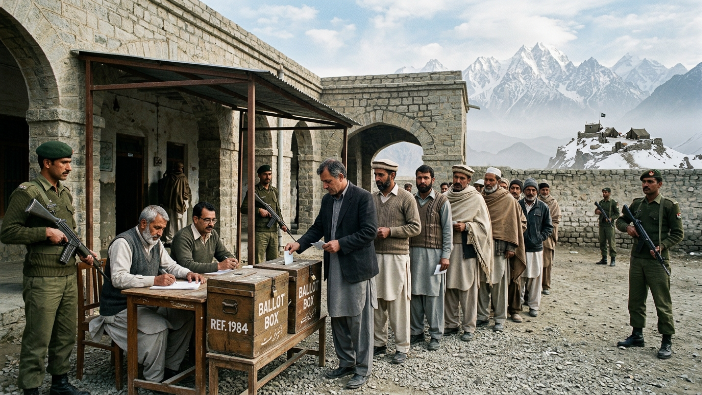
1. Why Was 1984 Important in Pakistan’s History?
1984 was important because General Zia-ul-Haq strengthened his rule through a national referendum. The year also saw Ordinance XX, continued martial law, Afghan war involvement, political restrictions, and the beginning of the Siachen conflict.
2. Who Was the President of Pakistan in 1984?
General Muhammad Zia-ul-Haq was the President of Pakistan in 1984. He also controlled the country through martial law and remained the most powerful political authority.
3. What Was Pakistan’s Political System in 1984?
Pakistan was under military rule in 1984. Democratic institutions were restricted, and political parties were not allowed to function freely.
4. Did Pakistan Have an Elected Prime Minister in 1984?
No, Pakistan did not have an elected Prime Minister in 1984. General Zia-ul-Haq ruled directly as President and Chief Martial Law Administrator.
5. What Was the Status of the 1973 Constitution in 1984?
The 1973 Constitution remained held in abeyance under martial law. Its democratic provisions were not fully restored during this year.
6. What Was the Most Important Political Event of 1984?
The most important political event was the national referendum held by General Zia-ul-Haq. It was used to extend and legitimize his rule.
7. When Was Zia-ul-Haq’s Referendum Held?
Zia-ul-Haq’s referendum was held on 19 December 1984. The referendum asked voters to support his Islamization program and indirectly approve his presidency.
8. What Was the Purpose of the 1984 Referendum?
The referendum was designed to give Zia-ul-Haq political legitimacy. A “yes” vote was treated as approval for Zia to continue as President for another term.
9. Why Was the 1984 Referendum Controversial?
The referendum was controversial because it linked support for Islamization with support for Zia’s presidency. Opposition groups criticized it as unfair and undemocratic.
10. What Was the Official Result of the 1984 Referendum?
The official result showed overwhelming support for Zia-ul-Haq. However, opposition parties rejected the process and questioned the turnout and fairness.
11. Why Did Opposition Parties Boycott the Referendum?
Opposition parties boycotted the referendum because they considered it a tool to extend military rule. They demanded free general elections instead.
12. What Was the Movement for the Restoration of Democracy in 1984?
The Movement for the Restoration of Democracy, or MRD, was an opposition alliance against Zia’s military rule. It demanded restoration of the 1973 Constitution and democratic elections.
13. What Was the Status of the MRD in 1984?
The MRD continued to oppose Zia-ul-Haq’s government, although it faced arrests, restrictions, and state pressure. Its influence remained important in democratic resistance.
14. What Was the Role of the Pakistan Peoples Party in 1984?
The Pakistan Peoples Party remained one of the strongest opposition forces against Zia-ul-Haq. Its leaders and workers continued to face political restrictions.
15. Who Were the Main PPP Leaders in 1984?
Benazir Bhutto and Begum Nusrat Bhutto remained important PPP figures. They represented resistance to martial law and the political legacy of Zulfikar Ali Bhutto.
16. What Was Benazir Bhutto’s Role in 1984?
Benazir Bhutto remained a key symbol of opposition to Zia’s regime. She faced restrictions but continued to be associated with the struggle for democracy.
17. What Was the Status of Political Parties in 1984?
Political parties were heavily restricted under martial law. Public rallies, campaigns, and party-based mobilization were controlled by the government.
18. Why Were Political Parties Restricted in 1984?
Zia-ul-Haq restricted political parties to prevent organized opposition. The regime wanted controlled political activity instead of open democratic competition.
19. What Was Majlis-e-Shoora in 1984?
Majlis-e-Shoora was a nominated advisory council under Zia-ul-Haq. It was not an elected parliament and had limited legislative authority.
20. Why Was Majlis-e-Shoora Criticized?
It was criticized because its members were nominated rather than elected by the people. Opposition leaders viewed it as a substitute for real democracy.
21. What Was Zia-ul-Haq’s Islamization Policy in 1984?
Zia’s Islamization policy continued to shape laws, courts, education, and public life. The government used Islamic reforms as a central justification for military rule.
22. Why Was Islamization Important for Zia’s Government?
Islamization helped Zia gain support from religious groups and present his rule as morally legitimate. It became a major ideological feature of his government.
23. What Was Ordinance XX?
Ordinance XX was a law introduced in 1984 that placed legal restrictions on the Ahmadiyya community. It amended Pakistan’s penal law and became one of the most significant religious legal developments of Zia’s era.
24. When Was Ordinance XX Issued?
Ordinance XX was issued on 26 April 1984. It became part of Zia-ul-Haq’s wider Islamization policies.
25. Why Was Ordinance XX Important?
The ordinance was important because it legally restricted Ahmadis from using Islamic terminology and presenting themselves as Muslims. It had long-term legal, religious, and social consequences.
26. Why Was Ordinance XX Controversial?
It was controversial because human rights groups and critics argued that it restricted religious freedom. Supporters considered it part of Pakistan’s Islamic legal framework.
27. What Was the Role of the Federal Shariat Court in 1984?
The Federal Shariat Court continued reviewing laws according to Islamic principles. It remained a major institution in Zia-ul-Haq’s Islamization program.
28. What Was the Zakat and Ushr System in 1984?
The Zakat and Ushr system continued under state administration. It involved collection and distribution of Islamic welfare contributions through government mechanisms.
29. Why Was the Zakat System Controversial?
The system remained controversial because religious groups differed over compulsory state collection. It also raised sectarian and administrative concerns.
30. What Was the Condition of Civil Liberties in 1984?
Civil liberties were restricted under martial law. Freedom of speech, political assembly, press freedom, and party activity remained limited.
31. What Was the Condition of the Press in 1984?
The press operated under censorship and government pressure. Newspapers had to be careful when reporting on martial law, opposition politics, and sensitive religious issues.
32. What Was the Biggest Security Development of 1984?
The beginning of the Siachen conflict was a major security development. India occupied key positions on the Siachen Glacier, creating a new military dispute with Pakistan.
33. What Was the Siachen Conflict?
The Siachen conflict was a military dispute between Pakistan and India over control of the Siachen Glacier region. It became one of the highest battlefield zones in the world.
34. When Did the Siachen Conflict Begin?
The Siachen conflict began in 1984 after India launched Operation Meghdoot. This changed the military situation in the glacier region.
35. Why Was Siachen Important for Pakistan?
Siachen was important because of its strategic location near the northern borders of Pakistan, India, and China. Control of the area had military and symbolic significance.
36. What Was Pakistan’s Relationship With India in 1984?
Pakistan’s relations with India remained tense due to Kashmir, Siachen, and regional mistrust. The Siachen conflict added another serious dispute between the two countries.
37. What Was the Status of Kashmir in 1984?
The Kashmir dispute remained unresolved. Pakistan continued to treat Kashmir as a central issue in its foreign policy toward India.
38. What Was Pakistan’s Role in the Afghan War in 1984?
Pakistan remained deeply involved in the Afghan war. It supported Afghan resistance groups and hosted millions of Afghan refugees.
39. Why Was Pakistan Called a Frontline State in 1984?
Pakistan was called a frontline state because it bordered Soviet-occupied Afghanistan. Its location made it central to the anti-Soviet strategy of the United States and its allies.
40. What Was the Afghan Refugee Situation in 1984?
Large numbers of Afghan refugees continued to live in Pakistan. Refugee camps in Khyber Pakhtunkhwa and Balochistan placed pressure on local resources.
41. What Was the Role of Peshawar in 1984?
Peshawar remained a major center for Afghan refugees, resistance groups, aid networks, and political activity connected to the Afghan war.
42. What Was the Role of the ISI in 1984?
The Inter-Services Intelligence became increasingly important because of the Afghan war. It helped coordinate security and support networks linked to Afghan resistance.
43. What Was Pakistan’s Relationship With the United States in 1984?
Pakistan’s relationship with the United States remained strong due to the Afghan conflict. The United States viewed Pakistan as a key partner against Soviet influence.
44. Why Was U.S. Aid Important for Pakistan in 1984?
U.S. aid supported Pakistan’s economy, military, and Afghan war-related policies. It increased Pakistan’s importance during the Cold War.
45. What Was Pakistan’s Relationship With Saudi Arabia in 1984?
Pakistan’s relations with Saudi Arabia remained close. Saudi cooperation was important in financial, religious, and Afghan war-related matters.
46. What Was Pakistan’s Relationship With China in 1984?
Pakistan maintained strong strategic relations with China. China remained one of Pakistan’s most reliable regional partners.
47. What Was Pakistan’s Nuclear Policy in 1984?
Pakistan continued developing its nuclear program. The program remained a sensitive national security priority and attracted international concern.
48. What Was Pakistan’s Economic Situation in 1984?
Pakistan’s economy benefited from foreign aid, remittances, and Afghan war-related international support. However, inflation, inequality, and political restrictions remained important issues.
49. Why Is 1984 Considered a Year of Authoritarian Consolidation?
1984 is considered a year of authoritarian consolidation because Zia used the referendum to strengthen his rule. Political parties remained restricted, and martial law continued.
50. What Is the Historical Significance of 1984 for Pakistan?
1984 is historically significant because Zia-ul-Haq held a controversial referendum, Ordinance XX was introduced, the Siachen conflict began, Pakistan remained central to the Afghan war, and martial law continued to shape the country’s political and legal system.
1985
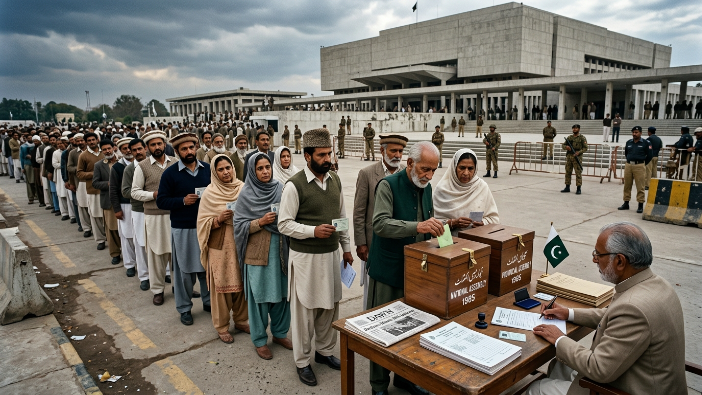
1. Why Was 1985 Important in Pakistan’s History?
1985 was important because Pakistan moved from direct martial law toward a controlled civilian political system. The year saw non-party elections, the appointment of Muhammad Khan Junejo as Prime Minister, the Eighth Constitutional Amendment, and the formal lifting of martial law.
2. Who Was the President of Pakistan in 1985?
General Muhammad Zia-ul-Haq was the President of Pakistan in 1985. He continued to hold the most powerful position in the country and remained central to political decision-making.
3. What Was Pakistan’s Political System at the Start of 1985?
At the start of 1985, Pakistan was still under martial law. The 1973 Constitution was not fully restored, and political activity remained heavily controlled by the military government.
4. What Was the Most Important Political Event of 1985?
The most important political event was the holding of non-party general elections. These elections created a civilian government, but political parties were not allowed to contest officially.
5. When Were the 1985 General Elections Held?
General elections were held in February 1985. They were conducted on a non-party basis under General Zia-ul-Haq’s controlled political framework.
6. Why Were the 1985 Elections Called Non-Party Elections?
They were called non-party elections because candidates contested as individuals rather than as representatives of political parties. This limited the role of organized political parties in Parliament.
7. Why Did Zia-ul-Haq Hold Non-Party Elections?
Zia held non-party elections to create a civilian political structure without allowing full party-based democracy. This helped him maintain control while giving the system a constitutional appearance.
8. Why Were the 1985 Elections Controversial?
The elections were controversial because major political parties were restricted and the contest was not held on a party basis. Critics argued that the process weakened real democratic representation.
9. Did the Movement for the Restoration of Democracy Participate in the 1985 Elections?
The Movement for the Restoration of Democracy largely boycotted the 1985 elections. It rejected the non-party system and demanded restoration of full democracy under the 1973 Constitution.
10. Why Did the MRD Boycott the Elections?
The MRD boycotted the elections because it considered them undemocratic and controlled by the military regime. The alliance wanted party-based elections and an end to Zia’s rule.
11. Who Became Prime Minister of Pakistan in 1985?
Muhammad Khan Junejo became Prime Minister of Pakistan in 1985. He was appointed after the non-party elections and became the civilian head of government.
12. Who Was Muhammad Khan Junejo?
Muhammad Khan Junejo was a politician from Sindh who became Prime Minister under Zia-ul-Haq’s system. Although he was initially seen as a loyal choice, he later tried to assert civilian authority.
13. Why Was Junejo’s Appointment Important?
Junejo’s appointment was important because Pakistan had a Prime Minister again after years of direct military rule. His government marked a partial return to civilian administration.
14. Did Junejo Have Full Executive Power in 1985?
No, Junejo did not have full independent power. General Zia-ul-Haq remained President and retained strong authority over national politics and state institutions.
15. What Was the Status of the 1973 Constitution in 1985?
The 1973 Constitution was revived in 1985 but with major changes. These changes strengthened the President and protected many actions taken during martial law.
16. What Was the Revival of the Constitution Order?
The Revival of the Constitution Order was used to bring the 1973 Constitution back into operation with modifications. It helped create the legal basis for the new civilian setup.
17. Why Was the Revival of the Constitution Important?
It was important because it restored a constitutional framework after years of martial law. However, the restored Constitution was changed in ways that favored presidential authority.
18. What Was the Eighth Constitutional Amendment?
The Eighth Constitutional Amendment was a major constitutional change passed in 1985. It gave the President strong powers and validated many martial law actions.
19. Why Was the Eighth Amendment Important?
The Eighth Amendment changed the balance of power between the President and Prime Minister. It made the President far more powerful than in the original 1973 parliamentary system.
20. What Was Article 58(2)(b)?
Article 58(2)(b) gave the President the power to dissolve the National Assembly. This power later became one of the most controversial features of Pakistan’s constitutional politics.
21. Why Was Article 58(2)(b) Controversial?
It was controversial because it allowed the President to dismiss elected governments. This weakened parliamentary democracy and created instability in later years.
22. How Did the Eighth Amendment Affect the Prime Minister?
The amendment limited the independence of the Prime Minister by strengthening the President. It made civilian governments vulnerable to presidential dismissal.
23. How Did the Eighth Amendment Affect the President?
The amendment greatly strengthened the President’s position. It gave the President powers that were not part of the original parliamentary spirit of the 1973 Constitution.
24. What Did the Eighth Amendment Do to Martial Law Actions?
The amendment gave legal protection to many actions taken during martial law. This helped Zia-ul-Haq secure constitutional cover for his rule.
25. What Was Article 2A?
Article 2A made the Objectives Resolution a substantive part of the Constitution. This strengthened the ideological and Islamic basis of Pakistan’s constitutional framework.
26. Why Was Article 2A Important?
Article 2A was important because it gave constitutional force to the Objectives Resolution. It linked Pakistan’s constitutional system more directly with Islamic principles.
27. What Was the Role of Parliament in 1985?
Parliament was restored after the elections and began functioning again. However, it operated under the limits created by Zia’s constitutional changes.
28. What Was the Role of the Senate in 1985?
The Senate became part of the restored parliamentary structure. It represented the provinces and supported the bicameral system under the 1973 Constitution.
29. What Was the Role of the National Assembly in 1985?
The National Assembly became the lower house of Parliament after the elections. It participated in lawmaking and constitutional approval processes.
30. When Was Martial Law Lifted in 1985?
Martial law was formally lifted on 30 December 1985. This marked the official end of the martial law period that had begun in 1977.
31. Why Was the Lifting of Martial Law Important?
It was important because Pakistan returned to a constitutional civilian framework. However, Zia remained President and continued to hold strong powers.
32. Did the End of Martial Law Mean Full Democracy?
No, the end of martial law did not mean full democracy. Political parties had been restricted, and the President retained extraordinary constitutional powers.
33. What Was the Role of Political Parties in 1985?
Political parties were not allowed to contest the elections officially. Their role remained limited, although many political figures had party backgrounds.
34. How Did Non-Party Elections Affect Pakistani Politics?
Non-party elections weakened political parties and encouraged personal, local, and group-based politics. This had long-term effects on Pakistan’s parliamentary culture.
35. What Was the Condition of Civil Liberties in 1985?
Civil liberties improved slightly after the transition toward civilian rule, but restrictions remained. Political activity and public criticism were still shaped by Zia’s control.
36. What Was the Condition of the Press in 1985?
The press had more space than during strict martial law periods, but censorship and pressure had not disappeared completely. Sensitive political issues remained difficult to report freely.
37. What Was Zia-ul-Haq’s Islamization Policy in 1985?
Zia’s Islamization policy continued to influence law, education, courts, and public life. Islamic provisions remained central to his political legitimacy.
38. What Was the Role of the Federal Shariat Court in 1985?
The Federal Shariat Court continued to review laws in light of Islamic principles. It remained an important institution created during Zia’s Islamization program.
39. What Was the Status of the Zakat and Ushr System in 1985?
The Zakat and Ushr system continued under state administration. It remained one of the major economic and religious policies introduced during Zia’s rule.
40. What Was Pakistan’s Role in the Afghan War in 1985?
Pakistan continued to play a central role in the Afghan war against Soviet forces. It supported Afghan resistance groups and hosted large numbers of Afghan refugees.
41. Why Was Pakistan Called a Frontline State in 1985?
Pakistan was called a frontline state because it bordered Soviet-occupied Afghanistan. Its location made it a key partner for the United States and its allies during the Cold War.
42. What Was the Afghan Refugee Situation in 1985?
Millions of Afghan refugees continued to live in Pakistan. Refugee camps in Khyber Pakhtunkhwa and Balochistan created social, economic, and security pressures.
43. What Was Pakistan’s Relationship With the United States in 1985?
Pakistan’s relationship with the United States remained strong due to the Afghan conflict. U.S. military and economic aid supported Pakistan’s strategic role.
44. What Was Pakistan’s Relationship With Saudi Arabia in 1985?
Pakistan maintained close relations with Saudi Arabia. Cooperation involved financial support, religious ties, and shared interests in the Afghan conflict.
45. What Was Pakistan’s Relationship With China in 1985?
Pakistan’s relationship with China remained strong and strategic. China continued to be one of Pakistan’s closest regional partners.
46. What Was Pakistan’s Relationship With India in 1985?
Relations with India remained cautious due to Kashmir, Siachen, and regional mistrust. The Siachen conflict remained an important security issue.
47. What Was the Status of Kashmir in 1985?
The Kashmir dispute remained unresolved. Pakistan continued to consider Kashmir one of its most important foreign policy issues.
48. What Was Pakistan’s Nuclear Policy in 1985?
Pakistan continued developing its nuclear program. The program remained sensitive because of regional security concerns and international pressure.
49. Why Is 1985 Considered a Turning Point?
1985 is considered a turning point because Pakistan shifted from direct martial law to a controlled civilian government. The Eighth Amendment and revival of the Constitution shaped politics for years.
50. What Is the Historical Significance of 1985 for Pakistan?
1985 is historically significant because non-party elections were held, Muhammad Khan Junejo became Prime Minister, the 1973 Constitution was revived with major changes, the Eighth Amendment strengthened presidential powers, and martial law was formally lifted while Zia-ul-Haq remained politically dominant.
1986
1. Why Was 1986 Important in Pakistan’s History?
1986 was important because Pakistan was moving through a controlled civilian setup after years of martial law. The year saw Muhammad Khan Junejo’s civilian government, Benazir Bhutto’s historic return, growing opposition politics, Afghan war pressures, and rising internal social tensions.
2. Who Was the President of Pakistan in 1986?
General Muhammad Zia-ul-Haq was the President of Pakistan in 1986. Although martial law had formally ended in December 1985, Zia retained strong constitutional and political powers.
3. Who Was the Prime Minister of Pakistan in 1986?
Muhammad Khan Junejo was the Prime Minister of Pakistan in 1986. He had taken office after the non-party elections of 1985 and led a civilian government under Zia’s presidency.
4. What Was Pakistan’s Political System in 1986?
Pakistan had a parliamentary system under the revived 1973 Constitution, but it was heavily influenced by the Eighth Amendment. The President had strong powers, while the Prime Minister operated within a controlled political environment.
5. Was Martial Law Still in Force in 1986?
No, martial law had formally ended on 30 December 1985. However, many effects of military rule remained visible in politics, law, administration, and civil liberties.
6. Why Was the End of Martial Law Important for 1986?
The end of martial law allowed civilian institutions to function again. However, the democratic system remained limited because President Zia still had strong powers over Parliament and the Prime Minister.
7. What Was the Role of the Eighth Amendment in 1986?
The Eighth Amendment shaped politics by strengthening the President’s authority. It allowed the President to dissolve the National Assembly and dismiss elected governments.
8. Why Was Article 58(2)(b) Important in 1986?
Article 58(2)(b) gave the President the power to dissolve the National Assembly. This created a constant imbalance between the President and Prime Minister.
9. What Was the Most Important Political Event of 1986?
One of the most important political events was Benazir Bhutto’s return to Pakistan. Her return revived opposition politics and energized the Pakistan Peoples Party.
10. When Did Benazir Bhutto Return to Pakistan?
Benazir Bhutto returned to Pakistan in April 1986. Her arrival in Lahore attracted a massive public gathering and became a major political moment.
11. Why Was Benazir Bhutto’s Return Important?
Her return showed that the Pakistan Peoples Party still had strong public support. It also marked the revival of open opposition politics against Zia-ul-Haq’s influence.
12. Where Did Benazir Bhutto Receive a Historic Welcome?
Benazir Bhutto received a historic welcome in Lahore. Large crowds gathered to support her and the PPP, making it one of the biggest political rallies of the period.
13. What Was Benazir Bhutto’s Main Political Demand in 1986?
Benazir Bhutto demanded full restoration of democracy and free party-based elections. She opposed Zia’s controlled political system and presidential dominance.
14. What Was the Pakistan Peoples Party’s Role in 1986?
The PPP became more active after Benazir Bhutto’s return. It challenged Zia’s political influence and demanded a return to genuine democratic rule.
15. Who Was the Main Opposition Leader in 1986?
Benazir Bhutto emerged as the most prominent opposition leader in 1986. She became the central political figure challenging Zia’s system.
16. What Was the Movement for the Restoration of Democracy in 1986?
The Movement for the Restoration of Democracy, or MRD, was an alliance demanding democratic rule and restoration of the 1973 Constitution in its original spirit.
17. What Was the Status of the MRD in 1986?
The MRD remained active, but Benazir Bhutto’s personal political rise gave the PPP a stronger independent role. Opposition politics became more visible during the year.
18. What Was the Role of Muhammad Khan Junejo in 1986?
Junejo tried to run a civilian government within the limits of Zia’s system. He gradually attempted to assert parliamentary authority and administrative independence.
19. Why Was Junejo’s Position Difficult?
Junejo was Prime Minister, but President Zia retained powerful constitutional authority. This created tension between civilian government and presidential control.
20. What Was the Relationship Between Zia and Junejo in 1986?
Their relationship was cooperative on the surface but increasingly uneasy. Junejo wanted more civilian authority, while Zia wanted to preserve his dominant role.
21. What Was the Status of Political Parties in 1986?
Political parties became more active than during martial law, but the political system was still shaped by earlier restrictions. Party-based democracy had not been fully restored.
22. Why Was Party Politics Important in 1986?
Party politics was important because opposition groups were rebuilding after years of repression. The PPP’s revival showed that public demand for democracy was increasing.
23. What Was the Role of the Muslim League in 1986?
The Muslim League became associated with the ruling political structure under Junejo. It helped provide parliamentary support to the civilian government.
24. What Was Pakistan’s Biggest Political Tension in 1986?
The biggest political tension was between controlled civilian rule and demands for full democracy. Opposition parties wanted real elections, while Zia’s system limited political power.
25. What Was the Condition of Civil Liberties in 1986?
Civil liberties improved compared to the martial law period, but restrictions and pressure still existed. Political speech and opposition activity were watched closely by the state.
26. What Was the Condition of the Press in 1986?
The press had slightly more freedom than during strict martial law, but censorship and pressure did not completely disappear. Sensitive political issues still required caution.
27. What Was the Role of the Judiciary in 1986?
The judiciary operated under the constitutional framework shaped by Zia’s amendments. Questions about judicial independence and constitutional balance remained important.
28. What Was Zia-ul-Haq’s Islamization Policy in 1986?
Zia’s Islamization policies continued to influence law, education, courts, and social life. Islamic legal reforms remained part of the state’s ideological direction.
29. What Was the Federal Shariat Court’s Role in 1986?
The Federal Shariat Court continued reviewing laws according to Islamic principles. It remained one of the key institutions created during Zia’s Islamization program.
30. What Was the Zakat and Ushr System in 1986?
The Zakat and Ushr system continued under government administration. It remained a major religious and economic policy from Zia’s period.
31. What Was Pakistan’s Role in the Afghan War in 1986?
Pakistan remained deeply involved in the Afghan war against Soviet forces. It supported Afghan resistance groups and hosted millions of Afghan refugees.
32. Why Was Pakistan Still Called a Frontline State in 1986?
Pakistan was called a frontline state because it bordered Soviet-occupied Afghanistan. Its location made it central to the United States-led anti-Soviet strategy.
33. What Was the Afghan Refugee Situation in 1986?
Millions of Afghan refugees continued living in Pakistan. Refugee camps in Khyber Pakhtunkhwa and Balochistan created social, economic, and security pressures.
34. Why Was the Afghan War Important for Pakistan’s Foreign Policy?
The Afghan war increased Pakistan’s strategic value internationally. It strengthened ties with the United States, Saudi Arabia, China, and other anti-Soviet partners.
35. What Was Pakistan’s Relationship With the United States in 1986?
Pakistan’s relationship with the United States remained strong due to the Afghan conflict. U.S. aid and military cooperation continued to support Pakistan’s strategic role.
36. Why Was U.S. Aid Important for Pakistan in 1986?
U.S. aid helped Pakistan’s economy, defense capability, and Afghan war-related policies. It also increased Pakistan’s importance during the Cold War.
37. What Was Pakistan’s Nuclear Policy in 1986?
Pakistan continued developing its nuclear program. The program remained a sensitive national security issue and attracted international concern.
38. Why Was Pakistan’s Nuclear Program Under Pressure in 1986?
Western countries, especially the United States, were concerned about Pakistan’s nuclear ambitions. However, Pakistan’s role in the Afghan war made the issue diplomatically complex.
39. What Was Pakistan’s Relationship With China in 1986?
Pakistan maintained strong strategic relations with China. China remained one of Pakistan’s closest and most reliable partners.
40. What Was Pakistan’s Relationship With Saudi Arabia in 1986?
Pakistan’s relations with Saudi Arabia remained close. Cooperation involved financial support, religious ties, Afghan war interests, and labor migration.
41. What Was Pakistan’s Relationship With India in 1986?
Pakistan’s relationship with India became tense due to regional mistrust, Kashmir, Siachen, and military developments such as India’s Brasstacks exercises.
42. What Was Operation Brasstacks?
Operation Brasstacks was a large Indian military exercise that began in 1986 and later created a serious crisis between Pakistan and India. It increased fears of possible war.
43. Why Was Operation Brasstacks Important for Pakistan?
Pakistan viewed the exercise as a possible security threat. It led to heightened military alertness and increased tension with India.
44. What Was the Status of the Siachen Conflict in 1986?
The Siachen conflict remained active after beginning in 1984. Pakistan and India continued military competition in the glacier region.
45. What Was the Status of Kashmir in 1986?
The Kashmir dispute remained unresolved. Pakistan continued to treat Kashmir as a central issue in relations with India.
46. What Was the Qasba-Aligarh Incident of 1986?
The Qasba-Aligarh incident was a major episode of ethnic violence in Karachi in December 1986. It reflected rising urban tensions and law-and-order problems.
47. Why Was Karachi Important in 1986?
Karachi was Pakistan’s largest city and economic hub, but it faced growing ethnic and political tensions. Urban violence became a serious challenge during this period.
48. What Was Pakistan’s Economic Situation in 1986?
Pakistan’s economy benefited from foreign aid, remittances, and Afghan war-related inflows. However, inflation, inequality, and structural weaknesses remained important concerns.
49. Why Is 1986 Considered a Year of Political Revival?
1986 is considered a year of political revival because Benazir Bhutto returned and opposition politics gained new energy. Public pressure for democracy became stronger.
50. What Is the Historical Significance of 1986 for Pakistan?
1986 is historically significant because Benazir Bhutto’s return revived democratic opposition, Junejo’s civilian government operated under Zia’s powerful presidency, Pakistan remained central to the Afghan war, tensions with India increased, and internal urban conflict became more visible.
1987
1. Why Was 1987 Important in Pakistan’s History?
1987 was important because Pakistan faced serious regional tension with India, continued involvement in the Afghan war, and growing pressure between President Zia-ul-Haq and Prime Minister Muhammad Khan Junejo. The year also saw important political and social developments inside the country.
2. Who Was the President of Pakistan in 1987?
General Muhammad Zia-ul-Haq was the President of Pakistan in 1987. He remained the most powerful figure in the country because of the Eighth Amendment and his strong influence over the political system.
3. Who Was the Prime Minister of Pakistan in 1987?
Muhammad Khan Junejo was the Prime Minister of Pakistan in 1987. He headed a civilian government, but his authority was limited by President Zia-ul-Haq’s constitutional and political power.
4. What Was Pakistan’s Political System in 1987?
Pakistan had a parliamentary system under the revived 1973 Constitution, but the President held strong powers under the Eighth Amendment. This created tension between civilian government and presidential authority.
5. Was Pakistan Under Martial Law in 1987?
No, martial law had formally ended in December 1985. However, many political and constitutional effects of Zia-ul-Haq’s military rule continued to shape governance.
6. What Was the Role of the Eighth Amendment in 1987?
The Eighth Amendment gave the President strong powers, including the authority to dissolve the National Assembly. This limited the independence of the Prime Minister and Parliament.
7. Why Was Article 58(2)(b) Important in 1987?
Article 58(2)(b) allowed the President to dismiss an elected government and dissolve the National Assembly. It created a constant threat over civilian governments.
8. What Was the Relationship Between Zia-ul-Haq and Junejo in 1987?
The relationship between Zia and Junejo was becoming tense. Junejo tried to assert civilian authority, while Zia wanted to maintain strong presidential control.
9. Why Was Junejo’s Government Important in 1987?
Junejo’s government represented a partial return to civilian rule after years of martial law. However, it operated under strong presidential influence and military pressure.
10. What Was the Biggest Political Tension of 1987?
The biggest political tension was the struggle between civilian authority and presidential-military dominance. This tension later contributed to the dismissal of Junejo’s government in 1988.
11. What Was Pakistan’s Main Foreign Policy Issue in 1987?
Pakistan’s main foreign policy issues were the Afghan war, relations with India, and the Kashmir dispute. Regional security remained a major concern.
12. What Was the Afghan War’s Importance for Pakistan in 1987?
The Afghan war remained central to Pakistan’s foreign policy. Pakistan continued to support Afghan resistance groups against Soviet forces in Afghanistan.
13. Why Was Pakistan Called a Frontline State in 1987?
Pakistan was called a frontline state because it bordered Soviet-occupied Afghanistan. Its location made it a key partner for the United States, Saudi Arabia, and other anti-Soviet countries.
14. What Was the Afghan Refugee Situation in 1987?
Millions of Afghan refugees continued to live in Pakistan. Their presence created social, economic, administrative, and security challenges, especially in Khyber Pakhtunkhwa and Balochistan.
15. Why Were Afghan Refugees Important in Pakistan’s History?
The Afghan refugee crisis changed Pakistan’s border regions and affected local economies, security, and society. It became one of the largest refugee situations in the world.
16. What Was the Role of Peshawar in 1987?
Peshawar remained a major center for Afghan refugees, resistance leaders, foreign aid networks, and political activity related to the Afghan war.
17. What Was the Role of the ISI in 1987?
The Inter-Services Intelligence remained highly important because of the Afghan conflict. It helped coordinate support networks for Afghan resistance groups.
18. What Was Pakistan’s Relationship With the United States in 1987?
Pakistan’s relationship with the United States remained strong because of the Afghan war. U.S. military and economic aid continued to support Pakistan’s strategic role.
19. Why Was U.S. Aid Important for Pakistan in 1987?
U.S. aid helped Pakistan strengthen defense capabilities and support its economy. It also increased Pakistan’s importance in Cold War politics.
20. What Was Pakistan’s Relationship With Saudi Arabia in 1987?
Pakistan maintained close relations with Saudi Arabia. Saudi cooperation was important in finance, religion, Afghan war support, and labor migration.
21. What Was Pakistan’s Relationship With China in 1987?
Pakistan’s relationship with China remained strong and strategic. China continued to be one of Pakistan’s most trusted regional partners.
22. What Was Pakistan’s Relationship With India in 1987?
Pakistan’s relationship with India became highly tense in 1987 due to the Brasstacks crisis. Both countries faced fears of possible military confrontation.
23. What Was Operation Brasstacks?
Operation Brasstacks was a large Indian military exercise that began in 1986 and created major tension with Pakistan in 1987. Pakistan viewed it as a possible security threat.
24. Why Was the Brasstacks Crisis Important?
The Brasstacks crisis brought Pakistan and India close to serious military confrontation. It showed how quickly regional tension could escalate between the two nuclear-aspiring rivals.
25. How Did Pakistan Respond to Operation Brasstacks?
Pakistan increased military alertness and prepared for possible conflict. Diplomatic communication later helped reduce the crisis.
26. What Was Zia-ul-Haq’s Cricket Diplomacy?
Zia-ul-Haq visited India during a cricket match in 1987. This visit became known as cricket diplomacy because it helped reduce tension during the Brasstacks crisis.
27. Why Was Cricket Diplomacy Important in 1987?
Cricket diplomacy was important because it provided an informal way to reduce military tension between Pakistan and India. It showed how sports could support diplomatic communication.
28. What Was the Status of the Kashmir Dispute in 1987?
The Kashmir dispute remained unresolved. Pakistan continued to consider Kashmir a central issue in its relations with India.
29. What Was the Siachen Conflict in 1987?
The Siachen conflict remained an active military issue between Pakistan and India. Both countries continued competing for control in the glacier region.
30. Why Was Siachen Important for Pakistan?
Siachen was important because of its strategic location near the northern borders of Pakistan, India, and China. It became one of the world’s highest conflict zones.
31. What Was Pakistan’s Nuclear Policy in 1987?
Pakistan continued developing its nuclear program in 1987. The program remained a sensitive national security issue and attracted international attention.
32. Why Was Pakistan’s Nuclear Program Important in 1987?
Pakistan viewed nuclear development as necessary for strategic balance with India. Regional tensions made the nuclear question even more important.
33. Why Was Pakistan’s Nuclear Program Under International Pressure?
Western countries were concerned about Pakistan’s nuclear ambitions. However, Pakistan’s role in the Afghan war made international pressure more complicated.
34. What Was Pakistan’s Economic Situation in 1987?
Pakistan’s economy benefited from foreign aid, remittances, and Afghan war-related inflows. However, inflation, inequality, and structural weaknesses remained important concerns.
35. Why Were Remittances Important in 1987?
Remittances from Pakistani workers in the Middle East helped support families and provided foreign exchange. They became one of the strongest pillars of Pakistan’s economy.
36. What Was the Role of the Middle East in Pakistan’s Economy?
The Middle East provided employment opportunities for Pakistani workers. Money sent home by these workers supported households and strengthened foreign exchange reserves.
37. What Was Pakistan’s Industrial Situation in 1987?
Pakistan’s industrial sector operated in a mixed environment of public and private activity. The government tried to encourage investment while dealing with earlier effects of nationalization.
38. What Was Pakistan’s Agricultural Situation in 1987?
Agriculture remained a major part of the economy. Irrigation, crop production, rural development, and food security continued to be important national priorities.
39. What Was the Status of Islamization in 1987?
Zia-ul-Haq’s Islamization policies continued to influence law, education, courts, and public life. Islamic legal institutions remained important in state policy.
40. What Was the Role of the Federal Shariat Court in 1987?
The Federal Shariat Court continued to review laws according to Islamic principles. It remained a major institution created during Zia’s Islamization program.
41. What Was the Zakat and Ushr System in 1987?
The Zakat and Ushr system continued under state administration. It remained part of Zia-ul-Haq’s Islamization and welfare policy framework.
42. What Was the Condition of Civil Liberties in 1987?
Civil liberties were better than during strict martial law but still limited by the political structure. Opposition activity existed, but state pressure and restrictions remained.
43. What Was the Condition of the Press in 1987?
The press had more space than during the strict martial law years, but sensitive political issues still faced pressure. Reporting on the military, Zia, and opposition politics required caution.
44. What Was the Role of the Pakistan Peoples Party in 1987?
The Pakistan Peoples Party remained the strongest opposition force against Zia’s political system. Benazir Bhutto continued to symbolize democratic resistance.
45. What Was Benazir Bhutto’s Role in 1987?
Benazir Bhutto remained the most prominent opposition leader. She continued to demand full democracy, free elections, and the end of Zia’s political dominance.
46. What Was the Role of the Muslim League in 1987?
The Muslim League was linked with the ruling parliamentary setup under Prime Minister Junejo. It provided political support to the civilian government.
47. What Was the Importance of Local Government Politics in 1987?
Local government politics became increasingly important because urban political groups gained more visibility. In Sindh, especially Karachi and Hyderabad, local politics reflected rising ethnic and urban political identity.
48. What Was the Rise of MQM in 1987?
The Mohajir Qaumi Movement gained strong political visibility in urban Sindh during this period. Its rise changed the political landscape of Karachi and Hyderabad.
49. Why Is 1987 Considered a Year of Regional Tension?
1987 is considered a year of regional tension because of the Brasstacks crisis, the Siachen conflict, the Kashmir dispute, and Pakistan’s involvement in the Afghan war.
50. What Is the Historical Significance of 1987 for Pakistan?
1987 is historically significant because Pakistan faced the Brasstacks crisis with India, used cricket diplomacy to reduce tension, remained central to the Afghan war, continued under Zia’s powerful presidency, and experienced growing civilian-political tensions that shaped the events of 1988.
1988
1. Why Was 1988 Important in Pakistan’s History?
1988 was one of the most important years in Pakistan’s political history. It witnessed the Ojhri Camp disaster, the dismissal of Prime Minister Muhammad Khan Junejo, the death of General Zia-ul-Haq, and the return of elected civilian government under Benazir Bhutto.
2. Who Was the President of Pakistan at the Start of 1988?
General Muhammad Zia-ul-Haq was the President of Pakistan at the start of 1988. He had ruled Pakistan since 1977 and remained the most powerful political authority in the country.
3. Who Was the Prime Minister of Pakistan at the Start of 1988?
Muhammad Khan Junejo was the Prime Minister of Pakistan at the start of 1988. He headed a civilian government formed after the non-party elections of 1985.
4. What Was Pakistan’s Political System in Early 1988?
Pakistan had a parliamentary system under the revived 1973 Constitution, but the President had strong powers under the Eighth Amendment. This created tension between President Zia-ul-Haq and Prime Minister Junejo.
5. What Was the Role of the Eighth Amendment in 1988?
The Eighth Amendment gave the President the power to dissolve the National Assembly. This power became very important when Zia dismissed Junejo’s government in 1988.
6. What Was Article 58(2)(b)?
Article 58(2)(b) allowed the President to dissolve the National Assembly. It became one of the most controversial constitutional powers in Pakistan’s political history.
7. What Was the Ojhri Camp Disaster?
The Ojhri Camp disaster was a major arms depot explosion near Rawalpindi and Islamabad. It caused widespread destruction, panic, and loss of life.
8. When Did the Ojhri Camp Disaster Occur?
The Ojhri Camp disaster occurred on 10 April 1988. Rockets and ammunition exploded and spread across Rawalpindi and Islamabad.
9. Why Was the Ojhri Camp Disaster Important?
The disaster raised serious questions about military storage, safety, and accountability. It also created political tension between Prime Minister Junejo’s government and powerful military authorities.
10. How Did the Ojhri Camp Disaster Affect Junejo’s Government?
Junejo demanded an inquiry into the disaster, which increased tension with Zia-ul-Haq and military circles. This became one of the factors contributing to his dismissal.
11. When Was Muhammad Khan Junejo Dismissed?
Muhammad Khan Junejo was dismissed on 29 May 1988. President Zia-ul-Haq dissolved the National Assembly using his constitutional powers.
12. Why Did Zia-ul-Haq Dismiss Junejo’s Government?
Zia dismissed Junejo’s government because of growing political differences, the Ojhri Camp inquiry, Afghan policy issues, and Junejo’s attempts to assert civilian authority.
13. Why Was Junejo’s Dismissal Important?
The dismissal showed the strength of presidential power over an elected Prime Minister. It also exposed the weakness of civilian government under the Eighth Amendment.
14. What Happened to the National Assembly in 1988?
The National Assembly was dissolved by President Zia-ul-Haq. This ended Junejo’s government and created a new political crisis.
15. Did Pakistan Have a Prime Minister After Junejo’s Dismissal?
After Junejo’s dismissal, Pakistan did not have a regular elected Prime Minister until the elections later in the year. Political authority remained mainly with President Zia-ul-Haq.
16. What Was the Geneva Accords?
The Geneva Accords were agreements related to the Soviet withdrawal from Afghanistan. They involved Pakistan, Afghanistan, the United States, and the Soviet Union.
17. When Were the Geneva Accords Signed?
The Geneva Accords were signed on 14 April 1988. They became a major diplomatic development in the Afghan conflict.
18. Why Were the Geneva Accords Important for Pakistan?
The accords were important because Pakistan had played a central role in the Afghan war. They created a framework for the withdrawal of Soviet troops from Afghanistan.
19. What Was Pakistan’s Role in the Afghan War in 1988?
Pakistan continued to support Afghan resistance groups and hosted millions of Afghan refugees. It remained a frontline state in the final phase of the Soviet-Afghan conflict.
20. When Did the Soviet Withdrawal From Afghanistan Begin?
The Soviet withdrawal from Afghanistan began in May 1988. This was a major turning point in the Afghan war and regional politics.
21. Why Was Afghanistan Still Important for Pakistan in 1988?
Afghanistan remained important because instability there directly affected Pakistan’s security, refugee situation, foreign policy, and relations with global powers.
22. What Was the Afghan Refugee Situation in 1988?
Millions of Afghan refugees were still living in Pakistan. Their presence affected Pakistan’s economy, society, security, and border regions.
23. What Was Pakistan’s Relationship With the United States in 1988?
Pakistan’s relationship with the United States remained important because of the Afghan war. However, concerns about Pakistan’s nuclear program also remained a major issue.
24. What Was Pakistan’s Relationship With China in 1988?
Pakistan maintained strong and friendly relations with China. China continued to be one of Pakistan’s most reliable strategic partners.
25. What Was Pakistan’s Relationship With Saudi Arabia in 1988?
Pakistan’s relations with Saudi Arabia remained close. Saudi Arabia was important for financial cooperation, religious ties, labor migration, and Afghan war-related support.
26. What Was Pakistan’s Relationship With India in 1988?
Pakistan’s relationship with India remained cautious and tense. Issues such as Kashmir, Siachen, and regional mistrust continued to affect relations.
27. What Was the Status of the Kashmir Dispute in 1988?
The Kashmir dispute remained unresolved. Pakistan continued to treat Kashmir as a central issue in its foreign policy toward India.
28. What Was the Status of the Siachen Conflict in 1988?
The Siachen conflict remained active between Pakistan and India. Both countries continued military deployments in the glacier region.
29. What Was Pakistan’s Nuclear Policy in 1988?
Pakistan continued developing its nuclear program. The program remained a sensitive national security matter and attracted international attention.
30. Why Was Pakistan’s Nuclear Program Important in 1988?
Pakistan viewed the nuclear program as necessary for strategic balance with India. Regional security concerns made the program increasingly important.
31. What Happened on 17 August 1988?
On 17 August 1988, General Zia-ul-Haq died in a plane crash near Bahawalpur. His death ended more than eleven years of his rule.
32. Who Died Along With Zia-ul-Haq in the Plane Crash?
Several senior officials died in the crash, including General Akhtar Abdur Rahman and the U.S. Ambassador to Pakistan, Arnold Raphel. The crash became one of the most mysterious events in Pakistan’s history.
33. Why Was Zia-ul-Haq’s Death Important?
Zia’s death created a major political turning point. It opened the way for elections and the return of civilian democratic government.
34. Who Became Acting President After Zia-ul-Haq’s Death?
Ghulam Ishaq Khan, the Chairman of the Senate, became Acting President after Zia-ul-Haq’s death. This transfer followed the constitutional line of succession.
35. Who Became Chief of Army Staff After Zia’s Death?
General Mirza Aslam Beg became Chief of Army Staff after Zia-ul-Haq’s death. He played an important role during the transition to elections.
36. Why Was the Transition After Zia’s Death Important?
The transition was important because Pakistan avoided immediate political collapse after the sudden death of its military ruler. The state moved toward general elections.
37. When Were the 1988 General Elections Held?
The general elections were held on 16 November 1988. These elections marked the return of party-based electoral politics after years of military-dominated rule.
38. Why Were the 1988 Elections Important?
The elections were important because they restored civilian political competition. They allowed major political parties to participate openly after years of restrictions.
39. Which Party Won the Most Seats in the 1988 Elections?
The Pakistan Peoples Party won the largest number of seats in the National Assembly. However, it did not win an overwhelming two-thirds majority.
40. Who Led the Pakistan Peoples Party in 1988?
Benazir Bhutto led the Pakistan Peoples Party in 1988. She became the most important civilian political leader after Zia-ul-Haq’s death.
41. What Was the Islami Jamhoori Ittehad?
The Islami Jamhoori Ittehad, or IJI, was a political alliance formed to oppose the Pakistan Peoples Party. It became the PPP’s main rival in the 1988 elections.
42. Why Was the IJI Important in 1988?
The IJI was important because it united several anti-PPP political forces. It played a major role in shaping the election contest and later opposition politics.
43. Who Became Prime Minister After the 1988 Elections?
Benazir Bhutto became Prime Minister of Pakistan after the 1988 elections. She took office on 2 December 1988.
44. Why Was Benazir Bhutto’s Election Historic?
Benazir Bhutto became the first woman to lead a Muslim-majority country as Prime Minister. Her rise was a major milestone in Pakistan’s democratic history.
45. Who Was the President When Benazir Bhutto Became Prime Minister?
Ghulam Ishaq Khan was the President when Benazir Bhutto became Prime Minister. The President still had strong powers under the Eighth Amendment.
46. What Was the Biggest Political Challenge for Benazir Bhutto in 1988?
Her biggest challenge was governing under a powerful President and a political system still influenced by the military and establishment. She also faced a strong opposition alliance.
47. What Was Pakistan’s Economic Situation in 1988?
Pakistan’s economy relied on foreign aid, remittances, and Afghan war-related inflows. However, inflation, unemployment, debt, and structural weaknesses remained serious problems.
48. What Was the Condition of Democracy in 1988?
Democracy was restored through elections, but it remained fragile. The President, military, and constitutional powers such as Article 58(2)(b) continued to influence politics.
49. Why Is 1988 Considered a Turning Point?
1988 is considered a turning point because Zia-ul-Haq’s rule ended, party-based elections returned, and Benazir Bhutto became Prime Minister. It marked the beginning of a new democratic phase.
50. What Is the Historical Significance of 1988 for Pakistan?
1988 is historically significant because it included the Ojhri Camp disaster, the dismissal of Junejo’s government, the Geneva Accords, Zia-ul-Haq’s death, general elections, and the rise of Benazir Bhutto as the first female Prime Minister of Pakistan.
1989
1. Why Was 1989 Important in Pakistan’s History?
1989 was important because it was the first full year of Benazir Bhutto’s first government. The year was marked by democratic transition, opposition pressure, the end of the Soviet withdrawal from Afghanistan, growing Kashmir unrest, and Pakistan’s return to the Commonwealth.
2. Who Was the Prime Minister of Pakistan in 1989?
Benazir Bhutto was the Prime Minister of Pakistan in 1989. She had taken office in December 1988 and became the first woman to lead a Muslim-majority country.
3. Who Was the President of Pakistan in 1989?
Ghulam Ishaq Khan was the President of Pakistan in 1989. He held strong constitutional powers under the Eighth Amendment, including the power to dissolve the National Assembly.
4. What Was Pakistan’s Political System in 1989?
Pakistan had a parliamentary system under the 1973 Constitution. However, the President still held powerful authority under Article 58(2)(b), which limited the independence of the Prime Minister.
5. Why Was Benazir Bhutto’s Government Important in 1989?
Her government represented the return of elected civilian rule after years of military dominance. It also symbolized a major democratic opening after General Zia-ul-Haq’s death.
6. What Was Benazir Bhutto’s Biggest Political Challenge in 1989?
Her biggest challenge was governing under pressure from a powerful President, the military establishment, and a strong opposition alliance. Her government had limited room to act independently.
7. What Was the Main Opposition Alliance in 1989?
The main opposition alliance was the Islami Jamhoori Ittehad, commonly known as IJI. It was formed to oppose the Pakistan Peoples Party and became Benazir Bhutto’s strongest parliamentary rival.
8. Who Was the Main Opposition Leader in 1989?
Nawaz Sharif was one of the most important opposition leaders in 1989. He was Chief Minister of Punjab and a leading figure of the IJI.
9. Why Was Punjab Important in 1989 Politics?
Punjab was politically important because it was Pakistan’s largest province by population. The PPP led the federal government, while the opposition had strong influence in Punjab.
10. What Was the Relationship Between Benazir Bhutto and Nawaz Sharif in 1989?
Their relationship was highly competitive and tense. Benazir led the federal government, while Nawaz Sharif led Punjab and became the central figure of opposition politics.
11. What Was the No-Confidence Motion Against Benazir Bhutto?
In 1989, the opposition moved a no-confidence motion against Prime Minister Benazir Bhutto. It was an attempt to remove her government through parliamentary means.
12. When Was the No-Confidence Motion Held?
The no-confidence motion took place in November 1989. It became one of the most important parliamentary tests of Benazir Bhutto’s first government.
13. Did Benazir Bhutto Survive the No-Confidence Motion?
Yes, Benazir Bhutto survived the no-confidence motion. Her government remained in power, but the event showed how fragile the political situation was.
14. Why Was the No-Confidence Motion Important?
It was important because it was the first major attempt to remove her government after the return of democracy. It also exposed deep divisions between the PPP and opposition forces.
15. What Was the Role of the Eighth Amendment in 1989?
The Eighth Amendment remained highly important because it gave the President strong constitutional powers. It created tension between the elected Prime Minister and the presidency.
16. What Was Article 58(2)(b)?
Article 58(2)(b) allowed the President to dissolve the National Assembly. This power made elected governments vulnerable to dismissal.
17. Why Was Civil-Military Relations Important in 1989?
Civil-military relations were important because Pakistan was transitioning from military rule to civilian government. The military still had strong influence over security, Afghanistan, and nuclear policy.
18. What Was the Role of the Pakistan Army in 1989?
The Pakistan Army remained a powerful institution. Although civilian rule had returned, the military continued to influence defense, Afghan policy, and national security decisions.
19. What Was Pakistan’s Role in Afghanistan in 1989?
Pakistan remained deeply involved in Afghanistan after the Soviet withdrawal. It continued to support Afghan resistance groups and managed the effects of the long Afghan war.
20. When Did the Soviet Withdrawal From Afghanistan End?
The Soviet withdrawal from Afghanistan was completed on 15 February 1989. This was a major turning point in regional politics and Pakistan’s foreign policy.
21. Why Was the Soviet Withdrawal Important for Pakistan?
The withdrawal reduced direct Soviet pressure near Pakistan’s western border. However, Afghanistan remained unstable, creating long-term security and refugee challenges for Pakistan.
22. What Was the Battle of Jalalabad?
The Battle of Jalalabad occurred in 1989 after the Soviet withdrawal. Afghan mujahideen forces attempted to capture Jalalabad from the Afghan communist government but failed.
23. Why Was the Battle of Jalalabad Important?
The battle showed that the Afghan communist government was still capable of resistance after the Soviet withdrawal. It also affected Pakistan’s expectations about the future of Afghanistan.
24. What Was the Afghan Refugee Situation in 1989?
Millions of Afghan refugees were still living in Pakistan. Their presence created social, economic, and security pressures, especially in Khyber Pakhtunkhwa and Balochistan.
25. Why Was Peshawar Important in 1989?
Peshawar remained a major center for Afghan refugees, resistance leaders, aid networks, and political activity related to Afghanistan.
26. What Was Pakistan’s Relationship With the United States in 1989?
Pakistan maintained close relations with the United States because of the Afghan war. However, nuclear concerns continued to create tension in the relationship.
27. Why Was Pakistan’s Nuclear Program Important in 1989?
Pakistan’s nuclear program was important because it was seen as essential for strategic balance with India. It also remained a major concern for Western countries.
28. What Was the Pressler Amendment Issue?
The Pressler Amendment linked U.S. aid to certification that Pakistan did not possess a nuclear explosive device. It became an important issue in Pakistan-U.S. relations.
29. What Was Pakistan’s Relationship With China in 1989?
Pakistan maintained strong strategic relations with China. China continued to be one of Pakistan’s most reliable regional partners.
30. What Was Pakistan’s Relationship With Saudi Arabia in 1989?
Pakistan’s relations with Saudi Arabia remained close. Saudi cooperation was important in finance, labor migration, religious ties, and Afghan-related diplomacy.
31. What Was Pakistan’s Relationship With India in 1989?
Pakistan’s relations with India remained tense due to Kashmir, Siachen, and regional mistrust. Political unrest in Kashmir became increasingly important during this period.
32. What Was the Status of Kashmir in 1989?
The Kashmir dispute became more intense in 1989 as unrest and militancy increased in Indian-administered Kashmir. This development strongly affected Pakistan-India relations.
33. Why Was 1989 Important for the Kashmir Issue?
1989 is often seen as the beginning of a new phase in the Kashmir conflict. Political unrest and armed resistance increased sharply in the region.
34. What Was the Siachen Conflict in 1989?
The Siachen conflict remained active between Pakistan and India. Both countries continued military deployments in the glacier region.
35. What Was Pakistan’s Economic Situation in 1989?
Pakistan faced economic challenges such as debt, inflation, unemployment, and dependence on foreign aid and remittances. The new government had to manage these pressures carefully.
36. Why Were Remittances Important in 1989?
Remittances from Pakistani workers abroad, especially in the Middle East, remained a major source of foreign exchange. They supported families and helped stabilize the economy.
37. What Was Benazir Bhutto’s Economic Policy in 1989?
Benazir Bhutto’s government aimed to improve social welfare, attract investment, and reduce the heavy state control inherited from earlier periods. However, political instability limited major reforms.
38. What Was the Role of Privatization Debate in 1989?
The debate over privatization became more visible as Pakistan considered reducing state control over parts of the economy. This was different from Bhutto-era nationalization policies of the 1970s.
39. What Was the First Women Bank?
The First Women Bank was established in 1989 to support women’s economic participation. It became an important symbol of Benazir Bhutto’s focus on women’s empowerment.
40. Why Was the First Women Bank Important?
It was important because it aimed to provide financial services and opportunities for women. The bank reflected efforts to increase women’s role in the economy.
41. What Was the Status of Women’s Rights in 1989?
Women’s rights became more visible under Benazir Bhutto’s government. However, many legal and social restrictions from the Zia era remained in place.
42. What Was the Condition of Civil Liberties in 1989?
Civil liberties improved compared to the martial law era. Political parties, public debate, and media activity became more open, although tensions and restrictions still existed.
43. What Was the Condition of the Press in 1989?
The press had more freedom than during Zia-ul-Haq’s rule. Newspapers and journalists discussed politics more openly, though pressure from powerful institutions remained.
44. What Was Pakistan’s Return to the Commonwealth?
Pakistan rejoined the Commonwealth in 1989 after having left it in 1972. This was an important diplomatic development during Benazir Bhutto’s first government.
45. Why Did Pakistan Rejoin the Commonwealth?
Pakistan rejoined the Commonwealth to improve diplomatic relations and restore international engagement after years of political isolation and military rule.
46. What Was the Biggest Diplomatic Achievement of 1989?
Pakistan’s return to the Commonwealth was one of the major diplomatic achievements of 1989. It showed Pakistan’s return to a more open international role under civilian leadership.
47. What Was the Biggest Political Crisis of 1989?
The biggest political crisis was the no-confidence motion against Benazir Bhutto. Although she survived, it showed the weakness and instability of the new democratic setup.
48. Why Is 1989 Considered a Year of Democratic Testing?
1989 is considered a year of democratic testing because Pakistan’s newly restored civilian government faced strong opposition, institutional pressure, and parliamentary challenges.
49. How Did 1989 Influence Pakistan’s Future Politics?
The events of 1989 shaped the rivalry between the PPP and IJI, strengthened the Benazir-Nawaz political competition, and showed that democracy remained fragile after Zia’s era.
50. What Is the Historical Significance of 1989 for Pakistan?
1989 is historically significant because Benazir Bhutto’s government faced its first major political test, Pakistan rejoined the Commonwealth, the Soviet withdrawal from Afghanistan was completed, Kashmir entered a new phase of unrest, and democratic politics returned under difficult institutional conditions.
1990
1. Why Was 1990 Important in Pakistan’s History?
1990 was important because Benazir Bhutto’s first government was dismissed, new general elections were held, and Nawaz Sharif became Prime Minister for the first time. The year also saw rising Kashmir tensions and major changes in Pakistan’s relationship with the United States.
2. Who Was the President of Pakistan in 1990?
Ghulam Ishaq Khan was the President of Pakistan in 1990. He held strong constitutional powers under the Eighth Amendment, including the authority to dismiss the government and dissolve the National Assembly.
3. Who Was the Prime Minister of Pakistan at the Start of 1990?
Benazir Bhutto was the Prime Minister of Pakistan at the beginning of 1990. She had taken office in December 1988 after the restoration of elected government.
4. What Was Pakistan’s Political System in 1990?
Pakistan had a parliamentary system under the 1973 Constitution, but the President held strong powers under Article 58(2)(b). This created an imbalance between the Prime Minister and the President.
5. What Was the Most Important Political Event of 1990?
The most important political event was the dismissal of Benazir Bhutto’s government. President Ghulam Ishaq Khan dissolved the National Assembly and removed her from office.
6. When Was Benazir Bhutto’s Government Dismissed?
Benazir Bhutto’s government was dismissed on 6 August 1990. President Ghulam Ishaq Khan used Article 58(2)(b) of the Constitution to dissolve the National Assembly.
7. Why Was Benazir Bhutto’s Government Dismissed?
Her government was dismissed on allegations of corruption, poor governance, law and order problems, and misuse of authority. The Pakistan Peoples Party rejected the dismissal and considered it politically motivated.
8. What Was Article 58(2)(b)?
Article 58(2)(b) gave the President the power to dissolve the National Assembly. It became one of the most controversial constitutional powers in Pakistan’s political history.
9. Why Was Article 58(2)(b) Important in 1990?
It was important because it was used to remove an elected Prime Minister. This showed the weakness of parliamentary democracy under the Eighth Amendment.
10. What Happened After Benazir Bhutto’s Dismissal?
After the dismissal, a caretaker government was formed to hold new elections. Political tension increased between the PPP and its opponents.
11. Who Became Caretaker Prime Minister in 1990?
Ghulam Mustafa Jatoi became the caretaker Prime Minister after Benazir Bhutto’s dismissal. His government supervised the general elections later that year.
12. Who Was Ghulam Mustafa Jatoi?
Ghulam Mustafa Jatoi was a senior politician from Sindh. He had been associated with national politics for many years and was appointed to lead the caretaker setup in 1990.
13. When Were the 1990 General Elections Held?
The general elections were held on 24 October 1990. These elections were conducted after the dismissal of Benazir Bhutto’s government.
14. Which Alliance Won the 1990 General Elections?
The Islami Jamhoori Ittehad, commonly known as IJI, won the 1990 general elections. It became the main ruling alliance after the election.
15. Who Led the IJI in the 1990 Elections?
Nawaz Sharif was the leading political figure of the IJI in the 1990 elections. His victory made him the most important civilian leader in the new government.
16. Who Became Prime Minister After the 1990 Elections?
Nawaz Sharif became Prime Minister of Pakistan after the 1990 elections. He took office in November 1990 and began his first term as Prime Minister.
17. Why Was Nawaz Sharif’s Rise Important?
Nawaz Sharif’s rise marked the emergence of a powerful new civilian leader from Punjab. His leadership began a new phase of rivalry between the Pakistan Muslim League and the Pakistan Peoples Party.
18. What Was the Pakistan Peoples Party’s Position After the 1990 Elections?
The PPP became the main opposition party after losing power. Benazir Bhutto continued to challenge the election results and criticized the role of state institutions.
19. Why Were the 1990 Elections Controversial?
The elections were controversial because the PPP alleged manipulation and unfair interference. Later political debates often discussed whether the election process was fully fair.
20. What Was the Main Political Rivalry of 1990?
The main political rivalry was between Benazir Bhutto and Nawaz Sharif. This rivalry shaped Pakistan’s politics throughout the 1990s.
21. What Was the Role of Ghulam Ishaq Khan in 1990?
Ghulam Ishaq Khan played a decisive role by dismissing Benazir Bhutto’s government and overseeing the transition to new elections. His presidential powers made him a central figure in politics.
22. What Was the Role of the Establishment in 1990 Politics?
The establishment remained highly influential in national politics. Civilian governments operated in an environment where the presidency, military, and intelligence institutions had significant power.
23. Who Was the Chief of Army Staff in 1990?
General Mirza Aslam Beg was the Chief of Army Staff in 1990. The army remained one of the most powerful institutions in Pakistan’s political and security system.
24. Why Were Civil-Military Relations Important in 1990?
Civil-military relations were important because Pakistan had recently emerged from Zia-ul-Haq’s military era. The military still had major influence over security, Afghanistan, India, and nuclear policy.
25. What Was Pakistan’s Relationship With India in 1990?
Relations with India were tense in 1990, especially due to Kashmir. The situation raised fears of a serious military crisis between the two countries.
26. Why Was Kashmir Important in 1990?
Kashmir became especially important because unrest and militancy increased in Indian-administered Kashmir. Pakistan viewed Kashmir as a central issue in relations with India.
27. What Was the 1990 Kashmir Crisis?
The 1990 Kashmir crisis involved rising tensions between Pakistan and India due to unrest in Kashmir and military concerns. It became one of the serious regional security issues of the year.
28. How Did the Kashmir Situation Affect Pakistan’s Foreign Policy?
The Kashmir situation kept Pakistan focused on India and regional security. Pakistan continued to raise the issue internationally and support the right of Kashmiris to self-determination.
29. What Was the Status of the Siachen Conflict in 1990?
The Siachen conflict remained active between Pakistan and India. Both countries continued military deployments in the glacier region.
30. What Was Pakistan’s Nuclear Policy in 1990?
Pakistan continued to develop its nuclear program as part of its national security strategy. The program remained closely linked to strategic balance with India.
31. Why Was Pakistan’s Nuclear Program Under International Pressure in 1990?
Pakistan’s nuclear program attracted pressure from the United States and other Western countries. Concerns grew over possible nuclear weapons capability in South Asia.
32. What Was the Pressler Amendment?
The Pressler Amendment was a U.S. law that linked American aid to certification that Pakistan did not possess a nuclear explosive device. It became a major issue in Pakistan-U.S. relations.
33. How Did the Pressler Amendment Affect Pakistan in 1990?
In 1990, the United States could no longer certify Pakistan under the Pressler Amendment. This led to the suspension of major military and economic assistance.
34. Why Was the Suspension of U.S. Aid Important?
The suspension of U.S. aid affected Pakistan’s defense cooperation and international relations. It also showed that Pakistan’s strategic value changed after the Soviet withdrawal from Afghanistan.
35. What Was Pakistan’s Relationship With the United States in 1990?
Pakistan’s relationship with the United States became strained due to the nuclear issue. The end of the Soviet-Afghan war reduced Pakistan’s strategic importance for Washington.
36. What Was Pakistan’s Role in Afghanistan in 1990?
Pakistan remained involved in Afghanistan after the Soviet withdrawal. Afghan politics remained unstable, and Pakistan continued to deal with refugee and security challenges.
37. What Was the Afghan Refugee Situation in 1990?
Millions of Afghan refugees were still living in Pakistan. Their presence continued to affect Pakistan’s economy, society, security, and border regions.
38. Why Was Afghanistan Still Important for Pakistan in 1990?
Afghanistan remained important because instability there directly affected Pakistan’s western border. Pakistan was concerned about the future government and regional influence in Afghanistan.
39. What Was Pakistan’s Relationship With China in 1990?
Pakistan maintained strong strategic relations with China. China continued to be one of Pakistan’s most reliable allies in regional and defense matters.
40. What Was Pakistan’s Relationship With Saudi Arabia in 1990?
Pakistan maintained close relations with Saudi Arabia. Cooperation included labor migration, financial links, religious ties, and diplomatic support.
41. What Was Pakistan’s Economic Situation in 1990?
Pakistan faced economic problems including debt, inflation, unemployment, and pressure on public finances. The new government had to address economic instability and investor confidence.
42. What Was Nawaz Sharif’s Economic Vision in 1990?
Nawaz Sharif supported private-sector growth, industrial development, investment, and economic liberalization. His policies were different from the nationalization approach of the 1970s.
43. Why Was Privatization Important in 1990?
Privatization became important because the government wanted to reduce state control and encourage private investment. It became a major theme of Nawaz Sharif’s economic policy.
44. What Was the Role of Punjab in 1990 Politics?
Punjab was politically central because it was Pakistan’s largest province and Nawaz Sharif’s strongest base. The province played a major role in shaping the election outcome.
45. What Was the Political Situation in Sindh in 1990?
Sindh remained politically sensitive because the PPP had strong support there. Urban Sindh also had ethnic and political tensions involving the MQM and other groups.
46. What Was the Role of MQM in 1990?
The MQM remained an important political force in urban Sindh, especially Karachi and Hyderabad. Its role was significant in coalition politics and urban representation.
47. What Was the Condition of Democracy in 1990?
Democracy continued, but it was fragile. The dismissal of an elected government and controversial elections showed that civilian rule was still vulnerable.
48. What Was the Biggest Political Challenge of 1990?
The biggest political challenge was maintaining democratic stability after the dismissal of Benazir Bhutto’s government. Trust between political parties and institutions remained weak.
49. Why Is 1990 Considered a Turning Point?
1990 is considered a turning point because it ended Benazir Bhutto’s first government and brought Nawaz Sharif to power for the first time. It also began a new phase of PPP-PML rivalry.
50. What Is the Historical Significance of 1990 for Pakistan?
1990 is historically significant because Benazir Bhutto’s government was dismissed, caretaker rule was established, general elections were held, Nawaz Sharif became Prime Minister, the Kashmir crisis intensified, and U.S. aid was affected by the Pressler Amendment.
1991
1. Why Was 1991 Important in Pakistan’s History?
1991 was important because Nawaz Sharif’s first government introduced major economic reforms, privatization policies, and constitutional-religious legislation. The year also saw the historic Water Apportionment Accord among provinces.
2. Who Was the Prime Minister of Pakistan in 1991?
Nawaz Sharif was the Prime Minister of Pakistan in 1991. His government focused on economic liberalization, private-sector growth, industrial development, and infrastructure planning.
3. Who Was the President of Pakistan in 1991?
Ghulam Ishaq Khan was the President of Pakistan in 1991. He retained strong constitutional powers under the Eighth Amendment, including the power to dissolve the National Assembly.
4. What Was Pakistan’s Political System in 1991?
Pakistan had a parliamentary system under the 1973 Constitution. However, the President still held strong powers under Article 58(2)(b), which limited the full independence of the elected Prime Minister.
5. What Was the Most Important Economic Policy of 1991?
The most important economic policy was privatization and economic liberalization. Nawaz Sharif’s government wanted to reduce state control and encourage private investment.
6. What Was Privatization in 1991?
Privatization meant transferring government-owned industries, banks, and enterprises to private ownership. The policy was introduced to improve efficiency and reduce the financial burden on the state.
7. Why Did Nawaz Sharif Support Privatization?
Nawaz Sharif believed that private enterprise could create faster economic growth, more investment, and better industrial performance. His approach was different from Bhutto’s nationalization policies of the 1970s.
8. What Was Economic Liberalization?
Economic liberalization meant reducing government control over business, trade, and industry. It aimed to make Pakistan’s economy more open, competitive, and private-sector driven.
9. Why Was 1991 Important for Pakistan’s Private Sector?
1991 was important because the government strongly encouraged private investment. Industrialists, traders, and business groups were given more space in economic planning.
10. What Was the Protection of Economic Reforms Act 1992 Connected To?
Although passed later in 1992, its background was linked to the economic liberalization policies started under Nawaz Sharif’s government. The aim was to protect investment, foreign currency accounts, and market-oriented reforms.
11. What Was the Water Apportionment Accord of 1991?
The Water Apportionment Accord was an agreement among Pakistan’s provinces regarding the distribution of Indus river system waters. It was one of the most important federal agreements in Pakistan’s history.
12. When Was the Water Apportionment Accord Signed?
The Water Apportionment Accord was signed in March 1991. It provided a formal framework for water sharing among Punjab, Sindh, NWFP, and Balochistan.
13. Why Was the Water Accord Important?
The accord was important because water distribution had long been a sensitive issue between provinces. It helped reduce disputes by creating an agreed formula for sharing river waters.
14. Which Provinces Were Part of the Water Accord?
Punjab, Sindh, NWFP, and Balochistan were part of the Water Apportionment Accord. The agreement aimed to balance provincial irrigation and agricultural needs.
15. Why Was Water Distribution a Major Issue in Pakistan?
Water distribution was important because Pakistan’s agriculture depends heavily on canal irrigation. Disputes over water affected farming, provincial relations, and national politics.
16. What Was the Role of the Indus River System in 1991?
The Indus river system remained the backbone of Pakistan’s agriculture. Its water supported irrigation, food production, and rural livelihoods across the country.
17. What Was the Council of Common Interests?
The Council of Common Interests is a constitutional body that deals with matters shared between the federation and provinces. It played an important role in approving interprovincial decisions like water sharing.
18. Why Was the Water Accord Important for Federalism?
The Water Accord strengthened federalism by addressing provincial concerns through negotiation. It showed that major disputes could be managed through constitutional and political agreement.
19. What Was the Enforcement of Shariat Act 1991?
The Enforcement of Shariat Act was a law introduced during Nawaz Sharif’s government. It aimed to give Islamic principles a stronger role in Pakistan’s legal and social order.
20. Why Was the Shariat Act Important?
The Shariat Act was important because it reflected the continuing influence of Islamization after Zia-ul-Haq’s era. It connected Pakistan’s legal framework with Islamic principles.
21. Why Was the Shariat Act Controversial?
The Act was controversial because critics feared it could create legal confusion and affect parliamentary lawmaking. Supporters considered it a step toward strengthening Pakistan’s Islamic identity.
22. What Was the Role of the Federal Shariat Court in 1991?
The Federal Shariat Court continued to review laws according to Islamic principles. It remained an important institution in Pakistan’s legal system after the Zia era.
23. What Was the Status of Islamization in 1991?
Islamization remained influential in law, politics, and public debate. Nawaz Sharif’s government continued some Islamic legal themes while focusing strongly on economic reform.
24. What Was Pakistan’s Relationship With the United States in 1991?
Pakistan’s relationship with the United States remained strained because of the nuclear issue and the Pressler Amendment. U.S. military aid had been affected after 1990.
25. What Was the Pressler Amendment Issue in 1991?
The Pressler Amendment restricted U.S. aid to Pakistan unless the U.S. President could certify that Pakistan did not possess a nuclear explosive device. This became a major problem in Pakistan-U.S. relations.
26. How Did the Pressler Amendment Affect Pakistan?
The amendment led to the suspension of major U.S. military assistance and affected defense cooperation. It also became a symbol of changing U.S. policy after the Afghan war.
27. What Was Pakistan’s Nuclear Policy in 1991?
Pakistan continued to maintain its nuclear program as a national security priority. The program was closely linked to strategic balance with India.
28. Why Was Pakistan’s Nuclear Program Important in 1991?
Pakistan viewed nuclear capability as necessary because India had already demonstrated nuclear potential. Regional security concerns kept the program politically and strategically important.
29. What Was Pakistan’s Relationship With India in 1991?
Pakistan’s relationship with India remained tense due to Kashmir, Siachen, and nuclear concerns. Diplomatic contact continued, but mistrust remained strong.
30. What Was the Status of Kashmir in 1991?
The Kashmir conflict remained highly active in 1991. Pakistan continued to raise the issue internationally, while unrest in Indian-administered Kashmir remained a major regional concern.
31. Why Was Kashmir Important in Pakistan’s Foreign Policy?
Kashmir was important because Pakistan considered it an unresolved dispute from partition. It remained central to Pakistan’s relations with India and its national security policy.
32. What Was the Siachen Conflict in 1991?
The Siachen conflict remained an active military dispute between Pakistan and India. Both countries continued to maintain forces in the difficult glacier region.
33. What Was Pakistan’s Role in Afghanistan in 1991?
Pakistan remained involved in Afghan affairs after the Soviet withdrawal. It continued to deal with Afghan refugees, resistance groups, and the unstable future of Afghanistan.
34. Why Was Afghanistan Still Important for Pakistan in 1991?
Afghanistan remained important because instability there affected Pakistan’s border security, refugee situation, and regional influence. Pakistan wanted a friendly government in Kabul.
35. What Was the Afghan Refugee Situation in 1991?
Millions of Afghan refugees were still living in Pakistan. Their presence continued to affect Pakistan’s economy, society, security, and border provinces.
36. What Was Pakistan’s Relationship With China in 1991?
Pakistan maintained strong strategic relations with China. China remained one of Pakistan’s most reliable partners in defense, diplomacy, and regional politics.
37. What Was Pakistan’s Relationship With Saudi Arabia in 1991?
Pakistan maintained close relations with Saudi Arabia. The relationship was important because of labor migration, religious ties, financial cooperation, and Gulf security concerns.
38. What Was Pakistan’s Role During the Gulf War Period?
Pakistan supported Saudi Arabia’s security during the Gulf crisis period and maintained close ties with Gulf countries. The issue was important because many Pakistani workers lived in the Middle East.
39. Why Was the Gulf Region Important for Pakistan in 1991?
The Gulf region was important because of Pakistani workers, remittances, oil supplies, and close relations with Muslim countries. Instability in the Gulf directly affected Pakistan’s economy and diplomacy.
40. What Was Pakistan’s Economic Situation in 1991?
Pakistan faced debt, inflation, unemployment, and pressure on public finances. Nawaz Sharif’s government tried to address these issues through privatization, deregulation, and investment promotion.
41. Why Were Remittances Important in 1991?
Remittances from overseas Pakistanis, especially from the Middle East, remained a major source of foreign exchange. They helped support households and reduce pressure on the economy.
42. What Was Pakistan’s Industrial Policy in 1991?
The government encouraged industrial growth through private investment and deregulation. It wanted to increase production, exports, and business confidence.
43. What Was Pakistan’s Agricultural Situation in 1991?
Agriculture remained a major part of Pakistan’s economy. The Water Accord was especially important because irrigation was essential for crop production.
44. What Was the Role of Punjab in 1991 Politics?
Punjab remained politically central because it was Pakistan’s largest province and Nawaz Sharif’s main political base. Its role strongly influenced national politics.
45. What Was the Political Situation in Sindh in 1991?
Sindh remained politically sensitive due to PPP influence, MQM politics, and urban law-and-order issues. Karachi continued to be an important but tense political center.
46. What Was the Role of MQM in 1991?
The MQM remained a powerful political force in urban Sindh, especially Karachi and Hyderabad. Its role was important in provincial and national coalition politics.
47. What Was the Condition of Democracy in 1991?
Democracy was functioning, but it remained fragile. The President, military, opposition parties, and constitutional powers continued to influence elected government.
48. What Was the Biggest Political Challenge of 1991?
The biggest political challenge was maintaining stability while balancing presidential power, opposition pressure, provincial concerns, and economic reforms.
49. Why Is 1991 Considered an Important Reform Year?
1991 is considered an important reform year because the government pushed privatization, deregulation, and economic liberalization. These policies shaped Pakistan’s economic direction in the 1990s.
50. What Is the Historical Significance of 1991 for Pakistan?
1991 is historically significant because Pakistan signed the Water Apportionment Accord, advanced privatization and economic liberalization, introduced the Enforcement of Shariat Act, faced U.S. pressure over its nuclear program, and continued dealing with Kashmir, Afghanistan, and fragile democratic governance.
1992
1. Why Was 1992 Important in Pakistan’s History?
1992 was important because Pakistan experienced major political, economic, security, and social developments. The year is remembered for Pakistan’s Cricket World Cup victory, Operation Clean-up in Karachi, severe floods, economic reforms, and important developments in Afghanistan.
2. Who Was the Prime Minister of Pakistan in 1992?
Nawaz Sharif was the Prime Minister of Pakistan in 1992. His government focused on privatization, economic liberalization, infrastructure development, and strengthening the private sector.
3. Who Was the President of Pakistan in 1992?
Ghulam Ishaq Khan was the President of Pakistan in 1992. He held strong constitutional powers under the Eighth Amendment, including the authority to dissolve the National Assembly.
4. What Was Pakistan’s Political System in 1992?
Pakistan had a parliamentary system under the 1973 Constitution. However, the President still had strong powers under Article 58(2)(b), which created tension within the political system.
5. What Was the Most Important National Achievement of 1992?
Pakistan’s victory in the 1992 Cricket World Cup was one of the biggest national achievements of the year. It brought huge pride and unity to the country.
6. When Did Pakistan Win the 1992 Cricket World Cup?
Pakistan won the Cricket World Cup on 25 March 1992. The final was played against England at the Melbourne Cricket Ground in Australia.
7. Who Was Pakistan’s Captain in the 1992 World Cup?
Imran Khan was the captain of Pakistan’s cricket team in the 1992 World Cup. His leadership played a major role in Pakistan’s historic victory.
8. Why Was the 1992 World Cup Victory Important?
The victory was important because it was Pakistan’s first Cricket World Cup title. It became a major moment of national pride and is still remembered as one of Pakistan’s greatest sports achievements.
9. Who Were the Key Players in Pakistan’s 1992 World Cup Victory?
Key players included Imran Khan, Javed Miandad, Wasim Akram, Inzamam-ul-Haq, and Mushtaq Ahmed. Their performances were crucial in Pakistan’s successful campaign.
10. What Was Wasim Akram’s Role in the 1992 Final?
Wasim Akram played a decisive role in the final with both bat and ball. His fast bowling helped Pakistan defeat England and secure the World Cup title.
11. What Was the Biggest Internal Security Event of 1992?
The biggest internal security event was Operation Clean-up in Karachi and Sindh. It was launched to address lawlessness, political violence, and criminal activity.
12. What Was Operation Clean-up?
Operation Clean-up was a security operation launched in 1992. It involved law enforcement and military action in Karachi and parts of Sindh.
13. Why Was Operation Clean-up Launched?
The operation was launched because Karachi was facing serious law and order problems, including political violence, ethnic tension, crime, and armed groups.
14. Which City Was Most Affected by Operation Clean-up?
Karachi was the city most affected by Operation Clean-up. It was Pakistan’s largest city and economic hub, but it faced severe urban unrest during this period.
15. Why Was Karachi Important in 1992?
Karachi was important because it was Pakistan’s largest commercial and industrial city. Any instability in Karachi directly affected the national economy and political environment.
16. What Was the Role of MQM in 1992 Politics?
The MQM was a major political force in urban Sindh, especially Karachi and Hyderabad. Its relationship with the state became highly tense during Operation Clean-up.
17. What Was MQM-Haqiqi?
MQM-Haqiqi emerged as a breakaway faction from the MQM during this period. Its rise added another layer of complexity to Karachi’s political and security situation.
18. Why Was the Karachi Operation Controversial?
The operation was controversial because supporters saw it as necessary for law and order, while critics argued that it involved political targeting and human rights concerns.
19. What Was the Political Situation in Sindh in 1992?
Sindh remained politically sensitive due to PPP influence, MQM politics, ethnic tension, and federal security actions. Karachi and Hyderabad were especially important political centers.
20. What Was the Role of the Army in 1992?
The army played a major role in internal security through Operation Clean-up. It also remained influential in national security, Afghanistan policy, and relations with India.
21. Who Was the Chief of Army Staff in 1992?
General Asif Nawaz Janjua was the Chief of Army Staff in 1992. He had taken office in 1991 and led the army during a tense period in internal and regional security.
22. What Was Pakistan’s Economic Policy in 1992?
Pakistan continued economic liberalization and privatization under Nawaz Sharif. The government encouraged private investment, deregulation, and market-oriented reforms.
23. What Was the Protection of Economic Reforms Act 1992?
The Protection of Economic Reforms Act was introduced to protect economic reforms and investor confidence. It supported foreign currency accounts, private investment, and market liberalization.
24. Why Was the Protection of Economic Reforms Act Important?
It was important because it gave legal protection to investors and economic reforms. The law aimed to encourage confidence in Pakistan’s financial and business environment.
25. What Was Privatization in 1992?
Privatization meant transferring state-owned industries and institutions to private ownership. Nawaz Sharif’s government viewed it as a way to improve efficiency and economic growth.
26. Why Did Nawaz Sharif Support Privatization?
Nawaz Sharif believed the private sector could create jobs, investment, and industrial growth. His economic approach differed from the nationalization policies of the 1970s.
27. What Was Pakistan’s Industrial Policy in 1992?
The government promoted industrial growth through private investment, deregulation, and infrastructure development. Industry was seen as a key driver of economic modernization.
28. What Was Pakistan’s Agricultural Situation in 1992?
Agriculture remained a major part of Pakistan’s economy. Irrigation, crop production, rural development, and water management continued to be important national concerns.
29. What Natural Disaster Affected Pakistan in 1992?
Severe floods affected Pakistan in 1992. These floods caused major damage to homes, crops, roads, and infrastructure in different parts of the country.
30. Why Were the 1992 Floods Important?
The floods were important because they created a serious humanitarian and economic crisis. They affected agriculture, displaced communities, and placed pressure on government relief efforts.
31. What Was the Government’s Response to the 1992 Floods?
The government launched relief and rehabilitation efforts for affected areas. However, the scale of destruction made recovery difficult and costly.
32. What Was Pakistan’s Relationship With the United States in 1992?
Pakistan’s relationship with the United States remained strained due to the nuclear issue and the Pressler Amendment. U.S. military aid had been affected after 1990.
33. What Was the Pressler Amendment Issue in 1992?
The Pressler Amendment restricted U.S. assistance to Pakistan because of concerns over its nuclear program. It became a major obstacle in Pakistan-U.S. relations.
34. What Was Pakistan’s Nuclear Policy in 1992?
Pakistan continued to maintain its nuclear program as a national security priority. The program was closely linked to strategic balance with India.
35. Why Was Pakistan’s Nuclear Program Important in 1992?
Pakistan viewed nuclear development as necessary because India had nuclear capability and regional tensions remained high. The program remained sensitive internationally.
36. What Was Pakistan’s Relationship With India in 1992?
Relations with India remained tense due to Kashmir, Siachen, and nuclear concerns. Diplomatic contact existed, but mistrust between the two countries continued.
37. What Was the Status of Kashmir in 1992?
The Kashmir conflict remained active and tense in 1992. Pakistan continued to raise the issue internationally and supported the right of Kashmiris to self-determination.
38. What Was the Siachen Conflict in 1992?
The Siachen conflict remained an unresolved military dispute between Pakistan and India. Both countries continued deployments in the glacier region.
39. What Happened in Afghanistan in 1992?
In 1992, the Soviet-backed government in Kabul collapsed, and Afghan mujahideen groups entered Kabul. This created a new phase of instability and civil conflict in Afghanistan.
40. Why Was Afghanistan Important for Pakistan in 1992?
Afghanistan was important because instability there directly affected Pakistan’s security, refugees, border areas, and regional influence. Pakistan wanted a friendly and stable government in Kabul.
41. What Was the Afghan Refugee Situation in 1992?
Millions of Afghan refugees were still living in Pakistan. Their presence continued to affect Pakistan’s economy, society, security, and border provinces.
42. What Was Pakistan’s Relationship With China in 1992?
Pakistan maintained strong strategic relations with China. China remained one of Pakistan’s closest partners in defense, diplomacy, and regional politics.
43. What Was Pakistan’s Relationship With Saudi Arabia in 1992?
Pakistan maintained close relations with Saudi Arabia. The relationship was important because of religious ties, labor migration, remittances, and financial cooperation.
44. What Was the Role of Remittances in 1992?
Remittances from overseas Pakistanis remained important for the economy. Money sent from the Middle East and other regions supported families and strengthened foreign exchange.
45. What Was the Political Role of Punjab in 1992?
Punjab remained politically central because it was Pakistan’s largest province and the main political base of Prime Minister Nawaz Sharif. Its role strongly influenced national politics.
46. What Was the Political Role of the Pakistan Peoples Party in 1992?
The Pakistan Peoples Party remained the main opposition party. Benazir Bhutto continued to criticize Nawaz Sharif’s government and challenge its policies.
47. What Was the Main Political Rivalry in 1992?
The main political rivalry was between Nawaz Sharif and Benazir Bhutto. This rivalry dominated Pakistan’s politics throughout much of the 1990s.
48. What Was the Biggest Political Challenge of 1992?
The biggest political challenge was maintaining stability amid opposition pressure, Karachi violence, institutional tensions, and economic reform debates.
49. Why Is 1992 Considered a Memorable Year?
1992 is memorable because Pakistan won the Cricket World Cup, but it was also a year of serious political, economic, security, and natural disaster challenges.
50. What Is the Historical Significance of 1992 for Pakistan?
1992 is historically significant because Pakistan won its first Cricket World Cup, launched Operation Clean-up in Karachi, continued privatization and economic reforms, faced severe floods, dealt with Afghanistan’s post-Soviet instability, and remained under pressure over Kashmir and the nuclear issue.
1993
1. Why Was 1993 Important in Pakistan’s History?
1993 was one of the most politically turbulent years in Pakistan’s history. It witnessed the dismissal and restoration of Nawaz Sharif’s government, the resignation of both the President and Prime Minister, caretaker rule, general elections, and Benazir Bhutto’s return to power.
2. Who Was the Prime Minister of Pakistan at the Start of 1993?
Nawaz Sharif was the Prime Minister of Pakistan at the beginning of 1993. His government was facing serious tension with President Ghulam Ishaq Khan.
3. Who Was the President of Pakistan at the Start of 1993?
Ghulam Ishaq Khan was the President of Pakistan at the start of 1993. He held strong constitutional powers under Article 58(2)(b) of the Constitution.
4. What Was the Political System of Pakistan in 1993?
Pakistan had a parliamentary system under the 1973 Constitution. However, presidential powers under the Eighth Amendment created constant tension between the President and Prime Minister.
5. What Was the Most Important Political Crisis of 1993?
The most important political crisis was the conflict between President Ghulam Ishaq Khan and Prime Minister Nawaz Sharif. This conflict led to the dismissal of the government and later the resignation of both leaders.
6. What Was Article 58(2)(b)?
Article 58(2)(b) gave the President the power to dissolve the National Assembly. It was one of the most controversial constitutional powers in Pakistan’s political history.
7. Why Was Article 58(2)(b) Important in 1993?
It was important because President Ghulam Ishaq Khan used it to dismiss Nawaz Sharif’s government. This showed how powerful the presidency remained during the 1990s.
8. When Was Nawaz Sharif’s Government Dismissed in 1993?
Nawaz Sharif’s government was dismissed on 18 April 1993. President Ghulam Ishaq Khan dissolved the National Assembly and removed him from office.
9. Why Was Nawaz Sharif’s Government Dismissed?
The government was dismissed on allegations of corruption, mismanagement, and constitutional breakdown. Nawaz Sharif rejected the dismissal and challenged it in court.
10. Who Became Caretaker Prime Minister After Nawaz Sharif’s Dismissal?
Balakh Sher Mazari became caretaker Prime Minister after the dismissal of Nawaz Sharif’s government. His caretaker setup was short-lived because the Supreme Court later restored Nawaz Sharif.
11. What Did Nawaz Sharif Do After His Dismissal?
Nawaz Sharif challenged the dismissal in the Supreme Court of Pakistan. His legal challenge became one of the most important constitutional cases of the year.
12. What Was the Supreme Court’s Decision in 1993?
The Supreme Court restored Nawaz Sharif’s government in May 1993. This was a major decision because it reversed the President’s dissolution of the National Assembly.
13. Why Was the Restoration of Nawaz Sharif Important?
The restoration strengthened the position of the elected Prime Minister against presidential authority. However, the conflict between Nawaz Sharif and Ghulam Ishaq Khan continued.
14. Who Was the Chief Justice During the 1993 Crisis?
Chief Justice Nasim Hasan Shah headed the Supreme Court during this important constitutional case. The court’s decision became a landmark moment in Pakistan’s legal and political history.
15. Did the Restoration End the Political Crisis?
No, the restoration did not end the crisis. Tension between the President and Prime Minister continued and made governance extremely difficult.
16. What Was the Role of the Army in the 1993 Crisis?
The army played an important behind-the-scenes role in resolving the political deadlock. Army Chief General Abdul Waheed Kakar helped mediate the crisis.
17. Who Was General Abdul Waheed Kakar?
General Abdul Waheed Kakar was the Chief of Army Staff in 1993. He became important because of his role in resolving the conflict between the President and Prime Minister.
18. What Was the Kakar Formula?
The Kakar Formula refers to the political settlement that led to the resignation of both President Ghulam Ishaq Khan and Prime Minister Nawaz Sharif. It was a way to end the deadlock without direct military takeover.
19. When Did Nawaz Sharif and Ghulam Ishaq Khan Resign?
Both Nawaz Sharif and Ghulam Ishaq Khan resigned in July 1993. Their resignations ended the immediate constitutional crisis.
20. Why Did Both Leaders Resign?
Both leaders resigned because their conflict had made governance almost impossible. The settlement allowed new caretaker rule and fresh elections.
21. Who Became Acting President After Ghulam Ishaq Khan?
Wasim Sajjad became Acting President after Ghulam Ishaq Khan resigned. He was the Chairman of the Senate and took over according to constitutional procedure.
22. Who Became Caretaker Prime Minister After the July 1993 Resignations?
Moeen Qureshi became caretaker Prime Minister after the resignations of Nawaz Sharif and Ghulam Ishaq Khan. He was a technocrat with experience in international finance.
23. Who Was Moeen Qureshi?
Moeen Qureshi was a Pakistani economist and former World Bank official. As caretaker Prime Minister, he introduced several administrative and economic reforms.
24. Why Was Moeen Qureshi’s Caretaker Government Important?
His caretaker government was important because it tried to improve governance, transparency, and economic management before elections. It also gained attention for publishing lists of loan defaulters and tax-related reforms.
25. What Reforms Did Moeen Qureshi Introduce?
Moeen Qureshi’s caretaker government introduced reforms related to taxation, banking discipline, administrative control, and accountability. Although temporary, his government is often remembered for active caretaker governance.
26. When Were the 1993 General Elections Held?
The general elections were held on 6 October 1993. These elections were held after the resignation of both the President and Prime Minister.
27. Which Party Won the 1993 Elections?
The Pakistan Peoples Party won the largest number of seats in the 1993 elections. It formed the government with support from allies.
28. Who Led the Pakistan Peoples Party in 1993?
Benazir Bhutto led the Pakistan Peoples Party in the 1993 elections. Her victory brought her back to power for a second term as Prime Minister.
29. Who Became Prime Minister After the 1993 Elections?
Benazir Bhutto became Prime Minister of Pakistan after the 1993 elections. She took office in October 1993.
30. Why Was Benazir Bhutto’s Return Important?
Her return marked the beginning of her second term as Prime Minister. It also showed the continued rivalry between the PPP and Nawaz Sharif’s political camp.
31. What Was Nawaz Sharif’s Position After the 1993 Elections?
Nawaz Sharif became the main opposition leader after the 1993 elections. His party continued to challenge Benazir Bhutto’s government.
32. What Was the Main Political Rivalry of 1993?
The main political rivalry was between Benazir Bhutto and Nawaz Sharif. This rivalry dominated Pakistan’s politics throughout the 1990s.
33. Who Became President After the 1993 Elections?
Farooq Ahmad Khan Leghari became President of Pakistan in 1993. He was a senior PPP figure and was elected after Benazir Bhutto returned to power.
34. Why Was Farooq Leghari’s Election Important?
Farooq Leghari’s election was important because it gave the PPP influence over both the presidency and the federal government. However, his relationship with Benazir later became tense.
35. What Was the Role of the Eighth Amendment After 1993?
The Eighth Amendment remained powerful even after the elections. The President still had the authority to dismiss the government under Article 58(2)(b).
36. What Was Pakistan’s Economic Situation in 1993?
Pakistan faced economic difficulties, including debt, inflation, fiscal pressure, and weak investor confidence. Political instability made economic management more difficult.
37. What Was the Economic Policy Debate in 1993?
The main debate involved privatization, taxation, public debt, and economic reform. Both caretaker and elected governments had to deal with financial pressure.
38. What Was Pakistan’s Relationship With the United States in 1993?
Pakistan’s relationship with the United States remained strained due to the nuclear issue and the Pressler Amendment. Military aid restrictions continued to affect relations.
39. What Was the Pressler Amendment Issue in 1993?
The Pressler Amendment restricted U.S. aid because of concerns over Pakistan’s nuclear program. It remained a major obstacle in Pakistan-U.S. relations.
40. What Was Pakistan’s Nuclear Policy in 1993?
Pakistan continued to maintain its nuclear program as a national security priority. The program remained closely linked to strategic balance with India.
41. What Was Pakistan’s Relationship With India in 1993?
Relations with India remained tense due to Kashmir, Siachen, and nuclear concerns. Diplomatic contact existed, but mistrust remained strong.
42. What Was the Status of Kashmir in 1993?
The Kashmir conflict remained active and tense. Pakistan continued to raise the issue internationally and supported the right of Kashmiris to self-determination.
43. What Was the Siachen Conflict in 1993?
The Siachen conflict remained an unresolved military dispute between Pakistan and India. Both countries continued maintaining forces in the harsh glacier region.
44. What Was Pakistan’s Role in Afghanistan in 1993?
Pakistan remained involved in Afghan affairs after the collapse of the Soviet-backed government in Kabul. Afghanistan’s civil war continued to affect Pakistan’s security and refugee situation.
45. Why Was Afghanistan Important for Pakistan in 1993?
Afghanistan was important because instability there affected Pakistan’s western border, refugee camps, security policy, and regional influence. Pakistan wanted stability in Kabul but faced a complex conflict.
46. What Was the Afghan Refugee Situation in 1993?
Millions of Afghan refugees were still living in Pakistan. Their presence continued to affect the economy, society, and security of border regions.
47. What Was Pakistan’s Relationship With China in 1993?
Pakistan maintained strong strategic relations with China. China remained a reliable partner in defense, diplomacy, and regional policy.
48. What Was the Political Situation in Sindh in 1993?
Sindh remained politically sensitive due to PPP influence, MQM politics, ethnic tension, and law-and-order challenges. Karachi continued to be a major political and security concern.
49. Why Is 1993 Considered a Constitutional Crisis Year?
1993 is considered a constitutional crisis year because an elected government was dismissed, restored by the Supreme Court, and then ended through resignations. The crisis exposed deep institutional conflict.
50. What Is the Historical Significance of 1993 for Pakistan?
1993 is historically significant because Nawaz Sharif’s government was dismissed and restored, President Ghulam Ishaq Khan and Prime Minister Nawaz Sharif both resigned, Moeen Qureshi led a reform-oriented caretaker government, elections were held, and Benazir Bhutto returned as Prime Minister for her second term.
1994
1. Why Was 1994 Important in Pakistan’s History?
1994 was important because Benazir Bhutto’s second government continued to face political opposition, economic pressure, Karachi unrest, Afghan instability, and international concern over Pakistan’s nuclear program. It was also a year of major social and energy-sector initiatives.
2. Who Was the Prime Minister of Pakistan in 1994?
Benazir Bhutto was the Prime Minister of Pakistan in 1994. She was serving her second term after winning the 1993 general elections.
3. Who Was the President of Pakistan in 1994?
Farooq Ahmad Khan Leghari was the President of Pakistan in 1994. He belonged to the Pakistan Peoples Party and had been elected President after the 1993 elections.
4. What Was Pakistan’s Political System in 1994?
Pakistan had a parliamentary system under the 1973 Constitution. However, the President still had strong powers under the Eighth Amendment, especially Article 58(2)(b).
5. What Was the Role of Article 58(2)(b) in 1994?
Article 58(2)(b) gave the President power to dissolve the National Assembly. Even though Benazir Bhutto’s party was in government, this power remained a major constitutional pressure.
6. What Was the Most Important Political Feature of 1994?
The most important political feature was the rivalry between the PPP government and Nawaz Sharif’s opposition. This rivalry shaped most of Pakistan’s politics during the 1990s.
7. Who Was the Main Opposition Leader in 1994?
Nawaz Sharif was the main opposition leader in 1994. He led the Pakistan Muslim League and strongly criticized Benazir Bhutto’s government.
8. What Was the Main Political Rivalry of 1994?
The main rivalry was between Benazir Bhutto and Nawaz Sharif. Their competition dominated national politics and created continuous political instability.
9. What Was the Pakistan Peoples Party’s Position in 1994?
The Pakistan Peoples Party was the ruling party at the federal level. It controlled the central government under Prime Minister Benazir Bhutto.
10. What Was the Pakistan Muslim League’s Role in 1994?
The Pakistan Muslim League, led by Nawaz Sharif, acted as the main opposition party. It challenged the PPP government on corruption, governance, economy, and law and order issues.
11. What Was Pakistan’s Biggest Internal Security Problem in 1994?
Karachi’s law and order situation was one of the biggest internal security problems. Ethnic violence, political conflict, and criminal activity created serious instability in the city.
12. Why Was Karachi Important in 1994?
Karachi was Pakistan’s largest city, major port, and economic hub. Any unrest in Karachi directly affected trade, industry, investment, and national politics.
13. What Was the Role of MQM in 1994 Politics?
The MQM remained a major political force in urban Sindh, especially Karachi and Hyderabad. Its relationship with the federal and provincial governments remained tense.
14. Why Was Urban Sindh Politically Sensitive in 1994?
Urban Sindh was sensitive because of ethnic politics, MQM influence, PPP-MQM tensions, and law and order problems. Karachi remained central to these political conflicts.
15. What Was Operation Clean-up’s Relevance in 1994?
Operation Clean-up, launched earlier in 1992, continued to influence Karachi politics and security. Its effects were still visible in relations between the state and MQM.
16. Why Was Operation Clean-up Controversial?
Supporters saw it as necessary to control violence and crime, while critics argued that it involved political targeting and human rights concerns. The operation remained a major source of tension.
17. What Was Pakistan’s Economic Situation in 1994?
Pakistan faced economic difficulties, including debt, inflation, fiscal pressure, and unemployment. The government tried to attract investment and improve economic stability.
18. What Was Benazir Bhutto’s Economic Policy in 1994?
Benazir Bhutto’s government focused on investment, social development, energy expansion, and economic management. It also continued some market-oriented reforms started in the early 1990s.
19. What Was the Power Policy of 1994?
The 1994 Power Policy encouraged private investment in electricity generation. It was introduced to reduce power shortages and expand Pakistan’s energy capacity.
20. Why Was the 1994 Power Policy Important?
The policy attracted independent power producers, also known as IPPs. It became one of the most important energy-sector decisions of Benazir Bhutto’s second government.
21. What Were Independent Power Producers?
Independent Power Producers were private companies allowed to generate electricity. The government encouraged them to invest in power plants to reduce Pakistan’s energy shortages.
22. Why Did Pakistan Need Private Power Projects in 1994?
Pakistan needed private power projects because electricity demand was increasing and public-sector generation was insufficient. Energy shortages were affecting industry, business, and households.
23. Why Was the 1994 Power Policy Later Debated?
The policy was later debated because some critics argued that power purchase agreements were costly. Supporters argued that the policy helped address urgent electricity shortages.
24. What Was the Lady Health Workers Programme?
The Lady Health Workers Programme was a major public health initiative launched during Benazir Bhutto’s government. It aimed to improve basic health services for women and children at the community level.
25. Why Was the Lady Health Workers Programme Important?
It was important because it expanded access to basic healthcare, family planning, immunization, and maternal-child health services. It became one of Pakistan’s most significant community health programs.
26. What Was the Social Development Focus of 1994?
The government focused on health, education, women’s welfare, and poverty-related services. Social development was presented as an important part of Benazir Bhutto’s policy agenda.
27. What Was the Status of Women’s Rights in 1994?
Women’s rights remained an important theme under Benazir Bhutto’s government. However, many legal and social barriers from earlier periods continued to affect women.
28. What Was Pakistan’s Foreign Policy Focus in 1994?
Pakistan focused on Kashmir, Afghanistan, relations with China, the United States, Saudi Arabia, and the wider Muslim world. Regional security remained a major priority.
29. What Was Pakistan’s Relationship With India in 1994?
Relations with India remained tense due to Kashmir, Siachen, and nuclear concerns. Diplomatic contact continued, but mistrust remained strong.
30. What Was the Status of Kashmir in 1994?
The Kashmir conflict remained active and tense. Pakistan continued to raise the issue internationally and supported the right of Kashmiris to self-determination.
31. Why Was Kashmir Important in Pakistan’s Foreign Policy?
Kashmir was important because Pakistan considered it an unresolved dispute from partition. It remained central to Pakistan’s security, diplomacy, and relations with India.
32. What Was the Siachen Conflict in 1994?
The Siachen conflict remained an unresolved military dispute between Pakistan and India. Both countries continued deployments in the difficult glacier region.
33. What Was Pakistan’s Nuclear Policy in 1994?
Pakistan continued to maintain its nuclear program as a national security priority. The program was linked to strategic balance with India and remained under international scrutiny.
34. Why Was Pakistan’s Nuclear Program Under International Pressure in 1994?
The United States and other countries were concerned about Pakistan’s nuclear capability. The Pressler Amendment had already affected U.S. military aid to Pakistan.
35. What Was the Pressler Amendment Issue in 1994?
The Pressler Amendment restricted U.S. assistance to Pakistan because of nuclear concerns. It remained a major obstacle in Pakistan-U.S. relations during the early 1990s.
36. What Was Pakistan’s Relationship With the United States in 1994?
Pakistan’s relationship with the United States remained strained because of the nuclear issue. However, both countries continued diplomatic engagement on regional and security matters.
37. What Was Pakistan’s Relationship With China in 1994?
Pakistan maintained strong strategic relations with China. China remained one of Pakistan’s most reliable partners in defense, diplomacy, and regional policy.
38. What Was Pakistan’s Relationship With Saudi Arabia in 1994?
Pakistan maintained close relations with Saudi Arabia. The relationship was important because of religious ties, labor migration, financial cooperation, and diplomatic support.
39. What Was Happening in Afghanistan in 1994?
Afghanistan was in civil war after the collapse of the Soviet-backed government. Different Afghan factions fought for power, creating instability that affected Pakistan.
40. Why Was Afghanistan Important for Pakistan in 1994?
Afghanistan was important because instability there affected Pakistan’s border security, refugee situation, trade routes, and regional influence. Pakistan wanted stability in Kabul.
41. What Was the Taliban’s Emergence in 1994?
The Taliban movement emerged in southern Afghanistan in 1994. Its rise became a major development in Afghan politics and later strongly affected Pakistan’s regional policy.
42. Why Was the Taliban’s Emergence Important for Pakistan?
The Taliban’s emergence was important because Pakistan was deeply connected to Afghan developments. Afghan instability directly affected Pakistan’s security, refugees, and western border areas.
43. What Was the Afghan Refugee Situation in 1994?
Millions of Afghan refugees were still living in Pakistan. Their presence continued to affect Pakistan’s economy, society, security, and border provinces.
44. What Was the Role of Peshawar in 1994?
Peshawar remained an important center for Afghan refugees, political groups, aid networks, and cross-border developments. Its strategic role continued after the Soviet withdrawal.
45. What Was Pakistan’s Agricultural Situation in 1994?
Agriculture remained a major part of Pakistan’s economy. Irrigation, crop production, rural employment, and food security continued to be important national issues.
46. What Was Pakistan’s Industrial Situation in 1994?
Industry faced challenges from energy shortages, political instability, and investment uncertainty. The government tried to improve industrial growth through energy and investment policies.
47. What Was the Role of Remittances in 1994?
Remittances from overseas Pakistanis remained important for foreign exchange and household income. The Middle East continued to be a major source of employment for Pakistani workers.
48. What Was the Biggest Political Challenge of 1994?
The biggest political challenge was maintaining stability amid opposition pressure, Karachi violence, institutional tensions, and economic problems. The government faced criticism from multiple directions.
49. Why Is 1994 Considered Important for Energy Policy?
1994 is considered important because of the Power Policy that encouraged private-sector investment in electricity generation. This policy shaped Pakistan’s energy sector for years.
50. What Is the Historical Significance of 1994 for Pakistan?
1994 is historically significant because Benazir Bhutto’s second government faced political opposition, Karachi unrest, economic challenges, nuclear pressure, Afghan instability, and launched important initiatives such as the Power Policy and Lady Health Workers Programme.
1995
1. Why Was 1995 Important in Pakistan’s History?
1995 was important because Benazir Bhutto’s second government faced serious political, security, economic, and foreign policy challenges. The year is remembered for Karachi unrest, the failed military coup attempt, Afghan instability, and continued nuclear-related pressure.
2. Who Was the Prime Minister of Pakistan in 1995?
Benazir Bhutto was the Prime Minister of Pakistan in 1995. She was serving her second term and faced strong opposition from Nawaz Sharif and other political groups.
3. Who Was the President of Pakistan in 1995?
Farooq Ahmad Khan Leghari was the President of Pakistan in 1995. He belonged to the Pakistan Peoples Party, but tensions later developed between him and Benazir Bhutto’s government.
4. What Was Pakistan’s Political System in 1995?
Pakistan had a parliamentary system under the 1973 Constitution. However, the President still had strong powers under the Eighth Amendment, especially the power to dissolve the National Assembly.
5. What Was the Main Political Rivalry in 1995?
The main political rivalry was between Benazir Bhutto and Nawaz Sharif. This rivalry dominated national politics and created constant pressure on the federal government.
6. Who Was the Main Opposition Leader in 1995?
Nawaz Sharif was the main opposition leader in 1995. He led the Pakistan Muslim League and strongly criticized the PPP government over corruption, economy, and law and order.
7. What Was the Most Important Security Issue of 1995?
The most important security issue was the continuing violence and law-and-order crisis in Karachi. The city faced ethnic, political, and militant conflict during this period.
8. Why Was Karachi Important in 1995?
Karachi was Pakistan’s largest city, main port, and economic center. Violence in Karachi affected trade, industry, investment, and national political stability.
9. What Was the Karachi Operation in 1995?
The Karachi Operation was a security campaign against armed groups, criminal networks, and political violence. It mainly affected urban Sindh, especially Karachi.
10. Why Was the Karachi Operation Controversial?
Supporters considered it necessary for restoring law and order, while critics argued that it involved political targeting and human rights abuses. It became one of the most disputed actions of the period.
11. What Was the Role of MQM in 1995 Politics?
The MQM remained a major political force in urban Sindh. Its conflict with the state and rival groups made Karachi’s political situation highly tense.
12. Why Were PPP-MQM Relations Tense in 1995?
PPP-MQM relations were tense because of disputes over power-sharing, law and order, and urban Sindh politics. These tensions contributed to instability in Karachi.
13. What Was the Situation in Sindh in 1995?
Sindh faced political tension, ethnic conflict, and security operations. Karachi and Hyderabad remained major centers of political and law-and-order challenges.
14. What Was the Failed Coup Attempt of 1995?
The failed coup attempt of 1995 was an alleged plot by some military officers to overthrow Benazir Bhutto’s government. It became one of the most serious civil-military events of the year.
15. Who Was Linked to the 1995 Coup Plot?
Major General Zaheerul Islam Abbasi and other military officers were linked to the alleged coup plot. The case raised serious concerns about extremism and discipline within sections of the military.
16. Why Was the 1995 Coup Attempt Important?
It was important because it showed that Pakistan’s civilian government still faced threats from within powerful institutions. It also highlighted security concerns connected with radical elements.
17. How Did the Government Respond to the Coup Attempt?
The government arrested the accused officers and investigated the plot. The incident strengthened concerns about national security and civil-military relations.
18. What Was the Role of the Army in 1995?
The army remained one of Pakistan’s most powerful institutions. Although civilian rule continued, the military strongly influenced national security, Afghanistan policy, and relations with India.
19. Who Was the Chief of Army Staff in 1995?
General Abdul Waheed Kakar was the Chief of Army Staff during most of 1995. He was known for maintaining a professional military role during a politically difficult period.
20. Why Were Civil-Military Relations Important in 1995?
Civil-military relations were important because Pakistan had a history of military intervention. The failed coup attempt and security issues kept this relationship politically sensitive.
21. What Was Pakistan’s Economic Situation in 1995?
Pakistan faced debt, inflation, unemployment, fiscal pressure, and weak investor confidence. The government tried to attract investment but political instability affected economic progress.
22. What Was Benazir Bhutto’s Economic Policy in 1995?
Benazir Bhutto’s government focused on investment, energy projects, privatization, and social welfare. However, economic reforms were slowed by political opposition and financial pressure.
23. What Was the Importance of the 1994 Power Policy in 1995?
The 1994 Power Policy continued to influence Pakistan’s energy sector in 1995. Independent Power Producers began becoming more important in electricity generation planning.
24. Why Were Independent Power Producers Important?
Independent Power Producers were private companies encouraged to generate electricity. They were introduced to reduce Pakistan’s power shortages and support industrial growth.
25. Why Was the Power Policy Later Criticized?
Critics argued that some power agreements were expensive and created long-term financial burdens. Supporters argued that Pakistan urgently needed new power generation capacity.
26. What Was the Role of Privatization in 1995?
Privatization remained part of Pakistan’s economic policy. The government wanted to reduce pressure on the public sector and encourage private investment.
27. What Was Pakistan’s Industrial Situation in 1995?
Industry faced challenges from energy shortages, political instability, and security problems in Karachi. These issues affected production, investment, and exports.
28. What Was Pakistan’s Agricultural Situation in 1995?
Agriculture remained a major part of Pakistan’s economy. Irrigation, crop production, rural employment, and food supply continued to be important national concerns.
29. What Was the Role of Remittances in 1995?
Remittances from overseas Pakistanis remained important for foreign exchange and household income. The Middle East continued to be a major source of employment for Pakistani workers.
30. What Was the Lady Health Workers Programme in 1995?
The Lady Health Workers Programme continued to expand during Benazir Bhutto’s government. It aimed to improve basic healthcare for women and children at the community level.
31. Why Was the Lady Health Workers Programme Important?
It improved access to family planning, maternal health, child health, and basic medical awareness. It became one of Pakistan’s most important public health initiatives.
32. What Was the Status of Women’s Rights in 1995?
Women’s rights were a visible issue under Benazir Bhutto’s government. However, legal and social restrictions from earlier periods continued to affect women’s lives.
33. What Was Pakistan’s Foreign Policy Focus in 1995?
Pakistan focused on Kashmir, Afghanistan, relations with the United States, China, Saudi Arabia, and the wider Muslim world. Regional security remained a major priority.
34. What Was Pakistan’s Relationship With India in 1995?
Pakistan’s relationship with India remained tense because of Kashmir, Siachen, and nuclear concerns. Diplomatic contact existed, but mistrust remained strong.
35. What Was the Status of Kashmir in 1995?
The Kashmir conflict remained active and tense. Pakistan continued to raise the issue internationally and supported the right of Kashmiris to self-determination.
36. Why Was Kashmir Important in Pakistan’s Foreign Policy?
Kashmir remained important because Pakistan considered it an unresolved dispute from partition. It continued to shape Pakistan’s security policy and relations with India.
37. What Was the Siachen Conflict in 1995?
The Siachen conflict remained an unresolved military dispute between Pakistan and India. Both countries continued deployments in the difficult glacier region.
38. What Was Pakistan’s Nuclear Policy in 1995?
Pakistan continued to maintain its nuclear program as a national security priority. The program remained closely linked to strategic balance with India.
39. Why Was Pakistan’s Nuclear Program Under International Pressure in 1995?
The United States and other countries were concerned about Pakistan’s nuclear capability. The Pressler Amendment had already affected American military assistance to Pakistan.
40. What Was the Brown Amendment?
The Brown Amendment was a U.S. legislative measure that eased some restrictions on Pakistan after the Pressler sanctions. It allowed limited release of certain previously blocked military and economic assistance.
41. Why Was the Brown Amendment Important for Pakistan?
It was important because it partially improved Pakistan-U.S. relations after years of tension over the nuclear issue. However, it did not fully remove all restrictions.
42. What Was Pakistan’s Relationship With the United States in 1995?
Relations with the United States remained mixed. Nuclear concerns caused tension, but both countries continued diplomatic engagement and limited cooperation.
43. What Was Pakistan’s Relationship With China in 1995?
Pakistan maintained strong strategic relations with China. China remained one of Pakistan’s most reliable partners in defense, diplomacy, and regional policy.
44. What Was Pakistan’s Relationship With Saudi Arabia in 1995?
Pakistan maintained close relations with Saudi Arabia. The relationship was important because of religious ties, labor migration, remittances, and financial cooperation.
45. What Was Happening in Afghanistan in 1995?
Afghanistan remained unstable because of civil war among different factions. The Taliban movement expanded its influence during this period.
46. Why Was Afghanistan Important for Pakistan in 1995?
Afghanistan was important because instability there affected Pakistan’s border security, refugee situation, trade routes, and regional influence. Pakistan wanted a stable and friendly government in Kabul.
47. What Was the Afghan Refugee Situation in 1995?
Millions of Afghan refugees were still living in Pakistan. Their presence continued to affect Pakistan’s economy, society, border security, and local resources.
48. What Was the Biggest Political Challenge of 1995?
The biggest political challenge was maintaining stability amid opposition pressure, Karachi violence, economic problems, and institutional tensions. Benazir Bhutto’s government faced criticism from several directions.
49. Why Is 1995 Considered a Security-Sensitive Year?
1995 is considered security-sensitive because of Karachi violence, the failed coup attempt, Kashmir tensions, Afghan instability, and concerns over extremism and internal security.
50. What Is the Historical Significance of 1995 for Pakistan?
1995 is historically significant because Benazir Bhutto’s government faced Karachi unrest, the failed military coup attempt, economic pressure, nuclear-related U.S. sanctions, Afghan instability, and continued political rivalry with Nawaz Sharif’s opposition.
1996
1. Why Was 1996 Important in Pakistan’s History?
1996 was important because Benazir Bhutto’s second government came to an end after being dismissed by President Farooq Leghari. The year also witnessed Murtaza Bhutto’s killing, Karachi violence, Taliban’s takeover of Kabul, and Pakistan’s role in hosting the Cricket World Cup.
2. Who Was the Prime Minister of Pakistan at the Start of 1996?
Benazir Bhutto was the Prime Minister of Pakistan at the start of 1996. She was serving her second term and faced strong opposition, economic pressure, and serious law-and-order challenges.
3. Who Was the President of Pakistan in 1996?
Farooq Ahmad Khan Leghari was the President of Pakistan in 1996. Although he belonged to the Pakistan Peoples Party, his relationship with Benazir Bhutto’s government became increasingly tense.
4. What Was Pakistan’s Political System in 1996?
Pakistan had a parliamentary system under the 1973 Constitution. However, the President still had strong powers under Article 58(2)(b), which allowed him to dismiss the government.
5. What Was Article 58(2)(b)?
Article 58(2)(b) gave the President the power to dissolve the National Assembly. It was one of the most controversial constitutional powers in Pakistan’s political history.
6. Why Was Article 58(2)(b) Important in 1996?
It was important because President Farooq Leghari used it to dismiss Benazir Bhutto’s government. This showed that elected governments were still vulnerable to presidential intervention.
7. What Was the Most Important Political Event of 1996?
The most important political event was the dismissal of Benazir Bhutto’s government on 5 November 1996. This ended her second term as Prime Minister.
8. When Was Benazir Bhutto’s Government Dismissed?
Benazir Bhutto’s government was dismissed on 5 November 1996. President Farooq Leghari dissolved the National Assembly and accused the government of corruption and poor governance.
9. Why Was Benazir Bhutto’s Government Dismissed?
Her government was dismissed on allegations of corruption, law and order failure, misuse of authority, and economic mismanagement. The PPP rejected the dismissal and considered it politically motivated.
10. Why Was Farooq Leghari’s Action Significant?
Farooq Leghari’s action was significant because he dismissed a government led by his own party’s Prime Minister. This created a major political shock and deepened divisions within the PPP.
11. Who Became Caretaker Prime Minister After Benazir’s Dismissal?
Malik Meraj Khalid became the caretaker Prime Minister after Benazir Bhutto’s dismissal. His caretaker government was responsible for holding the next general elections.
12. Who Was Malik Meraj Khalid?
Malik Meraj Khalid was a senior politician and former Speaker of the National Assembly. He was known for his simple lifestyle and was appointed to lead the caretaker setup in 1996.
13. What Was the Political Situation After the Dismissal?
After the dismissal, Pakistan entered another period of political uncertainty. The caretaker government prepared for elections, while the PPP challenged the reasons behind its removal.
14. What Was the Role of Nawaz Sharif in 1996?
Nawaz Sharif was the main opposition leader in 1996. He strongly criticized Benazir Bhutto’s government and prepared his party for the next elections.
15. What Was the Main Political Rivalry of 1996?
The main political rivalry was between Benazir Bhutto and Nawaz Sharif. Their competition continued to dominate Pakistan’s politics throughout the 1990s.
16. What Was the Biggest Internal Security Issue in 1996?
The biggest internal security issue was violence in Karachi. Political, ethnic, sectarian, and criminal violence created serious instability in the city.
17. Why Was Karachi Important in 1996?
Karachi was Pakistan’s largest city, main port, and economic center. Violence in Karachi directly affected business, trade, investment, and national politics.
18. What Was the Karachi Operation in 1996?
The Karachi Operation was a security campaign aimed at controlling violence, crime, and armed political activity. It remained controversial because of allegations of human rights abuses and political targeting.
19. What Was the Role of MQM in 1996 Politics?
The MQM remained a major political force in urban Sindh, especially Karachi and Hyderabad. Its relationship with the PPP government and state institutions remained tense.
20. Why Were PPP-MQM Relations Difficult in 1996?
PPP-MQM relations were difficult because of disputes over power-sharing, security operations, urban representation, and law and order in Karachi.
21. Who Was Murtaza Bhutto?
Murtaza Bhutto was the son of Zulfikar Ali Bhutto and brother of Benazir Bhutto. He was a political figure and leader of the Pakistan Peoples Party Shaheed Bhutto faction.
22. What Happened to Murtaza Bhutto in 1996?
Murtaza Bhutto was killed in a police encounter in Karachi on 20 September 1996. His death became one of the most controversial events of the year.
23. Why Was Murtaza Bhutto’s Death Important?
His death created a major political and emotional crisis for the Bhutto family and the PPP government. It also increased pressure on Benazir Bhutto’s administration.
24. How Did Murtaza Bhutto’s Death Affect Benazir Bhutto’s Government?
The killing damaged the government’s credibility and intensified criticism of its law-and-order policies. It also created deep personal and political controversy.
25. What Was the Role of Nusrat Bhutto in 1996?
Nusrat Bhutto was the widow of Zulfikar Ali Bhutto and mother of Benazir and Murtaza. Murtaza’s death deepened tensions within the Bhutto family and PPP politics.
26. What Was Pakistan’s Economic Situation in 1996?
Pakistan faced serious economic pressure, including debt, inflation, fiscal deficit, weak investment, and declining public confidence. Political instability made economic management more difficult.
27. What Was Benazir Bhutto’s Economic Challenge in 1996?
Her government had to deal with rising debt, energy-sector problems, corruption allegations, and pressure from international financial institutions.
28. What Was the Role of Independent Power Producers in 1996?
Independent Power Producers remained important because of the 1994 Power Policy. They were meant to reduce electricity shortages, but their contracts later became politically controversial.
29. Why Were IPP Agreements Controversial?
IPP agreements were criticized for high costs and long-term financial burden on the state. Supporters argued that Pakistan urgently needed more electricity generation.
30. What Was Pakistan’s Industrial Situation in 1996?
Industry faced problems from energy shortages, political uncertainty, Karachi violence, and weak investor confidence. These issues slowed economic activity.
31. What Was Pakistan’s Agricultural Situation in 1996?
Agriculture remained a major part of Pakistan’s economy. Irrigation, crop production, rural employment, and food supply continued to be important national priorities.
32. What Was Pakistan’s Foreign Policy Focus in 1996?
Pakistan focused on Kashmir, Afghanistan, relations with the United States, China, Saudi Arabia, and the wider Muslim world. Regional security remained a major concern.
33. What Was Pakistan’s Relationship With India in 1996?
Pakistan’s relationship with India remained tense because of Kashmir, Siachen, and nuclear concerns. Diplomatic contacts existed, but mistrust continued.
34. What Was the Status of Kashmir in 1996?
The Kashmir conflict remained active and tense. Pakistan continued to raise the issue internationally and supported the right of Kashmiris to self-determination.
35. What Was the Siachen Conflict in 1996?
The Siachen conflict remained an unresolved military dispute between Pakistan and India. Both countries continued deployments in the extremely difficult glacier region.
36. What Was Pakistan’s Nuclear Policy in 1996?
Pakistan continued to maintain its nuclear program as a national security priority. The program remained linked to strategic balance with India and attracted international pressure.
37. What Was the CTBT Issue in 1996?
The Comprehensive Nuclear-Test-Ban Treaty became an important international issue in 1996. Pakistan did not sign it because of security concerns and India’s position.
38. Why Was the CTBT Important for Pakistan?
The CTBT was important because it related directly to nuclear testing and strategic policy. Pakistan argued that its nuclear choices were linked to India’s nuclear posture.
39. What Was Pakistan’s Relationship With the United States in 1996?
Pakistan’s relationship with the United States remained affected by nuclear concerns and the Pressler Amendment. However, both countries continued diplomatic engagement.
40. What Was the Pressler Amendment Issue in 1996?
The Pressler Amendment restricted U.S. assistance to Pakistan because of concerns over its nuclear program. It remained a major obstacle in Pakistan-U.S. relations.
41. What Was Pakistan’s Relationship With China in 1996?
Pakistan maintained strong strategic relations with China. China remained one of Pakistan’s most reliable partners in defense, diplomacy, and regional affairs.
42. What Was Pakistan’s Relationship With Saudi Arabia in 1996?
Pakistan maintained close relations with Saudi Arabia. The relationship was important because of religious ties, labor migration, remittances, and financial cooperation.
43. What Happened in Afghanistan in 1996?
The Taliban captured Kabul in September 1996. This changed the political situation in Afghanistan and had major implications for Pakistan’s regional policy.
44. Why Was the Taliban’s Capture of Kabul Important for Pakistan?
It was important because Afghanistan’s stability directly affected Pakistan’s security, refugees, trade routes, and regional influence. Pakistan closely watched and engaged with developments in Kabul.
45. What Happened to Former Afghan President Najibullah in 1996?
Former Afghan President Najibullah was killed after the Taliban entered Kabul. His death symbolized the collapse of the previous Afghan political order.
46. What Was the Afghan Refugee Situation in 1996?
Millions of Afghan refugees were still living in Pakistan. Their presence continued to affect Pakistan’s economy, society, security, and border provinces.
47. What Was Pakistan’s Role in the 1996 Cricket World Cup?
Pakistan co-hosted the 1996 Cricket World Cup along with India and Sri Lanka. It was a major sporting event for South Asia.
48. Where Was the 1996 Cricket World Cup Final Held?
The final was held at Gaddafi Stadium in Lahore. Sri Lanka defeated Australia and won the tournament.
49. Why Is 1996 Considered a Crisis Year?
1996 is considered a crisis year because of Benazir Bhutto’s dismissal, Murtaza Bhutto’s killing, Karachi violence, economic pressure, and Afghan instability.
50. What Is the Historical Significance of 1996 for Pakistan?
1996 is historically significant because Benazir Bhutto’s second government was dismissed, Murtaza Bhutto was killed, Karachi remained unstable, Taliban captured Kabul, Pakistan co-hosted the Cricket World Cup, and the country entered another phase of political uncertainty before the 1997 elections.
1997
1. Why Was 1997 Important in Pakistan’s History?
1997 was important because Nawaz Sharif returned to power with a huge parliamentary majority. The year also saw major constitutional amendments, the removal of presidential power to dismiss governments, a judiciary-government crisis, and Farooq Leghari’s resignation as President.
2. Who Was the Prime Minister of Pakistan at the Start of 1997?
At the beginning of 1997, Pakistan was under a caretaker government led by Malik Meraj Khalid. He had been appointed after the dismissal of Benazir Bhutto’s government in November 1996.
3. Who Was the President of Pakistan at the Start of 1997?
Farooq Ahmad Khan Leghari was the President of Pakistan at the start of 1997. He had dismissed Benazir Bhutto’s government in 1996 using Article 58(2)(b).
4. What Was the Most Important Political Event of 1997?
The most important political event was the general election of 1997. The election brought Nawaz Sharif and the Pakistan Muslim League-Nawaz back to power with a strong majority.
5. When Were the 1997 General Elections Held?
The general elections were held on 3 February 1997. These elections were organized after the dismissal of Benazir Bhutto’s second government.
6. Which Party Won the 1997 General Elections?
The Pakistan Muslim League-Nawaz won the 1997 general elections. The party secured a large parliamentary majority and formed the federal government.
7. Who Became Prime Minister After the 1997 Elections?
Nawaz Sharif became Prime Minister of Pakistan after the 1997 elections. This was his second term as Prime Minister.
8. Why Was Nawaz Sharif’s Victory Important?
His victory was important because it gave him a two-thirds majority in Parliament. This strong majority allowed his government to pass major constitutional amendments.
9. What Was the Position of the Pakistan Peoples Party in 1997?
The Pakistan Peoples Party performed poorly in the 1997 elections and became a weak opposition force in Parliament. Benazir Bhutto remained the party’s main leader.
10. Why Did the PPP Lose the 1997 Elections?
The PPP lost because of corruption allegations, public dissatisfaction, political instability, and the impact of its dismissal in 1996. Voters gave a strong mandate to Nawaz Sharif’s party.
11. What Was the Political System of Pakistan in 1997?
Pakistan had a parliamentary system under the 1973 Constitution. However, the system changed significantly in 1997 after the Thirteenth Amendment reduced presidential powers.
12. What Was Article 58(2)(b)?
Article 58(2)(b) gave the President the power to dissolve the National Assembly and dismiss an elected government. It had been used several times during the 1990s.
13. Why Was Article 58(2)(b) Controversial?
It was controversial because it weakened elected Prime Ministers and made civilian governments unstable. Presidents used it to remove elected governments before completing their terms.
14. What Was the Thirteenth Constitutional Amendment?
The Thirteenth Constitutional Amendment removed the President’s power to dissolve the National Assembly under Article 58(2)(b). It restored greater authority to the Prime Minister and Parliament.
15. When Was the Thirteenth Amendment Passed?
The Thirteenth Amendment was passed in 1997 during Nawaz Sharif’s second government. It became one of the most important constitutional changes of the year.
16. Why Was the Thirteenth Amendment Important?
It was important because it reduced presidential power and strengthened parliamentary democracy. It reversed one of the most powerful features introduced during the Zia era.
17. How Did the Thirteenth Amendment Affect the President?
The amendment weakened the President’s authority by removing the power to dismiss governments. The President became closer to a ceremonial head of state under the parliamentary system.
18. How Did the Thirteenth Amendment Affect the Prime Minister?
The amendment strengthened the Prime Minister’s position by reducing the threat of presidential dismissal. It gave Nawaz Sharif greater control over the government.
19. What Was the Fourteenth Constitutional Amendment?
The Fourteenth Amendment introduced strict rules against party defection. It aimed to prevent elected members from changing loyalties against party discipline.
20. Why Was the Fourteenth Amendment Important?
It was important because it strengthened party leadership and political discipline. However, critics argued that it reduced the independence of individual parliamentarians.
21. What Was Party Defection?
Party defection meant that an elected member changed political loyalty or voted against the party’s position. In Pakistan, defections had often affected governments and parliamentary stability.
22. Why Did Nawaz Sharif Support Anti-Defection Rules?
Nawaz Sharif supported anti-defection rules to protect his parliamentary majority and prevent political instability. The amendment gave party leaders greater control over their members.
23. What Was the Judiciary Crisis of 1997?
The judiciary crisis was a major conflict between Prime Minister Nawaz Sharif’s government and Chief Justice Sajjad Ali Shah. It became one of the most serious institutional crises of the year.
24. Who Was Chief Justice Sajjad Ali Shah?
Sajjad Ali Shah was the Chief Justice of Pakistan during the 1997 crisis. His conflict with the government created major tension between the judiciary and executive.
25. Why Did Nawaz Sharif and the Chief Justice Clash?
They clashed over judicial authority, contempt proceedings, constitutional power, and government influence. The crisis became a major test of institutional balance.
26. What Happened at the Supreme Court in 1997?
In November 1997, the Supreme Court building was attacked by supporters linked to the ruling party during a period of conflict between the court and the government. The incident became a dark moment in Pakistan’s judicial history.
27. Why Was the Supreme Court Attack Important?
The attack was important because it raised serious concerns about respect for judicial independence and rule of law. It damaged the image of democratic institutions.
28. What Was the Role of President Farooq Leghari in the 1997 Crisis?
Farooq Leghari became involved in tensions with Nawaz Sharif’s government. His position weakened after the Thirteenth Amendment reduced presidential powers.
29. When Did Farooq Leghari Resign?
Farooq Leghari resigned as President in December 1997. His resignation came during the constitutional and institutional crisis involving the government and judiciary.
30. Why Did Farooq Leghari Resign?
He resigned because his political authority had been reduced and his conflict with the government had intensified. His resignation marked the end of his presidency.
31. Who Became Acting President After Farooq Leghari?
Wasim Sajjad became Acting President after Farooq Leghari resigned. He was the Chairman of the Senate and took office under constitutional procedure.
32. Who Was Elected President After Farooq Leghari?
Rafiq Tarar was elected President after Farooq Leghari’s resignation. He was supported by Nawaz Sharif’s government and later formally took office.
33. Why Was Rafiq Tarar’s Election Important?
His election gave Nawaz Sharif’s government a friendly President. This further strengthened the Prime Minister’s control over the political system.
34. What Was the Role of Parliament in 1997?
Parliament played a major role because Nawaz Sharif’s government had a strong majority. It passed major constitutional amendments that changed Pakistan’s political balance.
35. Why Is 1997 Considered a Constitutional Reform Year?
1997 is considered a constitutional reform year because the Thirteenth and Fourteenth Amendments changed the powers of the President, Prime Minister, Parliament, and political parties.
36. What Was the Anti-Terrorism Act of 1997?
The Anti-Terrorism Act was introduced to address terrorism, sectarian violence, and serious law-and-order problems. It created special legal procedures for terrorism-related cases.
37. Why Was the Anti-Terrorism Act Important?
It was important because Pakistan was facing sectarian violence, urban unrest, and security challenges. The law showed the government’s attempt to respond through stricter legal measures.
38. What Was Pakistan’s Internal Security Situation in 1997?
Pakistan faced serious internal security problems, including sectarian violence, Karachi unrest, and terrorism-related concerns. Law and order remained a major challenge for the government.
39. What Was the Situation in Karachi in 1997?
Karachi remained politically and ethnically sensitive. Violence had reduced compared with some earlier years, but MQM politics, security operations, and urban tensions continued.
40. What Was the Role of MQM in 1997 Politics?
The MQM remained an important political force in urban Sindh, especially Karachi and Hyderabad. Its relationship with federal and provincial governments continued to affect national politics.
41. What Was Pakistan’s Economic Policy in 1997?
Nawaz Sharif’s government focused on privatization, investment, infrastructure, and economic liberalization. It wanted to strengthen the private sector and reduce state control.
42. What Was Privatization in 1997?
Privatization meant selling state-owned enterprises to private owners. The government believed this would improve efficiency, reduce losses, and attract investment.
43. What Was the Importance of the Motorway in 1997?
The Lahore-Islamabad Motorway became a major symbol of Nawaz Sharif’s infrastructure-focused development agenda. It represented his government’s emphasis on roads, transport, and modernization.
44. What Was Pakistan’s Economic Situation in 1997?
Pakistan faced debt, fiscal pressure, inflation concerns, and weak investor confidence. The government tried to improve the economy through reforms and infrastructure projects.
45. What Was Pakistan’s Foreign Policy Focus in 1997?
Pakistan focused on Kashmir, Afghanistan, relations with India, China, the United States, Saudi Arabia, and the wider Muslim world. Regional security remained a central concern.
46. What Was Pakistan’s Relationship With India in 1997?
Relations with India remained tense because of Kashmir and Siachen, but diplomatic engagement continued. Both countries explored dialogue while deep mistrust remained.
47. What Was the Status of Kashmir in 1997?
The Kashmir conflict remained active and unresolved. Pakistan continued to raise the issue internationally and considered it central to relations with India.
48. What Happened in Afghanistan in 1997?
Afghanistan remained unstable under Taliban control in Kabul, while opposition forces continued resisting in parts of the country. Pakistan’s Afghanistan policy remained highly important.
49. What Was Pakistan’s Relationship With the Taliban in 1997?
Pakistan was one of the few countries that recognized the Taliban government in Afghanistan. This decision became an important part of Pakistan’s regional policy.
50. What Is the Historical Significance of 1997 for Pakistan?
1997 is historically significant because Nawaz Sharif won a powerful electoral mandate, the Thirteenth Amendment removed the President’s dismissal power, the Fourteenth Amendment introduced anti-defection rules, Farooq Leghari resigned, Rafiq Tarar was elected President, and the judiciary-government crisis exposed serious institutional tensions.
1998
1. Why Was 1998 Important in Pakistan’s History?
1998 was one of the most important years in Pakistan’s history because Pakistan conducted nuclear tests and became a declared nuclear power. The year changed Pakistan’s defense policy, foreign relations, economy, and regional position.
2. Who Was the Prime Minister of Pakistan in 1998?
Nawaz Sharif was the Prime Minister of Pakistan in 1998. His government made the historic decision to conduct nuclear tests after India’s nuclear tests.
3. Who Was the President of Pakistan in 1998?
Rafiq Tarar was the President of Pakistan in 1998. He served as head of state while executive power was mainly held by Prime Minister Nawaz Sharif.
4. What Was the Most Important Event of 1998?
The most important event was Pakistan’s nuclear tests at Chagai. These tests officially made Pakistan a declared nuclear weapons state.
5. When Did Pakistan Conduct Its First Nuclear Tests?
Pakistan conducted its first series of nuclear tests on 28 May 1998. This day is remembered in Pakistan as Youm-e-Takbeer.
6. Where Were Pakistan’s Nuclear Tests Conducted?
Pakistan’s nuclear tests were conducted in the Chagai district of Balochistan. The test site became a symbol of Pakistan’s nuclear capability.
7. What Was Chagai-I?
Chagai-I was the name given to Pakistan’s first nuclear test series on 28 May 1998. It was carried out in response to India’s nuclear tests earlier that month.
8. What Was Chagai-II?
Chagai-II was Pakistan’s second nuclear test conducted on 30 May 1998. It further confirmed Pakistan’s nuclear capability after the first test series.
9. Why Did Pakistan Conduct Nuclear Tests in 1998?
Pakistan conducted nuclear tests after India carried out nuclear tests in May 1998. Pakistan argued that the tests were necessary for national security and strategic balance.
10. What Were India’s Pokhran-II Tests?
Pokhran-II refers to India’s nuclear tests conducted in May 1998. These tests created intense security pressure on Pakistan and influenced Pakistan’s decision to test.
11. Why Was 28 May 1998 Important for Pakistan?
28 May 1998 is important because Pakistan demonstrated its nuclear capability on that day. It became a major date in Pakistan’s defense and national history.
12. What Is Youm-e-Takbeer?
Youm-e-Takbeer is observed on 28 May to commemorate Pakistan’s nuclear tests. It symbolizes national defense, technological achievement, and strategic independence.
13. Who Was Dr. Abdul Qadeer Khan?
Dr. Abdul Qadeer Khan was a key figure in Pakistan’s nuclear program. He is widely associated with the development of Pakistan’s uranium enrichment capability.
14. Who Was Dr. Samar Mubarakmand?
Dr. Samar Mubarakmand was a Pakistani nuclear scientist involved in Pakistan’s nuclear testing program. He became associated with the technical execution of the Chagai tests.
15. Why Was Pakistan’s Nuclear Program Important?
Pakistan’s nuclear program was important because it aimed to create strategic balance with India. It became central to Pakistan’s defense and security policy.
16. What Was Pakistan’s Nuclear Doctrine After 1998?
Pakistan’s nuclear posture focused on deterrence. The purpose was to prevent war by making the cost of aggression extremely high.
17. What Is Nuclear Deterrence?
Nuclear deterrence means preventing an enemy from attacking by maintaining the ability to respond with nuclear weapons. For Pakistan, it became a core defense concept after 1998.
18. How Did the Nuclear Tests Affect Pakistan-India Relations?
The nuclear tests increased tension between Pakistan and India. Both countries became declared nuclear powers, making South Asian security more sensitive.
19. What Was the International Reaction to Pakistan’s Nuclear Tests?
Many countries criticized Pakistan’s nuclear tests and imposed sanctions. However, Pakistan argued that its tests were necessary because of India’s actions.
20. What Sanctions Were Imposed on Pakistan?
After the nuclear tests, the United States, Japan, and some other countries imposed economic sanctions on Pakistan. These sanctions affected aid, loans, and economic confidence.
21. How Did Nuclear Tests Affect Pakistan’s Economy?
The tests created economic pressure because of sanctions, reduced foreign exchange confidence, and financial uncertainty. The government had to take emergency economic measures.
22. What Emergency Measures Did Pakistan Take After the Nuclear Tests?
The government imposed emergency economic measures, including restrictions related to foreign currency accounts. These steps were taken to protect foreign exchange reserves.
23. Why Were Foreign Currency Accounts Important in 1998?
Foreign currency accounts were important because many Pakistanis and investors kept savings in foreign currencies. Restrictions on these accounts created public concern and damaged financial confidence.
24. What Was Pakistan’s Economic Situation in 1998?
Pakistan faced serious economic pressure in 1998 due to sanctions, debt, low foreign exchange reserves, and investor uncertainty. The nuclear tests increased both pride and economic difficulty.
25. What Was the Role of the IMF in 1998?
The International Monetary Fund remained important because Pakistan needed external financial support. However, sanctions and political uncertainty complicated economic negotiations.
26. What Was Pakistan’s Relationship With the United States in 1998?
Pakistan’s relationship with the United States became tense after the nuclear tests. The U.S. imposed sanctions but continued diplomatic contact because Pakistan remained regionally important.
27. What Was Pakistan’s Relationship With China in 1998?
Pakistan maintained strong relations with China. China remained one of Pakistan’s closest strategic partners during the period of nuclear pressure and regional tension.
28. What Was Pakistan’s Relationship With Saudi Arabia in 1998?
Pakistan maintained close relations with Saudi Arabia. Saudi Arabia remained important for financial support, energy needs, labor migration, and diplomatic cooperation.
29. What Was Pakistan’s Relationship With India in 1998?
Relations with India were tense because both countries conducted nuclear tests in the same year. Kashmir, Siachen, and nuclear rivalry remained major issues.
30. What Was the Status of Kashmir in 1998?
The Kashmir conflict remained active and unresolved. Pakistan continued to raise the issue internationally and considered it central to relations with India.
31. What Was the Siachen Conflict in 1998?
The Siachen conflict remained an unresolved military dispute between Pakistan and India. Both countries continued military deployments in the glacier region.
32. What Was Pakistan’s Missile Development in 1998?
Pakistan’s missile development gained attention in 1998, especially with the testing of the Ghauri missile. Missile capability became linked with nuclear deterrence.
33. What Was the Ghauri Missile?
The Ghauri missile was a medium-range ballistic missile tested by Pakistan in April 1998. It became an important symbol of Pakistan’s strategic defense capability.
34. Why Was the Ghauri Missile Test Important?
The Ghauri test showed Pakistan’s ability to develop delivery systems for strategic defense. It strengthened Pakistan’s deterrence posture before the nuclear tests.
35. Who Was the Chief of Army Staff at the Start of 1998?
General Jehangir Karamat was the Chief of Army Staff at the start of 1998. He later resigned after tensions with the civilian government.
36. Why Did General Jehangir Karamat Resign?
General Jehangir Karamat resigned in October 1998 after controversy over his suggestion for a National Security Council. His resignation was a major civil-military development.
37. Who Became Chief of Army Staff After Jehangir Karamat?
General Pervez Musharraf became Chief of Army Staff in October 1998. His appointment later became highly significant in Pakistan’s political history.
38. Why Was Pervez Musharraf’s Appointment Important?
Musharraf’s appointment was important because he later led the military takeover of 1999. His rise began a new phase in civil-military relations.
39. What Was the Civil-Military Situation in 1998?
Civil-military relations were tense due to differences over national security structures and authority. The resignation of General Karamat showed the strength of the civilian government at that moment.
40. What Was the Fifteenth Constitutional Amendment?
The Fifteenth Amendment Bill was a proposed constitutional amendment linked with the enforcement of Shariat. It was passed by the National Assembly but did not become part of the Constitution because it was not passed by the Senate.
41. Why Was the Fifteenth Amendment Controversial?
It was controversial because critics feared it would concentrate too much power in the hands of the Prime Minister and change the constitutional balance. Supporters viewed it as a step toward Islamic governance.
42. What Was the Role of Parliament in 1998?
Parliament was dominated by Nawaz Sharif’s party because of its strong majority. This allowed the government to pursue major constitutional and policy initiatives.
43. What Was the Position of the Pakistan Peoples Party in 1998?
The Pakistan Peoples Party was the main opposition party. Benazir Bhutto criticized the government’s policies, economic handling, and concentration of power.
44. What Was the Main Political Rivalry in 1998?
The main political rivalry remained between Nawaz Sharif and Benazir Bhutto. Their competition continued to dominate national politics.
45. What Was the 1998 Population Census?
Pakistan conducted a national population census in 1998. It was an important exercise for planning, resource distribution, and political representation.
46. Why Was the 1998 Census Important?
The census provided updated population data after many years. It helped the state understand demographic changes and plan development policies.
47. What Was Pakistan’s Situation in Afghanistan in 1998?
Afghanistan remained unstable under Taliban control in Kabul, with opposition forces still active. Pakistan’s Afghanistan policy remained important for regional security.
48. Why Was Afghanistan Important for Pakistan in 1998?
Afghanistan was important because instability there affected Pakistan’s border security, refugees, trade routes, and regional influence. Pakistan continued to watch Afghan developments closely.
49. Why Is 1998 Considered a Turning Point?
1998 is considered a turning point because Pakistan became a declared nuclear power. This changed South Asian security, Pakistan’s foreign policy, and its international position.
50. What Is the Historical Significance of 1998 for Pakistan?
1998 is historically significant because Pakistan conducted nuclear tests, became a declared nuclear power, faced international sanctions, tested the Ghauri missile, experienced major civil-military change through Musharraf’s appointment, and entered a new strategic phase in South Asian history.
1999
1. Why Was 1999 Important in Pakistan’s History?
1999 was one of the most important years in Pakistan’s history because it witnessed the Lahore Declaration, the Kargil conflict, severe civil-military tensions, and the military takeover by General Pervez Musharraf. The year changed Pakistan’s democratic and strategic direction.
2. Who Was the Prime Minister of Pakistan at the Start of 1999?
Nawaz Sharif was the Prime Minister of Pakistan at the start of 1999. He was serving his second term after winning a large parliamentary majority in the 1997 elections.
3. Who Was the President of Pakistan in 1999?
Rafiq Tarar was the President of Pakistan in 1999. Under the parliamentary system, his role was mostly ceremonial, while the Prime Minister held executive authority before the military takeover.
4. Who Was the Chief of Army Staff in 1999?
General Pervez Musharraf was the Chief of Army Staff in 1999. His role became central during the Kargil conflict and the military coup of October 1999.
5. What Was the Most Important Political Event of 1999?
The most important political event was the military takeover on 12 October 1999. General Pervez Musharraf removed Nawaz Sharif’s government and took control of the country.
6. What Was the Lahore Declaration?
The Lahore Declaration was an agreement signed between Pakistan and India to improve relations after the nuclear tests of 1998. It aimed to promote peace, dialogue, and confidence-building measures.
7. When Was the Lahore Declaration Signed?
The Lahore Declaration was signed on 21 February 1999. It was signed during Indian Prime Minister Atal Bihari Vajpayee’s historic visit to Lahore.
8. Who Signed the Lahore Declaration?
Prime Minister Nawaz Sharif signed it on behalf of Pakistan, while Prime Minister Atal Bihari Vajpayee signed it on behalf of India. The agreement was seen as a major peace initiative.
9. Why Was Vajpayee’s Lahore Visit Important?
Vajpayee traveled to Lahore by bus, symbolizing a new effort for peace between Pakistan and India. The visit created hope that both nuclear-armed countries could reduce tensions.
10. What Was Bus Diplomacy?
Bus diplomacy referred to Vajpayee’s Lahore bus journey and the peace process connected with it. It became a symbol of dialogue between Pakistan and India after years of mistrust.
11. Why Was the Lahore Declaration Significant?
It was significant because both Pakistan and India had become declared nuclear powers in 1998. The declaration showed willingness to reduce nuclear risk and continue dialogue.
12. Did the Lahore Declaration Solve the Kashmir Issue?
No, the Lahore Declaration did not solve the Kashmir issue. However, it kept dialogue open and recognized the need to address disputes through peaceful means.
13. What Was the Kargil Conflict?
The Kargil conflict was a military conflict between Pakistan and India in the Kargil region of Kashmir. It occurred after armed infiltration and occupation of high-altitude positions across the Line of Control.
14. When Did the Kargil Conflict Begin?
The Kargil conflict began around May 1999 when Indian forces detected positions occupied in the Kargil sector. The fighting continued for several weeks.
15. Where Did the Kargil Conflict Take Place?
The conflict took place in the Kargil-Dras-Batalik sector of Indian-administered Kashmir. The area is mountainous, extremely cold, and strategically important.
16. Why Was Kargil Strategically Important?
Kargil was important because it overlooked key routes in the region, including the road connecting Srinagar and Leh. Control of high positions gave military advantage.
17. What Was India’s Operation Vijay?
Operation Vijay was India’s military operation to retake positions in the Kargil sector. It involved ground forces, artillery, and air power.
18. What Was Pakistan’s Position During the Kargil Conflict?
Pakistan initially described the fighters as Kashmiri militants, while India accused Pakistani forces of direct involvement. The conflict became a major military and diplomatic crisis.
19. Why Was the Kargil Conflict Dangerous?
It was dangerous because it happened less than one year after both Pakistan and India conducted nuclear tests. The possibility of escalation created international concern.
20. What Was the International Reaction to Kargil?
The international community urged restraint and withdrawal from positions across the Line of Control. The United States played an important diplomatic role during the crisis.
21. What Was the Washington Meeting of 4 July 1999?
On 4 July 1999, Nawaz Sharif met U.S. President Bill Clinton in Washington. The meeting led to pressure for withdrawal from the Kargil positions.
22. Why Was the Washington Meeting Important?
The meeting was important because it helped end the Kargil conflict diplomatically. However, it also created political pressure on Nawaz Sharif at home.
23. How Did Kargil Affect Nawaz Sharif’s Government?
Kargil weakened Nawaz Sharif’s government and increased tension with the military leadership. The disagreement over responsibility and withdrawal contributed to the later civil-military crisis.
24. How Did Kargil Affect Pakistan-India Relations?
Kargil severely damaged the peace process created by the Lahore Declaration. Trust between Pakistan and India collapsed, and relations became more hostile.
25. Why Is Kargil Considered a Turning Point?
Kargil is considered a turning point because it exposed serious civil-military tensions in Pakistan and changed the regional security environment after the 1998 nuclear tests.
26. What Was the Role of General Pervez Musharraf in Kargil?
General Pervez Musharraf was the Chief of Army Staff during the Kargil conflict. His military leadership and role in the conflict became highly debated in Pakistan’s history.
27. What Was the Civil-Military Situation After Kargil?
Civil-military relations became extremely tense after Kargil. Differences between Nawaz Sharif and General Musharraf grew stronger and eventually led to confrontation.
28. What Happened on 12 October 1999?
On 12 October 1999, Nawaz Sharif tried to remove General Pervez Musharraf as Army Chief. The army responded by taking control of key state institutions and removing the elected government.
29. Who Did Nawaz Sharif Appoint as Army Chief on 12 October 1999?
Nawaz Sharif attempted to appoint Lieutenant General Ziauddin Butt as the new Chief of Army Staff. The army leadership did not accept this decision.
30. Why Did the Military Take Over in October 1999?
The military takeover occurred after Nawaz Sharif tried to dismiss General Musharraf while he was returning from Sri Lanka. The crisis quickly turned into a full military coup.
31. What Was the PIA Plane Controversy?
General Musharraf was returning to Pakistan on a PIA flight when the government allegedly tried to prevent the plane from landing in Karachi. This became a central part of the events leading to the coup.
32. What Happened to Nawaz Sharif After the Coup?
Nawaz Sharif was removed from office and later arrested. He faced legal cases under the military government.
33. What Position Did Pervez Musharraf Take After the Coup?
Pervez Musharraf became Chief Executive of Pakistan after the coup. He did not immediately become President; Rafiq Tarar remained President until 2001.
34. What Happened to the Constitution After the Coup?
The Constitution was held in abeyance after the coup. The military government issued a Provisional Constitutional Order to govern the country.
35. What Was the Provisional Constitutional Order of 1999?
The Provisional Constitutional Order, or PCO, was issued after the military takeover. It gave legal cover to the new military-led administration and limited constitutional procedures.
36. Why Was the PCO Important?
The PCO was important because it changed the legal framework after the coup. It restricted the normal operation of the Constitution and strengthened military authority.
37. What Was the Role of the Judiciary After the Coup?
The judiciary became important because the legality of the military takeover was later challenged. Courts had to deal with questions about constitutional rule and military authority.
38. What Was Pakistan’s Political System at the End of 1999?
By the end of 1999, Pakistan was under military rule led by General Pervez Musharraf as Chief Executive. Elected civilian government had been removed.
39. What Was the Role of Parliament After the Coup?
Parliament was suspended after the military takeover. Legislative power shifted to the military-led executive authority.
40. What Was the Position of the Pakistan Muslim League-Nawaz After the Coup?
The Pakistan Muslim League-Nawaz lost power after the coup. Many of its leaders faced pressure, arrests, or political restrictions under the new regime.
41. What Was the Position of the Pakistan Peoples Party in 1999?
The Pakistan Peoples Party was in opposition before the coup and also opposed military rule. Benazir Bhutto remained outside Pakistan and continued to criticize political developments.
42. What Was Pakistan’s Economic Situation in 1999?
Pakistan faced serious economic difficulties, including sanctions after the 1998 nuclear tests, debt pressure, low foreign exchange reserves, and weak investor confidence.
43. How Did the Nuclear Sanctions Affect Pakistan in 1999?
Sanctions imposed after the 1998 nuclear tests continued to pressure Pakistan’s economy. They affected financial flows, aid, investment confidence, and diplomatic relations.
44. What Was Pakistan’s Relationship With the United States in 1999?
Pakistan’s relationship with the United States was strained because of nuclear sanctions, Kargil, and the military coup. Washington criticized the coup and urged restoration of democracy.
45. What Was Pakistan’s Relationship With India in 1999?
Relations with India became extremely tense after the Kargil conflict. The Lahore peace process collapsed, and distrust between the two countries deepened.
46. What Was the Status of Kashmir in 1999?
The Kashmir dispute remained central to Pakistan-India relations. The Kargil conflict showed that Kashmir could still trigger major military confrontation.
47. What Was Pakistan’s Relationship With China in 1999?
Pakistan maintained strong relations with China. China remained an important strategic partner despite Pakistan’s political and economic difficulties.
48. What Was Pakistan’s Situation in Afghanistan in 1999?
Afghanistan remained unstable under Taliban control in Kabul, with opposition forces still active. Pakistan’s Afghanistan policy remained important for regional security and international relations.
49. Why Is 1999 Considered a Year of Political Breakdown?
1999 is considered a year of political breakdown because democratic rule collapsed after the military coup. The year exposed serious tensions among the civilian government, military leadership, judiciary, and regional security policy.
50. What Is the Historical Significance of 1999 for Pakistan?
1999 is historically significant because the Lahore Declaration raised hopes for peace, the Kargil conflict destroyed that momentum, civil-military tensions reached a peak, Nawaz Sharif’s government was overthrown, and General Pervez Musharraf began a new era of military rule in Pakistan.
2000
1. Why Was 2000 Important in Pakistan’s History?
2000 was important because Pakistan remained under General Pervez Musharraf’s military-led government after the 1999 coup. The year was marked by Supreme Court validation of the military takeover, accountability cases, Nawaz Sharif’s conviction and exile, economic pressure, and the beginning of local government reforms.
2. Who Was the Chief Executive of Pakistan in 2000?
General Pervez Musharraf was the Chief Executive of Pakistan in 2000. He had taken control of the country after removing Nawaz Sharif’s elected government on 12 October 1999.
3. Who Was the President of Pakistan in 2000?
Rafiq Tarar was the President of Pakistan in 2000. However, real political power was held by General Pervez Musharraf as Chief Executive and Chief of Army Staff.
4. Did Pakistan Have a Prime Minister in 2000?
No, Pakistan did not have an elected Prime Minister in 2000. The elected government had been removed, and the country was ruled by a military-led administration.
5. What Was Pakistan’s Political System in 2000?
Pakistan was under military rule in 2000. The Constitution was held in abeyance, Parliament was suspended, and executive authority was controlled by General Musharraf.
6. What Was the Most Important Constitutional Event of 2000?
The most important constitutional event was the Supreme Court’s validation of the 1999 military takeover. This decision gave legal cover to Musharraf’s rule for a limited period.
7. What Was the Zafar Ali Shah Case?
The Zafar Ali Shah case was a constitutional case challenging the legality of the 1999 military coup. The Supreme Court used this case to examine Musharraf’s takeover.
8. What Did the Supreme Court Decide in the Zafar Ali Shah Case?
The Supreme Court validated the military takeover under the doctrine of state necessity. It allowed Musharraf’s government to continue for a limited period and hold elections within three years.
9. Why Was the Zafar Ali Shah Judgment Important?
The judgment was important because it gave legal legitimacy to military rule. It also allowed Musharraf to make necessary constitutional changes within certain limits.
10. What Was the Doctrine of State Necessity?
The doctrine of state necessity was a legal principle used to justify extraordinary actions during political crisis. In Pakistan, it had been used several times to validate military interventions.
11. Why Was the Doctrine of Necessity Controversial?
It was controversial because critics believed it weakened constitutional democracy. It allowed military rulers to gain legal cover after removing elected governments.
12. What Was the Provisional Constitutional Order?
The Provisional Constitutional Order, or PCO, was a legal framework introduced after the 1999 coup. It restricted the normal operation of the Constitution and supported military rule.
13. Why Was the PCO Important in 2000?
The PCO was important because judges and state institutions had to function under the new military-led legal order. It changed the balance between the judiciary and executive authority.
14. What Was the Status of Parliament in 2000?
Parliament remained suspended in 2000. The National Assembly and Senate were not functioning as normal democratic institutions.
15. What Was the Role of the Judiciary in 2000?
The judiciary played a major role because it reviewed the legality of the coup. Its decision shaped the legal foundation of Musharraf’s government.
16. What Was the Political Position of Nawaz Sharif in 2000?
Nawaz Sharif was removed from power and faced legal cases after the coup. He was later convicted and eventually sent into exile.
17. What Case Was Filed Against Nawaz Sharif?
Nawaz Sharif faced a case related to the alleged hijacking and attempted diversion of General Musharraf’s plane on 12 October 1999. This case became central to his legal troubles.
18. When Was Nawaz Sharif Convicted?
Nawaz Sharif was convicted in 2000 in the plane hijacking case. He was sentenced to imprisonment before later being allowed to leave Pakistan.
19. Why Was Nawaz Sharif’s Conviction Important?
His conviction removed him from active politics for the time being. It also strengthened Musharraf’s control over the political system.
20. When Did Nawaz Sharif Go Into Exile?
Nawaz Sharif went into exile in Saudi Arabia in December 2000. His exile changed the political situation of the Pakistan Muslim League-Nawaz.
21. Why Was Nawaz Sharif’s Exile Important?
His exile removed Musharraf’s strongest civilian rival from Pakistan. It also weakened the PML-N and reshaped opposition politics.
22. What Was the Role of the Pakistan Muslim League-Nawaz in 2000?
The PML-N faced pressure after Nawaz Sharif’s removal and exile. Many party leaders were politically restricted, divided, or forced into a defensive position.
23. What Was the Position of the Pakistan Peoples Party in 2000?
The Pakistan Peoples Party remained in opposition to military rule. Benazir Bhutto was outside Pakistan, and the party continued to criticize Musharraf’s government.
24. Where Was Benazir Bhutto in 2000?
Benazir Bhutto was living outside Pakistan during this period. She continued to lead the PPP politically from abroad.
25. What Was Musharraf’s Main Political Agenda in 2000?
Musharraf’s main agenda included accountability, administrative reform, economic recovery, devolution of power, and political restructuring. He presented his rule as a reform mission.
26. What Was the Seven-Point Agenda?
The Seven-Point Agenda was Musharraf’s reform program announced after the coup. It focused on rebuilding national confidence, strengthening the economy, improving governance, and ensuring accountability.
27. Why Was Accountability Important in 2000?
Accountability was important because Musharraf’s government claimed corruption had damaged Pakistan’s politics and economy. The regime used accountability as a major justification for military rule.
28. What Was the National Accountability Bureau?
The National Accountability Bureau, or NAB, was created to investigate corruption and misuse of authority. It became one of the most powerful institutions during Musharraf’s early rule.
29. Why Was NAB Controversial?
NAB was controversial because critics argued that it was used against political opponents. Supporters said it was necessary to fight corruption and recover public money.
30. What Was the Devolution Plan?
The Devolution Plan was Musharraf’s local government reform program. It aimed to transfer administrative powers to local elected bodies.
31. Why Was the Devolution Plan Important?
The plan was important because it changed Pakistan’s local governance structure. It reduced the role of traditional provincial bureaucracy and created a new district-based system.
32. What Was the National Reconstruction Bureau?
The National Reconstruction Bureau was created to design and implement governance reforms. It played a key role in preparing the local government system.
33. Why Did Musharraf Promote Local Government?
Musharraf promoted local government to create grassroots democracy and bypass traditional political parties. Critics argued that it also helped the military regime build local support.
34. What Was Pakistan’s Economic Situation in 2000?
Pakistan faced economic pressure due to sanctions, debt, low foreign exchange reserves, and weak investor confidence. The government worked with international financial institutions to stabilize the economy.
35. Why Was Pakistan Under Economic Pressure in 2000?
Pakistan was under pressure because of sanctions after the 1998 nuclear tests, the effects of the 1999 coup, foreign debt, and weak economic management.
36. What Was Pakistan’s Relationship With the IMF in 2000?
Pakistan worked with the International Monetary Fund for economic stabilization. IMF support became important because Pakistan needed external financial assistance.
37. What Was the Main Economic Policy of Musharraf’s Government?
The government focused on stabilization, tax reform, debt management, privatization, and restoring investor confidence. Economic recovery was presented as a top priority.
38. What Was Pakistan’s Relationship With the United States in 2000?
Pakistan’s relationship with the United States remained strained because of the military coup, nuclear concerns, and Pakistan’s links with the Taliban regime in Afghanistan.
39. Why Was the United States Critical of Pakistan in 2000?
The United States criticized Pakistan over the interruption of democracy, nuclear policy, and Afghanistan-related issues. Relations had not yet improved as they did after 11 September 2001.
40. What Was Pakistan’s Relationship With India in 2000?
Relations with India remained tense after the Kargil conflict of 1999. Kashmir, nuclear rivalry, and mistrust continued to dominate relations.
41. What Was the Status of Kashmir in 2000?
The Kashmir dispute remained active and unresolved. Pakistan continued to raise the issue internationally, while India accused Pakistan of supporting cross-border militancy.
42. What Was the Siachen Conflict in 2000?
The Siachen conflict remained an unresolved military dispute between Pakistan and India. Both countries continued maintaining forces in the difficult glacier region.
43. What Was Pakistan’s Nuclear Policy in 2000?
Pakistan continued to maintain its nuclear program as a national security priority. Nuclear deterrence remained central after the 1998 tests.
44. Why Was Pakistan’s Nuclear Program Important in 2000?
Pakistan viewed its nuclear program as essential for strategic balance with India. International pressure continued, but Pakistan considered nuclear capability necessary for defense.
45. What Was Pakistan’s Relationship With China in 2000?
Pakistan maintained strong strategic relations with China. China remained one of Pakistan’s most reliable partners in defense, diplomacy, and regional security.
46. What Was Pakistan’s Relationship With Saudi Arabia in 2000?
Pakistan maintained close relations with Saudi Arabia. The relationship was important because of religious ties, labor migration, financial links, and Nawaz Sharif’s later exile there.
47. What Was Pakistan’s Policy Toward Afghanistan in 2000?
Pakistan maintained close links with the Taliban government in Afghanistan. Afghanistan remained important for Pakistan’s security, trade routes, refugees, and regional strategy.
48. Why Was Afghanistan Important for Pakistan in 2000?
Afghanistan was important because instability there affected Pakistan’s western border, refugee situation, security policy, and international relations. Pakistan’s Taliban policy also attracted global criticism.
49. Why Is 2000 Considered a Year of Military Consolidation?
2000 is considered a year of military consolidation because Musharraf secured judicial validation, controlled political opposition, launched accountability actions, and began restructuring governance through devolution reforms.
50. What Is the Historical Significance of 2000 for Pakistan?
2000 is historically significant because Musharraf’s military government gained legal cover through the Supreme Court, Nawaz Sharif was convicted and exiled, political parties remained restricted, accountability and devolution reforms expanded, and Pakistan continued to face economic sanctions, Afghan policy challenges, and tense relations with India.
2001
1. Why Was 2001 Important in Pakistan’s History?
2001 was one of the most important years in Pakistan’s modern history because General Pervez Musharraf became President, the Agra Summit was held with India, and the 9/11 attacks changed Pakistan’s foreign policy and security direction.
2. Who Was the Chief Executive of Pakistan at the Start of 2001?
General Pervez Musharraf was the Chief Executive of Pakistan at the start of 2001. He had taken power after the military takeover of October 1999.
3. Who Was the President of Pakistan at the Start of 2001?
Rafiq Tarar was the President of Pakistan at the beginning of 2001. However, real power was held by General Pervez Musharraf.
4. Who Became President of Pakistan in 2001?
General Pervez Musharraf became President of Pakistan in 2001. He replaced Rafiq Tarar and added the presidency to his existing military and executive powers.
5. When Did Pervez Musharraf Become President?
Pervez Musharraf became President on 20 June 2001. This was a major step in consolidating his control over the state.
6. Why Was Musharraf Becoming President Important?
It was important because Musharraf now controlled the army, the executive branch, and the presidency. This strengthened military-led governance in Pakistan.
7. Did Pakistan Have an Elected Prime Minister in 2001?
No, Pakistan did not have an elected Prime Minister in 2001. The country was ruled by General Musharraf under a military-led system.
8. What Was Pakistan’s Political System in 2001?
Pakistan was under military-led rule in 2001. Parliament was suspended, political parties were restricted, and Musharraf controlled the main institutions of power.
9. What Was the Status of the 1973 Constitution in 2001?
The 1973 Constitution was not fully operational. It existed as Pakistan’s constitutional framework, but many democratic provisions were suspended under military rule.
10. What Was the Provisional Constitutional Order?
The Provisional Constitutional Order, or PCO, was the legal framework used by Musharraf’s regime after the 1999 coup. It restricted normal constitutional functioning.
11. What Was Musharraf’s Main Political Agenda in 2001?
Musharraf focused on accountability, economic reform, local government, political restructuring, and international repositioning. He presented his rule as a reform-based military government.
12. What Was the Devolution Plan?
The Devolution Plan was Musharraf’s local government reform program. It aimed to transfer administrative powers to district, tehsil, and union council levels.
13. Why Was the Devolution Plan Important?
It was important because it changed Pakistan’s local governance structure. It created elected local bodies and reduced the influence of traditional provincial bureaucracy.
14. What Was the Local Government Ordinance 2001?
The Local Government Ordinance 2001 created the legal basis for Musharraf’s local government system. It introduced district governments, nazims, and local councils.
15. Who Were Nazims?
Nazims were elected local government heads under the new system. They became responsible for managing district and local-level administration.
16. Why Was Local Government Reform Controversial?
Supporters called it grassroots democracy, while critics argued it weakened provincial governments and helped Musharraf build local political support without restoring full parliamentary democracy.
17. What Was the National Accountability Bureau’s Role in 2001?
The National Accountability Bureau, or NAB, continued investigating corruption and misuse of authority. It remained one of the strongest institutions under Musharraf’s early rule.
18. Why Was NAB Controversial in 2001?
NAB was controversial because many critics believed it was used against political opponents. The regime defended it as necessary for accountability and anti-corruption reform.
19. What Was the Political Position of Nawaz Sharif in 2001?
Nawaz Sharif was in exile in Saudi Arabia after leaving Pakistan in December 2000. His party, PML-N, remained weakened and under political pressure.
20. What Was the Political Position of Benazir Bhutto in 2001?
Benazir Bhutto was also outside Pakistan during this period. She continued to lead the PPP politically from abroad and criticized military rule.
21. What Was the Status of Political Parties in 2001?
Political parties were restricted and could not operate with full freedom. Musharraf’s government controlled political activity while preparing its own political framework.
22. What Was the Agra Summit?
The Agra Summit was a meeting between Pakistan’s President Pervez Musharraf and Indian Prime Minister Atal Bihari Vajpayee. It was held to discuss Pakistan-India relations and the Kashmir issue.
23. When Was the Agra Summit Held?
The Agra Summit was held in July 2001 in India. It was one of the most important diplomatic events between Pakistan and India during Musharraf’s early rule.
24. Why Was the Agra Summit Important?
The summit created hope for improved Pakistan-India relations. It showed that both countries were willing to discuss difficult issues after the Kargil conflict.
25. Did the Agra Summit Succeed?
No, the Agra Summit failed to produce a final agreement. The two sides could not agree on wording and approach, especially regarding Kashmir and cross-border militancy.
26. Why Did the Agra Summit Fail?
The summit failed because Pakistan and India had different priorities. Pakistan emphasized Kashmir, while India focused strongly on terrorism and security concerns.
27. What Was Pakistan’s Relationship With India in 2001?
Pakistan’s relationship with India remained tense despite the Agra Summit. Kashmir, Kargil’s legacy, and security concerns continued to dominate bilateral relations.
28. What Was the Status of Kashmir in 2001?
The Kashmir dispute remained active and unresolved. Pakistan continued to treat Kashmir as the central issue in relations with India.
29. What Happened After the Indian Parliament Attack in 2001?
The Indian Parliament was attacked on 13 December 2001. India blamed Pakistan-based militant groups, and the incident led to a major military standoff between Pakistan and India.
30. Why Was the 2001–2002 Pakistan-India Standoff Important?
The standoff was important because both countries mobilized troops near the border. It raised fears of war between two nuclear-armed states.
31. What Was the Status of Siachen in 2001?
The Siachen conflict remained unresolved in 2001. Pakistan and India continued military deployments in the difficult glacier region.
32. What Was the Most Important Global Event Affecting Pakistan in 2001?
The 9/11 attacks in the United States were the most important global event affecting Pakistan. They completely changed Pakistan’s foreign policy and security environment.
33. When Did the 9/11 Attacks Occur?
The 9/11 attacks occurred on 11 September 2001. After these attacks, the United States launched the War on Terror.
34. Why Was 9/11 Important for Pakistan?
9/11 was important because Pakistan became a key ally of the United States in the War on Terror. Musharraf’s government changed Pakistan’s policy toward Afghanistan and the Taliban.
35. What Decision Did Musharraf Make After 9/11?
Musharraf decided to support the United States against terrorism. Pakistan provided cooperation including intelligence, logistics, and regional support.
36. Why Was Musharraf’s Post-9/11 Decision Controversial?
The decision was controversial because Pakistan had previously maintained close links with the Taliban government in Afghanistan. Many groups inside Pakistan opposed the shift toward the United States.
37. What Was Pakistan’s Relationship With the Taliban Before 9/11?
Before 9/11, Pakistan had recognized the Taliban government in Afghanistan. Afghanistan was central to Pakistan’s regional security and strategic policy.
38. How Did Pakistan’s Taliban Policy Change in 2001?
After 9/11, Pakistan moved away from open support for the Taliban and aligned with the United States. This became one of the biggest foreign policy shifts in Pakistan’s history.
39. When Did the U.S. War in Afghanistan Begin?
The U.S.-led military campaign in Afghanistan began in October 2001. It targeted Al-Qaeda and the Taliban regime after the 9/11 attacks.
40. How Did the Afghan War Affect Pakistan in 2001?
The Afghan war increased Pakistan’s strategic importance but also created security risks. Militancy, refugees, border control, and internal extremism became major challenges.
41. What Was the Afghan Refugee Situation in 2001?
Afghan refugees remained a major issue for Pakistan. The new war in Afghanistan created fears of further refugee movement and instability along the western border.
42. What Was Pakistan’s Relationship With the United States in 2001?
Pakistan’s relationship with the United States improved dramatically after 9/11. Pakistan became a major partner in the U.S.-led War on Terror.
43. Why Did the United States Need Pakistan After 9/11?
The United States needed Pakistan because of its location next to Afghanistan. Pakistan’s intelligence, airspace, logistics, and regional influence became extremely important.
44. How Did 9/11 Affect U.S. Sanctions on Pakistan?
After 9/11, many U.S. sanctions on Pakistan were eased or removed. Pakistan’s strategic importance increased, and international financial support improved.
45. What Was Pakistan’s Economic Situation in 2001?
Pakistan’s economy was under pressure before 9/11 due to debt, sanctions, and weak reserves. After 9/11, foreign aid, debt relief, and international support began improving the situation.
46. What Was Pakistan’s Nuclear Policy in 2001?
Pakistan continued to maintain its nuclear program as a national security priority. Nuclear deterrence remained central because of rivalry with India.
47. Why Was Pakistan’s Nuclear Program Important in 2001?
Pakistan viewed its nuclear capability as essential for strategic balance with India. After 1998, nuclear deterrence became a permanent part of Pakistan’s defense policy.
48. What Was Pakistan’s Relationship With China in 2001?
Pakistan maintained strong strategic relations with China. China remained one of Pakistan’s most reliable partners in defense, diplomacy, and regional policy.
49. Why Is 2001 Considered a Turning Point?
2001 is considered a turning point because Pakistan shifted from post-coup isolation to becoming a key U.S. ally after 9/11. This changed Pakistan’s foreign policy, security policy, economy, and internal politics.
50. What Is the Historical Significance of 2001 for Pakistan?
2001 is historically significant because Musharraf became President, the Agra Summit attempted to improve relations with India, the 9/11 attacks transformed Pakistan’s foreign policy, Pakistan joined the War on Terror, and the Indian Parliament attack triggered a dangerous military standoff with India.
2002
1. Why Was 2002 Important in Pakistan’s History?
2002 was important because Pakistan moved from direct military rule toward a controlled civilian setup under General Pervez Musharraf. The year included the presidential referendum, the Legal Framework Order, general elections, and the beginning of Zafarullah Khan Jamali’s government.
2. Who Was the President of Pakistan in 2002?
General Pervez Musharraf was the President of Pakistan in 2002. He also remained Chief of Army Staff, which gave him strong military and political authority.
3. Did Pakistan Have a Prime Minister at the Start of 2002?
No, Pakistan did not have an elected Prime Minister at the start of 2002. The country was still under Musharraf’s military-led rule.
4. Who Became Prime Minister of Pakistan in 2002?
Mir Zafarullah Khan Jamali became Prime Minister of Pakistan after the 2002 general elections. He was the first Prime Minister under Musharraf’s controlled democratic system.
5. Why Was Zafarullah Khan Jamali Important?
Jamali was important because he became the first Prime Minister after the 1999 military takeover. His government marked the partial return of parliamentary institutions.
6. What Was the Political System of Pakistan in 2002?
Pakistan was moving from military rule toward a hybrid political system. Civilian institutions were restored, but President Musharraf retained strong powers.
7. What Was the Presidential Referendum of 2002?
The presidential referendum was held to extend Musharraf’s rule as President. It was officially presented as a public vote of confidence in his leadership.
8. When Was the 2002 Referendum Held?
The referendum was held on 30 April 2002. It allowed Musharraf to claim public approval for continuing as President.
9. Why Was the 2002 Referendum Controversial?
The referendum was controversial because opposition parties questioned its fairness, transparency, and democratic legitimacy. Critics argued that it was used to strengthen military rule.
10. What Was Musharraf’s Position After the Referendum?
After the referendum, Musharraf claimed a mandate to remain President for five more years. This strengthened his position before the general elections.
11. What Was the Legal Framework Order 2002?
The Legal Framework Order, or LFO, was introduced by Musharraf before the 2002 elections. It changed the Constitution and gave the President strong powers within the political system.
12. Why Was the Legal Framework Order Important?
The LFO was important because it shaped the post-election political structure. It strengthened the presidency and allowed Musharraf to maintain authority even after civilian government returned.
13. What Powers Did the LFO Give to the President?
The LFO restored presidential powers, including the power to dissolve the National Assembly. It also strengthened the President’s role in appointments and national governance.
14. Why Was the LFO Controversial?
The LFO was controversial because it was introduced by a military ruler rather than an elected Parliament. Opposition parties argued that it weakened parliamentary democracy.
15. What Was Article 58(2)(b) in 2002?
Article 58(2)(b) gave the President power to dissolve the National Assembly. Musharraf’s constitutional changes restored this power after it had been removed in 1997.
16. When Were the 2002 General Elections Held?
The general elections were held on 10 October 2002. These were the first national elections after Musharraf’s 1999 military takeover.
17. Why Were the 2002 Elections Important?
The elections were important because they restored the National Assembly and provincial assemblies. However, the political system remained heavily influenced by Musharraf’s presidency.
18. Which Party Emerged Strongest in the 2002 Elections?
The Pakistan Muslim League-Quaid, or PML-Q, emerged as the strongest pro-Musharraf party. It later formed the federal government with allies.
19. What Was the PML-Q?
PML-Q was a political party formed by leaders who supported Musharraf’s political order. It became the main ruling party after the 2002 elections.
20. Why Was PML-Q Called the King’s Party?
PML-Q was often called the King’s Party because it was seen as close to the military-led government. Critics believed it received support from the establishment.
21. What Was the Role of the Pakistan Peoples Party in the 2002 Elections?
The Pakistan Peoples Party contested under the name PPP Parliamentarians. Benazir Bhutto was outside Pakistan, but her party remained a major political force.
22. What Was the Role of PML-N in 2002?
The PML-N was weakened because Nawaz Sharif was in exile. The party contested elections but could not perform as strongly as it had in the 1990s.
23. What Was the MMA?
The Muttahida Majlis-e-Amal, or MMA, was an alliance of religious political parties. It performed strongly in the 2002 elections, especially in NWFP and Balochistan.
24. Why Did the MMA Perform Well in 2002?
The MMA gained support partly because of anti-American sentiment after the U.S. war in Afghanistan. Religious parties used opposition to the War on Terror as a major political message.
25. Which Province Did the MMA Strongly Influence?
The MMA strongly influenced NWFP, now called Khyber Pakhtunkhwa. It also had significant influence in Balochistan.
26. What Was the Status of Benazir Bhutto in 2002?
Benazir Bhutto was living outside Pakistan in 2002. She remained the leader of the PPP but could not return freely to contest politics directly.
27. What Was the Status of Nawaz Sharif in 2002?
Nawaz Sharif was in exile in Saudi Arabia. His absence weakened the PML-N during the elections.
28. What Was the Graduate Degree Requirement?
The 2002 election rules required candidates for Parliament to hold a university degree. This requirement changed the composition of electoral politics and was widely debated.
29. Why Was the Graduate Degree Requirement Controversial?
It was controversial because critics argued that it excluded many experienced politicians from contesting elections. Supporters claimed it would improve the quality of political leadership.
30. What Was the Voting Age Change in 2002?
The voting age was reduced from 21 to 18 years. This allowed younger citizens to participate in national elections.
31. What Was the Role of Women’s Reserved Seats in 2002?
Women’s reserved seats were expanded in Parliament and provincial assemblies. This increased women’s formal representation in politics.
32. Why Were Reserved Seats Important?
Reserved seats were important because they increased the number of women in legislative bodies. This helped improve gender representation in Pakistan’s political system.
33. What Was Pakistan’s Relationship With the United States in 2002?
Pakistan’s relationship with the United States became very close because of the War on Terror. Pakistan became a major non-NATO partner in U.S. regional strategy.
34. Why Was Pakistan Important to the United States in 2002?
Pakistan was important because of its location next to Afghanistan. The United States needed Pakistan’s airspace, intelligence, logistics, and cooperation against Al-Qaeda and the Taliban.
35. What Was the War on Terror’s Impact on Pakistan in 2002?
The War on Terror increased Pakistan’s international importance but also created internal security challenges. Militancy, border control, and extremist violence became major concerns.
36. What Was Pakistan’s Policy Toward Afghanistan in 2002?
Pakistan officially supported the U.S.-backed political transition in Afghanistan after the fall of the Taliban regime. However, instability along the border continued to affect Pakistan.
37. What Was the Afghan Refugee Situation in 2002?
Afghan refugees remained a major issue for Pakistan. The fall of the Taliban and continuing instability affected refugee movement and border management.
38. Who Was Daniel Pearl?
Daniel Pearl was an American journalist working for The Wall Street Journal. He was kidnapped and killed in Pakistan in 2002.
39. Why Was Daniel Pearl’s Murder Important?
His murder shocked Pakistan and the international community. It highlighted the serious threat of extremist networks inside Pakistan after 9/11.
40. What Was Pakistan’s Internal Security Situation in 2002?
Pakistan faced growing internal security challenges, including extremist violence, sectarian attacks, and pressure from the War on Terror. Law enforcement and intelligence agencies became more active.
41. What Was the Pakistan-India Military Standoff in 2002?
The Pakistan-India military standoff was a major confrontation after the Indian Parliament attack of December 2001. Both countries deployed large numbers of troops near the border.
42. Why Was the 2002 Pakistan-India Standoff Dangerous?
The standoff was dangerous because both Pakistan and India were nuclear-armed states. International concern grew over the possibility of war.
43. What Was Pakistan’s Relationship With India in 2002?
Relations with India remained extremely tense during most of 2002. Kashmir, terrorism allegations, and military mobilization dominated relations.
44. What Was the Status of Kashmir in 2002?
The Kashmir dispute remained active and unresolved. Pakistan continued to raise the issue diplomatically, while India focused on cross-border militancy concerns.
45. What Was Pakistan’s Nuclear Policy in 2002?
Pakistan continued to maintain nuclear deterrence as a central part of national defense. The military standoff with India increased the importance of nuclear stability.
46. What Was Pakistan’s Economic Situation in 2002?
Pakistan’s economy began improving due to foreign aid, debt relief, remittances, and international support after 9/11. However, poverty, unemployment, and debt remained major issues.
47. Why Did Foreign Aid Increase in 2002?
Foreign aid increased because Pakistan became a key ally of the United States in the War on Terror. International financial institutions and Western countries renewed engagement with Pakistan.
48. What Was Pakistan’s Relationship With China in 2002?
Pakistan maintained strong relations with China. China remained a reliable partner in defense, diplomacy, infrastructure, and regional security.
49. Why Is 2002 Considered a Transition Year?
2002 is considered a transition year because Pakistan moved from direct military rule to a controlled civilian government. Elections were held, but Musharraf kept strong presidential and military powers.
50. What Is the Historical Significance of 2002 for Pakistan?
2002 is historically significant because Musharraf held a presidential referendum, introduced the Legal Framework Order, restored parliamentary institutions through elections, PML-Q formed the government, MMA rose as a major force, Pakistan remained central to the War on Terror, and tensions with India stayed extremely high.
2003
1. Why Was 2003 Important in Pakistan’s History?
2003 was important because Pakistan continued its transition from direct military rule to a controlled parliamentary system under President Pervez Musharraf. The year saw the Seventeenth Amendment, improved Pakistan-India relations, the Line of Control ceasefire, and major developments in the War on Terror.
2. Who Was the President of Pakistan in 2003?
General Pervez Musharraf was the President of Pakistan in 2003. He also remained Chief of Army Staff, which gave him strong political and military authority.
3. Who Was the Prime Minister of Pakistan in 2003?
Mir Zafarullah Khan Jamali was the Prime Minister of Pakistan in 2003. He led a civilian government supported by the pro-Musharraf Pakistan Muslim League-Quaid.
4. What Was Pakistan’s Political System in 2003?
Pakistan had a hybrid political system in 2003. Parliament and the Prime Minister existed, but President Musharraf retained strong powers over the political structure.
5. What Was the Role of PML-Q in 2003?
The Pakistan Muslim League-Quaid was the ruling party in 2003. It supported Musharraf’s political framework and formed the federal government with allies.
6. Why Was PML-Q Important in Musharraf’s System?
PML-Q was important because it gave civilian political support to Musharraf’s rule. It helped create a parliamentary face for the military-backed political order.
7. What Was the Role of the MMA in 2003?
The Muttahida Majlis-e-Amal, or MMA, was a major religious-political alliance in Parliament. It strongly opposed Musharraf on some issues but later negotiated over constitutional changes.
8. What Was the Legal Framework Order Issue in 2003?
The Legal Framework Order, or LFO, remained a major constitutional controversy in 2003. Opposition parties argued that Musharraf had changed the Constitution without full parliamentary approval.
9. Why Was the LFO Controversial?
The LFO was controversial because it gave strong powers to the President and was introduced by a military ruler. Many parties believed Parliament should decide constitutional changes.
10. What Was the Seventeenth Constitutional Amendment?
The Seventeenth Amendment was passed in 2003 to give parliamentary approval to many parts of Musharraf’s constitutional framework. It helped legalize his political system after the 1999 coup.
11. Why Was the Seventeenth Amendment Important?
The amendment was important because it validated many powers introduced through the LFO. It strengthened the presidency and gave constitutional cover to Musharraf’s rule.
12. What Power Did the Seventeenth Amendment Restore?
The amendment restored the President’s power to dissolve the National Assembly under Article 58(2)(b). This made the President very powerful again in Pakistan’s parliamentary system.
13. Why Was Article 58(2)(b) Important in 2003?
Article 58(2)(b) was important because it allowed the President to dismiss an elected government. Its restoration created fear that parliamentary democracy could again become unstable.
14. How Did the Seventeenth Amendment Affect Parliament?
The amendment reduced the independence of Parliament by strengthening the President. Although Parliament was functioning, real authority remained influenced by Musharraf.
15. Why Did the MMA Support the Seventeenth Amendment?
The MMA supported the amendment after negotiations with Musharraf’s government. The deal helped end a constitutional deadlock, but it also created criticism from other opposition groups.
16. What Was the Opposition’s Reaction to the Seventeenth Amendment?
Many opposition leaders criticized the amendment as a compromise with military rule. They argued that it weakened democracy and strengthened one-man rule.
17. What Was Musharraf’s Position After the Seventeenth Amendment?
Musharraf’s position became stronger after the amendment. His presidency and political framework gained constitutional protection.
18. What Was the Role of Prime Minister Jamali in 2003?
Jamali acted as the civilian head of government, but his authority was limited by Musharraf’s strong presidency. He represented the parliamentary side of Musharraf’s political system.
19. What Was the Status of Nawaz Sharif in 2003?
Nawaz Sharif remained in exile in Saudi Arabia in 2003. His party, PML-N, was weakened and faced political restrictions.
20. What Was the Status of Benazir Bhutto in 2003?
Benazir Bhutto remained outside Pakistan in 2003. She continued to lead the PPP from abroad and criticized Musharraf’s military-backed government.
21. What Was the Role of PPP in 2003?
The Pakistan Peoples Party remained a major opposition force. It opposed Musharraf’s rule and criticized the Seventeenth Amendment and presidential powers.
22. What Was the Role of Parliament in 2003?
Parliament became active after the 2002 elections, but it operated within Musharraf’s controlled political framework. The main parliamentary issue was the constitutional debate over the LFO.
23. What Was the Role of the Senate in 2003?
The Senate was restored after elections following the return of parliamentary institutions. Its restoration helped complete the federal parliamentary structure.
24. What Was Pakistan’s Relationship With India in 2003?
Pakistan’s relationship with India began improving in 2003 after a period of intense tension. Diplomatic contact slowly resumed, and both sides moved toward a peace process.
25. What Was Vajpayee’s Peace Initiative in 2003?
Indian Prime Minister Atal Bihari Vajpayee offered a new peace initiative toward Pakistan in 2003. This helped reduce tensions after the 2001–2002 military standoff.
26. What Was the Line of Control Ceasefire of 2003?
Pakistan and India agreed to a ceasefire along the Line of Control in Kashmir in November 2003. It was one of the most important confidence-building steps between the two countries.
27. Why Was the 2003 LoC Ceasefire Important?
The ceasefire reduced firing across the Line of Control and created space for dialogue. It helped improve the atmosphere between Pakistan and India after years of hostility.
28. How Did the Ceasefire Affect Kashmir?
The ceasefire brought relative calm to many border communities affected by shelling. However, the political dispute over Kashmir remained unresolved.
29. What Was the Status of Kashmir in 2003?
Kashmir remained the central dispute between Pakistan and India. Pakistan continued to raise the issue diplomatically while supporting a peaceful settlement.
30. What Was the Siachen Conflict in 2003?
The Siachen conflict remained unresolved in 2003. Pakistan and India continued to maintain troops in the difficult glacier region.
31. What Was Pakistan’s Relationship With the United States in 2003?
Pakistan’s relationship with the United States remained close because of the War on Terror. Pakistan received diplomatic, military, and financial support due to its strategic role.
32. Why Was Pakistan Important to the United States in 2003?
Pakistan was important because it shared a border with Afghanistan and helped the U.S. campaign against Al-Qaeda and Taliban-linked networks. Its intelligence and logistical cooperation were highly valuable.
33. What Was the War on Terror’s Impact on Pakistan in 2003?
The War on Terror increased Pakistan’s international importance but also created internal security threats. Militancy, extremism, and instability in tribal areas became serious concerns.
34. Who Was Khalid Sheikh Mohammed?
Khalid Sheikh Mohammed was a senior Al-Qaeda figure accused of planning the 9/11 attacks. He was captured in Rawalpindi in March 2003.
35. Why Was Khalid Sheikh Mohammed’s Arrest Important?
His arrest was important because it showed Pakistan’s cooperation with the United States in counterterrorism. It also highlighted the presence of extremist networks inside Pakistan.
36. What Was Pakistan’s Policy Toward Afghanistan in 2003?
Pakistan officially supported the post-Taliban Afghan government and the international campaign against terrorism. However, cross-border militancy and refugee issues continued to create tension.
37. Why Was Afghanistan Important for Pakistan in 2003?
Afghanistan was important because instability there affected Pakistan’s border security, refugees, trade routes, and relations with the United States. The western border became a major security concern.
38. What Was the Situation in Pakistan’s Tribal Areas in 2003?
Pakistan’s tribal areas became increasingly important due to militancy and cross-border movement after the Afghan war. These areas later became central to Pakistan’s internal security challenges.
39. What Was the Afghan Refugee Situation in 2003?
Afghan refugees remained a major issue for Pakistan. Many refugees continued to live in camps and cities, affecting resources, security, and border management.
40. What Was Pakistan’s Nuclear Policy in 2003?
Pakistan continued to maintain nuclear deterrence as a central part of national defense. Nuclear policy remained linked to strategic balance with India.
41. Why Was Pakistan’s Nuclear Program Under International Attention in 2003?
Pakistan’s nuclear program remained under international attention because of proliferation concerns and regional security issues. These concerns increased further toward the end of the year.
42. What Was the A.Q. Khan Network Issue?
The A.Q. Khan network issue involved allegations of nuclear technology transfers to other countries. The matter became a major controversy around 2003 and 2004.
43. Why Was the A.Q. Khan Issue Important?
It was important because it created international pressure on Pakistan’s nuclear program. The issue affected Pakistan’s global image and relations with Western countries.
44. What Was Pakistan’s Economic Situation in 2003?
Pakistan’s economy showed signs of improvement in 2003. Foreign aid, debt relief, remittances, and better reserves helped stabilize the economy after earlier sanctions and crisis.
45. Why Did Pakistan’s Economy Improve After 9/11?
Pakistan’s economy improved because of increased U.S. support, international financial assistance, debt rescheduling, and higher remittances. Pakistan’s strategic importance brought renewed foreign engagement.
46. What Was the Role of Remittances in 2003?
Remittances became a major support for Pakistan’s foreign exchange reserves. Overseas Pakistanis sent significant money back home, helping families and the national economy.
47. What Was Pakistan’s Relationship With China in 2003?
Pakistan maintained strong relations with China. China remained an important partner in defense, diplomacy, infrastructure, and regional policy.
48. What Was the Importance of Gwadar in 2003?
Gwadar was important because port development with Chinese assistance was moving forward. It was seen as a future trade and strategic hub for Pakistan.
49. Why Is 2003 Considered a Constitutional Transition Year?
2003 is considered a constitutional transition year because the Seventeenth Amendment gave legal shape to Musharraf’s political system. It restored parliamentary institutions but preserved strong presidential authority.
50. What Is the Historical Significance of 2003 for Pakistan?
2003 is historically significant because the Seventeenth Amendment strengthened Musharraf’s presidency, Parliament became more active after the 2002 elections, Pakistan captured major Al-Qaeda figures, the War on Terror shaped security policy, and the ceasefire with India opened the door to a new peace process.
2004
1. Why Was 2004 Important in Pakistan’s History?
2004 was important because Pakistan saw major political changes under President Pervez Musharraf, including a change of Prime Minister. The year also included the A.Q. Khan nuclear controversy, military operations in tribal areas, improved Pakistan-India dialogue, and closer relations with the United States.
2. Who Was the President of Pakistan in 2004?
General Pervez Musharraf was the President of Pakistan in 2004. He also remained Chief of Army Staff, which gave him strong military and political power.
3. Who Was the Prime Minister of Pakistan at the Start of 2004?
Mir Zafarullah Khan Jamali was the Prime Minister of Pakistan at the beginning of 2004. He had become Prime Minister after the 2002 general elections.
4. Why Did Zafarullah Khan Jamali Resign?
Zafarullah Khan Jamali resigned in June 2004 after political pressure and differences within the ruling setup. His resignation showed that real power still remained with President Musharraf.
5. Who Became Prime Minister After Jamali’s Resignation?
Chaudhry Shujaat Hussain became Prime Minister for a short temporary period after Jamali resigned. He served as an interim political arrangement before Shaukat Aziz took office.
6. Who Became Prime Minister Later in 2004?
Shaukat Aziz became Prime Minister of Pakistan in 2004. He was previously Finance Minister and was strongly associated with Musharraf’s economic reform agenda.
7. Why Was Shaukat Aziz Important?
Shaukat Aziz was important because he represented a technocratic and economic-management style of governance. His rise showed the importance Musharraf gave to economic stability and financial reform.
8. What Was Pakistan’s Political System in 2004?
Pakistan had a controlled parliamentary system under President Musharraf. Parliament and Prime Minister existed, but the President retained strong constitutional and military authority.
9. What Was Musharraf’s Vote of Confidence in 2004?
Musharraf received a vote of confidence from the electoral college in January 2004. This strengthened his position as President after the Seventeenth Amendment.
10. Why Was the Vote of Confidence Important?
It was important because it gave Musharraf political legitimacy within his constitutional framework. Opposition parties criticized it, but the ruling alliance presented it as approval of his presidency.
11. What Was the Seventeenth Amendment’s Role in 2004?
The Seventeenth Amendment continued to shape Pakistan’s politics in 2004. It gave constitutional cover to Musharraf’s presidency and restored strong presidential powers.
12. What Was Article 58(2)(b) in 2004?
Article 58(2)(b) gave the President power to dissolve the National Assembly. Its restoration made the President very powerful in Pakistan’s parliamentary system.
13. Why Was Musharraf’s Dual Role Controversial?
Musharraf’s role as both President and Army Chief was controversial because critics said it mixed military and civilian authority. Supporters argued that it provided stability during a sensitive security period.
14. What Was the Role of PML-Q in 2004?
The Pakistan Muslim League-Quaid was the ruling party in 2004. It supported Musharraf’s political system and formed the government with allied parties.
15. What Was the Role of the MMA in 2004?
The Muttahida Majlis-e-Amal remained an important opposition force. It criticized Musharraf’s policies, especially his alliance with the United States and his military role.
16. What Was the Role of PPP in 2004?
The Pakistan Peoples Party remained in opposition. Benazir Bhutto was outside Pakistan, but the party continued to oppose Musharraf’s rule.
17. What Was the Role of PML-N in 2004?
The PML-N remained weakened because Nawaz Sharif was in exile. The party continued to oppose Musharraf but had limited political space.
18. What Was the A.Q. Khan Nuclear Controversy?
The A.Q. Khan controversy involved allegations that nuclear technology had been transferred to other countries through an illegal network. It became one of Pakistan’s biggest international issues in 2004.
19. Why Was the A.Q. Khan Issue Important?
It was important because it placed Pakistan’s nuclear program under intense international scrutiny. The controversy affected Pakistan’s global image and relations with Western countries.
20. What Did A.Q. Khan Do in 2004?
Dr. Abdul Qadeer Khan publicly accepted responsibility for nuclear proliferation-related activities. President Musharraf later pardoned him.
21. Why Was A.Q. Khan’s Pardon Controversial?
The pardon was controversial because many foreign governments wanted deeper investigation. In Pakistan, many people still viewed A.Q. Khan as a national hero because of his role in the nuclear program.
22. What Was Pakistan’s Nuclear Policy in 2004?
Pakistan continued to maintain nuclear deterrence as a core national security policy. The government also tried to assure the world that nuclear assets were secure.
23. Why Was Nuclear Security Important in 2004?
Nuclear security was important because of international concerns after the A.Q. Khan controversy. Pakistan emphasized command and control to protect its nuclear program.
24. What Was the War on Terror’s Impact on Pakistan in 2004?
The War on Terror deeply affected Pakistan’s security and foreign policy. Pakistan increased military and intelligence cooperation with the United States while facing growing militant threats.
25. What Happened in South Waziristan in 2004?
Pakistan launched major military operations in South Waziristan against foreign militants and local militant networks. These operations marked a major expansion of the state’s role in the tribal areas.
26. Why Was the South Waziristan Operation Important?
It was important because it showed that Pakistan’s tribal areas had become central to the War on Terror. The operation also triggered long-term internal security challenges.
27. What Was the Situation in Pakistan’s Tribal Areas in 2004?
The tribal areas became increasingly unstable due to militants, foreign fighters, and cross-border movement from Afghanistan. These areas became a major focus of Pakistan’s security policy.
28. Why Was Militancy Increasing in 2004?
Militancy increased because of the Afghan war, Al-Qaeda-linked networks, local militant groups, and opposition to Pakistan’s alliance with the United States. This created serious internal security pressure.
29. What Was Pakistan’s Relationship With the United States in 2004?
Pakistan’s relationship with the United States was very close because of the War on Terror. The United States provided military, diplomatic, and economic support to Pakistan.
30. What Was Major Non-NATO Ally Status?
Major Non-NATO Ally status was a special U.S. designation given to important defense partners outside NATO. Pakistan received this status in 2004.
31. Why Was Major Non-NATO Ally Status Important for Pakistan?
It was important because it strengthened defense cooperation between Pakistan and the United States. It also showed Pakistan’s strategic importance after 9/11.
32. What Was Pakistan’s Relationship With Afghanistan in 2004?
Pakistan officially supported the post-Taliban Afghan government and international reconstruction efforts. However, border security, refugees, and militant movement remained serious problems.
33. Why Was Afghanistan Important for Pakistan in 2004?
Afghanistan was important because instability there affected Pakistan’s western border, tribal areas, refugees, trade routes, and relations with the United States.
34. What Was Pakistan’s Relationship With India in 2004?
Pakistan’s relationship with India improved in 2004 compared with the previous years. The two countries resumed dialogue after the 2003 ceasefire along the Line of Control.
35. What Was the Composite Dialogue?
The Composite Dialogue was a structured peace process between Pakistan and India. It covered Kashmir, peace and security, Siachen, Sir Creek, trade, terrorism, and other issues.
36. Why Was the Composite Dialogue Important?
It was important because it created a formal process to discuss major disputes. It helped reduce tensions after the Kargil conflict and the 2001–2002 military standoff.
37. What Was the Status of the Line of Control Ceasefire in 2004?
The Line of Control ceasefire, agreed in 2003, continued in 2004. It helped reduce cross-border firing and improved the environment for peace talks.
38. What Was the Status of Kashmir in 2004?
Kashmir remained the central dispute between Pakistan and India. Pakistan continued to raise the issue in talks and supported a peaceful settlement.
39. What Was Cricket Diplomacy in 2004?
Cricket diplomacy referred to the use of cricket to improve Pakistan-India relations. India toured Pakistan in 2004, creating goodwill and public excitement.
40. Why Was India’s Cricket Tour of Pakistan Important?
The tour was important because it helped improve people-to-people contact after years of tension. It showed that sports could support diplomatic engagement.
41. What Was the SAARC Summit in Islamabad?
The 12th SAARC Summit was held in Islamabad in January 2004. It brought South Asian leaders together and supported regional cooperation.
42. Why Was SAFTA Important in 2004?
SAFTA, the South Asian Free Trade Area agreement, was signed during the Islamabad SAARC Summit. It aimed to promote trade and economic cooperation among South Asian countries.
43. What Was Pakistan’s Economic Situation in 2004?
Pakistan’s economy showed improvement in 2004. Growth, foreign exchange reserves, remittances, and investor confidence improved compared with the crisis years of the late 1990s.
44. Why Did Pakistan’s Economy Improve in 2004?
The economy improved because of foreign aid, debt rescheduling, remittances, reforms, and better macroeconomic management. Pakistan’s strategic importance after 9/11 also helped attract support.
45. What Was Shaukat Aziz’s Economic Approach?
Shaukat Aziz focused on growth, investment, banking reforms, privatization, and macroeconomic stability. His policies were closely linked with Musharraf’s economic modernization agenda.
46. What Was the Role of Remittances in 2004?
Remittances remained important for Pakistan’s foreign exchange reserves and household income. Overseas Pakistanis continued to support the economy through money sent home.
47. What Was the Importance of Gwadar in 2004?
Gwadar was important because port development with Chinese assistance continued to move forward. It was viewed as a future trade, energy, and strategic hub.
48. What Was Pakistan’s Relationship With China in 2004?
Pakistan maintained strong strategic relations with China. China remained an important partner in defense, infrastructure, diplomacy, and regional policy.
49. Why Is 2004 Considered a Security Turning Point?
2004 is considered a security turning point because Pakistan’s military operations in tribal areas expanded the internal front of the War on Terror. Militancy became a deeper long-term national challenge.
50. What Is the Historical Significance of 2004 for Pakistan?
2004 is historically significant because Musharraf strengthened his presidency, Jamali resigned, Shaukat Aziz became Prime Minister, the A.Q. Khan nuclear controversy shook Pakistan’s international image, military operations expanded in tribal areas, Pakistan became a Major Non-NATO Ally of the United States, and Pakistan-India peace talks resumed through the Composite Dialogue.
2005
1. Why Was 2005 Important in Pakistan’s History?
2005 was important because Pakistan faced one of the deadliest natural disasters in its history, the Kashmir earthquake of 8 October. The year also saw progress in Pakistan-India peace efforts, economic growth under Shaukat Aziz, military operations in tribal areas, and rising tensions in Balochistan.
2. Who Was the President of Pakistan in 2005?
General Pervez Musharraf was the President of Pakistan in 2005. He also remained Chief of Army Staff, which made his position politically and militarily powerful.
3. Who Was the Prime Minister of Pakistan in 2005?
Shaukat Aziz was the Prime Minister of Pakistan in 2005. His government focused on economic growth, privatization, investment, and financial reforms.
4. What Was Pakistan’s Political System in 2005?
Pakistan had a controlled parliamentary system under President Musharraf. Parliament and the Prime Minister were functioning, but Musharraf retained strong presidential and military authority.
5. What Was the Most Important Event of 2005?
The most important event was the 8 October 2005 earthquake. It caused massive destruction in Azad Kashmir and northern Pakistan.
6. When Did the 2005 Earthquake Occur?
The earthquake occurred on 8 October 2005. It struck in the morning and caused widespread destruction within minutes.
7. Which Areas Were Most Affected by the 2005 Earthquake?
Azad Jammu and Kashmir, especially Muzaffarabad, Bagh, and Rawalakot, were badly affected. Parts of NWFP, including Balakot and Mansehra, also suffered severe destruction.
8. Why Was the 2005 Earthquake So Devastating?
The earthquake was devastating because it destroyed homes, schools, roads, hospitals, and communication networks. Mountainous terrain made rescue and relief operations extremely difficult.
9. How Many People Were Affected by the 2005 Earthquake?
Millions of people were affected by the earthquake through deaths, injuries, displacement, and loss of homes. It became one of Pakistan’s greatest humanitarian crises.
10. What Was the Government’s Response to the Earthquake?
The government launched rescue, relief, and rehabilitation efforts with the help of the army, civil administration, international donors, and humanitarian organizations.
11. What Was ERRA?
ERRA means Earthquake Reconstruction and Rehabilitation Authority. It was created to manage reconstruction and rehabilitation after the 2005 earthquake.
12. Why Was ERRA Important?
ERRA was important because rebuilding earthquake-affected areas required long-term planning. It worked on houses, schools, roads, hospitals, and public infrastructure.
13. What Was the Role of the Pakistan Army After the Earthquake?
The Pakistan Army played a major role in rescue, relief, medical aid, transport, and reconstruction support. Its helicopters and ground teams were essential in reaching remote areas.
14. What Was the International Response to the Earthquake?
Many countries and international organizations provided aid, rescue teams, medical supplies, tents, and financial assistance. The disaster brought global humanitarian attention to Pakistan.
15. How Did the Earthquake Affect Education?
The earthquake destroyed many schools and killed thousands of students and teachers. Rebuilding education infrastructure became a major national priority.
16. How Did the Earthquake Affect Health Services?
Hospitals and health centers were damaged in many affected areas. Emergency medical camps, field hospitals, and international medical teams became important for saving lives.
17. What Was Pakistan’s Relationship With India in 2005?
Pakistan’s relationship with India improved through the peace process and confidence-building measures. However, Kashmir, Siachen, and terrorism-related concerns remained unresolved.
18. What Was the Composite Dialogue in 2005?
The Composite Dialogue was the formal peace process between Pakistan and India. It included discussions on Kashmir, Siachen, Sir Creek, trade, terrorism, and people-to-people contact.
19. What Was the Srinagar-Muzaffarabad Bus Service?
The Srinagar-Muzaffarabad bus service was launched in April 2005. It connected divided Kashmiri families across the Line of Control.
20. Why Was the Srinagar-Muzaffarabad Bus Service Important?
It was important because it allowed families divided by the Line of Control to meet after decades. It became a major confidence-building measure between Pakistan and India.
21. What Was Cricket Diplomacy in 2005?
Cricket diplomacy was the use of cricket to improve Pakistan-India relations. Musharraf visited India during a cricket match and held talks with Indian leaders.
22. Why Was Musharraf’s 2005 Visit to India Important?
Musharraf’s visit helped improve the atmosphere between Pakistan and India. It supported dialogue and showed that both sides wanted to continue the peace process.
23. How Did the Earthquake Affect Pakistan-India Relations?
After the earthquake, Pakistan and India opened crossing points across the Line of Control for relief and family contact. This created a humanitarian opening in the peace process.
24. What Was the Status of Kashmir in 2005?
Kashmir remained the central dispute between Pakistan and India. However, 2005 also saw confidence-building measures that reduced some human suffering across the Line of Control.
25. What Was the Siachen Issue in 2005?
Siachen remained an unresolved military dispute between Pakistan and India. Both sides continued discussions, but no final settlement was reached.
26. What Was the Sir Creek Issue?
Sir Creek was a maritime boundary dispute between Pakistan and India. It remained part of the Composite Dialogue process.
27. What Was Pakistan’s Relationship With the United States in 2005?
Pakistan’s relationship with the United States remained close because of the War on Terror. Pakistan received military, economic, and diplomatic support due to its strategic role.
28. Why Was Pakistan Important to the United States in 2005?
Pakistan was important because of its border with Afghanistan and its role in counterterrorism. The United States relied on Pakistan for intelligence, logistics, and regional cooperation.
29. What Was the F-16 Issue in 2005?
In 2005, the United States moved toward allowing Pakistan to acquire F-16 fighter aircraft again. This was important because the aircraft issue had been blocked for years due to sanctions.
30. Why Were F-16s Important for Pakistan?
F-16s were important for Pakistan’s air defense and military modernization. Their approval showed improvement in Pakistan-U.S. defense relations after 9/11.
31. What Was the War on Terror’s Impact on Pakistan in 2005?
The War on Terror increased Pakistan’s international importance but created serious internal security problems. Militancy and military operations in tribal areas became major national issues.
32. What Was Happening in Pakistan’s Tribal Areas in 2005?
Pakistan’s tribal areas remained unstable due to militant networks, foreign fighters, and cross-border movement from Afghanistan. Military operations and security pressure continued.
33. Why Were Tribal Areas Important in 2005?
The tribal areas were important because they became a frontline region in the War on Terror. Instability there affected Pakistan’s security, Afghanistan policy, and relations with the United States.
34. What Was Pakistan’s Relationship With Afghanistan in 2005?
Pakistan officially supported Afghanistan’s post-Taliban government, but relations were often tense. Border security, militant movement, and refugee issues remained major problems.
35. What Was the Afghan Refugee Situation in 2005?
Afghan refugees continued to live in Pakistan in large numbers. Their presence affected local resources, security, employment, and border management.
36. What Was the Balochistan Situation in 2005?
Balochistan faced rising unrest in 2005. Tensions increased over gas resources, provincial rights, military presence, and conflict between the state and Baloch nationalist groups.
37. Why Was Sui Important in 2005?
Sui was important because it was a major source of natural gas for Pakistan. Unrest in the area affected energy supply and intensified the Balochistan conflict.
38. What Was the Dr. Shazia Khalid Case?
The Dr. Shazia Khalid case involved an alleged assault in Sui, Balochistan. It became a major trigger for protests and unrest in the province.
39. Why Did the Dr. Shazia Case Affect Balochistan Politics?
The case increased anger against the state and security forces in Balochistan. It became linked with broader grievances about justice, rights, and provincial control over resources.
40. What Was Pakistan’s Economic Situation in 2005?
Pakistan’s economy showed strong growth in 2005. Investment, banking reforms, consumer financing, remittances, and foreign exchange reserves improved during this period.
41. What Was Shaukat Aziz’s Economic Policy in 2005?
Shaukat Aziz focused on privatization, investment, banking sector reform, economic growth, and fiscal stability. His government presented Pakistan as an emerging investment-friendly economy.
42. What Was the Privatization Policy in 2005?
Privatization remained a major part of economic policy. The government wanted to sell state-owned enterprises to improve efficiency and attract investment.
43. What Was the PTCL Privatization?
The privatization of Pakistan Telecommunication Company Limited was one of the major economic events of 2005. It was part of the government’s larger privatization program.
44. Why Was PTCL Privatization Important?
PTCL privatization was important because telecommunications was a major state-controlled sector. The sale showed the government’s commitment to market-oriented reforms.
45. What Was the Role of Remittances in 2005?
Remittances from overseas Pakistanis remained important for foreign exchange reserves and household income. They helped support economic stability and domestic consumption.
46. What Was Pakistan’s Relationship With China in 2005?
Pakistan maintained strong strategic relations with China. The two countries strengthened cooperation in defense, trade, infrastructure, and diplomacy.
47. Why Was China Important for Pakistan in 2005?
China was important because it supported Pakistan in defense, infrastructure, economic projects, and international diplomacy. Pakistan viewed China as a long-term strategic partner.
48. What Was the Importance of Gwadar in 2005?
Gwadar remained an important strategic and economic project. Its port development was linked with future trade routes, regional connectivity, and China-Pakistan cooperation.
49. Why Is 2005 Considered a Disaster Management Turning Point?
2005 is considered a disaster management turning point because the earthquake exposed weaknesses in Pakistan’s emergency response system. It led to greater focus on reconstruction, relief coordination, and disaster preparedness.
50. What Is the Historical Significance of 2005 for Pakistan?
2005 is historically significant because the Kashmir earthquake caused massive destruction, ERRA was created for reconstruction, Pakistan-India confidence-building continued through the bus service and dialogue, the economy grew under Shaukat Aziz, tribal-area militancy expanded, and Balochistan unrest became more serious.
2006
1. Why Was 2006 Important in Pakistan’s History?
2006 was important because Pakistan faced major political, security, legal, and regional developments under President Pervez Musharraf. The year is remembered for the Charter of Democracy, Women’s Protection Act, Akbar Bugti’s death, tribal-area militancy, and Pakistan-India peace efforts.
2. Who Was the President of Pakistan in 2006?
General Pervez Musharraf was the President of Pakistan in 2006. He also remained Chief of Army Staff, making his role powerful in both civilian and military affairs.
3. Who Was the Prime Minister of Pakistan in 2006?
Shaukat Aziz was the Prime Minister of Pakistan in 2006. His government focused on economic growth, privatization, investment, and support for Musharraf’s political system.
4. What Was Pakistan’s Political System in 2006?
Pakistan had a controlled parliamentary system under President Musharraf. Parliament and the Prime Minister existed, but Musharraf retained strong presidential and military authority.
5. What Was the Role of PML-Q in 2006?
The Pakistan Muslim League-Quaid was the ruling party in 2006. It supported Musharraf’s presidency and formed the federal government with allied parties.
6. What Was the Role of the MMA in 2006?
The Muttahida Majlis-e-Amal remained an important religious-political alliance. It strongly criticized Musharraf’s policies, especially his alliance with the United States and reforms related to women’s laws.
7. What Was the Role of PPP in 2006?
The Pakistan Peoples Party remained a major opposition party. Benazir Bhutto was outside Pakistan but continued to lead the PPP and oppose Musharraf’s rule.
8. What Was the Role of PML-N in 2006?
The PML-N remained in opposition while Nawaz Sharif was in exile. The party continued to criticize military-backed rule and demanded restoration of full democracy.
9. What Was the Charter of Democracy?
The Charter of Democracy was an agreement signed by Benazir Bhutto and Nawaz Sharif in 2006. It aimed to restore democracy, reduce military interference, and strengthen constitutional rule.
10. When Was the Charter of Democracy Signed?
The Charter of Democracy was signed on 14 May 2006 in London. It became an important document for future democratic politics in Pakistan.
11. Why Was the Charter of Democracy Important?
It was important because two major rival leaders agreed on democratic principles after years of political conflict. It called for civilian supremacy, free elections, judicial independence, and constitutional reforms.
12. How Did the Charter of Democracy Affect Pakistani Politics?
The Charter created a basis for cooperation between the PPP and PML-N against military rule. It later influenced constitutional reforms after the return of civilian democracy.
13. Why Were Benazir Bhutto and Nawaz Sharif in Exile?
Both leaders were outside Pakistan due to legal cases, political pressure, and agreements linked to the Musharraf era. Their exile weakened traditional political opposition inside Pakistan.
14. What Was the Women’s Protection Act 2006?
The Women’s Protection Act was a law passed to amend parts of the Hudood Ordinances. It moved some crimes, including rape, into the Pakistan Penal Code and aimed to improve legal protection for women.
15. Why Was the Women’s Protection Act Important?
It was important because it addressed long-standing criticism of the Hudood laws. Supporters argued that it reduced injustice against women in criminal cases.
16. Why Was the Women’s Protection Act Controversial?
Religious parties criticized it and argued that it weakened Islamic laws. Supporters said it corrected legal misuse and protected women from unfair prosecution.
17. What Were the Hudood Ordinances?
The Hudood Ordinances were Islamic criminal laws introduced during General Zia-ul-Haq’s rule. They had long been criticized for their impact on women and legal justice.
18. What Was Pakistan’s Internal Security Situation in 2006?
Pakistan faced serious internal security problems in 2006. Militancy, tribal-area conflict, sectarian violence, suicide attacks, and Balochistan unrest became major national concerns.
19. What Was Happening in the Tribal Areas in 2006?
The tribal areas faced growing militancy, military operations, and peace deals. These areas became a central battlefield in Pakistan’s part of the War on Terror.
20. What Was the North Waziristan Agreement?
The North Waziristan Agreement was a peace deal signed in 2006 between the government and local tribal militants. It aimed to reduce fighting, but critics argued that it allowed militants to regroup.
21. Why Was the North Waziristan Agreement Important?
It was important because it showed the government’s attempt to manage militancy through negotiation. However, it also raised concerns about the state’s control in tribal areas.
22. Why Was Militancy Increasing in 2006?
Militancy increased due to the Afghan war, Al-Qaeda-linked networks, local extremist groups, and resentment against military operations. The tribal areas became a major security challenge.
23. What Was the Bajaur Madrassa Strike?
The Bajaur madrassa strike occurred in October 2006 and killed many people. It became controversial and increased anger in militant and religious circles.
24. What Was the Dargai Attack?
The Dargai attack was a suicide attack on an army training center in November 2006. It killed many soldiers and showed the rising threat of militant retaliation.
25. Why Were Suicide Attacks Becoming a Concern in 2006?
Suicide attacks were becoming a concern because militant groups were increasingly targeting security forces and state institutions. This marked a dangerous shift in Pakistan’s internal security environment.
26. What Was the Situation in Balochistan in 2006?
Balochistan faced serious unrest over provincial rights, natural resources, military presence, and nationalist demands. The conflict intensified during the year.
27. Who Was Nawab Akbar Bugti?
Nawab Akbar Bugti was a prominent Baloch tribal leader, former Governor, and former Chief Minister of Balochistan. He became a symbol of Baloch nationalist resistance.
28. What Happened to Akbar Bugti in 2006?
Akbar Bugti was killed in a military operation in August 2006. His death caused widespread anger in Balochistan and intensified the nationalist movement.
29. Why Was Akbar Bugti’s Death Important?
His death became a turning point in Balochistan’s conflict with the federal state. It deepened mistrust and increased political unrest in the province.
30. What Were the Main Grievances in Balochistan?
The main grievances included control over natural resources, gas royalties, provincial autonomy, development inequality, and military operations. These issues had existed for decades but became more intense in 2006.
31. What Was Pakistan’s Relationship With the United States in 2006?
Pakistan’s relationship with the United States remained close because of the War on Terror. However, U.S. concerns grew about militants operating near the Afghanistan border.
32. Why Was Pakistan Important to the United States in 2006?
Pakistan was important because of its border with Afghanistan and its role in counterterrorism. The United States depended on Pakistan for intelligence, logistics, and action against militant networks.
33. What Was Pakistan’s Relationship With Afghanistan in 2006?
Pakistan-Afghanistan relations were tense in 2006. Afghanistan accused Pakistan of not doing enough against Taliban sanctuaries, while Pakistan pointed to instability inside Afghanistan.
34. Why Was the Afghan Border Important in 2006?
The Afghan border was important because militants crossed between Afghanistan and Pakistan’s tribal areas. Border control became a major security and diplomatic issue.
35. What Was the Afghan Refugee Situation in 2006?
Afghan refugees continued to live in Pakistan in large numbers. Their presence remained connected with security, humanitarian, and economic challenges.
36. What Was Pakistan’s Relationship With India in 2006?
Pakistan’s relationship with India continued through the Composite Dialogue process. The peace process faced pressure from terrorism-related incidents but did not fully collapse.
37. What Was the Composite Dialogue in 2006?
The Composite Dialogue was a structured peace process between Pakistan and India. It discussed Kashmir, Siachen, Sir Creek, trade, terrorism, and other bilateral issues.
38. What Was the Havana Statement?
The Havana Statement was issued after Musharraf and Indian Prime Minister Manmohan Singh met in 2006. It supported the creation of a joint anti-terror mechanism between Pakistan and India.
39. Why Was the Havana Statement Important?
It was important because it helped revive dialogue after tensions caused by the Mumbai train blasts. It showed that both countries wanted to continue talks despite mistrust.
40. What Was the Thar Express?
The Thar Express was a train service between Pakistan and India through Sindh and Rajasthan. Its restoration helped improve people-to-people contact between the two countries.
41. Why Was the Thar Express Important?
It was important because it connected families and communities divided by the border. It became another confidence-building measure in the Pakistan-India peace process.
42. What Was the Status of Kashmir in 2006?
Kashmir remained the central dispute between Pakistan and India. Dialogue continued, but no final settlement was reached.
43. What Was Pakistan’s Economic Situation in 2006?
Pakistan’s economy showed strong growth in 2006. Investment, banking, telecom, remittances, and consumer financing expanded, although inequality and inflation concerns remained.
44. What Was Shaukat Aziz’s Economic Policy in 2006?
Shaukat Aziz focused on privatization, growth, foreign investment, financial reforms, and macroeconomic stability. His government promoted Pakistan as an investment-friendly economy.
45. What Was the Pakistan Steel Mills Privatization Case?
The government tried to privatize Pakistan Steel Mills in 2006. The Supreme Court later stopped the privatization, making it an important legal and economic case.
46. Why Was the Pakistan Steel Mills Case Important?
It was important because it showed the judiciary’s growing role in reviewing government economic decisions. It also raised questions about transparency in privatization.
47. What Was Pakistan’s Relationship With China in 2006?
Pakistan maintained strong strategic relations with China. The two countries cooperated in defense, trade, infrastructure, and regional diplomacy.
48. What Was the Pakistan-China Free Trade Agreement?
Pakistan and China signed a Free Trade Agreement in 2006. It aimed to increase trade and strengthen economic relations between the two countries.
49. Why Is 2006 Considered a Year of Rising Internal Pressure?
2006 is considered a year of rising internal pressure because militancy increased, Balochistan unrest deepened, tribal-area conflict expanded, and political opposition began coordinating more strongly against Musharraf.
50. What Is the Historical Significance of 2006 for Pakistan?
2006 is historically significant because the Charter of Democracy united major opposition leaders, the Women’s Protection Act changed controversial legal provisions, Akbar Bugti’s death intensified Balochistan unrest, tribal-area militancy grew, Pakistan-India dialogue continued, and Pakistan-China economic cooperation expanded through the Free Trade Agreement.
2007
1. Why Was 2007 Important in Pakistan’s History?
2007 was one of the most turbulent years in Pakistan’s history. It witnessed the judicial crisis, Lawyers’ Movement, Lal Masjid operation, emergency rule, Benazir Bhutto’s return and assassination, Nawaz Sharif’s return, and the rise of serious militancy.
2. Who Was the President of Pakistan in 2007?
General Pervez Musharraf was the President of Pakistan in 2007. He began the year as both President and Chief of Army Staff.
3. Who Was the Prime Minister of Pakistan in 2007?
Shaukat Aziz was the Prime Minister of Pakistan in 2007. His government functioned under President Musharraf’s strong political and military authority.
4. What Was Pakistan’s Political System in 2007?
Pakistan had a controlled parliamentary system under Musharraf. Parliament existed, but the President and military establishment held decisive power.
5. What Was the Most Important Political Crisis of 2007?
The most important political crisis was the judicial crisis that began with the suspension of Chief Justice Iftikhar Muhammad Chaudhry. This crisis triggered the Lawyers’ Movement and weakened Musharraf’s rule.
6. Who Was Chief Justice Iftikhar Muhammad Chaudhry?
Iftikhar Muhammad Chaudhry was the Chief Justice of Pakistan. His suspension in March 2007 became a major turning point in Pakistan’s political and judicial history.
7. When Was Chief Justice Iftikhar Chaudhry Suspended?
Chief Justice Iftikhar Chaudhry was suspended by President Musharraf on 9 March 2007. The action created a nationwide protest movement.
8. Why Was the Chief Justice Suspended?
Musharraf’s government accused the Chief Justice of misconduct. Critics believed the suspension was politically motivated because the judiciary had become more assertive.
9. What Was the Lawyers’ Movement?
The Lawyers’ Movement was a nationwide protest movement led by lawyers, civil society, opposition parties, and media groups. It demanded judicial independence and restoration of the Chief Justice.
10. Why Was the Lawyers’ Movement Important?
The movement was important because it challenged Musharraf’s authority and mobilized public opinion against military-backed rule. It became one of the strongest civil society movements in Pakistan.
11. What Was the Role of the Supreme Court in 2007?
The Supreme Court became central to national politics in 2007. Its decision to restore Chief Justice Iftikhar Chaudhry strengthened the judiciary and weakened Musharraf.
12. When Was Chief Justice Iftikhar Chaudhry Restored?
Chief Justice Iftikhar Chaudhry was restored by the Supreme Court in July 2007. His restoration was seen as a major victory for the Lawyers’ Movement.
13. What Happened on 12 May 2007 in Karachi?
On 12 May 2007, Karachi witnessed major violence during the Chief Justice’s planned visit. Many people were killed, and the event became a symbol of political confrontation and lawlessness.
14. Why Was 12 May Important?
12 May was important because it showed the depth of political conflict in Pakistan. It also increased criticism of the government’s handling of Karachi’s security situation.
15. What Was the Role of MQM in 2007 Politics?
The MQM was an important ally of Musharraf’s government and remained powerful in urban Sindh. Its role became controversial during the Karachi violence of 12 May.
16. What Was the Lal Masjid Crisis?
The Lal Masjid crisis was a confrontation between the government and armed religious students at Lal Masjid in Islamabad. It ended in a military operation in July 2007.
17. Why Did the Lal Masjid Crisis Begin?
The crisis began because Lal Masjid clerics and students challenged state authority through vigilante actions and armed resistance. The government eventually decided to use force.
18. When Did the Lal Masjid Operation Take Place?
The Lal Masjid operation took place in July 2007. It resulted in many deaths and deeply affected Pakistan’s internal security situation.
19. Why Was the Lal Masjid Operation Important?
The operation was important because it intensified militant anger against the state. After the operation, suicide attacks and extremist violence increased sharply in Pakistan.
20. How Did Lal Masjid Affect Militancy?
The Lal Masjid operation became a rallying point for militant groups. It contributed to a wave of attacks against security forces and civilians.
21. What Was the Security Situation in 2007?
Pakistan’s security situation worsened in 2007. Suicide bombings, militant attacks, tribal-area violence, and political instability became major national concerns.
22. What Was Happening in the Tribal Areas in 2007?
The tribal areas faced growing militancy, military operations, and militant control in some regions. These areas became central to Pakistan’s internal security crisis.
23. What Was the Tehrik-i-Taliban Pakistan?
Tehrik-i-Taliban Pakistan, or TTP, emerged as an umbrella group of Pakistani Taliban factions in 2007. It later became one of Pakistan’s most dangerous militant organizations.
24. Who Was Baitullah Mehsud?
Baitullah Mehsud was a militant leader from South Waziristan. He became associated with the formation and rise of the TTP.
25. Why Was the Formation of TTP Important?
The formation of TTP was important because it organized several militant groups under one broader structure. It increased the threat to Pakistan’s state, security forces, and civilians.
26. What Was the National Reconciliation Ordinance?
The National Reconciliation Ordinance, or NRO, was issued in October 2007. It provided legal relief in certain political cases and was linked to political negotiations between Musharraf and Benazir Bhutto.
27. Why Was the NRO Controversial?
The NRO was controversial because critics called it a political deal that protected leaders from corruption cases. Supporters argued that it helped create space for political reconciliation.
28. How Was Benazir Bhutto Connected to the NRO?
Benazir Bhutto’s return to Pakistan was linked with political negotiations involving the NRO. The ordinance helped remove legal obstacles for her participation in politics.
29. When Did Benazir Bhutto Return to Pakistan?
Benazir Bhutto returned to Pakistan on 18 October 2007 after years of exile. Her return brought massive public attention and renewed political activity.
30. What Happened at Karsaz in 2007?
On 18 October 2007, a suicide bombing targeted Benazir Bhutto’s homecoming procession near Karsaz in Karachi. Many people were killed, but Benazir survived the attack.
31. Why Was the Karsaz Attack Important?
The Karsaz attack showed the serious security threats facing Pakistan’s political leaders. It also highlighted the growing power of militant violence.
32. When Did Nawaz Sharif Return to Pakistan?
Nawaz Sharif returned to Pakistan in November 2007 after years of exile. His return revived the PML-N’s political role before the planned elections.
33. Why Was Nawaz Sharif’s Return Important?
His return was important because it restored direct leadership to the PML-N. It also strengthened opposition pressure against Musharraf.
34. What Was Musharraf’s Presidential Election in 2007?
Musharraf contested and won the presidential election in October 2007 while still serving as Army Chief. The election was challenged because of his dual office.
35. Why Was Musharraf’s Re-election Controversial?
It was controversial because opposition parties argued that an Army Chief should not contest the presidential election. The issue became part of the larger constitutional crisis.
36. What Happened on 3 November 2007?
On 3 November 2007, Musharraf declared emergency rule and suspended parts of the Constitution. He removed several judges and imposed a new Provisional Constitutional Order.
37. Why Did Musharraf Declare Emergency?
Musharraf said emergency was needed because of terrorism and judicial interference. Critics believed it was imposed to protect his presidency from legal challenge.
38. What Was the Provisional Constitutional Order of 2007?
The Provisional Constitutional Order required judges to take a new oath under Musharraf’s emergency rule. Many judges refused and were removed from office.
39. Why Was Emergency Rule Important?
Emergency rule was important because it damaged Musharraf’s legitimacy and increased public anger. It also intensified the movement for judicial independence and democracy.
40. What Happened to the Media During Emergency Rule?
Independent media channels faced restrictions during emergency rule. The government blocked broadcasts and tried to control criticism of Musharraf.
41. When Did Musharraf Resign as Army Chief?
Musharraf resigned as Chief of Army Staff in November 2007. This ended his formal military command while he continued as civilian President.
42. Who Became Chief of Army Staff After Musharraf?
General Ashfaq Parvez Kayani became Chief of Army Staff after Musharraf. His appointment marked an important change in civil-military relations.
43. Why Was Kayani’s Appointment Important?
Kayani’s appointment was important because the army entered a new phase after Musharraf left the post. It also separated the offices of President and Army Chief.
44. What Was Pakistan’s Relationship With the United States in 2007?
Pakistan’s relationship with the United States remained close but tense. Washington needed Pakistan in the War on Terror but was concerned about political instability and militancy.
45. What Was Pakistan’s Relationship With India in 2007?
Pakistan and India continued the peace process, but political instability and security concerns slowed progress. Kashmir, terrorism, and trust remained major issues.
46. What Was Pakistan’s Economic Situation in 2007?
Pakistan’s economy showed growth, but inflation, energy shortages, inequality, and political uncertainty created pressure. Economic confidence weakened as political crisis deepened.
47. What Was the Energy Crisis in 2007?
Pakistan began facing more visible electricity shortages and load-shedding problems. Energy shortages affected households, industry, and public confidence in governance.
48. When Was Benazir Bhutto Assassinated?
Benazir Bhutto was assassinated on 27 December 2007 in Rawalpindi after an election rally. Her death shocked Pakistan and the world.
49. Why Was Benazir Bhutto’s Assassination Important?
Her assassination created national grief, violence, and political uncertainty. It changed the direction of the upcoming elections and deeply affected Pakistan’s democratic process.
50. What Is the Historical Significance of 2007 for Pakistan?
2007 is historically significant because the judicial crisis weakened Musharraf, the Lawyers’ Movement rose, Lal Masjid intensified militancy, Benazir Bhutto and Nawaz Sharif returned from exile, emergency rule damaged constitutional governance, Musharraf left the army, and Benazir Bhutto’s assassination transformed Pakistan’s politics.
2008
1. Why Was 2008 Important in Pakistan’s History?
2008 was important because Pakistan returned to elected civilian rule after years of military-backed governance under Pervez Musharraf. The year included general elections, the formation of a PPP-led government, Musharraf’s resignation, Asif Ali Zardari’s election as President, economic crisis, terrorism, and worsening Pakistan-India relations after the Mumbai attacks.
2. Who Was the President of Pakistan at the Start of 2008?
Pervez Musharraf was the President of Pakistan at the start of 2008. He had resigned as Army Chief in 2007 but remained President until August 2008.
3. Who Was the Prime Minister of Pakistan at the Start of 2008?
At the start of 2008, Pakistan was under a caretaker setup after the end of Shaukat Aziz’s government. Muhammad Mian Soomro served as caretaker Prime Minister before the general elections.
4. When Were the 2008 General Elections Held?
The general elections were held on 18 February 2008. They were originally planned earlier but were delayed after Benazir Bhutto’s assassination in December 2007.
5. Why Were the 2008 Elections Important?
The elections were important because they marked the return of parliamentary democracy after Musharraf’s military-dominated rule. They also showed public rejection of the pro-Musharraf political setup.
6. Which Party Won the 2008 Elections?
The Pakistan Peoples Party won the largest number of seats in the 2008 elections. The party gained sympathy and support after Benazir Bhutto’s assassination.
7. What Was the Position of PML-N in the 2008 Elections?
The Pakistan Muslim League-Nawaz performed strongly, especially in Punjab. It became a major democratic force after Nawaz Sharif’s return from exile.
8. What Happened to PML-Q in the 2008 Elections?
The Pakistan Muslim League-Quaid performed poorly compared with its earlier position under Musharraf. Its defeat showed public dissatisfaction with the previous political order.
9. Who Became Prime Minister After the 2008 Elections?
Yousaf Raza Gillani became Prime Minister of Pakistan in March 2008. He belonged to the Pakistan Peoples Party.
10. Why Was Yousaf Raza Gillani’s Election Important?
His election was important because it restored an elected Prime Minister after years of military-backed rule. It also began a new PPP-led civilian government.
11. Who Became Speaker of the National Assembly in 2008?
Fehmida Mirza became Speaker of the National Assembly in 2008. She was the first woman in Pakistan’s history to hold this position.
12. Why Was Fehmida Mirza’s Election Important?
Her election was important because it represented a major milestone for women’s political representation in Pakistan. It also reflected the PPP’s strong parliamentary position.
13. What Was the PPP-PML-N Coalition?
The PPP and PML-N initially formed a coalition after the 2008 elections. Their cooperation was based on opposition to Musharraf and support for democratic restoration.
14. Why Did the PPP-PML-N Coalition Become Difficult?
The coalition became difficult because of disagreements over the restoration of judges removed during Musharraf’s emergency. The issue created serious tension between Asif Ali Zardari and Nawaz Sharif.
15. What Was the Judges’ Restoration Issue?
The judges’ restoration issue concerned judges removed under Musharraf’s emergency rule in November 2007. The Lawyers’ Movement and opposition parties demanded their full restoration.
16. What Was the Murree Declaration?
The Murree Declaration was an agreement between PPP and PML-N leaders in March 2008. It promised to restore the deposed judges, but implementation became a source of political dispute.
17. Why Was the Judges’ Issue Important in 2008?
It was important because it represented the struggle for judicial independence and rule of law. The issue remained central to Pakistan’s politics until the judges were restored in 2009.
18. What Was the Role of the Lawyers’ Movement in 2008?
The Lawyers’ Movement continued to demand restoration of the judiciary and constitutional democracy. It kept pressure on the new civilian government and Musharraf’s legacy.
19. Why Did Pervez Musharraf Resign in 2008?
Pervez Musharraf resigned because the new coalition government moved toward impeaching him. His political support had weakened after the 2008 elections.
20. When Did Pervez Musharraf Resign?
Pervez Musharraf resigned as President on 18 August 2008. His resignation ended his nearly nine-year rule over Pakistan’s political system.
21. Who Became Acting President After Musharraf’s Resignation?
Muhammad Mian Soomro became Acting President after Musharraf’s resignation. He was Chairman of the Senate and took over according to constitutional procedure.
22. Who Became President of Pakistan in 2008?
Asif Ali Zardari became President of Pakistan in September 2008. He was the co-chairman of the Pakistan Peoples Party and widower of Benazir Bhutto.
23. Why Was Asif Ali Zardari’s Election Important?
His election placed the PPP in control of both the presidency and federal government. It also marked a major political shift after Musharraf’s departure.
24. What Was the Role of Bilawal Bhutto Zardari in 2008?
Bilawal Bhutto Zardari had been named chairman of the PPP after Benazir Bhutto’s assassination. However, Asif Ali Zardari played the active leadership role in party politics.
25. What Was Pakistan’s Political System at the End of 2008?
By the end of 2008, Pakistan had an elected civilian government led by the PPP. However, the presidency still held strong powers inherited from the Musharraf era.
26. What Was the Role of General Ashfaq Parvez Kayani in 2008?
General Ashfaq Parvez Kayani was the Chief of Army Staff in 2008. He tried to distance the army from direct political rule after Musharraf’s departure from the army.
27. Why Was Civil-Military Balance Important in 2008?
Civil-military balance was important because Pakistan was transitioning from military-backed rule to civilian democracy. The elected government had to manage relations with a powerful army.
28. What Was Pakistan’s Internal Security Situation in 2008?
Pakistan’s internal security situation was very serious in 2008. Suicide attacks, Taliban militancy, tribal-area conflict, and attacks on cities created national fear and instability.
29. What Was the Role of TTP in 2008?
The Tehrik-i-Taliban Pakistan became a major militant threat in 2008. It targeted security forces, civilians, political leaders, and state institutions.
30. What Was Happening in FATA in 2008?
FATA faced intense militant activity and military operations. Areas such as Bajaur, South Waziristan, and other tribal regions became major conflict zones.
31. What Was the Bajaur Operation in 2008?
The Bajaur Operation was a major military operation against militants in the Bajaur tribal region. It showed the growing scale of Pakistan’s internal war against militancy.
32. What Was the Situation in Swat in 2008?
Swat faced increasing Taliban influence and violence in 2008. Militants challenged state authority, attacked schools, and imposed harsh local control in many areas.
33. Why Was Swat Important in 2008?
Swat was important because it showed that militancy was spreading beyond tribal areas into settled districts. The crisis became a major warning for the Pakistani state.
34. What Was the Marriott Hotel Bombing?
The Marriott Hotel bombing occurred in Islamabad on 20 September 2008. It was one of the deadliest terrorist attacks in Pakistan’s capital.
35. Why Was the Marriott Bombing Important?
The attack shocked Pakistan and the world because it targeted a high-profile hotel in the capital. It showed the ability of militants to strike heavily guarded urban centers.
36. What Was Pakistan’s Relationship With the United States in 2008?
Pakistan’s relationship with the United States remained close but tense because of the War on Terror. U.S. concerns grew over militants in Pakistan’s border areas.
37. Why Were U.S. Drone Strikes Important in 2008?
U.S. drone strikes in Pakistan’s tribal areas became more frequent and controversial. They targeted militants but also created anger over sovereignty and civilian casualties.
38. What Was Pakistan’s Relationship With Afghanistan in 2008?
Pakistan-Afghanistan relations remained tense due to border militancy, Taliban sanctuaries, and security accusations. Both countries were deeply affected by the War on Terror.
39. What Was Pakistan’s Economic Situation in 2008?
Pakistan faced a serious economic crisis in 2008. Inflation, energy shortages, falling reserves, currency pressure, and global financial instability created major difficulties.
40. Why Did Pakistan Seek IMF Support in 2008?
Pakistan sought IMF support because foreign exchange reserves were falling and the economy was under severe pressure. The IMF program helped Pakistan avoid a balance-of-payments crisis.
41. How Did the Global Financial Crisis Affect Pakistan?
The global financial crisis worsened Pakistan’s economic problems by reducing investor confidence and increasing financial uncertainty. Domestic instability made the situation more difficult.
42. What Was the Energy Crisis in 2008?
Pakistan faced serious electricity shortages and load-shedding in 2008. The energy crisis affected homes, businesses, industries, and public confidence in government.
43. What Was Pakistan’s Relationship With India Before the Mumbai Attacks?
Before the Mumbai attacks, Pakistan and India were still engaged in the peace process. The Composite Dialogue continued, although trust remained limited.
44. What Were the Mumbai Attacks of 2008?
The Mumbai attacks took place in India in November 2008. India blamed Pakistan-based militants, which created a major diplomatic crisis between the two countries.
45. How Did the Mumbai Attacks Affect Pakistan-India Relations?
The attacks severely damaged Pakistan-India relations and suspended the peace process. India demanded action against militant groups, while Pakistan faced intense international pressure.
46. What Was the Status of Kashmir in 2008?
Kashmir remained an unresolved dispute between Pakistan and India. After the Mumbai attacks, dialogue on Kashmir and other issues became much more difficult.
47. What Was Pakistan’s Nuclear Policy in 2008?
Pakistan continued to maintain nuclear deterrence as a core part of national defense. Nuclear stability remained important because of tensions with India.
48. What Was Pakistan’s Relationship With China in 2008?
Pakistan maintained strong relations with China in 2008. China remained a key partner in defense, diplomacy, infrastructure, and economic cooperation.
49. Why Is 2008 Considered a Democratic Transition Year?
2008 is considered a democratic transition year because elected civilian rule returned, Musharraf resigned, and the PPP formed a new government. However, the transition was challenged by terrorism, economic crisis, and unresolved constitutional issues.
50. What Is the Historical Significance of 2008 for Pakistan?
2008 is historically significant because Pakistan held general elections, Yousaf Raza Gillani became Prime Minister, Musharraf resigned, Asif Ali Zardari became President, civilian democracy returned, terrorism intensified, the economy entered crisis, and the Mumbai attacks badly damaged Pakistan-India relations.
2009
1. Why Was 2009 Important in Pakistan’s History?
2009 was important because Pakistan faced intense terrorism, major military operations, judicial restoration, political tension, and economic pressure. The year is remembered for the restoration of Chief Justice Iftikhar Chaudhry, the Swat operation, the South Waziristan operation, and Pakistan’s T20 World Cup victory.
2. Who Was the President of Pakistan in 2009?
Asif Ali Zardari was the President of Pakistan in 2009. His government faced pressure from the judiciary, opposition parties, security crises, and economic problems.
3. Who Was the Prime Minister of Pakistan in 2009?
Yousaf Raza Gillani was the Prime Minister of Pakistan in 2009. He led the PPP government during a difficult period of terrorism, displacement, and political instability.
4. Who Was the Chief of Army Staff in 2009?
General Ashfaq Parvez Kayani was the Chief of Army Staff in 2009. The army played a major role in counterterrorism operations in Swat and South Waziristan.
5. What Was the Political System of Pakistan in 2009?
Pakistan had a parliamentary democratic system, but the President still held strong powers inherited from the Musharraf era. Political debate continued over reducing presidential powers and strengthening Parliament.
6. What Was the Most Important Political Event of 2009?
The most important political event was the restoration of Chief Justice Iftikhar Muhammad Chaudhry. His restoration was a major victory for the Lawyers’ Movement and judicial independence.
7. What Was the Lawyers’ Movement in 2009?
The Lawyers’ Movement continued its struggle for restoration of judges removed during Musharraf’s emergency rule. It gained support from lawyers, civil society, media, and opposition parties.
8. What Was the Long March of 2009?
The Long March was a protest movement led by lawyers and supported by opposition parties, especially PML-N. It demanded the restoration of Chief Justice Iftikhar Chaudhry and other judges.
9. When Was Chief Justice Iftikhar Chaudhry Restored?
Chief Justice Iftikhar Chaudhry was restored in March 2009. His restoration ended a major constitutional and political crisis.
10. Why Was the Restoration of the Chief Justice Important?
It was important because it strengthened the judiciary and showed the power of public pressure. It also changed the balance between the government, courts, and opposition.
11. What Was the Role of Nawaz Sharif in the Long March?
Nawaz Sharif strongly supported the Long March and the restoration of judges. His role increased pressure on the PPP government.
12. Why Did the Government Restore the Judges?
The government restored the judges because public pressure, opposition mobilization, and institutional tension had reached a dangerous level. Restoration helped avoid a deeper political crisis.
13. What Was the NRO Case in 2009?
The NRO case concerned the National Reconciliation Ordinance issued during Musharraf’s rule. In December 2009, the Supreme Court declared the NRO unconstitutional.
14. Why Was the NRO Judgment Important?
The judgment reopened political and corruption-related cases that had been closed under the NRO. It created serious pressure on President Zardari and the PPP government.
15. What Was the National Reconciliation Ordinance?
The NRO was an ordinance that provided legal relief in certain political and corruption cases. It was widely criticized as a political deal between Musharraf and some political leaders.
16. What Was Pakistan’s Biggest Security Challenge in 2009?
Pakistan’s biggest security challenge was the rise of Taliban militancy. Militants controlled or influenced areas in Swat, FATA, and other regions.
17. What Was the Situation in Swat in 2009?
Swat faced severe Taliban control and violence in early 2009. Militants challenged the state, attacked schools, targeted civilians, and imposed harsh rules.
18. What Was the Nizam-e-Adl Regulation?
The Nizam-e-Adl Regulation was introduced in 2009 for the Malakand region. It aimed to establish a Sharia-based judicial system in response to local demands and militant pressure.
19. Why Was the Nizam-e-Adl Regulation Controversial?
It was controversial because critics saw it as a concession to militants. Supporters argued that it was meant to restore peace in Swat and Malakand.
20. What Was Operation Rah-e-Rast?
Operation Rah-e-Rast was a major military operation launched in 2009 against Taliban militants in Swat and Malakand. It aimed to restore government control in the region.
21. Why Was Operation Rah-e-Rast Important?
The operation was important because it pushed militants out of Swat and re-established state authority. It also showed that the army had shifted toward stronger action against domestic militancy.
22. How Did the Swat Operation Affect Civilians?
The Swat operation displaced a very large number of people from their homes. Many families moved to camps and host communities in other parts of Khyber Pakhtunkhwa.
23. What Was the IDP Crisis of 2009?
The IDP crisis refers to the mass displacement caused by military operations in Swat and nearby areas. It became one of Pakistan’s biggest internal humanitarian challenges.
24. How Did Pakistan Respond to the IDP Crisis?
The government, army, aid organizations, and local communities provided shelter, food, medical care, and relief. Many displaced people later returned after security improved.
25. What Was Operation Rah-e-Nijat?
Operation Rah-e-Nijat was a military operation launched in South Waziristan in October 2009. It targeted the Tehrik-i-Taliban Pakistan and its strongholds.
26. Why Was South Waziristan Important in 2009?
South Waziristan was important because it was a major base for TTP militants. The area was linked to attacks across Pakistan.
27. Who Was Baitullah Mehsud?
Baitullah Mehsud was the leader of the Tehrik-i-Taliban Pakistan. He was considered one of Pakistan’s most dangerous militant commanders.
28. What Happened to Baitullah Mehsud in 2009?
Baitullah Mehsud was killed in a U.S. drone strike in August 2009. His death created a leadership change inside the TTP.
29. Who Became Important in the TTP After Baitullah Mehsud?
Hakimullah Mehsud became a major TTP leader after Baitullah Mehsud’s death. The group continued violent attacks despite leadership changes.
30. What Was the GHQ Attack of 2009?
The GHQ attack was a militant attack on Pakistan Army’s General Headquarters in Rawalpindi in October 2009. It shocked the country because it targeted the army’s most important command center.
31. Why Was the GHQ Attack Important?
The attack showed that militants could strike highly sensitive military targets. It increased public concern about the scale of Pakistan’s internal security threat.
32. What Happened to the Sri Lankan Cricket Team in 2009?
The Sri Lankan cricket team was attacked by gunmen in Lahore on 3 March 2009. The attack badly damaged international cricket in Pakistan.
33. Why Was the Sri Lankan Team Attack Important?
The attack forced foreign teams to avoid touring Pakistan for many years. It became a major setback for Pakistan’s sports reputation and security image.
34. What Was Pakistan’s Biggest Sports Achievement in 2009?
Pakistan won the ICC World Twenty20 in 2009. This victory brought happiness to the country during a year of terrorism and political stress.
35. Who Captained Pakistan in the 2009 T20 World Cup?
Younis Khan captained Pakistan in the 2009 T20 World Cup. His leadership helped Pakistan win the tournament in England.
36. Why Was the 2009 T20 World Cup Victory Important?
The victory was important because it gave Pakistan a major international sports success during a difficult national period. It restored pride after years of instability and cricket setbacks.
37. What Was Pakistan’s Relationship With the United States in 2009?
Pakistan’s relationship with the United States remained close but tense because of the War on Terror. U.S. drone strikes, aid conditions, and security cooperation created both support and controversy.
38. What Was the Kerry-Lugar-Berman Act?
The Kerry-Lugar-Berman Act was a U.S. law passed in 2009 to provide civilian aid to Pakistan. It aimed to support democracy, development, and economic stability.
39. Why Was the Kerry-Lugar Act Controversial?
It was controversial because many Pakistanis believed some conditions affected national sovereignty and security institutions. Supporters argued that it provided important civilian assistance.
40. What Was Pakistan’s Relationship With Afghanistan in 2009?
Pakistan-Afghanistan relations remained difficult because of border militancy, Taliban movement, refugees, and security accusations. The Afghan war continued to affect Pakistan deeply.
41. What Was Pakistan’s Relationship With India in 2009?
Pakistan’s relationship with India remained tense after the 2008 Mumbai attacks. Dialogue was limited, and India demanded action against those responsible for the attacks.
42. What Was the Sharm el-Sheikh Statement?
The Sharm el-Sheikh statement was issued after Pakistani and Indian leaders met in Egypt in 2009. It became controversial in India because it mentioned Balochistan along with dialogue issues.
43. What Was the Status of Kashmir in 2009?
Kashmir remained an unresolved dispute between Pakistan and India. However, after the Mumbai attacks, terrorism concerns dominated India-Pakistan relations more strongly.
44. What Was Pakistan’s Economic Situation in 2009?
Pakistan’s economy remained under pressure due to terrorism, energy shortages, inflation, and dependence on IMF support. Political instability also affected investor confidence.
45. What Was the Energy Crisis in 2009?
Pakistan faced serious electricity shortages and load-shedding in 2009. The energy crisis affected households, businesses, industries, and public anger toward the government.
46. What Was the Seventh NFC Award?
The Seventh National Finance Commission Award was agreed in 2009. It changed the distribution of financial resources between the federation and provinces.
47. Why Was the Seventh NFC Award Important?
It was important because it gave provinces a larger share of federal resources. It strengthened provincial autonomy and became a major step toward federal balance.
48. What Was the Aghaz-e-Haqooq-e-Balochistan Package?
The Aghaz-e-Haqooq-e-Balochistan package was announced in 2009 to address Balochistan’s grievances. It focused on rights, development, jobs, and political reconciliation.
49. What Was the Gilgit-Baltistan Empowerment Order 2009?
The Gilgit-Baltistan Empowerment and Self-Governance Order gave the region a new governance structure. It created the title of Chief Minister and expanded local political representation.
50. What Is the Historical Significance of 2009 for Pakistan?
2009 is historically significant because the judiciary was restored, the NRO was struck down, the army launched major operations in Swat and South Waziristan, militancy reached a dangerous level, Pakistan won the T20 World Cup, the Seventh NFC Award strengthened federalism, and the country faced major political, economic, and security challenges.
2009 – Important Questions and Answers About Pakistan
1. Why Was 2009 Important in Pakistan’s History?
2009 was important because Pakistan faced intense terrorism, major military operations, judicial restoration, political tension, and economic pressure. The year is remembered for the restoration of Chief Justice Iftikhar Chaudhry, the Swat operation, the South Waziristan operation, and Pakistan’s T20 World Cup victory.
2. Who Was the President of Pakistan in 2009?
Asif Ali Zardari was the President of Pakistan in 2009. His government faced pressure from the judiciary, opposition parties, security crises, and economic problems.
3. Who Was the Prime Minister of Pakistan in 2009?
Yousaf Raza Gillani was the Prime Minister of Pakistan in 2009. He led the PPP government during a difficult period of terrorism, displacement, and political instability.
4. Who Was the Chief of Army Staff in 2009?
General Ashfaq Parvez Kayani was the Chief of Army Staff in 2009. The army played a major role in counterterrorism operations in Swat and South Waziristan.
5. What Was the Political System of Pakistan in 2009?
Pakistan had a parliamentary democratic system, but the President still held strong powers inherited from the Musharraf era. Political debate continued over reducing presidential powers and strengthening Parliament.
6. What Was the Most Important Political Event of 2009?
The most important political event was the restoration of Chief Justice Iftikhar Muhammad Chaudhry. His restoration was a major victory for the Lawyers’ Movement and judicial independence.
7. What Was the Lawyers’ Movement in 2009?
The Lawyers’ Movement continued its struggle for restoration of judges removed during Musharraf’s emergency rule. It gained support from lawyers, civil society, media, and opposition parties.
8. What Was the Long March of 2009?
The Long March was a protest movement led by lawyers and supported by opposition parties, especially PML-N. It demanded the restoration of Chief Justice Iftikhar Chaudhry and other judges.
9. When Was Chief Justice Iftikhar Chaudhry Restored?
Chief Justice Iftikhar Chaudhry was restored in March 2009. His restoration ended a major constitutional and political crisis.
10. Why Was the Restoration of the Chief Justice Important?
It was important because it strengthened the judiciary and showed the power of public pressure. It also changed the balance between the government, courts, and opposition.
11. What Was the Role of Nawaz Sharif in the Long March?
Nawaz Sharif strongly supported the Long March and the restoration of judges. His role increased pressure on the PPP government.
12. Why Did the Government Restore the Judges?
The government restored the judges because public pressure, opposition mobilization, and institutional tension had reached a dangerous level. Restoration helped avoid a deeper political crisis.
13. What Was the NRO Case in 2009?
The NRO case concerned the National Reconciliation Ordinance issued during Musharraf’s rule. In December 2009, the Supreme Court declared the NRO unconstitutional.
14. Why Was the NRO Judgment Important?
The judgment reopened political and corruption-related cases that had been closed under the NRO. It created serious pressure on President Zardari and the PPP government.
15. What Was the National Reconciliation Ordinance?
The NRO was an ordinance that provided legal relief in certain political and corruption cases. It was widely criticized as a political deal between Musharraf and some political leaders.
16. What Was Pakistan’s Biggest Security Challenge in 2009?
Pakistan’s biggest security challenge was the rise of Taliban militancy. Militants controlled or influenced areas in Swat, FATA, and other regions.
17. What Was the Situation in Swat in 2009?
Swat faced severe Taliban control and violence in early 2009. Militants challenged the state, attacked schools, targeted civilians, and imposed harsh rules.
18. What Was the Nizam-e-Adl Regulation?
The Nizam-e-Adl Regulation was introduced in 2009 for the Malakand region. It aimed to establish a Sharia-based judicial system in response to local demands and militant pressure.
19. Why Was the Nizam-e-Adl Regulation Controversial?
It was controversial because critics saw it as a concession to militants. Supporters argued that it was meant to restore peace in Swat and Malakand.
20. What Was Operation Rah-e-Rast?
Operation Rah-e-Rast was a major military operation launched in 2009 against Taliban militants in Swat and Malakand. It aimed to restore government control in the region.
21. Why Was Operation Rah-e-Rast Important?
The operation was important because it pushed militants out of Swat and re-established state authority. It also showed that the army had shifted toward stronger action against domestic militancy.
22. How Did the Swat Operation Affect Civilians?
The Swat operation displaced a very large number of people from their homes. Many families moved to camps and host communities in other parts of Khyber Pakhtunkhwa.
23. What Was the IDP Crisis of 2009?
The IDP crisis refers to the mass displacement caused by military operations in Swat and nearby areas. It became one of Pakistan’s biggest internal humanitarian challenges.
24. How Did Pakistan Respond to the IDP Crisis?
The government, army, aid organizations, and local communities provided shelter, food, medical care, and relief. Many displaced people later returned after security improved.
25. What Was Operation Rah-e-Nijat?
Operation Rah-e-Nijat was a military operation launched in South Waziristan in October 2009. It targeted the Tehrik-i-Taliban Pakistan and its strongholds.
26. Why Was South Waziristan Important in 2009?
South Waziristan was important because it was a major base for TTP militants. The area was linked to attacks across Pakistan.
27. Who Was Baitullah Mehsud?
Baitullah Mehsud was the leader of the Tehrik-i-Taliban Pakistan. He was considered one of Pakistan’s most dangerous militant commanders.
28. What Happened to Baitullah Mehsud in 2009?
Baitullah Mehsud was killed in a U.S. drone strike in August 2009. His death created a leadership change inside the TTP.
29. Who Became Important in the TTP After Baitullah Mehsud?
Hakimullah Mehsud became a major TTP leader after Baitullah Mehsud’s death. The group continued violent attacks despite leadership changes.
30. What Was the GHQ Attack of 2009?
The GHQ attack was a militant attack on Pakistan Army’s General Headquarters in Rawalpindi in October 2009. It shocked the country because it targeted the army’s most important command center.
31. Why Was the GHQ Attack Important?
The attack showed that militants could strike highly sensitive military targets. It increased public concern about the scale of Pakistan’s internal security threat.
32. What Happened to the Sri Lankan Cricket Team in 2009?
The Sri Lankan cricket team was attacked by gunmen in Lahore on 3 March 2009. The attack badly damaged international cricket in Pakistan.
33. Why Was the Sri Lankan Team Attack Important?
The attack forced foreign teams to avoid touring Pakistan for many years. It became a major setback for Pakistan’s sports reputation and security image.
34. What Was Pakistan’s Biggest Sports Achievement in 2009?
Pakistan won the ICC World Twenty20 in 2009. This victory brought happiness to the country during a year of terrorism and political stress.
35. Who Captained Pakistan in the 2009 T20 World Cup?
Younis Khan captained Pakistan in the 2009 T20 World Cup. His leadership helped Pakistan win the tournament in England.
36. Why Was the 2009 T20 World Cup Victory Important?
The victory was important because it gave Pakistan a major international sports success during a difficult national period. It restored pride after years of instability and cricket setbacks.
37. What Was Pakistan’s Relationship With the United States in 2009?
Pakistan’s relationship with the United States remained close but tense because of the War on Terror. U.S. drone strikes, aid conditions, and security cooperation created both support and controversy.
38. What Was the Kerry-Lugar-Berman Act?
The Kerry-Lugar-Berman Act was a U.S. law passed in 2009 to provide civilian aid to Pakistan. It aimed to support democracy, development, and economic stability.
39. Why Was the Kerry-Lugar Act Controversial?
It was controversial because many Pakistanis believed some conditions affected national sovereignty and security institutions. Supporters argued that it provided important civilian assistance.
40. What Was Pakistan’s Relationship With Afghanistan in 2009?
Pakistan-Afghanistan relations remained difficult because of border militancy, Taliban movement, refugees, and security accusations. The Afghan war continued to affect Pakistan deeply.
41. What Was Pakistan’s Relationship With India in 2009?
Pakistan’s relationship with India remained tense after the 2008 Mumbai attacks. Dialogue was limited, and India demanded action against those responsible for the attacks.
42. What Was the Sharm el-Sheikh Statement?
The Sharm el-Sheikh statement was issued after Pakistani and Indian leaders met in Egypt in 2009. It became controversial in India because it mentioned Balochistan along with dialogue issues.
43. What Was the Status of Kashmir in 2009?
Kashmir remained an unresolved dispute between Pakistan and India. However, after the Mumbai attacks, terrorism concerns dominated India-Pakistan relations more strongly.
44. What Was Pakistan’s Economic Situation in 2009?
Pakistan’s economy remained under pressure due to terrorism, energy shortages, inflation, and dependence on IMF support. Political instability also affected investor confidence.
45. What Was the Energy Crisis in 2009?
Pakistan faced serious electricity shortages and load-shedding in 2009. The energy crisis affected households, businesses, industries, and public anger toward the government.
46. What Was the Seventh NFC Award?
The Seventh National Finance Commission Award was agreed in 2009. It changed the distribution of financial resources between the federation and provinces.
47. Why Was the Seventh NFC Award Important?
It was important because it gave provinces a larger share of federal resources. It strengthened provincial autonomy and became a major step toward federal balance.
48. What Was the Aghaz-e-Haqooq-e-Balochistan Package?
The Aghaz-e-Haqooq-e-Balochistan package was announced in 2009 to address Balochistan’s grievances. It focused on rights, development, jobs, and political reconciliation.
49. What Was the Gilgit-Baltistan Empowerment Order 2009?
The Gilgit-Baltistan Empowerment and Self-Governance Order gave the region a new governance structure. It created the title of Chief Minister and expanded local political representation.
50. What Is the Historical Significance of 2009 for Pakistan?
2009 is historically significant because the judiciary was restored, the NRO was struck down, the army launched major operations in Swat and South Waziristan, militancy reached a dangerous level, Pakistan won the T20 World Cup, the Seventh NFC Award strengthened federalism, and the country faced major political, economic, and security challenges.
2010
1. Why Was 2010 Important in Pakistan’s History?
2010 was important because Pakistan passed the historic Eighteenth Constitutional Amendment and faced one of the worst floods in its history. The year also saw judicial-government tensions, economic pressure, militancy, drone strikes, and major changes in federal-provincial relations.
2. Who Was the President of Pakistan in 2010?
Asif Ali Zardari was the President of Pakistan in 2010. His powers were significantly reduced after the Eighteenth Amendment restored a more parliamentary form of government.
3. Who Was the Prime Minister of Pakistan in 2010?
Yousaf Raza Gillani was the Prime Minister of Pakistan in 2010. His government handled constitutional reform, flood relief, terrorism, and economic difficulties.
4. Who Was the Chief of Army Staff in 2010?
General Ashfaq Parvez Kayani was the Chief of Army Staff in 2010. His tenure was extended for another three years during the year.
5. What Was the Most Important Constitutional Event of 2010?
The most important constitutional event was the passage of the Eighteenth Amendment. It changed Pakistan’s political system by reducing presidential powers and strengthening Parliament.
6. What Was the Eighteenth Amendment?
The Eighteenth Amendment was a major constitutional reform passed in 2010. It restored many features of the 1973 Constitution and transferred more powers to Parliament and provinces.
7. Why Was the Eighteenth Amendment Important?
It was important because it reversed many powers accumulated by military rulers and strong presidents. It made Pakistan’s system more parliamentary and more federal.
8. How Did the Eighteenth Amendment Affect the President?
The amendment reduced the President’s power to dismiss the National Assembly. It made the President less powerful and restored the Prime Minister’s central role in government.
9. How Did the Eighteenth Amendment Affect the Prime Minister?
The amendment strengthened the Prime Minister by returning key executive powers to the elected head of government. It reduced the threat of presidential dismissal.
10. What Happened to Article 58(2)(b) in 2010?
Article 58(2)(b), which allowed the President to dissolve the National Assembly, was removed through the Eighteenth Amendment. This was a major step toward parliamentary stability.
11. Why Was the Removal of Article 58(2)(b) Important?
Its removal was important because the article had been used in the past to dismiss elected governments. Ending this power reduced presidential interference in parliamentary democracy.
12. What Was the Impact of the Eighteenth Amendment on Provinces?
The amendment gave provinces greater autonomy and authority. Many subjects were transferred from the federal government to the provinces.
13. What Was the Concurrent Legislative List?
The Concurrent Legislative List contained subjects on which both federal and provincial governments could legislate. The Eighteenth Amendment abolished it and transferred many powers to provinces.
14. Why Was Provincial Autonomy Important in 2010?
Provincial autonomy was important because smaller provinces had long demanded more control over their own resources and governance. The amendment helped strengthen the federal structure.
15. What Was the New Name of NWFP in 2010?
NWFP was renamed Khyber Pakhtunkhwa through the Eighteenth Amendment. This fulfilled a long-standing demand of Pashtun nationalist parties.
16. Why Was the Renaming of NWFP Important?
The renaming was important because it recognized the cultural and ethnic identity of the province’s Pashtun majority. However, it also created opposition in some Hazara areas.
17. What Was the Hazara Protest Movement in 2010?
The Hazara protest movement emerged against the renaming of NWFP as Khyber Pakhtunkhwa. Protesters demanded recognition of Hazara identity and later called for a separate Hazara province.
18. What Was the Parliamentary Committee on Constitutional Reforms?
The Parliamentary Committee on Constitutional Reforms prepared the Eighteenth Amendment. It included representatives from different political parties and played a major role in building consensus.
19. Why Was Political Consensus Important for the Eighteenth Amendment?
Political consensus was important because the amendment made deep constitutional changes. Support from major parties gave the reform democratic legitimacy.
20. What Was the Nineteenth Amendment?
The Nineteenth Amendment was passed in 2010 to modify the process of judicial appointments. It came after concerns raised by the Supreme Court about parts of the Eighteenth Amendment.
21. Why Was the Nineteenth Amendment Important?
It was important because it adjusted the balance between Parliament and the judiciary in judicial appointments. It showed continuing tension and negotiation between institutions.
22. What Was the Judiciary-Government Tension in 2010?
The judiciary and government remained tense over the NRO judgment, corruption cases, and constitutional interpretation. The restored judiciary played a more active role in national politics.
23. What Was the NRO Issue in 2010?
The National Reconciliation Ordinance issue continued after the Supreme Court declared it unconstitutional in 2009. The government faced pressure to reopen cases closed under the NRO.
24. Why Was the NRO Issue Important?
The NRO issue was important because it directly affected senior political figures and raised questions about accountability. It also increased tension between the PPP government and the judiciary.
25. What Was the Most Devastating Natural Disaster of 2010?
The most devastating natural disaster was the 2010 Pakistan floods. The floods affected large parts of the country and created a massive humanitarian crisis.
26. When Did the 2010 Floods Begin?
The floods began during the monsoon season in July 2010. Heavy rains caused rivers to overflow and flood large areas across Pakistan.
27. Which Areas Were Affected by the 2010 Floods?
Khyber Pakhtunkhwa, Punjab, Sindh, and Balochistan were affected by the floods. The disaster spread from northern areas down toward southern Pakistan.
28. Why Were the 2010 Floods So Destructive?
The floods were destructive because they damaged homes, crops, roads, bridges, schools, and health facilities. Millions of people were displaced and needed emergency relief.
29. How Many People Were Affected by the 2010 Floods?
Millions of people were affected by the floods through displacement, loss of homes, damaged crops, and destroyed livelihoods. It became one of the largest humanitarian disasters in Pakistan’s history.
30. What Was the Government’s Response to the 2010 Floods?
The government launched relief efforts with the help of the army, civil administration, international donors, and aid organizations. However, the scale of the disaster made response and recovery extremely difficult.
31. What Was the Role of the Pakistan Army During the Floods?
The Pakistan Army played a major role in rescue, evacuation, food distribution, medical aid, and relief operations. Its helicopters and boats were used to reach stranded people.
32. What Was the International Response to the 2010 Floods?
Many countries, international organizations, and humanitarian groups provided aid to Pakistan. The disaster brought global attention to Pakistan’s humanitarian needs.
33. How Did the Floods Affect Agriculture?
The floods destroyed crops, livestock, irrigation systems, and farmland. This created serious problems for rural livelihoods and food supply.
34. How Did the Floods Affect Pakistan’s Economy?
The floods damaged infrastructure, agriculture, housing, and public services. They increased economic pressure at a time when Pakistan was already facing inflation, energy shortages, and security problems.
35. What Was the Airblue Flight 202 Crash?
Airblue Flight 202 crashed near Islamabad on 28 July 2010. It was one of the deadliest aviation disasters in Pakistan’s history.
36. Why Was the Airblue Crash Important?
The crash shocked the country and raised questions about aviation safety, weather conditions, and flight management. It became a major national tragedy in 2010.
37. What Was Pakistan’s Internal Security Situation in 2010?
Pakistan continued to face serious internal security challenges. Militancy, suicide attacks, sectarian violence, and operations in conflict areas remained major concerns.
38. What Was the Role of TTP in 2010?
The Tehrik-i-Taliban Pakistan remained a major militant threat. It carried out attacks against civilians, security forces, religious sites, and state institutions.
39. What Was Happening in FATA in 2010?
FATA remained a central conflict zone in Pakistan’s fight against militancy. Military operations, drone strikes, displacement, and militant activity continued in several tribal areas.
40. What Was the Situation in Swat in 2010?
Swat was recovering after the 2009 military operation. The government and army worked to restore administration, rebuild communities, and support displaced families returning home.
41. What Was Pakistan’s Relationship With the United States in 2010?
Pakistan’s relationship with the United States remained close but tense. Cooperation continued in the War on Terror, but drone strikes and sovereignty concerns created public anger.
42. Why Were Drone Strikes Controversial in 2010?
Drone strikes were controversial because they targeted militants in tribal areas but also raised concerns about civilian casualties and Pakistan’s sovereignty. They became a major source of anti-American sentiment.
43. What Was Pakistan’s Relationship With Afghanistan in 2010?
Pakistan-Afghanistan relations remained difficult due to border security, Taliban movement, refugees, and mistrust. Afghanistan’s instability continued to affect Pakistan’s western border.
44. What Was Pakistan’s Relationship With India in 2010?
Pakistan’s relationship with India remained tense after the 2008 Mumbai attacks. Some diplomatic contact resumed, but trust between the two countries remained weak.
45. What Was the Status of Kashmir in 2010?
Kashmir remained an unresolved dispute between Pakistan and India. Pakistan continued to raise the issue diplomatically, while dialogue remained limited.
46. What Was Pakistan’s Nuclear Policy in 2010?
Pakistan continued to maintain nuclear deterrence as a core part of national defense. Nuclear policy remained linked to strategic balance with India.
47. What Was Pakistan’s Economic Situation in 2010?
Pakistan’s economy faced inflation, energy shortages, flood damage, fiscal pressure, and dependence on international assistance. The floods made recovery harder by damaging agriculture, infrastructure, and livelihoods.
48. What Was the Energy Crisis in 2010?
Pakistan faced serious electricity shortages and load-shedding in 2010. The energy crisis affected homes, factories, businesses, students, and public confidence in the government.
49. Why Is 2010 Considered a Federalism Turning Point?
2010 is considered a federalism turning point because the Eighteenth Amendment gave provinces greater authority and removed many centralized powers. It reshaped the relationship between the federal government and provinces.
50. What Is the Historical Significance of 2010 for Pakistan?
2010 is historically significant because the Eighteenth Amendment restored parliamentary democracy, strengthened provincial autonomy, renamed NWFP as Khyber Pakhtunkhwa, and removed Article 58(2)(b). The year is also remembered for devastating floods, judicial-government tensions, militancy, economic pressure, and major changes in Pakistan’s federal structure.
2011
1. Why Was 2011 Important in Pakistan’s History?
2011 was important because Pakistan faced major security, diplomatic, political, and social crises. The year is remembered for the killing of Osama bin Laden in Abbottabad, the Raymond Davis case, the Salala attack, Memogate, terrorism, floods, and rising extremism.
2. Who Was the President of Pakistan in 2011?
Asif Ali Zardari was the President of Pakistan in 2011. His government faced pressure from the judiciary, military, opposition parties, terrorism, and foreign policy crises.
3. Who Was the Prime Minister of Pakistan in 2011?
Yousaf Raza Gillani was the Prime Minister of Pakistan in 2011. He led the PPP government during a year of intense internal and external pressure.
4. Who Was the Chief of Army Staff in 2011?
General Ashfaq Parvez Kayani was the Chief of Army Staff in 2011. The army played a central role in national security, counterterrorism, and relations with the United States.
5. What Was Pakistan’s Political System in 2011?
Pakistan had a parliamentary democratic system after the Eighteenth Amendment. However, civil-military relations, judicial activism, and security crises strongly influenced governance.
6. What Was the Most Important International Event Affecting Pakistan in 2011?
The most important international event was the killing of Osama bin Laden in Abbottabad. It created a major crisis in Pakistan’s relationship with the United States.
7. When Was Osama bin Laden Killed?
Osama bin Laden was killed on 2 May 2011. U.S. Navy SEALs carried out the operation in Abbottabad without prior public Pakistani approval.
8. Where Was Osama bin Laden Killed?
Osama bin Laden was killed in Abbottabad, a city in Khyber Pakhtunkhwa. The location shocked Pakistan and the world because it was close to important military institutions.
9. What Was Operation Neptune Spear?
Operation Neptune Spear was the U.S. military operation that killed Osama bin Laden. It became one of the most important counterterrorism events of the 21st century.
10. Why Was the Abbottabad Operation Controversial?
The operation was controversial because it raised questions about Pakistan’s sovereignty and intelligence performance. Many Pakistanis asked how a foreign military operation could happen inside Pakistan without detection.
11. How Did the Abbottabad Operation Affect Pakistan-U.S. Relations?
The operation badly damaged Pakistan-U.S. relations. The United States questioned Pakistan’s counterterrorism role, while Pakistan objected to the violation of its sovereignty.
12. What Was the Abbottabad Commission?
The Abbottabad Commission was created to investigate the circumstances surrounding Osama bin Laden’s presence in Pakistan and the U.S. raid. It examined security failures, intelligence gaps, and institutional responsibility.
13. Why Was the Abbottabad Commission Important?
It was important because the incident created serious national embarrassment and international pressure. The commission tried to understand how such a major event happened inside Pakistan.
14. What Was the Raymond Davis Case?
The Raymond Davis case involved an American CIA contractor who shot and killed two Pakistani men in Lahore in January 2011. The case became a major diplomatic crisis between Pakistan and the United States.
15. Why Was the Raymond Davis Case Important?
It was important because it raised questions about diplomatic immunity, intelligence activity, sovereignty, and U.S. presence in Pakistan. Public anger against America increased sharply.
16. How Was Raymond Davis Released?
Raymond Davis was released after compensation, known as diyat, was paid to the families of the deceased. His release remained controversial in Pakistan.
17. What Was the Salala Attack?
The Salala attack was a NATO airstrike on Pakistani border posts in November 2011. It killed 24 Pakistani soldiers and created a major crisis in Pakistan-NATO relations.
18. Why Was the Salala Attack Important?
The attack was important because it triggered strong anger across Pakistan. The government closed NATO supply routes and demanded respect for Pakistan’s sovereignty.
19. How Did Pakistan Respond to the Salala Attack?
Pakistan closed NATO supply lines, boycotted the Bonn Conference on Afghanistan, and asked the United States to leave Shamsi Airbase. These actions showed a serious breakdown in trust.
20. What Was Shamsi Airbase?
Shamsi Airbase was an air facility in Balochistan linked with U.S. drone operations. After the Salala attack, Pakistan demanded that the United States vacate it.
21. What Was the Memogate Scandal?
Memogate was a political scandal involving an alleged memo sent to U.S. military officials after the Abbottabad raid. The memo allegedly sought U.S. help against a possible military threat to the civilian government.
22. Why Was Memogate Important?
Memogate was important because it increased tension between the civilian government, military, and judiciary. It raised serious questions about national security and civilian-military trust.
23. Who Was Husain Haqqani?
Husain Haqqani was Pakistan’s Ambassador to the United States in 2011. He resigned after being linked to the Memogate controversy.
24. Who Was Mansoor Ijaz?
Mansoor Ijaz was a Pakistani-American businessman who claimed he helped deliver the alleged memo. His claims became central to the Memogate investigation.
25. What Was the Supreme Court’s Role in Memogate?
The Supreme Court became involved after petitions were filed about the alleged memo. The case increased judicial involvement in national security and political matters.
26. What Was the Most Important Internal Security Issue in 2011?
The most important internal security issue was terrorism and militancy. Pakistan faced attacks on civilians, security forces, religious minorities, and military installations.
27. What Was the PNS Mehran Attack?
The PNS Mehran attack was a militant attack on a naval airbase in Karachi in May 2011. Militants destroyed aircraft and killed security personnel.
28. Why Was the PNS Mehran Attack Important?
The attack was important because it targeted a sensitive military installation. It exposed serious security weaknesses and increased concern about militant reach.
29. What Was the Role of TTP in 2011?
The Tehrik-i-Taliban Pakistan remained a major militant threat in 2011. It carried out attacks against security forces, civilians, and state institutions.
30. What Was Happening in FATA in 2011?
FATA remained a conflict zone due to militant activity, drone strikes, military operations, and displacement. It continued to be central to Pakistan’s internal security challenge.
31. Why Were Drone Strikes Controversial in 2011?
Drone strikes were controversial because they targeted militants but also raised concerns about civilian casualties and national sovereignty. They became a major source of anti-American sentiment.
32. What Was the Assassination of Salman Taseer?
Salman Taseer, the Governor of Punjab, was assassinated in January 2011 by his own security guard, Mumtaz Qadri. His killing was linked to debate over Pakistan’s blasphemy laws.
33. Why Was Salman Taseer’s Assassination Important?
His assassination showed the dangerous rise of religious extremism and intolerance. It also revealed how sensitive and polarizing the blasphemy law issue had become.
34. Who Was Shahbaz Bhatti?
Shahbaz Bhatti was Pakistan’s Federal Minister for Minorities Affairs. He was a Christian political leader and advocate for minority rights.
35. What Happened to Shahbaz Bhatti in 2011?
Shahbaz Bhatti was assassinated in March 2011 in Islamabad. His killing further highlighted threats faced by minority voices and reform-minded politicians.
36. Why Were Salman Taseer and Shahbaz Bhatti’s Killings Important?
Their killings showed that extremism had entered mainstream political and social life. Both incidents created fear among those speaking about minority rights and legal reform.
37. What Was Pakistan’s Relationship With India in 2011?
Pakistan’s relationship with India showed limited improvement through dialogue and cricket diplomacy. However, Kashmir, terrorism, and mistrust remained major barriers.
38. What Was Mohali Cricket Diplomacy?
Mohali cricket diplomacy happened when Prime Minister Yousaf Raza Gillani visited India during the 2011 Cricket World Cup semi-final. The visit created a positive diplomatic atmosphere.
39. Why Was Mohali Cricket Diplomacy Important?
It was important because it helped reopen contact between Pakistan and India after the tension caused by the 2008 Mumbai attacks. Sports became a platform for political engagement.
40. What Was the Status of Kashmir in 2011?
Kashmir remained an unresolved dispute between Pakistan and India. Dialogue continued slowly, but no major breakthrough occurred.
41. What Was Pakistan’s Relationship With Afghanistan in 2011?
Pakistan-Afghanistan relations remained tense due to border militancy, Taliban sanctuaries, refugees, and mistrust. The Afghan war continued to affect Pakistan’s western border.
42. Why Was Afghanistan Important for Pakistan in 2011?
Afghanistan was important because instability there directly affected Pakistan’s security, foreign policy, refugees, and relations with the United States. Pakistan remained central to regional diplomacy.
43. What Was Pakistan’s Relationship With China in 2011?
Pakistan maintained very strong relations with China in 2011. The year also marked the 60th anniversary of Pakistan-China diplomatic relations.
44. Why Was China Important for Pakistan in 2011?
China was important because it supported Pakistan in defense, infrastructure, diplomacy, and strategic cooperation. Pakistan viewed China as its most reliable long-term partner.
45. Who Became Pakistan’s Foreign Minister in 2011?
Hina Rabbani Khar became Pakistan’s Foreign Minister in 2011. She was the first woman to hold this office in Pakistan.
46. Why Was Hina Rabbani Khar’s Appointment Important?
Her appointment was important because it represented a major milestone for women in Pakistan’s foreign policy leadership. She handled diplomacy during a difficult period of Pakistan-U.S. tension.
47. What Was Pakistan’s Economic Situation in 2011?
Pakistan’s economy faced inflation, energy shortages, fiscal pressure, unemployment, and weak investment. Flood recovery and security problems made economic management more difficult.
48. What Were the 2011 Sindh Floods?
The 2011 Sindh floods were caused by heavy monsoon rains. They affected millions of people, damaged crops, destroyed homes, and created another humanitarian crisis after the 2010 floods.
49. Why Is 2011 Considered a Crisis Year?
2011 is considered a crisis year because Pakistan faced the Abbottabad raid, Raymond Davis case, Salala attack, Memogate scandal, terrorism, political pressure, floods, and strained relations with the United States.
50. What Is the Historical Significance of 2011 for Pakistan?
2011 is historically significant because Osama bin Laden was killed in Abbottabad, Pakistan-U.S. relations reached a crisis point, the Salala attack led to closure of NATO supply routes, Memogate intensified civil-military tensions, major assassinations exposed extremism, and Pakistan continued to struggle with terrorism, floods, economic pressure, and regional insecurity.
2012
1. Why Was 2012 Important in Pakistan’s History?
2012 was important because Pakistan faced major political, judicial, security, and diplomatic crises. The year is remembered for the disqualification of Prime Minister Yousaf Raza Gillani, the rise of Raja Pervez Ashraf as Prime Minister, the Malala Yousafzai attack, the Gayari avalanche, and tense Pakistan-U.S. relations.
2. Who Was the President of Pakistan in 2012?
Asif Ali Zardari was the President of Pakistan in 2012. His government faced strong pressure from the judiciary, opposition parties, military issues, terrorism, and economic problems.
3. Who Was the Prime Minister of Pakistan at the Start of 2012?
Yousaf Raza Gillani was the Prime Minister of Pakistan at the start of 2012. He was later disqualified by the Supreme Court in a contempt case.
4. Who Became Prime Minister After Gillani’s Disqualification?
Raja Pervez Ashraf became Prime Minister of Pakistan after Yousaf Raza Gillani was disqualified. He belonged to the Pakistan Peoples Party.
5. Why Was Yousaf Raza Gillani Disqualified?
Yousaf Raza Gillani was disqualified after being convicted for contempt of court. The case was linked to his refusal to write a letter to Swiss authorities regarding corruption cases involving President Zardari.
6. Why Was Gillani’s Disqualification Important?
His disqualification was important because it was the first time a sitting Prime Minister of Pakistan was removed through a Supreme Court ruling. It showed the growing power of the judiciary in national politics.
7. What Was the Swiss Letter Case?
The Swiss letter case was connected to corruption cases that had been closed under the National Reconciliation Ordinance. The Supreme Court ordered the government to write to Swiss authorities to reopen the cases.
8. Why Was the Swiss Letter Issue Controversial?
It was controversial because the government argued that the President had constitutional immunity. The judiciary insisted that court orders must be implemented.
9. What Was the Role of the Supreme Court in 2012?
The Supreme Court played a very active role in politics, accountability, and governance. Its decisions created pressure on the PPP government and shaped national debate.
10. Who Was Chief Justice of Pakistan in 2012?
Iftikhar Muhammad Chaudhry was the Chief Justice of Pakistan in 2012. He led an assertive judiciary that frequently challenged executive decisions.
11. What Was Judicial Activism in 2012?
Judicial activism meant the courts were actively involved in public interest, corruption, governance, and constitutional matters. Supporters praised it, while critics said it increased institutional conflict.
12. What Was the Twentieth Constitutional Amendment?
The Twentieth Amendment was passed in 2012 to improve the process of forming caretaker governments and strengthening election arrangements. It was important before the 2013 general elections.
13. Why Was the Twentieth Amendment Important?
It was important because it created a clearer method for appointing caretaker governments and helped prepare for a smoother electoral transition. It also strengthened the Election Commission’s role.
14. Who Was Appointed Chief Election Commissioner in 2012?
Fakhruddin G. Ebrahim was appointed Chief Election Commissioner in 2012. His appointment was seen as important for holding the next general elections.
15. Why Was the Election Commission Important in 2012?
The Election Commission was important because Pakistan was preparing for the 2013 elections. Confidence in the election process was essential for democratic continuity.
16. What Was the Asghar Khan Case?
The Asghar Khan case concerned allegations that money was distributed to politicians in the 1990 elections to influence results. The Supreme Court issued an important judgment in 2012.
17. Why Was the Asghar Khan Case Important?
The case was important because it highlighted the role of intelligence agencies and establishment influence in past elections. It raised major questions about electoral fairness and political manipulation.
18. What Was Pakistan’s Political System in 2012?
Pakistan had a parliamentary democratic system after the Eighteenth Amendment. However, judicial activism, civil-military tensions, terrorism, and economic crisis strongly affected governance.
19. What Was the Role of PPP in 2012?
The Pakistan Peoples Party was the ruling party at the federal level. It tried to complete its parliamentary term despite pressure from the courts, opposition, and security challenges.
20. What Was the Role of PML-N in 2012?
The Pakistan Muslim League-Nawaz was the main opposition party. Nawaz Sharif strongly criticized the PPP government over corruption, energy crisis, governance, and economy.
21. What Was the Role of PTI in 2012?
Pakistan Tehreek-e-Insaf, led by Imran Khan, became increasingly visible in 2012. It attracted youth, urban voters, and people frustrated with traditional parties.
22. Why Was Imran Khan’s Politics Important in 2012?
Imran Khan’s politics was important because PTI began emerging as a serious third force. Its anti-corruption and change-based message gained strong public attention.
23. What Was the Most Important Security Incident of 2012?
The attack on Malala Yousafzai was one of the most important security incidents of 2012. It brought global attention to extremism, girls’ education, and Taliban violence in Pakistan.
24. Who Was Malala Yousafzai?
Malala Yousafzai was a student and education activist from Swat. She spoke for girls’ education and opposed Taliban restrictions.
25. When Was Malala Yousafzai Attacked?
Malala Yousafzai was attacked on 9 October 2012 in Swat. Militants shot her while she was returning from school.
26. Why Was the Attack on Malala Important?
The attack was important because it exposed the threat of extremism against education and women’s rights. It also made Malala an international symbol of courage and education.
27. What Was the Role of TTP in 2012?
The Tehrik-i-Taliban Pakistan remained a major militant threat in 2012. It carried out attacks against civilians, security forces, schools, and political voices.
28. What Was Pakistan’s Internal Security Situation in 2012?
Pakistan’s internal security situation remained dangerous due to terrorism, sectarian violence, targeted killings, and militant activity. Karachi, Balochistan, FATA, and Khyber Pakhtunkhwa were especially affected.
29. What Was the Situation in Karachi in 2012?
Karachi faced serious violence, including targeted killings, extortion, gang conflict, and political clashes. The city’s instability affected Pakistan’s economy and public security.
30. What Was the Situation in Balochistan in 2012?
Balochistan faced unrest, missing persons cases, sectarian violence, and nationalist conflict. The province remained one of Pakistan’s most sensitive political and security regions.
31. What Was the Gayari Avalanche?
The Gayari avalanche occurred in April 2012 near the Siachen region. It buried a Pakistani military camp and killed many soldiers and civilians.
32. Why Was the Gayari Avalanche Important?
The tragedy highlighted the human cost of the Siachen conflict. It renewed debate about demilitarizing the glacier and reducing Pakistan-India military tensions.
33. What Was the Siachen Issue in 2012?
Siachen remained an unresolved military dispute between Pakistan and India. Both countries continued to maintain troops in one of the world’s harshest battle zones.
34. What Was Pakistan’s Relationship With India in 2012?
Pakistan’s relationship with India showed limited diplomatic engagement but remained affected by mistrust. Trade talks, visa agreements, Kashmir, and security concerns remained important issues.
35. What Was the Pakistan-India Visa Agreement of 2012?
Pakistan and India signed a new visa agreement in 2012 to ease travel restrictions. It aimed to improve people-to-people contact between the two countries.
36. Why Was Trade With India Important in 2012?
Trade with India was important because both countries explored economic normalization. Supporters believed trade could reduce tensions, while critics feared political and security risks.
37. What Was Pakistan’s Relationship With the United States in 2012?
Pakistan’s relationship with the United States remained tense after the 2011 Salala attack. Relations slowly improved after negotiations over NATO supply routes.
38. What Happened to NATO Supply Routes in 2012?
Pakistan reopened NATO supply routes in July 2012 after they had been closed following the Salala attack. The reopening came after U.S. regret over the deaths of Pakistani soldiers.
39. Why Were NATO Supply Routes Important?
NATO supply routes were important because they were used to transport supplies to foreign forces in Afghanistan. Their closure showed Pakistan’s anger and bargaining power after Salala.
40. Why Were Drone Strikes Controversial in 2012?
Drone strikes were controversial because they targeted militants but also raised concerns about civilian casualties and Pakistan’s sovereignty. They remained a major source of anti-American sentiment.
41. What Was Pakistan’s Relationship With Afghanistan in 2012?
Pakistan-Afghanistan relations remained tense due to border security, Taliban movement, refugees, and mistrust. Afghanistan’s future after foreign troop withdrawal remained a major concern.
42. What Was the Afghan Refugee Situation in 2012?
Afghan refugees continued to live in Pakistan in large numbers. Their presence remained connected with humanitarian, economic, and security challenges.
43. What Was Pakistan’s Nuclear Policy in 2012?
Pakistan continued to maintain nuclear deterrence as a core part of national defense. The policy remained closely linked to strategic balance with India.
44. What Was Pakistan’s Relationship With China in 2012?
Pakistan maintained strong relations with China. China remained a key partner in defense, diplomacy, infrastructure, and regional cooperation.
45. What Was Pakistan’s Economic Situation in 2012?
Pakistan’s economy faced inflation, energy shortages, low investment, fiscal pressure, and unemployment. The energy crisis became one of the most serious public problems.
46. What Was the Energy Crisis in 2012?
Pakistan faced severe electricity shortages and long hours of load-shedding. The crisis affected homes, industries, businesses, education, and public anger against the government.
47. What Was the Bhoja Air Crash?
Bhoja Air Flight 213 crashed near Islamabad in April 2012. The crash killed all people on board and raised concerns about aviation safety.
48. What Was the YouTube Ban in 2012?
Pakistan blocked YouTube in 2012 after controversy over an anti-Islam film. The ban reflected the sensitivity of religious issues and digital censorship debates.
49. Why Is 2012 Considered a Pre-Election Year?
2012 is considered a pre-election year because political parties were preparing for the 2013 general elections. The Election Commission, caretaker rules, and public campaigns became increasingly important.
50. What Is the Historical Significance of 2012 for Pakistan?
2012 is historically significant because Prime Minister Yousaf Raza Gillani was disqualified, Raja Pervez Ashraf became Prime Minister, the Twentieth Amendment prepared the electoral transition, Malala Yousafzai was attacked, NATO supply routes reopened, the Gayari avalanche shocked the nation, and Pakistan faced terrorism, energy crisis, judicial activism, and pre-election political pressure.
2013
1. Why Was 2013 Important in Pakistan’s History?
2013 was important because Pakistan witnessed its first democratic transfer of power from one elected civilian government to another. The year also saw general elections, Nawaz Sharif’s return as Prime Minister, major terrorism incidents, economic crisis, and a change in army leadership.
2. Who Was the President of Pakistan at the Start of 2013?
Asif Ali Zardari was the President of Pakistan at the start of 2013. He completed his presidential term and later handed over office peacefully.
3. Who Was the Prime Minister of Pakistan at the Start of 2013?
Raja Pervez Ashraf was the Prime Minister at the start of 2013. He belonged to the Pakistan Peoples Party and served near the end of the PPP government’s five-year term.
4. Why Was the Completion of the PPP Government Important?
It was important because it was the first time in Pakistan’s history that an elected civilian government completed its full five-year term. This marked a major step in democratic continuity.
5. Who Became Caretaker Prime Minister in 2013?
Mir Hazar Khan Khoso became caretaker Prime Minister in 2013. His caretaker government was responsible for holding general elections.
6. When Were the 2013 General Elections Held?
The 2013 general elections were held on 11 May 2013. These elections were a major milestone in Pakistan’s democratic history.
7. Why Were the 2013 Elections Important?
The elections were important because they enabled the first peaceful democratic transfer of power between elected governments. They strengthened public confidence in the electoral process despite violence and controversy.
8. Which Party Won the 2013 General Elections?
The Pakistan Muslim League-Nawaz won the 2013 general elections. It gained a strong mandate, especially from Punjab.
9. Who Became Prime Minister After the 2013 Elections?
Nawaz Sharif became Prime Minister of Pakistan after the 2013 elections. This was his third term as Prime Minister.
10. Why Was Nawaz Sharif’s Return Important?
His return was important because he came back to power after being overthrown in 1999 and spending years in exile. It showed a major comeback for the PML-N.
11. What Was the Position of PPP in the 2013 Elections?
The Pakistan Peoples Party lost power at the federal level in the 2013 elections. However, it retained strong support in Sindh and formed the provincial government there.
12. What Was the Role of PTI in the 2013 Elections?
Pakistan Tehreek-e-Insaf emerged as a major political force in 2013. It formed the government in Khyber Pakhtunkhwa and became an important opposition party nationally.
13. Why Was PTI’s Rise Important in 2013?
PTI’s rise was important because it challenged the traditional dominance of PPP and PML-N. It attracted youth, urban voters, and people demanding change and anti-corruption politics.
14. What Was the Political Situation in Punjab After the 2013 Elections?
PML-N formed the government in Punjab with a strong majority. Shahbaz Sharif continued as Chief Minister and remained a key figure in provincial governance.
15. What Was the Political Situation in Sindh After the 2013 Elections?
PPP formed the government in Sindh after the 2013 elections. Karachi’s law and order situation remained one of the biggest challenges for the province.
16. What Was the Political Situation in Khyber Pakhtunkhwa in 2013?
PTI formed the provincial government in Khyber Pakhtunkhwa. Pervez Khattak became Chief Minister, marking PTI’s first major experience in government.
17. What Was the Political Situation in Balochistan in 2013?
A coalition government was formed in Balochistan. Dr. Abdul Malik Baloch became Chief Minister as part of a power-sharing arrangement supported by PML-N and nationalist parties.
18. Who Became President of Pakistan in 2013?
Mamnoon Hussain became President of Pakistan in 2013. He was supported by PML-N and replaced Asif Ali Zardari.
19. Why Was Asif Ali Zardari’s Exit Important?
Zardari became the first elected civilian President in Pakistan to complete a full constitutional term. His peaceful transfer of office strengthened democratic continuity.
20. Who Was the Chief of Army Staff at the Start of 2013?
General Ashfaq Parvez Kayani was the Chief of Army Staff at the start of 2013. He had played a major role during Pakistan’s War on Terror period.
21. Who Became Chief of Army Staff in 2013?
General Raheel Sharif became Chief of Army Staff in November 2013. His appointment later became very important because of major counterterrorism operations.
22. Why Was the Change in Army Leadership Important?
The change was important because Pakistan was facing severe terrorism and internal security threats. The new army leadership later played a major role in anti-militancy strategy.
23. What Was Pakistan’s Biggest Security Challenge in 2013?
Pakistan’s biggest security challenge was terrorism and militancy. The TTP and other extremist groups carried out attacks across the country.
24. What Was the Role of TTP in 2013?
The Tehrik-i-Taliban Pakistan remained one of the most dangerous militant groups in 2013. It targeted civilians, security forces, political parties, religious minorities, and public places.
25. What Was the Peshawar Church Attack?
The Peshawar church attack took place in September 2013. It targeted worshippers at All Saints Church and became one of the deadliest attacks on Pakistan’s Christian community.
26. Why Was the Peshawar Church Attack Important?
The attack highlighted the vulnerability of religious minorities in Pakistan. It also increased national debate about extremism and protection of minority communities.
27. What Were the Quetta Hazara Attacks of 2013?
Quetta witnessed deadly attacks against the Hazara Shia community in 2013. These attacks created national outrage and highlighted sectarian violence in Balochistan.
28. Why Was Sectarian Violence a Major Issue in 2013?
Sectarian violence was a major issue because extremist groups targeted Shia Muslims, Hazaras, and other communities. It weakened social harmony and exposed security failures.
29. What Was the Abbas Town Blast?
The Abbas Town blast occurred in Karachi in March 2013. It targeted a Shia-majority area and caused heavy casualties and destruction.
30. What Was the Karachi Operation of 2013?
The Karachi Operation was launched in September 2013 to control terrorism, target killings, extortion, and organized crime. It involved Rangers and law enforcement agencies.
31. Why Was the Karachi Operation Important?
It was important because Karachi’s violence was damaging Pakistan’s economy and public security. The operation aimed to restore order in the country’s largest city.
32. What Was the Situation in Balochistan in 2013?
Balochistan faced terrorism, sectarian killings, nationalist unrest, missing persons issues, and natural disaster damage. The province remained one of Pakistan’s most sensitive regions.
33. What Was the Awaran Earthquake?
The Awaran earthquake struck Balochistan in September 2013. It caused major destruction in Awaran and nearby areas.
34. Why Was the Awaran Earthquake Important?
The earthquake was important because it worsened the humanitarian situation in an already troubled region. Relief work was difficult due to poor infrastructure and security concerns.
35. What Was Pakistan’s Policy Toward Peace Talks With the Taliban?
The new government initially supported talks with the Taliban to reduce violence. However, continued attacks made the policy difficult and controversial.
36. What Happened to Hakimullah Mehsud in 2013?
Hakimullah Mehsud, the TTP leader, was killed in a U.S. drone strike in November 2013. His death affected proposed peace talks between the government and militants.
37. Why Were Drone Strikes Controversial in 2013?
Drone strikes were controversial because they targeted militants but raised concerns about civilian casualties and Pakistan’s sovereignty. They also complicated Pakistan-U.S. relations.
38. What Was Pakistan’s Relationship With the United States in 2013?
Pakistan’s relationship with the United States remained important but tense. Counterterrorism cooperation continued, while drone strikes and Afghanistan policy created mistrust.
39. What Was Pakistan’s Relationship With Afghanistan in 2013?
Pakistan-Afghanistan relations remained difficult due to Taliban activity, border issues, refugees, and mistrust. Afghanistan’s future after NATO withdrawal remained a major concern.
40. What Was Pakistan’s Relationship With India in 2013?
Pakistan’s relationship with India remained tense despite limited dialogue. Line of Control firing, Kashmir, terrorism concerns, and mistrust continued to affect relations.
41. What Was the Status of Kashmir in 2013?
Kashmir remained an unresolved dispute between Pakistan and India. Pakistan continued to raise the issue diplomatically, while relations remained affected by border tensions.
42. What Was Pakistan’s Nuclear Policy in 2013?
Pakistan continued to maintain nuclear deterrence as a central part of national defense. The policy remained linked to strategic balance with India.
43. What Was Pakistan’s Economic Situation in 2013?
Pakistan faced serious economic challenges, including energy shortages, inflation, low reserves, weak investment, and fiscal pressure. The new government made economic recovery a major priority.
44. Why Was the IMF Program Important in 2013?
Pakistan entered a new IMF program in 2013 to stabilize the economy and support foreign exchange reserves. The program was important for avoiding a deeper financial crisis.
45. What Was the Energy Crisis in 2013?
Pakistan faced severe electricity load-shedding in 2013. The energy crisis affected industries, businesses, education, households, and public anger toward the government.
46. What Steps Did Nawaz Sharif’s Government Take on Energy?
The government promised to reduce load-shedding, clear circular debt, and increase power generation. Energy reform became one of its biggest policy priorities.
47. What Was the Importance of China-Pakistan Relations in 2013?
Pakistan-China relations became even more important in 2013 because of growing economic and infrastructure cooperation. Early work toward the China-Pakistan Economic Corridor gained attention.
48. What Was the Importance of Gwadar in 2013?
Gwadar remained important as a future port and trade hub. Its management and development became closely linked with China-Pakistan economic cooperation.
49. Why Is 2013 Considered a Democratic Milestone?
2013 is considered a democratic milestone because one elected civilian government completed its term and transferred power through elections. This was a historic achievement in Pakistan’s political development.
50. What Is the Historical Significance of 2013 for Pakistan?
2013 is historically significant because Pakistan held general elections, Nawaz Sharif became Prime Minister for the third time, Mamnoon Hussain became President, General Raheel Sharif became Army Chief, PTI emerged as a major force, democratic transfer of power occurred, and the country continued facing terrorism, energy crisis, economic pressure, and regional security challenges.
2014
1. Why Was 2014 Important in Pakistan’s History?
2014 was important because Pakistan faced major political protests, terrorism, military operations, and national tragedy. The year is remembered for Operation Zarb-e-Azb, the PTI-PAT sit-ins, the Model Town incident, the Karachi airport attack, and the Army Public School attack in Peshawar.
2. Who Was the President of Pakistan in 2014?
Mamnoon Hussain was the President of Pakistan in 2014. His role was mostly ceremonial under the parliamentary system.
3. Who Was the Prime Minister of Pakistan in 2014?
Nawaz Sharif was the Prime Minister of Pakistan in 2014. His government faced opposition protests, terrorism, economic pressure, and civil-military challenges.
4. Who Was the Chief of Army Staff in 2014?
General Raheel Sharif was the Chief of Army Staff in 2014. He became highly important because of major counterterrorism operations against militant groups.
5. What Was Pakistan’s Political System in 2014?
Pakistan had a parliamentary democratic system. However, political protests, security challenges, judicial issues, and military operations strongly shaped the year.
6. What Was the Biggest Security Operation of 2014?
The biggest security operation was Operation Zarb-e-Azb. It was launched by the Pakistan Army against militants in North Waziristan.
7. When Was Operation Zarb-e-Azb Launched?
Operation Zarb-e-Azb was launched in June 2014. It targeted militant hideouts, command centers, and networks in North Waziristan.
8. Why Was Operation Zarb-e-Azb Launched?
The operation was launched because militant attacks had increased and North Waziristan had become a major base for extremist groups. The Karachi airport attack also intensified pressure for military action.
9. Why Was Operation Zarb-e-Azb Important?
It was important because it marked a major shift toward large-scale military action against militants. The operation aimed to restore state control and weaken the TTP and foreign militant networks.
10. Which Area Was Most Affected by Operation Zarb-e-Azb?
North Waziristan was the main area affected by the operation. It had long been considered a major militant stronghold near the Afghan border.
11. How Did Operation Zarb-e-Azb Affect Civilians?
The operation displaced a large number of civilians from North Waziristan. Many families became internally displaced persons and needed shelter, food, health care, and relief support.
12. What Was the IDP Crisis of 2014?
The IDP crisis was caused by the displacement of people during Operation Zarb-e-Azb. It became a major humanitarian challenge for the government and aid organizations.
13. What Was the Karachi Airport Attack?
The Karachi airport attack took place in June 2014 when militants attacked Jinnah International Airport. It was one of the most serious terrorist attacks on a major national facility.
14. Why Was the Karachi Airport Attack Important?
The attack showed that militants could target Pakistan’s most important economic city and aviation hub. It increased pressure on the state to launch a strong military response.
15. What Was the Role of TTP in 2014?
The Tehrik-i-Taliban Pakistan remained one of the biggest militant threats in 2014. It was linked to attacks on civilians, security forces, public places, and national institutions.
16. What Was the Army Public School Attack?
The Army Public School attack occurred in Peshawar on 16 December 2014. Militants attacked a school and killed a large number of children and staff members.
17. Why Was the APS Attack So Important?
The APS attack shocked Pakistan and the world because schoolchildren were deliberately targeted. It became a turning point in Pakistan’s fight against terrorism.
18. How Did Pakistan Respond to the APS Attack?
Pakistan’s political and military leadership agreed to take stronger action against terrorism. The attack led to the creation of the National Action Plan.
19. What Was the National Action Plan?
The National Action Plan was a counterterrorism strategy announced after the APS attack. It aimed to fight terrorism, hate speech, extremist financing, armed groups, and militant networks.
20. Why Was the National Action Plan Important?
It was important because it created a national consensus against terrorism after the APS tragedy. It showed that terrorism was no longer seen only as a regional problem but as a national emergency.
21. What Was the Wagah Border Attack?
The Wagah border attack was a suicide bombing in November 2014 near the Pakistan-India border ceremony area. It killed many civilians and showed the continuing threat of terrorism.
22. Why Was the Wagah Attack Important?
The attack was important because it targeted a symbolic national location visited by ordinary citizens. It also showed that militants could attack highly visible public spaces.
23. What Was the Political Protest Movement of 2014?
The political protest movement of 2014 was led mainly by Pakistan Tehreek-e-Insaf and Pakistan Awami Tehreek. It challenged the legitimacy of the 2013 general elections and the Nawaz Sharif government.
24. What Was the Azadi March?
The Azadi March was a protest march led by Imran Khan’s PTI in August 2014. It demanded investigation into alleged election rigging and called for political accountability.
25. What Was the Inqilab March?
The Inqilab March was led by Dr. Tahir-ul-Qadri and Pakistan Awami Tehreek. It demanded political reform and justice for the victims of the Model Town incident.
26. What Was the Islamabad Sit-In of 2014?
The Islamabad sit-in was a long protest by PTI and PAT supporters in the capital. It created serious pressure on the Nawaz Sharif government and disrupted normal politics for months.
27. Why Was the 2014 Sit-In Important?
The sit-in was important because it challenged the authority of an elected government and increased political instability. It also made allegations of election rigging a major national issue.
28. What Was the Model Town Incident?
The Model Town incident occurred in Lahore in June 2014 when police clashed with Pakistan Awami Tehreek workers. Several people were killed, creating a major political and legal controversy.
29. Why Was the Model Town Incident Important?
The incident became important because it increased anger against the Punjab government and strengthened Tahir-ul-Qadri’s protest movement. It remained a long-running issue in Pakistani politics.
30. What Was the Role of Imran Khan in 2014?
Imran Khan led PTI’s protest movement against alleged election rigging. His politics gained national attention and increased pressure on the PML-N government.
31. What Was the Role of Tahir-ul-Qadri in 2014?
Tahir-ul-Qadri led Pakistan Awami Tehreek’s protest movement. He focused on political reform, accountability, and justice for Model Town victims.
32. What Was the Role of Parliament During the 2014 Crisis?
Parliament supported the continuation of the elected government during the protest crisis. Many parties opposed the removal of the government through street pressure.
33. What Was the Role of the Army During the 2014 Political Crisis?
The army remained an important institution during the crisis because political tensions were very high. Civil-military relations became a major topic of discussion during the protests.
34. What Was Pakistan’s Internal Security Situation in 2014?
Pakistan’s internal security situation remained very serious. Terrorism, militant attacks, sectarian violence, Karachi unrest, and tribal-area conflict continued to challenge the state.
35. What Was the Karachi Operation in 2014?
The Karachi Operation continued in 2014 against target killings, extortion, terrorism, and organized crime. Rangers and law enforcement agencies played a major role in the operation.
36. Why Was Karachi Important in 2014?
Karachi was Pakistan’s largest city, main port, and economic center. Restoring peace in Karachi was important for trade, investment, industry, and public security.
37. What Was the Situation in Balochistan in 2014?
Balochistan continued to face nationalist unrest, sectarian violence, missing persons concerns, and security challenges. The province remained politically sensitive.
38. What Was Pakistan’s Relationship With the United States in 2014?
Pakistan’s relationship with the United States remained linked to counterterrorism, Afghanistan, aid, and security cooperation. Drone strikes and sovereignty concerns continued to create tension.
39. What Was Pakistan’s Relationship With Afghanistan in 2014?
Pakistan-Afghanistan relations remained important because NATO combat operations in Afghanistan were ending. Pakistan watched the Afghan political transition and security situation closely.
40. Why Was Afghanistan Important for Pakistan in 2014?
Afghanistan was important because instability there affected Pakistan’s border security, militancy, refugees, and regional diplomacy. Pakistan wanted a stable Afghanistan but faced mistrust from Kabul.
41. What Was Pakistan’s Relationship With India in 2014?
Pakistan’s relationship with India began with hope after Nawaz Sharif attended Narendra Modi’s inauguration, but tensions later increased. Kashmir, border firing, and mistrust remained major issues.
42. Why Was Nawaz Sharif’s Visit to India Important?
Nawaz Sharif attended Narendra Modi’s oath-taking ceremony in May 2014. This was seen as a gesture toward dialogue and better relations.
43. What Was the Status of Kashmir in 2014?
Kashmir remained an unresolved dispute between Pakistan and India. Line of Control tensions continued to affect relations between the two countries.
44. What Was Pakistan’s Nuclear Policy in 2014?
Pakistan continued to maintain nuclear deterrence as a core part of national defense. The policy remained linked to strategic balance with India.
45. What Was Pakistan’s Economic Situation in 2014?
Pakistan’s economy faced energy shortages, debt pressure, inflation concerns, and low investment confidence. The government worked with the IMF and promoted energy and infrastructure projects.
46. What Was the Energy Crisis in 2014?
Pakistan continued to face electricity shortages and load-shedding. The crisis affected homes, industries, businesses, education, and public confidence in the government.
47. What Was the Importance of GSP Plus Status?
Pakistan received GSP Plus trade benefits from the European Union starting in 2014. This helped Pakistani exporters, especially the textile sector, access European markets more easily.
48. Why Was Malala Yousafzai Important in 2014?
Malala Yousafzai won the Nobel Peace Prize in 2014 along with Kailash Satyarthi. She became the youngest Nobel laureate and a global symbol of girls’ education.
49. Why Is 2014 Considered a Turning Point Against Terrorism?
2014 is considered a turning point because Operation Zarb-e-Azb began and the APS attack forced national consensus against terrorism. The state moved toward a stronger and more organized counterterrorism policy.
50. What Is the Historical Significance of 2014 for Pakistan?
2014 is historically significant because Pakistan launched Operation Zarb-e-Azb, faced the APS Peshawar tragedy, announced the National Action Plan, experienced the PTI-PAT sit-ins, saw the Model Town crisis, continued the Karachi Operation, received GSP Plus status, and witnessed Malala Yousafzai’s Nobel Peace Prize.
2015
1. Why Was 2015 Important in Pakistan’s History?
2015 was important because Pakistan implemented the National Action Plan after the APS tragedy, continued Operation Zarb-e-Azb, launched CPEC with China, and faced major terrorism, political, economic, and foreign policy developments. The year also saw military courts, local government elections, the Zimbabwe cricket tour, and renewed Pakistan-India diplomatic contact.
2. Who Was the President of Pakistan in 2015?
Mamnoon Hussain was the President of Pakistan in 2015. His role was mostly ceremonial under the parliamentary system.
3. Who Was the Prime Minister of Pakistan in 2015?
Nawaz Sharif was the Prime Minister of Pakistan in 2015. His government focused on counterterrorism, energy projects, CPEC, economic recovery, and political stability.
4. Who Was the Chief of Army Staff in 2015?
General Raheel Sharif was the Chief of Army Staff in 2015. He became highly influential because of Operation Zarb-e-Azb and the state’s stronger response to terrorism.
5. What Was Pakistan’s Political System in 2015?
Pakistan had a parliamentary democratic system. However, security policy, military operations, judicial matters, opposition pressure, and terrorism strongly influenced national politics.
6. What Was the National Action Plan?
The National Action Plan was a counterterrorism strategy created after the Army Public School attack of December 2014. In 2015, it became the main policy framework for action against terrorism and extremism.
7. Why Was the National Action Plan Important in 2015?
It was important because Pakistan tried to build a national consensus against terrorism. The plan focused on militant groups, hate speech, terror financing, armed organizations, and extremist networks.
8. What Was the Twenty-First Constitutional Amendment?
The Twenty-First Amendment was passed in January 2015 to allow military courts for terrorism-related cases. It was introduced as an extraordinary step after the APS tragedy.
9. Why Were Military Courts Created in 2015?
Military courts were created to quickly try terrorism cases. Supporters said they were necessary because ordinary courts faced delays and security threats.
10. Why Were Military Courts Controversial?
Military courts were controversial because critics worried about due process, civilian rights, and the role of the military in the justice system. Supporters argued that Pakistan was facing an emergency terrorism situation.
11. What Was Operation Zarb-e-Azb in 2015?
Operation Zarb-e-Azb continued in 2015 against militant groups in North Waziristan and surrounding areas. The operation aimed to destroy terrorist hideouts and restore state authority.
12. Why Was Operation Zarb-e-Azb Important?
It was important because it weakened many militant networks and reduced their ability to operate from tribal areas. It also increased the army’s role in national security policy.
13. How Did Operation Zarb-e-Azb Affect Civilians?
The operation displaced many civilians from conflict areas. Internally displaced families needed shelter, food, medical care, education, and support for return and rehabilitation.
14. What Was the IDP Issue in 2015?
The IDP issue involved people displaced by military operations in tribal areas. Their return and rehabilitation became a major humanitarian and administrative challenge.
15. What Was the Karachi Operation in 2015?
The Karachi Operation continued in 2015 against terrorism, target killing, extortion, and organized crime. Rangers played a major role in improving security in the city.
16. Why Was Karachi Important in 2015?
Karachi was Pakistan’s largest city, main port, and economic center. Restoring peace in Karachi was essential for business, trade, industry, and national confidence.
17. What Was the Rangers Raid on Nine Zero?
In March 2015, Rangers raided Nine Zero, the headquarters of MQM in Karachi. The raid became a major political and security event in urban Sindh.
18. Why Was the Nine Zero Raid Important?
The raid showed the state’s tougher approach toward armed politics and criminal networks in Karachi. It also increased tension between MQM and security institutions.
19. What Was the Role of MQM in 2015?
MQM remained a major political force in urban Sindh, especially Karachi and Hyderabad. However, the party faced strong pressure during the Karachi Operation.
20. What Was the Safoora Goth Attack?
The Safoora Goth attack occurred in Karachi in May 2015 when gunmen attacked a bus carrying members of the Ismaili community. It was one of the deadliest sectarian attacks of the year.
21. Why Was the Safoora Goth Attack Important?
The attack shocked Pakistan because it targeted a peaceful minority community. It highlighted the continuing threat of sectarian extremism and urban terrorism.
22. What Were the Youhanabad Church Attacks?
The Youhanabad church attacks occurred in Lahore in March 2015. Bombings targeted Christian worshippers and caused deaths, injuries, and public anger.
23. Why Were the Youhanabad Attacks Important?
The attacks showed that religious minorities remained vulnerable to terrorism. They also raised questions about security for churches and minority communities.
24. What Was the Badaber Air Base Attack?
The Badaber attack took place in September 2015 near Peshawar. Militants attacked a Pakistan Air Force camp, killing security personnel and civilians.
25. Why Was the Badaber Attack Important?
The attack showed that militants still had the ability to target sensitive military facilities. It reinforced the need for continued counterterrorism operations.
26. What Was Pakistan’s Internal Security Situation in 2015?
Pakistan’s internal security situation improved in some areas but remained serious. Terrorism, sectarian attacks, Karachi violence, and militant retaliation continued to challenge the state.
27. What Was CPEC?
CPEC stands for China-Pakistan Economic Corridor. It is a major infrastructure and economic development project connecting China’s western region with Pakistan’s Gwadar port through roads, energy projects, and industrial cooperation.
28. When Was CPEC Officially Launched?
CPEC was officially launched during Chinese President Xi Jinping’s visit to Pakistan in April 2015. The visit marked a major milestone in Pakistan-China relations.
29. Why Was Xi Jinping’s Visit Important?
Xi Jinping’s visit was important because major agreements were signed between Pakistan and China. These agreements focused on energy, roads, infrastructure, Gwadar, and economic cooperation.
30. Why Was CPEC Important for Pakistan?
CPEC was important because it promised investment in energy, transport, infrastructure, and regional connectivity. Pakistan viewed it as a possible game changer for economic growth.
31. Why Was Gwadar Important in 2015?
Gwadar was important because it became central to CPEC and Pakistan’s future trade strategy. It was seen as a strategic port linking Pakistan, China, the Middle East, and Central Asia.
32. What Were the Main CPEC Sectors in 2015?
The main CPEC sectors included energy projects, road networks, port development, and infrastructure improvement. Energy was especially important because Pakistan faced severe electricity shortages.
33. What Was Pakistan’s Economic Situation in 2015?
Pakistan’s economy showed signs of stabilization but still faced energy shortages, debt pressure, low exports, and unemployment. The government promoted CPEC and infrastructure development as solutions.
34. What Was the Energy Crisis in 2015?
Pakistan continued to face electricity shortages and load-shedding in 2015. Energy projects under CPEC were promoted as a major answer to this crisis.
35. What Was the Karachi Heatwave of 2015?
A severe heatwave hit Karachi in June 2015. It caused many deaths and exposed weaknesses in public health, electricity supply, water availability, and emergency response.
36. Why Was the Karachi Heatwave Important?
The heatwave was important because it showed how climate stress, poor urban planning, weak health services, and power outages could create a deadly disaster.
37. What Was the 2015 Earthquake in Pakistan?
A powerful earthquake struck parts of Pakistan in October 2015. It affected Khyber Pakhtunkhwa, Gilgit-Baltistan, and northern areas.
38. Why Was the 2015 Earthquake Important?
The earthquake caused deaths, injuries, and damage to homes and infrastructure. It reminded Pakistan of the need for stronger disaster preparedness in mountainous regions.
39. What Was the Judicial Commission on 2013 Elections?
A judicial commission investigated allegations of organized rigging in the 2013 general elections. It issued its report in 2015.
40. What Did the Judicial Commission Decide?
The commission found irregularities but did not support the claim of systematic organized rigging that changed the overall result. This decision weakened PTI’s election-rigging case.
41. Why Was the Judicial Commission Important?
It was important because it addressed one of the main causes of the 2014 political crisis. Its findings helped reduce pressure on the PML-N government.
42. What Was the Role of PTI in 2015?
PTI remained a major opposition party under Imran Khan. It continued to focus on electoral reform, anti-corruption politics, and governance in Khyber Pakhtunkhwa.
43. What Were the Local Government Elections of 2015?
Local government elections were held in several parts of Pakistan in 2015. They helped restore local-level elected representation after a long gap.
44. Why Were Local Government Elections Important?
They were important because local governments handle community-level issues such as sanitation, roads, public services, and local development. They also strengthened grassroots political participation.
45. What Was Pakistan’s Relationship With India in 2015?
Pakistan’s relationship with India remained mixed, with both tension and dialogue. Border firing, Kashmir, terrorism concerns, and diplomatic efforts shaped the relationship.
46. What Was Modi’s Lahore Visit in 2015?
Indian Prime Minister Narendra Modi made a surprise visit to Lahore in December 2015 to meet Prime Minister Nawaz Sharif. It created hope for renewed dialogue between Pakistan and India.
47. What Was the Ufa Meeting?
The Ufa meeting took place in Russia in July 2015 between Nawaz Sharif and Narendra Modi. It aimed to restart contact, but later disagreements slowed progress.
48. What Was Pakistan’s Relationship With Afghanistan in 2015?
Pakistan-Afghanistan relations were complex in 2015. Pakistan supported talks with the Afghan Taliban, but mistrust, border attacks, and accusations continued.
49. What Was the Murree Peace Process?
The Murree peace process was an effort in 2015 to hold talks between the Afghan government and the Taliban with Pakistan’s facilitation. The process weakened after news of Mullah Omar’s death became public.
50. What Is the Historical Significance of 2015 for Pakistan?
2015 is historically significant because CPEC was launched, Operation Zarb-e-Azb and the National Action Plan continued, military courts were created, Karachi Operation intensified, terrorism remained a serious threat, local government elections were held, Zimbabwe’s cricket tour marked the return of international cricket, and Pakistan experienced major diplomatic developments with China, India, Afghanistan, Saudi Arabia, and the United States.
2016
1. Why Was 2016 Important in Pakistan’s History?
2016 was important because Pakistan faced major political, security, legal, and diplomatic developments. The year is remembered for the Panama Papers scandal, continued Operation Zarb-e-Azb, CPEC progress, terrorist attacks, Kashmir tensions, and the change of army leadership from General Raheel Sharif to General Qamar Javed Bajwa.
2. Who Was the President of Pakistan in 2016?
Mamnoon Hussain was the President of Pakistan in 2016. His role was mostly ceremonial under the parliamentary system.
3. Who Was the Prime Minister of Pakistan in 2016?
Nawaz Sharif was the Prime Minister of Pakistan in 2016. His government focused on infrastructure, energy projects, CPEC, economic growth, and managing political pressure from the Panama Papers issue.
4. Who Was the Chief of Army Staff at the Start of 2016?
General Raheel Sharif was the Chief of Army Staff at the start of 2016. He was highly influential because of Operation Zarb-e-Azb and Pakistan’s counterterrorism strategy.
5. Who Became Chief of Army Staff in 2016?
General Qamar Javed Bajwa became Chief of Army Staff in November 2016. His appointment marked the beginning of a new phase in Pakistan’s military leadership.
6. Why Was the Change in Army Leadership Important?
The change was important because Pakistan was still fighting terrorism and managing regional tensions. General Bajwa inherited major security challenges, including militancy, India-Pakistan tensions, and Afghanistan-related issues.
7. What Was Pakistan’s Political System in 2016?
Pakistan had a parliamentary democratic system. However, politics was strongly affected by the Panama Papers scandal, opposition protests, civil-military relations, and national security concerns.
8. What Were the Panama Papers?
The Panama Papers were leaked documents that revealed offshore companies and financial holdings of many global figures. In Pakistan, the names of Nawaz Sharif’s family members appeared in connection with offshore companies.
9. Why Were the Panama Papers Important for Pakistan?
The Panama Papers became important because they created a major corruption and accountability crisis for Prime Minister Nawaz Sharif. The issue later led to court proceedings and political instability.
10. How Did the Opposition Respond to the Panama Papers?
Opposition parties, especially PTI, demanded accountability and investigation of Nawaz Sharif and his family. Imran Khan made the Panama issue a central part of his political campaign.
11. What Was PTI’s Role in 2016 Politics?
Pakistan Tehreek-e-Insaf led protests and demanded investigation into the Panama Papers. PTI increased pressure on the government through public rallies and legal action.
12. What Was the Islamabad Lockdown Call?
PTI announced a plan to shut down Islamabad in 2016 over the Panama Papers issue. The protest campaign increased political tension between the government and opposition.
13. Why Was the Panama Case a Turning Point?
The Panama case was a turning point because it moved political conflict into the courts. It eventually became one of the most important accountability cases in Pakistan’s history.
14. What Was Operation Zarb-e-Azb in 2016?
Operation Zarb-e-Azb continued in 2016 against militant networks in tribal areas. The operation aimed to clear terrorist hideouts and restore state authority.
15. Why Was Operation Zarb-e-Azb Important in 2016?
It was important because it continued to weaken militant infrastructure in North Waziristan and nearby regions. The operation also shaped Pakistan’s internal security policy.
16. What Was the National Action Plan in 2016?
The National Action Plan remained Pakistan’s main counterterrorism framework in 2016. It focused on terrorism, hate speech, armed groups, terror financing, and extremist networks.
17. Why Was the National Action Plan Criticized?
The plan was criticized because implementation was uneven. Some areas saw security gains, while critics argued that action against extremism, banned groups, and hate speech was incomplete.
18. What Was the Karachi Operation in 2016?
The Karachi Operation continued in 2016 against target killing, extortion, terrorism, and organized crime. Rangers and law enforcement agencies remained active in the city.
19. Why Was Karachi Important in 2016?
Karachi was Pakistan’s largest city, main port, and economic hub. Peace in Karachi was essential for trade, industry, investment, and public security.
20. What Happened to MQM in 2016?
MQM faced a major internal and political crisis after Altaf Hussain’s controversial speech in August 2016. MQM Pakistan later distanced itself from the London-based leadership.
21. Why Was the MQM Crisis Important?
The crisis changed urban Sindh politics and weakened MQM’s old centralized leadership structure. It also increased state pressure on the party’s offices and political network.
22. What Was the Bacha Khan University Attack?
The Bacha Khan University attack took place in Charsadda in January 2016. Militants attacked the university, killing students and staff.
23. Why Was the Bacha Khan University Attack Important?
The attack showed that educational institutions remained vulnerable even after the APS tragedy. It reinforced the need for stronger campus and public security.
24. What Was the Gulshan-e-Iqbal Park Attack?
The Gulshan-e-Iqbal Park attack occurred in Lahore in March 2016. A suicide bombing targeted families celebrating Easter, killing many civilians.
25. Why Was the Lahore Park Attack Important?
The attack showed that militants could target public recreational spaces and religious minorities. It created national grief and intensified counterterrorism debate.
26. What Was the Quetta Civil Hospital Attack?
The Quetta Civil Hospital attack occurred in August 2016 after lawyers gathered following the killing of a senior lawyer. A suicide bombing killed many lawyers and civilians.
27. Why Was the Quetta Hospital Attack Important?
The attack was important because it devastated Balochistan’s legal community. It exposed serious security weaknesses and the continuing threat of terrorism in the province.
28. What Was the Police Training College Attack in Quetta?
The Police Training College in Quetta was attacked in October 2016. The attack killed many police cadets and showed the persistent danger of militant violence.
29. What Was Pakistan’s Internal Security Situation in 2016?
Pakistan’s security situation had improved in some areas due to military operations, but terrorism remained a serious threat. Attacks in Charsadda, Lahore, Quetta, and other areas showed that militants were still active.
30. What Was the Situation in Balochistan in 2016?
Balochistan faced terrorism, sectarian violence, nationalist unrest, and border-security challenges. The province remained important because of CPEC, Gwadar, and regional security.
31. Who Was Kulbhushan Jadhav?
Kulbhushan Jadhav was an Indian national arrested by Pakistan in 2016. Pakistan accused him of espionage and involvement in activities against the state.
32. Why Was the Kulbhushan Jadhav Case Important?
The case became a major issue between Pakistan and India. Pakistan used it to support claims of Indian interference, while India rejected Pakistan’s allegations.
33. What Was CPEC’s Status in 2016?
CPEC projects moved forward in 2016, especially in energy, roads, infrastructure, and Gwadar development. The project remained central to Pakistan’s economic strategy.
34. Why Was Gwadar Important in 2016?
Gwadar became more important because of CPEC and regional trade plans. The first major trade convoy through Gwadar in 2016 symbolized the port’s future role.
35. Why Was CPEC Called a Game Changer?
CPEC was called a game changer because it promised investment in energy, transport, ports, and industrial development. Pakistan hoped it would improve connectivity and economic growth.
36. What Was Pakistan’s Relationship With China in 2016?
Pakistan’s relationship with China remained very strong. CPEC deepened cooperation in infrastructure, energy, trade, defense, and strategic partnership.
37. What Was Pakistan’s Economic Situation in 2016?
Pakistan’s economy showed improvement through growth, better reserves, IMF program completion, and CPEC-related investment. However, exports, debt, unemployment, and energy shortages remained challenges.
38. What Was the IMF Program’s Importance in 2016?
Pakistan completed an IMF program in 2016, which was presented as a sign of economic stabilization. It helped improve financial confidence, though structural economic problems remained.
39. What Was the Energy Situation in 2016?
Pakistan continued to face electricity shortages, but energy projects were under construction. CPEC energy projects were promoted as a major solution to load-shedding.
40. What Was the Orange Line Project?
The Orange Line Metro Train project in Lahore was a major urban transport project supported by Chinese cooperation. It became a symbol of the PML-N government’s infrastructure policy.
41. Why Was the Orange Line Project Controversial?
The project was controversial because of cost, heritage concerns, urban planning issues, and political debate. Supporters called it a modern transport solution, while critics questioned priorities.
42. What Was Pakistan’s Relationship With the United States in 2016?
Pakistan’s relationship with the United States remained strained but important. Issues included Afghanistan, drone strikes, counterterrorism cooperation, and U.S. concerns over militant networks.
43. What Happened to Mullah Akhtar Mansour in 2016?
Taliban leader Mullah Akhtar Mansour was killed in a U.S. drone strike in Balochistan in May 2016. The strike created serious tension between Pakistan and the United States.
44. Why Was the Mullah Mansour Strike Important?
The strike was important because it happened inside Pakistan and raised sovereignty concerns. It also showed U.S. frustration over Taliban sanctuaries and Afghanistan policy.
45. What Was Pakistan’s Relationship With Afghanistan in 2016?
Pakistan-Afghanistan relations were tense due to border clashes, Taliban activity, refugees, and mistrust. Both countries accused each other of not doing enough against militants.
46. What Was the Torkham Border Clash?
The Torkham border clash occurred in June 2016 between Pakistani and Afghan forces. It reflected growing tensions over border management and security.
47. What Was Pakistan’s Relationship With India in 2016?
Pakistan’s relationship with India became very tense in 2016. Kashmir unrest, the Uri attack, India’s claimed surgical strikes, and diplomatic disputes worsened relations.
48. Why Was Burhan Wani’s Killing Important?
Burhan Wani, a Kashmiri militant commander, was killed in July 2016 in Indian-administered Kashmir. His death triggered widespread unrest in Kashmir and intensified Pakistan-India diplomatic tension.
49. What Was the SAARC Summit Issue in 2016?
The SAARC Summit planned in Islamabad was postponed after India and some other countries withdrew. This showed how regional tensions damaged South Asian cooperation.
50. What Is the Historical Significance of 2016 for Pakistan?
2016 is historically significant because the Panama Papers scandal began a major accountability crisis, Operation Zarb-e-Azb and the National Action Plan continued, CPEC advanced, terrorism remained serious, MQM faced a major split, Pakistan-India tensions increased, and General Qamar Javed Bajwa replaced General Raheel Sharif as Chief of Army Staff.
2017
1. Why Was 2017 Important in Pakistan’s History?
2017 was important because Prime Minister Nawaz Sharif was disqualified in the Panama Papers case, creating a major political turning point. The year also saw Operation Radd-ul-Fasaad, the 2017 census, Pakistan’s Champions Trophy victory, the Faizabad sit-in, and major developments in CPEC and regional diplomacy.
2. Who Was the President of Pakistan in 2017?
Mamnoon Hussain was the President of Pakistan in 2017. His role remained mostly ceremonial under the parliamentary system.
3. Who Was the Prime Minister of Pakistan at the Start of 2017?
Nawaz Sharif was the Prime Minister of Pakistan at the start of 2017. He was later disqualified by the Supreme Court in the Panama Papers case.
4. Who Became Prime Minister After Nawaz Sharif’s Disqualification?
Shahid Khaqan Abbasi became Prime Minister of Pakistan after Nawaz Sharif’s disqualification. He belonged to the Pakistan Muslim League-Nawaz and completed the remaining term of the government.
5. Who Was the Chief of Army Staff in 2017?
General Qamar Javed Bajwa was the Chief of Army Staff in 2017. He led the army during Operation Radd-ul-Fasaad and a period of serious internal and regional security challenges.
6. What Was Pakistan’s Political System in 2017?
Pakistan had a parliamentary democratic system in 2017. However, politics was strongly affected by judicial decisions, civil-military tensions, opposition pressure, and security challenges.
7. What Was the Panama Papers Case?
The Panama Papers case was a major corruption and accountability case involving offshore companies linked to Nawaz Sharif’s family. It became one of the most important legal and political cases in Pakistan’s history.
8. Why Was the Panama Case Important in 2017?
The Panama case was important because it led to the disqualification of a sitting Prime Minister. It changed Pakistan’s political direction before the 2018 general elections.
9. What Was the Supreme Court’s April 2017 Decision?
In April 2017, the Supreme Court ordered the formation of a Joint Investigation Team to investigate the Panama Papers allegations. This decision increased pressure on Nawaz Sharif’s government.
10. What Was the Joint Investigation Team?
The Joint Investigation Team, or JIT, was formed to investigate the financial affairs of Nawaz Sharif and his family. Its report became central to the Supreme Court’s final decision.
11. When Was Nawaz Sharif Disqualified?
Nawaz Sharif was disqualified by the Supreme Court on 28 July 2017. The judgment removed him from the office of Prime Minister.
12. Why Was Nawaz Sharif Disqualified?
Nawaz Sharif was disqualified for not declaring a receivable salary from a company linked to his son’s business. The decision was made under constitutional provisions related to honesty and qualification for public office.
13. Why Was Nawaz Sharif’s Disqualification Controversial?
The decision was controversial because supporters viewed it as unfair and politically motivated, while critics saw it as accountability. It deepened polarization in Pakistani politics.
14. What Was Nawaz Sharif’s “Mujhe Kyun Nikala” Campaign?
“Mujhe Kyun Nikala” became Nawaz Sharif’s political slogan after his disqualification. It reflected his claim that he was removed unjustly despite having an electoral mandate.
15. What Was the Role of PTI in the Panama Case?
Pakistan Tehreek-e-Insaf strongly pursued the Panama issue against Nawaz Sharif. Imran Khan used the case to build public pressure for accountability.
16. What Was the Role of PML-N After Nawaz’s Disqualification?
PML-N remained in power after Nawaz Sharif’s removal. The party elected Shahid Khaqan Abbasi as Prime Minister and continued its federal government.
17. What Was the Role of PPP in 2017?
The Pakistan Peoples Party remained an opposition party at the federal level. It criticized both PML-N and PTI while maintaining its political base in Sindh.
18. What Was the Elections Act 2017?
The Elections Act 2017 was a major law that consolidated and updated Pakistan’s election-related laws. It was passed to prepare the legal framework for future elections.
19. Why Was the Elections Act 2017 Controversial?
The law became controversial because of changes in wording related to the declaration about Khatm-e-Nabuwwat. Although the government called it a clerical issue, religious groups strongly protested.
20. What Was the Khatm-e-Nabuwwat Controversy?
The Khatm-e-Nabuwwat controversy involved changes in election forms related to the finality of Prophethood declaration. The issue created major religious and political unrest.
21. What Was the Faizabad Sit-In?
The Faizabad sit-in was a protest led by Tehreek-e-Labbaik Pakistan in November 2017. Protesters blocked the Faizabad interchange between Islamabad and Rawalpindi.
22. Why Was the Faizabad Sit-In Important?
The sit-in was important because it showed the growing power of religious protest politics. It also exposed the state’s difficulty in managing religiously sensitive street movements.
23. Who Was Zahid Hamid?
Zahid Hamid was the federal law minister during the Khatm-e-Nabuwwat controversy. He resigned after pressure from the Faizabad protesters.
24. What Was Tehreek-e-Labbaik Pakistan?
Tehreek-e-Labbaik Pakistan, or TLP, emerged as a religious-political movement focused on blasphemy law and Khatm-e-Nabuwwat issues. Its influence grew strongly after the Faizabad sit-in.
25. What Was Operation Radd-ul-Fasaad?
Operation Radd-ul-Fasaad was a nationwide counterterrorism operation launched in February 2017. It aimed to eliminate remaining terrorist networks and consolidate gains from earlier military operations.
26. Why Was Operation Radd-ul-Fasaad Important?
It was important because terrorism had spread beyond tribal areas into cities and provinces. The operation focused on intelligence-based actions, border security, and counter-extremism.
27. What Triggered Stronger Counterterrorism Action in 2017?
A wave of terrorist attacks in February 2017 increased pressure for stronger action. Attacks in Lahore and Sehwan shocked the country and pushed the state toward a tougher response.
28. What Was the Sehwan Attack?
The Sehwan attack was a suicide bombing at the shrine of Lal Shahbaz Qalandar in Sindh in February 2017. It killed many worshippers and became one of the deadliest attacks of the year.
29. Why Was the Sehwan Attack Important?
The attack was important because it targeted a Sufi shrine, symbolizing religious tolerance and popular devotion. It showed that militants were attacking both security targets and cultural-religious spaces.
30. What Was the Lahore Mall Road Attack?
The Lahore Mall Road attack occurred in February 2017 during a protest near the Punjab Assembly. It killed police officers and civilians, highlighting the continuing threat of terrorism in major cities.
31. What Was the Twenty-Third Constitutional Amendment?
The Twenty-Third Amendment extended the system of military courts for terrorism-related cases. It continued the extraordinary legal measures introduced after the APS tragedy.
32. Why Were Military Courts Extended in 2017?
Military courts were extended because the government argued that terrorism still required faster and stronger judicial mechanisms. Critics remained concerned about due process and civilian legal protections.
33. What Was the 2017 Census?
The 2017 census was Pakistan’s first national population census since 1998. It provided updated population data for planning, resource distribution, and electoral arrangements.
34. Why Was the 2017 Census Important?
The census was important because population data affects seats, development planning, federal resources, and provincial representation. It showed major demographic changes since 1998.
35. What Was Pakistan’s Population According to the 2017 Census?
The 2017 census showed Pakistan’s population had grown to over 200 million. This made population growth, urbanization, education, jobs, and housing major national concerns.
36. What Was CPEC’s Status in 2017?
CPEC projects continued to move forward in energy, roads, infrastructure, and Gwadar development. The corridor remained central to Pakistan’s economic and strategic policy.
37. Why Was CPEC Important in 2017?
CPEC was important because Pakistan hoped it would reduce energy shortages, improve infrastructure, and increase regional connectivity. It also deepened Pakistan-China cooperation.
38. What Was Pakistan’s Economic Situation in 2017?
Pakistan’s economy showed growth, but external pressure increased through trade deficits, debt concerns, and falling foreign exchange reserves. Energy projects improved supply, but structural problems remained.
39. What Was the Energy Situation in 2017?
Pakistan’s energy situation improved compared with earlier years because new power projects were added. However, circular debt, distribution losses, and electricity affordability remained serious issues.
40. What Was Pakistan’s Biggest Sports Achievement in 2017?
Pakistan won the ICC Champions Trophy in 2017. The victory became one of Pakistan’s greatest cricket achievements.
41. When Did Pakistan Win the 2017 Champions Trophy?
Pakistan won the Champions Trophy final on 18 June 2017. Pakistan defeated India in the final at The Oval in London.
42. Why Was the Champions Trophy Victory Important?
The victory was important because Pakistan entered the tournament as an underdog and defeated India in the final. It brought national pride and unity during a politically tense year.
43. Who Captained Pakistan in the 2017 Champions Trophy?
Sarfraz Ahmed captained Pakistan in the 2017 Champions Trophy. His leadership helped Pakistan win a major international cricket title.
44. What Was the PSL Final in Lahore?
The Pakistan Super League final was held in Lahore in March 2017. It was an important step toward bringing international-level cricket activity back to Pakistan.
45. Why Was the PSL Final Important?
The PSL final was important because it showed improved security confidence after years of isolation from international cricket. It became a symbolic moment for the revival of cricket in Pakistan.
46. What Was Pakistan’s Relationship With India in 2017?
Pakistan’s relationship with India remained tense in 2017. Kashmir unrest, Line of Control firing, the Kulbhushan Jadhav case, and diplomatic mistrust dominated relations.
47. What Was the Kulbhushan Jadhav Case in 2017?
Pakistan sentenced Kulbhushan Jadhav to death in 2017 after accusing him of espionage and sabotage. India took the case to the International Court of Justice, which ordered Pakistan to stay the execution while the case proceeded.
48. What Was Pakistan’s Relationship With the United States in 2017?
Pakistan’s relationship with the United States became more strained after the Trump administration criticized Pakistan’s role in Afghanistan. Washington increased pressure over alleged militant safe havens.
49. Why Was SCO Membership Important for Pakistan in 2017?
Pakistan became a full member of the Shanghai Cooperation Organization in 2017. This expanded Pakistan’s regional diplomatic role and strengthened ties with China, Russia, and Central Asian states.
50. What Is the Historical Significance of 2017 for Pakistan?
2017 is historically significant because Nawaz Sharif was disqualified in the Panama case, Shahid Khaqan Abbasi became Prime Minister, Operation Radd-ul-Fasaad began, the 2017 census updated national population data, CPEC advanced, TLP emerged through the Faizabad sit-in, Pakistan joined the SCO, and Pakistan won the ICC Champions Trophy.
2018
1. Why Was 2018 Important in Pakistan’s History?
2018 was important because Pakistan held general elections, PTI came to power for the first time, and Imran Khan became Prime Minister. The year also saw the end of the PML-N government, a caretaker setup, major corruption cases, economic pressure, security challenges, and a new phase in Pakistan’s politics.
2. Who Was the President of Pakistan at the Start of 2018?
Mamnoon Hussain was the President of Pakistan at the start of 2018. His role was mostly ceremonial under the parliamentary system.
3. Who Was the Prime Minister of Pakistan at the Start of 2018?
Shahid Khaqan Abbasi was the Prime Minister of Pakistan at the start of 2018. He completed the remaining term of the PML-N government after Nawaz Sharif’s disqualification in 2017.
4. Why Was the Completion of the PML-N Government Important?
It was important because another elected civilian government completed its constitutional term. This strengthened the pattern of democratic continuity after the 2008 and 2013 transitions.
5. Who Became Caretaker Prime Minister in 2018?
Justice Nasir-ul-Mulk became caretaker Prime Minister in 2018. His caretaker government was responsible for holding the general elections.
6. When Were the 2018 General Elections Held?
The general elections were held on 25 July 2018. These elections changed Pakistan’s political direction by bringing PTI to power.
7. Which Party Won the 2018 General Elections?
Pakistan Tehreek-e-Insaf won the largest number of seats in the 2018 general elections. It formed the federal government with the support of allied parties.
8. Who Became Prime Minister After the 2018 Elections?
Imran Khan became Prime Minister of Pakistan in August 2018. He was the chairman of Pakistan Tehreek-e-Insaf and came to power on an anti-corruption and reform agenda.
9. Why Was Imran Khan Becoming Prime Minister Important?
It was important because PTI became a ruling party for the first time at the federal level. It also ended the long dominance of PML-N and PPP in national government.
10. What Was PTI’s Main Political Message in 2018?
PTI’s main message was anti-corruption, accountability, institutional reform, and creation of a “Naya Pakistan.” The party promised to improve governance, justice, economy, and public welfare.
11. What Was the Position of PML-N in the 2018 Elections?
PML-N became the main opposition party after the 2018 elections. It faced political pressure because Nawaz Sharif had been disqualified and convicted in corruption-related cases.
12. What Was the Position of PPP in the 2018 Elections?
PPP performed strongly in Sindh but remained weaker at the national level. It formed the provincial government in Sindh and became an important opposition party in Parliament.
13. Who Became President of Pakistan in 2018?
Dr. Arif Alvi became President of Pakistan in September 2018. He belonged to Pakistan Tehreek-e-Insaf.
14. Why Was Arif Alvi’s Election Important?
Arif Alvi’s election gave PTI control of the presidency after forming the federal government. His role was mostly constitutional and ceremonial.
15. Who Was the Chief of Army Staff in 2018?
General Qamar Javed Bajwa was the Chief of Army Staff in 2018. The army remained important in security policy, counterterrorism, border management, and regional affairs.
16. What Was Pakistan’s Political System in 2018?
Pakistan had a parliamentary democratic system. However, politics was strongly influenced by accountability cases, civil-military relations, economic pressure, and election-related controversies.
17. Why Were the 2018 Elections Controversial?
The elections were controversial because opposition parties alleged pre-poll pressure, uneven political conditions, and irregularities in vote counting. PTI rejected these allegations and defended its victory as a public mandate.
18. What Was the RTS Issue in the 2018 Elections?
RTS means Result Transmission System, used to send election results electronically. Its reported failure on election night created controversy and strengthened opposition claims of irregularities.
19. What Was the Role of the Election Commission in 2018?
The Election Commission of Pakistan conducted the general elections. It faced criticism over result delays and election management but maintained that the process was valid.
20. What Was the Role of Nawaz Sharif in 2018?
Nawaz Sharif remained a central political figure despite being disqualified from office. He was convicted in the Avenfield case and returned to Pakistan with Maryam Nawaz before the elections.
21. What Was the Avenfield Case?
The Avenfield case was a corruption case related to properties in London linked to Nawaz Sharif’s family. In 2018, Nawaz Sharif, Maryam Nawaz, and Captain Safdar were convicted in this case.
22. Why Was the Avenfield Verdict Important?
The verdict was important because it affected PML-N’s election campaign and leadership. It also strengthened the accountability narrative used by PTI.
23. What Was the Role of Maryam Nawaz in 2018?
Maryam Nawaz became an important political voice for PML-N. Her conviction and arrest before the elections made her a major symbol of the party’s resistance narrative.
24. What Was the Role of Shahbaz Sharif in 2018?
Shahbaz Sharif led PML-N during the election campaign after Nawaz Sharif’s disqualification. He later became Leader of the Opposition in the National Assembly.
25. What Was the Role of Bilawal Bhutto Zardari in 2018?
Bilawal Bhutto Zardari led PPP’s national election campaign. He tried to present PPP as a progressive democratic alternative, especially for younger voters.
26. What Was Pakistan’s Economic Situation in 2018?
Pakistan faced serious economic pressure in 2018, including a current account deficit, falling reserves, rising imports, debt pressure, and currency weakness. The new government inherited difficult financial conditions.
27. Why Did Pakistan Face a Balance-of-Payments Crisis in 2018?
Pakistan faced pressure because imports were high, exports were weak, foreign exchange reserves were falling, and external debt payments were increasing. This created a need for emergency economic support.
28. What Was PTI’s Economic Challenge After Coming to Power?
PTI’s biggest economic challenge was stabilizing the economy while maintaining public expectations. The government had to consider loans, austerity, tax reforms, and possible IMF support.
29. What Was the Role of CPEC in 2018?
CPEC remained a major economic and infrastructure project in 2018. The new government reviewed some aspects of the project while continuing Pakistan’s strategic partnership with China.
30. Why Was CPEC Important in 2018?
CPEC was important because it involved energy, roads, Gwadar, and regional connectivity. Pakistan viewed it as a key part of long-term economic development.
31. What Was Pakistan’s Relationship With China in 2018?
Pakistan maintained strong relations with China in 2018. China remained a central partner in defense, diplomacy, infrastructure, investment, and CPEC.
32. What Was Pakistan’s Relationship With the United States in 2018?
Pakistan’s relationship with the United States remained tense during much of 2018. U.S. concerns focused on Afghanistan, militant safe havens, and security cooperation.
33. Why Were Pakistan-U.S. Relations Tense in 2018?
Relations were tense because the United States accused Pakistan of not doing enough against militant networks linked to Afghanistan. Pakistan rejected these claims and emphasized its sacrifices in the War on Terror.
34. What Was Pakistan’s Relationship With Afghanistan in 2018?
Pakistan-Afghanistan relations remained difficult due to border security, Taliban activity, refugees, and mistrust. Afghanistan’s peace process became an important diplomatic issue.
35. What Was Pakistan’s Role in the Afghan Peace Process?
Pakistan supported efforts for dialogue between the United States, Afghan government, and Taliban. Its influence over regional diplomacy remained important because of geography and history.
36. What Was Pakistan’s Relationship With India in 2018?
Pakistan’s relationship with India remained tense due to Kashmir, border firing, and diplomatic mistrust. However, the Kartarpur initiative created a rare positive development.
37. What Was the Kartarpur Corridor Initiative?
The Kartarpur Corridor initiative aimed to allow Sikh pilgrims from India to visit Gurdwara Darbar Sahib Kartarpur in Pakistan without a traditional visa process. It became an important religious and diplomatic gesture.
38. Why Was Kartarpur Important?
Kartarpur was important because it showed a people-to-people confidence-building effort between Pakistan and India. It also highlighted Pakistan’s role in Sikh religious heritage.
39. What Was the Status of Kashmir in 2018?
Kashmir remained an unresolved dispute between Pakistan and India. Pakistan continued to raise the issue diplomatically, while violence and unrest continued in Indian-administered Kashmir.
40. What Was Pakistan’s Internal Security Situation in 2018?
Pakistan’s security situation had improved compared with earlier years, but terrorism had not ended. Attacks during the election period and in Balochistan showed that militant threats remained serious.
41. What Was the Mastung Attack of 2018?
The Mastung attack occurred during the election campaign in Balochistan in July 2018. It targeted a political gathering and killed many people, making it one of the deadliest attacks of the year.
42. Why Was the Mastung Attack Important?
The attack showed the continuing danger of terrorism during democratic processes. It also highlighted Balochistan’s fragile security environment.
43. What Was the Situation in Balochistan in 2018?
Balochistan faced security threats, nationalist unrest, sectarian violence, and development concerns. The province remained important because of Gwadar, CPEC, and regional connectivity.
44. What Was the Situation in Karachi in 2018?
Karachi’s security situation had improved compared with the peak violence years. However, political competition, urban governance problems, and policing challenges remained important.
45. What Was the FATA Merger?
The FATA merger was the constitutional integration of the Federally Administered Tribal Areas with Khyber Pakhtunkhwa. It ended the old colonial-era administrative system in the tribal areas.
46. Which Amendment Merged FATA With Khyber Pakhtunkhwa?
The Twenty-Fifth Constitutional Amendment merged FATA with Khyber Pakhtunkhwa in 2018. It was one of the most important federal reforms of the year.
47. Why Was the FATA Merger Important?
The FATA merger was important because it extended constitutional rights, courts, policing, and provincial governance to the tribal districts. It aimed to bring the region into Pakistan’s mainstream political and legal system.
48. What Was Pakistan’s Nuclear Policy in 2018?
Pakistan continued to maintain nuclear deterrence as a core part of national defense. The policy remained linked to strategic balance with India.
49. Why Is 2018 Considered a Political Turning Point?
2018 is considered a political turning point because PTI came to power for the first time and Imran Khan became Prime Minister. It marked a shift from the traditional PPP-PML-N pattern of federal power.
50. What Is the Historical Significance of 2018 for Pakistan?
2018 is historically significant because Pakistan held general elections, PTI formed the federal government, Imran Khan became Prime Minister, Arif Alvi became President, the FATA merger changed Pakistan’s federal structure, Nawaz Sharif faced major convictions, CPEC continued, Kartarpur diplomacy began, and Pakistan faced serious economic and security challenges.
2019
1. Why Was 2019 Important in Pakistan’s History?
2019 was important because Pakistan faced major regional tensions with India, especially after Pulwama, Balakot, and India’s revocation of Article 370 in Kashmir. The year also saw the IMF program, Kartarpur Corridor opening, first provincial elections in former FATA, accountability politics, and the return of Test cricket to Pakistan.
2. Who Was the President of Pakistan in 2019?
Dr. Arif Alvi was the President of Pakistan in 2019. He belonged to Pakistan Tehreek-e-Insaf and served mainly in a constitutional and ceremonial role.
3. Who Was the Prime Minister of Pakistan in 2019?
Imran Khan was the Prime Minister of Pakistan in 2019. His government focused on economic stabilization, accountability, foreign policy, social welfare, and institutional reforms.
4. Who Was the Chief of Army Staff in 2019?
General Qamar Javed Bajwa was the Chief of Army Staff in 2019. He played a major role in national security, India-Pakistan tensions, Afghanistan policy, and counterterrorism matters.
5. What Was Pakistan’s Political System in 2019?
Pakistan had a parliamentary democratic system in 2019. However, politics was strongly shaped by economic pressure, accountability cases, civil-military relations, and opposition protests.
6. What Was the Biggest Foreign Policy Crisis of 2019?
The biggest foreign policy crisis was the sharp escalation with India after the Pulwama attack and Balakot airstrike. The crisis brought two nuclear-armed states close to open conflict.
7. What Was the Pulwama Attack?
The Pulwama attack occurred in Indian-administered Kashmir in February 2019. India blamed Pakistan-based militants, while Pakistan denied state involvement and called for evidence-based dialogue.
8. Why Was the Pulwama Attack Important?
The attack created a major military and diplomatic crisis between Pakistan and India. It led to Indian airstrikes and a dangerous escalation across the Line of Control.
9. What Was the Balakot Airstrike?
The Balakot airstrike was carried out by India in February 2019. India claimed it targeted a militant camp, while Pakistan rejected India’s claims and said the strike caused no major damage.
10. How Did Pakistan Respond to the Balakot Airstrike?
Pakistan responded with an air operation the next day. During the confrontation, Pakistan shot down an Indian aircraft and captured Indian pilot Wing Commander Abhinandan Varthaman.
11. Who Was Abhinandan Varthaman?
Abhinandan Varthaman was an Indian Air Force pilot captured by Pakistan after his aircraft was shot down in February 2019. Pakistan later released him as a peace gesture.
12. Why Did Pakistan Release Abhinandan?
Pakistan released Abhinandan to reduce tensions and signal willingness for peace. Prime Minister Imran Khan described the release as a gesture to de-escalate the crisis.
13. Why Was the 2019 Pakistan-India Air Conflict Important?
It was important because it was one of the most serious military confrontations between Pakistan and India since both became declared nuclear powers. It showed how quickly regional crises could escalate.
14. What Happened on 5 August 2019?
On 5 August 2019, India revoked the special constitutional status of Jammu and Kashmir by changing Article 370 and Article 35A. Pakistan strongly condemned the move.
15. Why Was Article 370 Important for Kashmir?
Article 370 gave Jammu and Kashmir a special constitutional status within India. Its removal changed the legal and political status of the region from India’s side.
16. How Did Pakistan Respond to India’s Kashmir Decision?
Pakistan downgraded diplomatic relations with India, suspended bilateral trade, and raised the Kashmir issue at international forums. The government called India’s action illegal and unacceptable.
17. Why Was the Kashmir Issue Central in 2019?
Kashmir became central because India’s 5 August decision created a new political crisis. Pakistan argued that the move violated international commitments and the rights of Kashmiris.
18. What Was the International Response to Kashmir in 2019?
The issue gained international attention, especially due to the lockdown and communication restrictions in Kashmir. Pakistan tried to mobilize diplomatic support through the United Nations, Muslim countries, and global media.
19. What Was Imran Khan’s UN Speech in 2019?
Imran Khan addressed the United Nations General Assembly in September 2019. He strongly raised the Kashmir issue, Islamophobia, climate change, and the danger of war between nuclear states.
20. Why Was Imran Khan’s UN Speech Important?
The speech was important because it became one of Pakistan’s strongest diplomatic presentations on Kashmir. It was widely discussed inside Pakistan and among overseas Pakistanis.
21. What Was the Kartarpur Corridor?
The Kartarpur Corridor is a visa-free religious passage allowing Sikh pilgrims from India to visit Gurdwara Darbar Sahib Kartarpur in Pakistan. It was opened in November 2019.
22. Why Was the Kartarpur Corridor Important?
The corridor was important because it promoted religious tourism and people-to-people contact despite tense Pakistan-India relations. It was especially meaningful for the Sikh community.
23. When Was the Kartarpur Corridor Opened?
The Kartarpur Corridor was opened on 9 November 2019. The opening came shortly before the 550th birth anniversary of Guru Nanak.
24. What Was Pakistan’s Relationship With India at the End of 2019?
Pakistan’s relationship with India remained extremely tense at the end of 2019. Kashmir, diplomatic downgrading, trade suspension, and border tensions dominated relations.
25. What Was Pakistan’s Economic Situation in 2019?
Pakistan faced a difficult economic situation in 2019, including high inflation, currency depreciation, fiscal pressure, debt, and a balance-of-payments crisis. The government turned to the IMF for support.
26. What Was the IMF Program of 2019?
Pakistan entered a new IMF program in 2019 to stabilize its economy. The program focused on fiscal discipline, exchange rate adjustment, tax reforms, and external financing.
27. Why Was the IMF Program Important?
The IMF program was important because Pakistan needed support to manage foreign exchange reserves and debt pressure. However, the reforms also increased public concern over inflation and economic hardship.
28. What Was the Main Economic Challenge for Imran Khan’s Government?
The main economic challenge was stabilizing the economy while controlling inflation and protecting ordinary citizens. The government had to manage difficult reforms and public dissatisfaction.
29. What Was the Ehsaas Program?
The Ehsaas Program was a major social welfare initiative launched by the PTI government. It aimed to reduce poverty, support vulnerable families, and improve social protection.
30. Why Was the Ehsaas Program Important?
It was important because it expanded the government’s focus on poverty reduction and social safety nets. It later became one of Pakistan’s major welfare frameworks.
31. What Was the Kamyab Jawan Program?
The Kamyab Jawan Program was launched to support youth through loans, skills, and entrepreneurship opportunities. It was part of the government’s youth-focused development agenda.
32. What Was the Role of Accountability Politics in 2019?
Accountability politics remained central in 2019. Opposition leaders faced NAB cases, while the government argued that corruption must be punished.
33. Why Was NAB Controversial in 2019?
NAB was controversial because opposition parties accused it of political victimization. The government defended NAB as an accountability institution working against corruption.
34. What Happened to Nawaz Sharif in 2019?
Nawaz Sharif remained involved in corruption-related legal cases and health-related proceedings. In November 2019, he was allowed to travel to London for medical treatment.
35. Why Was Nawaz Sharif’s Departure Important?
His departure was important because he remained the central figure of PML-N politics. It also created debate over accountability, health, law, and political deals.
36. What Happened to Asif Ali Zardari in 2019?
Asif Ali Zardari faced NAB cases and was arrested in 2019. His arrest increased tensions between the PPP and the federal government.
37. What Was the Opposition’s Position in 2019?
Opposition parties accused the PTI government of political victimization, economic mismanagement, and weak governance. They also criticized inflation and the IMF program.
38. What Was Maulana Fazlur Rehman’s Azadi March?
The Azadi March was an anti-government protest led by Maulana Fazlur Rehman in 2019. It demanded Prime Minister Imran Khan’s resignation and fresh elections.
39. Why Was the Azadi March Important?
The march was important because it showed growing opposition pressure against the PTI government. It also brought multiple opposition parties closer on anti-government demands.
40. What Was the Army Chief Extension Case?
In 2019, the extension of General Qamar Javed Bajwa’s tenure became a legal and constitutional issue before the Supreme Court. The court allowed a temporary extension and directed Parliament to legislate on the matter.
41. Why Was the Army Chief Extension Case Important?
The case was important because it raised questions about the legal procedure for extending the Army Chief’s tenure. It also brought a sensitive civil-military issue into constitutional debate.
42. What Was the Twenty-Sixth Constitutional Amendment?
The Twenty-Sixth Amendment related to representation for the former tribal areas after their merger with Khyber Pakhtunkhwa. It increased political representation for the newly merged districts.
43. Why Were Former FATA Elections Important in 2019?
The first provincial elections were held in the former FATA areas in 2019. This was a major step after the tribal districts were merged with Khyber Pakhtunkhwa.
44. Why Was the FATA Merger Process Important in 2019?
The merger process was important because it extended provincial governance, courts, police, and political representation to the former tribal areas. It aimed to bring the region into Pakistan’s constitutional mainstream.
45. What Was Pakistan’s Internal Security Situation in 2019?
Pakistan’s internal security situation had improved compared with earlier years, but threats remained. Attacks in Balochistan, tribal districts, and urban centers showed that militancy had not fully ended.
46. What Was the Pearl Continental Gwadar Attack?
The Pearl Continental Hotel in Gwadar was attacked in May 2019. The attack highlighted security risks around Balochistan and CPEC-related locations.
47. Why Was Gwadar Important in 2019?
Gwadar was important because of CPEC, port development, and regional trade plans. Its security became a national priority due to its strategic value.
48. What Was Pakistan’s Relationship With China in 2019?
Pakistan maintained strong relations with China in 2019. CPEC, defense cooperation, infrastructure projects, and diplomatic support remained central to the partnership.
49. What Was the Return of Test Cricket in 2019?
Test cricket returned to Pakistan in December 2019 when Sri Lanka played a Test series in Pakistan. This was a major milestone after years of international cricket isolation.
50. What Is the Historical Significance of 2019 for Pakistan?
2019 is historically significant because Pakistan faced the Pulwama-Balakot crisis, India revoked Kashmir’s special status, the Kartarpur Corridor opened, Pakistan entered an IMF program, Ehsaas was launched, former FATA held provincial elections, the Army Chief extension became a legal issue, and Test cricket returned to Pakistan.
2020
1. Why Was 2020 Important in Pakistan’s History?
2020 was important because Pakistan faced the COVID-19 pandemic, one of the biggest public health and economic crises in its history. The year also saw the Ehsaas Emergency Cash Program, smart lockdown policy, PDM opposition movement, PIA plane crash, urban flooding, locust attacks, and major developments in Afghanistan peace diplomacy.
2. Who Was the President of Pakistan in 2020?
Dr. Arif Alvi was the President of Pakistan in 2020. His role remained mostly constitutional and ceremonial under the parliamentary system.
3. Who Was the Prime Minister of Pakistan in 2020?
Imran Khan was the Prime Minister of Pakistan in 2020. His government dealt with the COVID-19 pandemic, economic pressure, opposition protests, and foreign policy challenges.
4. Who Was the Chief of Army Staff in 2020?
General Qamar Javed Bajwa was the Chief of Army Staff in 2020. The army supported national security, border management, pandemic response, and regional diplomacy.
5. What Was Pakistan’s Political System in 2020?
Pakistan had a parliamentary democratic system in 2020. However, governance was strongly affected by the pandemic, economic stress, opposition pressure, and civil-military coordination.
6. What Was the Most Important Event of 2020?
The most important event was the COVID-19 pandemic. It affected health, education, business, travel, religious gatherings, employment, and daily life across Pakistan.
7. When Did COVID-19 Reach Pakistan?
Pakistan reported its first confirmed COVID-19 cases in February 2020. The virus quickly became a national health emergency.
8. Why Was COVID-19 a Major Challenge for Pakistan?
COVID-19 was a major challenge because Pakistan had limited health resources, a large population, and many daily-wage workers. The government had to balance disease control with economic survival.
9. What Was the Smart Lockdown Policy?
The smart lockdown policy was Pakistan’s targeted approach to controlling COVID-19. Instead of closing the entire country for long periods, the government restricted high-risk areas.
10. Why Was the Smart Lockdown Policy Important?
It was important because Pakistan tried to reduce virus spread while avoiding complete economic shutdown. The policy was praised by some observers and criticized by others for implementation challenges.
11. What Was the National Command and Operation Centre?
The National Command and Operation Centre, or NCOC, was created to coordinate Pakistan’s COVID-19 response. It brought together civilian and military officials for data-based decision-making.
12. Why Was the NCOC Important?
The NCOC was important because it coordinated testing, lockdowns, hospital capacity, travel rules, and public messaging. It became the main operational body for pandemic management.
13. What Was the Ehsaas Emergency Cash Program?
The Ehsaas Emergency Cash Program was launched to support poor and vulnerable families during the COVID-19 crisis. It provided direct cash assistance to millions of people.
14. Why Was Ehsaas Emergency Cash Important?
It was important because many workers lost income during lockdowns and business closures. The program helped reduce immediate financial hardship for low-income households.
15. How Did COVID-19 Affect Education in Pakistan?
COVID-19 closed schools, colleges, and universities across Pakistan. Online learning expanded, but many students faced difficulties due to internet access, devices, and electricity problems.
16. What Was Teleschool?
Teleschool was a television-based education initiative launched during the pandemic. It aimed to provide lessons to students while schools were closed.
17. Why Was Teleschool Important?
Teleschool was important because many students did not have access to online classes. Television helped reach children in areas with limited internet access.
18. How Did COVID-19 Affect Pakistan’s Economy?
COVID-19 slowed business activity, reduced employment, disrupted trade, and increased pressure on public finances. Daily-wage workers, small businesses, transport, and services were badly affected.
19. What Was Pakistan’s Economic Situation in 2020?
Pakistan’s economy faced severe pressure due to the pandemic, inflation, debt, and weak growth. However, remittances and emergency international support helped reduce some financial stress.
20. What Was the Role of Remittances in 2020?
Remittances from overseas Pakistanis remained very important in 2020. They supported foreign exchange reserves and helped many families during economic uncertainty.
21. What Was the IMF’s Role in 2020?
The IMF remained important for Pakistan’s economic stabilization. During the pandemic, emergency financial support and policy flexibility helped Pakistan manage external pressure.
22. What Was Pakistan’s Relationship With China in 2020?
Pakistan maintained strong relations with China in 2020. China supported Pakistan through medical supplies, diplomatic cooperation, CPEC projects, and strategic partnership.
23. What Was CPEC’s Status in 2020?
CPEC continued in 2020, with work on energy, infrastructure, Gwadar, and special economic zones. The government presented CPEC as a long-term engine of economic growth.
24. What Was the ML-1 Railway Project?
ML-1 was a major railway modernization project under CPEC planning. It aimed to upgrade Pakistan’s main railway line from Karachi to Peshawar.
25. Why Was ML-1 Important?
ML-1 was important because Pakistan’s railway system needed modernization. The project was expected to improve transport efficiency, trade movement, and connectivity.
26. What Was the Orange Line Metro Train?
The Orange Line Metro Train was an urban transport project in Lahore. It became operational in 2020 after years of construction and political debate.
27. Why Was Orange Line Important?
The Orange Line was important because it was Pakistan’s first large-scale electric metro train system. Supporters called it a modern transport achievement, while critics questioned its cost and priorities.
28. What Was the Diamer-Bhasha Dam Development in 2020?
In 2020, construction activity on the Diamer-Bhasha Dam project was formally pushed forward. The project was promoted for water storage, electricity generation, and flood control.
29. Why Was Diamer-Bhasha Dam Important?
The dam was important because Pakistan faced water scarcity, energy needs, and flood-management challenges. It was seen as a long-term national infrastructure project.
30. What Was the Locust Attack of 2020?
Pakistan faced a serious desert locust attack in 2020. Locust swarms damaged crops and threatened food security in several regions.
31. Why Was the Locust Crisis Important?
The crisis was important because agriculture is central to Pakistan’s economy and food supply. It added pressure at a time when the country was already facing the pandemic.
32. What Was the PIA Flight 8303 Crash?
PIA Flight 8303 crashed in Karachi on 22 May 2020. The crash killed many passengers and became one of Pakistan’s major aviation tragedies.
33. Why Was the PIA Crash Important?
The crash raised serious questions about aviation safety, pilot training, airline management, and regulatory oversight. It also created national grief shortly before Eid.
34. What Was the Pilot License Scandal?
After the PIA crash, questions were raised about fake or doubtful pilot licenses in Pakistan. The issue damaged Pakistan’s aviation reputation internationally.
35. What Was the Karachi Rain and Urban Flooding Crisis?
Karachi experienced severe monsoon rains and urban flooding in 2020. Roads, homes, businesses, and electricity systems were badly affected.
36. Why Was Karachi Flooding Important?
The flooding exposed serious urban governance problems, poor drainage, unplanned construction, and weak municipal management. It renewed debate about Karachi’s administration.
37. What Was the Pakistan Democratic Movement?
The Pakistan Democratic Movement, or PDM, was an opposition alliance formed in 2020. It included major parties such as PML-N, PPP, and JUI-F.
38. Why Was PDM Important?
PDM was important because it united opposition parties against Imran Khan’s government. It accused the government of poor governance, inflation, political victimization, and establishment support.
39. What Was the Role of PML-N in 2020?
PML-N played a major opposition role in 2020. Nawaz Sharif addressed political gatherings from London, while Maryam Nawaz became more active in public politics.
40. What Was the Role of PPP in 2020?
PPP remained in opposition at the federal level while governing Sindh. Bilawal Bhutto Zardari criticized the federal government on COVID-19, economy, and governance.
41. What Was Pakistan’s Relationship With the United States in 2020?
Pakistan’s relationship with the United States remained focused on Afghanistan, counterterrorism, and regional stability. Pakistan’s role in the Afghan peace process was especially important.
42. What Was the U.S.-Taliban Doha Agreement?
The Doha Agreement was signed between the United States and the Taliban in February 2020. It aimed to create a path for U.S. troop withdrawal from Afghanistan and future Afghan dialogue.
43. Why Was the Doha Agreement Important for Pakistan?
The agreement was important because Pakistan had supported efforts to bring the Taliban and the United States to negotiations. Pakistan hoped Afghan peace would improve regional stability and reduce security pressure.
44. What Was Pakistan’s Relationship With Afghanistan in 2020?
Pakistan-Afghanistan relations remained complex but focused on peace talks, border management, refugees, and trade. Pakistan wanted a stable Afghanistan but mistrust continued.
45. What Was Pakistan’s Relationship With India in 2020?
Pakistan’s relationship with India remained very tense after India’s 2019 Kashmir decision. Diplomatic relations were downgraded, trade remained suspended, and Line of Control tensions continued.
46. What Was the Status of Kashmir in 2020?
Kashmir remained a central issue in Pakistan’s foreign policy. Pakistan continued to criticize India’s 5 August 2019 actions and raised the issue at international forums.
47. What Was Pakistan’s Nuclear Policy in 2020?
Pakistan continued to maintain nuclear deterrence as a core part of national defense. The policy remained linked to strategic balance with India.
48. What Was Pakistan’s Internal Security Situation in 2020?
Pakistan’s security situation had improved compared with earlier years, but militant attacks continued in Balochistan, tribal districts, and some urban areas. Counterterrorism remained a national priority.
49. Why Is 2020 Considered a Pandemic Crisis Year?
2020 is considered a pandemic crisis year because COVID-19 affected nearly every part of national life. Health, education, economy, governance, travel, religion, and social welfare were all deeply changed.
50. What Is the Historical Significance of 2020 for Pakistan?
2020 is historically significant because Pakistan faced the COVID-19 pandemic, created the NCOC, launched Ehsaas Emergency Cash, used smart lockdowns, dealt with locust attacks, suffered the PIA Flight 8303 crash, experienced Karachi urban flooding, saw the rise of PDM, and played an important role in the Afghan peace process.
2021
1. Why Was 2021 Important in Pakistan’s History?
2021 was important because Pakistan faced COVID-19 waves, economic pressure, political opposition, TLP protests, regional change after the Taliban takeover of Afghanistan, and security challenges. The year also saw Senate election drama, continued FATF pressure, CPEC security concerns, and Pakistan’s historic cricket victory against India in the T20 World Cup.
2. Who Was the President of Pakistan in 2021?
Dr. Arif Alvi was the President of Pakistan in 2021. His role remained mostly constitutional and ceremonial under the parliamentary system.
3. Who Was the Prime Minister of Pakistan in 2021?
Imran Khan was the Prime Minister of Pakistan in 2021. His government focused on pandemic management, economic stabilization, welfare programs, foreign policy, and political survival.
4. Who Was the Chief of Army Staff in 2021?
General Qamar Javed Bajwa was the Chief of Army Staff in 2021. The army remained important in security policy, Afghanistan-related matters, border management, and counterterrorism.
5. What Was Pakistan’s Political System in 2021?
Pakistan had a parliamentary democratic system in 2021. Politics was strongly affected by opposition movements, Senate elections, economic issues, civil-military relations, and institutional tensions.
6. What Was the Biggest Public Health Issue in 2021?
The biggest public health issue was the continuing COVID-19 pandemic. Pakistan faced new waves of infection, vaccination challenges, restrictions, and pressure on hospitals.
7. What Was the Role of the NCOC in 2021?
The National Command and Operation Centre continued to coordinate Pakistan’s COVID-19 response. It managed vaccination policy, lockdown guidance, travel rules, school closures, and public health data.
8. Why Was Vaccination Important in 2021?
Vaccination was important because it helped reduce severe illness and deaths from COVID-19. Pakistan expanded vaccination centers and public campaigns during the year.
9. How Did COVID-19 Affect Education in 2021?
COVID-19 continued to disrupt schools, colleges, and universities. Students faced online learning problems, exam delays, and unequal access to internet and digital devices.
10. What Was Pakistan’s Economic Situation in 2021?
Pakistan’s economy showed recovery after the pandemic slowdown but faced inflation, debt, currency pressure, and external account challenges. Rising prices became a major public concern.
11. Why Was Inflation a Major Issue in 2021?
Inflation was a major issue because food, fuel, electricity, and daily-use items became more expensive. It increased pressure on ordinary families and created criticism of the government.
12. What Was the Role of Remittances in 2021?
Remittances from overseas Pakistanis remained very important in 2021. They supported foreign exchange reserves and helped many households manage economic pressure.
13. What Was the Roshan Digital Account?
Roshan Digital Account was a banking initiative for overseas Pakistanis. It allowed them to invest and send money to Pakistan more easily through digital channels.
14. Why Was Ehsaas Important in 2021?
Ehsaas remained an important social welfare program in 2021. It supported poor families, women, students, and vulnerable communities through cash assistance and welfare schemes.
15. What Was the Single National Curriculum?
The Single National Curriculum was introduced to reduce differences between public, private, and religious school education. It aimed to create a more uniform educational standard.
16. Why Was the Single National Curriculum Controversial?
It was controversial because supporters called it a step toward equality, while critics questioned content, implementation, and provincial education autonomy. The debate reflected deeper concerns about education reform.
17. What Was the Political Importance of the Senate Elections in 2021?
The Senate elections were important because they created major pressure on the PTI government. The opposition victory on the Islamabad Senate seat shocked the government.
18. What Happened in the Islamabad Senate Seat Election?
Yousaf Raza Gillani defeated the government-backed candidate Abdul Hafeez Shaikh on the Islamabad Senate seat. This result was seen as a political setback for Prime Minister Imran Khan.
19. Why Did Imran Khan Take a Vote of Confidence in 2021?
Imran Khan took a vote of confidence after the government’s Senate election setback. He won the vote and used it to show that he still had majority support in the National Assembly.
20. Who Was Re-Elected Senate Chairman in 2021?
Sadiq Sanjrani was re-elected as Chairman of the Senate in 2021. His victory was important because the opposition had hoped to win the position through Yousaf Raza Gillani.
21. What Was the Role of PDM in 2021?
The Pakistan Democratic Movement continued to oppose the PTI government in 2021. It criticized inflation, governance, accountability cases, and the role of institutions in politics.
22. Why Did PDM Face Internal Problems in 2021?
PDM faced internal problems because opposition parties disagreed on resignations, strategy, and parliamentary politics. Differences between PPP and PML-N weakened the alliance.
23. What Was the Role of PML-N in 2021?
PML-N remained a major opposition party in 2021. Maryam Nawaz and Shahbaz Sharif played important roles in criticizing the PTI government.
24. What Was the Role of PPP in 2021?
PPP remained in opposition at the federal level while governing Sindh. It followed a different political strategy from PML-N on resignations and parliamentary participation.
25. What Was the Role of NAB in 2021?
NAB continued to pursue corruption and accountability cases in 2021. Opposition parties accused it of political victimization, while the government defended accountability efforts.
26. What Was the TLP Protest Issue in 2021?
Tehreek-e-Labbaik Pakistan held major protests in 2021 over religious and diplomatic demands related to France. The protests caused violence, road blockages, arrests, and negotiations with the government.
27. Why Was TLP Banned in 2021?
The government banned TLP in April 2021 after violent protests and clashes with police. Later, after negotiations, the ban was removed and the party returned to political activity.
28. Why Was the TLP Issue Important?
The TLP issue was important because it showed the power of religious street politics in Pakistan. It also raised questions about law enforcement, state authority, and negotiation with pressure groups.
29. What Was Pakistan’s Internal Security Situation in 2021?
Pakistan’s security situation remained mixed in 2021. Terrorism had reduced compared with earlier years, but attacks increased in Balochistan, former tribal areas, and border regions.
30. What Was the TTP Situation in 2021?
The Tehrik-i-Taliban Pakistan showed renewed activity in 2021. Its attacks increased after regional changes in Afghanistan, creating new concerns for Pakistan’s security.
31. What Was the Dasu Bus Attack?
The Dasu bus attack occurred in July 2021 and killed several people, including Chinese nationals working on a project. It became a major security concern for Pakistan-China cooperation.
32. Why Was the Dasu Attack Important?
The attack was important because it targeted Chinese workers and raised concerns about CPEC-related security. Pakistan had to reassure China about the protection of its citizens and projects.
33. What Was the Lahore Johar Town Blast?
The Johar Town blast occurred in Lahore in June 2021 near the residence of Hafiz Saeed. The incident raised concerns about terrorism, security, and foreign involvement claims.
34. What Was the Situation in Balochistan in 2021?
Balochistan faced militant attacks, political grievances, missing persons concerns, and development issues. Gwadar and CPEC made the province strategically important.
35. What Was the Gwadar Protest Movement?
Gwadar saw public protests over local rights, fishing issues, water, electricity, border trade, and employment. The movement reflected local frustration with unequal development.
36. What Was Pakistan’s Relationship With China in 2021?
Pakistan maintained strong relations with China in 2021. CPEC, defense cooperation, infrastructure, diplomacy, and vaccine support remained important parts of the relationship.
37. What Was CPEC’s Status in 2021?
CPEC continued in 2021 with projects in energy, infrastructure, Gwadar, and industrial cooperation. However, security concerns and economic pressures affected the pace of work.
38. What Was Pakistan’s Relationship With the United States in 2021?
Pakistan’s relationship with the United States was shaped mainly by Afghanistan. After the U.S. withdrawal, Pakistan wanted international engagement with Afghanistan but also faced criticism and pressure.
39. What Happened in Afghanistan in 2021?
The Taliban took control of Afghanistan in August 2021 after the collapse of the Afghan government. This changed the regional security and diplomatic environment for Pakistan.
40. Why Was the Taliban Takeover Important for Pakistan?
The Taliban takeover was important because Pakistan shares a long border with Afghanistan and has deep security, refugee, trade, and diplomatic interests there. It created both opportunities and serious risks for Pakistan.
41. How Did Pakistan Respond to the Taliban Takeover?
Pakistan called for stability, humanitarian support, and engagement with Afghanistan. However, it did not immediately give full formal recognition to the Taliban government.
42. Why Was Afghanistan’s Humanitarian Crisis Important for Pakistan?
Afghanistan’s humanitarian crisis mattered because instability could create refugee pressure, border insecurity, terrorism risks, and economic disruption. Pakistan urged the world to avoid abandoning Afghanistan.
43. What Was Pakistan’s Relationship With India in 2021?
Pakistan’s relationship with India remained tense because of Kashmir and the effects of India’s 2019 actions. However, a Line of Control ceasefire understanding in 2021 reduced cross-border firing.
44. Why Was the 2021 LoC Ceasefire Understanding Important?
The ceasefire understanding was important because it reduced violence along the Line of Control. It brought relief to border communities affected by years of firing.
45. What Was the Status of Kashmir in 2021?
Kashmir remained a central issue in Pakistan’s foreign policy. Pakistan continued to criticize India’s 5 August 2019 actions and raised the issue internationally.
46. What Was Pakistan’s Position on FATF in 2021?
Pakistan remained on the FATF grey list in 2021. The government worked to complete action plans on terror financing and anti-money laundering.
47. Why Was FATF Important for Pakistan?
FATF was important because remaining on the grey list affected Pakistan’s financial reputation and international confidence. Exiting the grey list became a major policy goal.
48. What Was Pakistan’s Major Cricket Achievement in 2021?
Pakistan defeated India by 10 wickets in the 2021 T20 World Cup. It was Pakistan’s first victory over India in a World Cup match.
49. Why Was the T20 World Cup Victory Over India Important?
The victory was important because it broke Pakistan’s long World Cup losing streak against India. It created huge national celebration and became a memorable sports moment.
50. What Is the Historical Significance of 2021 for Pakistan?
2021 is historically significant because Pakistan managed COVID-19 vaccination, faced inflation and economic pressure, dealt with Senate election drama, saw TLP protests and renewed security concerns, remained on the FATF grey list, responded to the Taliban takeover in Afghanistan, maintained the LoC ceasefire understanding with India, continued CPEC, and celebrated a historic cricket victory against India.
2022
1. Why Was 2022 Important in Pakistan’s History?
2022 was important because Pakistan faced a historic political change, severe economic pressure, devastating floods, and rising security concerns. The year is remembered for the no-confidence motion against Imran Khan, Shehbaz Sharif becoming Prime Minister, catastrophic floods, Pakistan’s removal from the FATF grey list, and a change in army leadership.
2. Who Was the President of Pakistan in 2022?
Dr. Arif Alvi was the President of Pakistan in 2022. He belonged to Pakistan Tehreek-e-Insaf and played a constitutional role during a year of intense political conflict.
3. Who Was the Prime Minister of Pakistan at the Start of 2022?
Imran Khan was the Prime Minister of Pakistan at the start of 2022. His government faced opposition pressure, economic problems, inflation, and political instability.
4. Who Became Prime Minister After Imran Khan?
Shehbaz Sharif became Prime Minister of Pakistan in April 2022. He led a coalition government supported by PDM and other allied parties.
5. Why Was Imran Khan Removed From Office?
Imran Khan was removed through a successful vote of no-confidence in the National Assembly. He became the first Prime Minister in Pakistan’s history to be removed through this constitutional process.
6. Why Was the No-Confidence Motion Important?
The no-confidence motion was important because it changed the federal government without a military coup or direct presidential dismissal. It became one of the most significant parliamentary events in Pakistan’s political history.
7. What Happened on 3 April 2022?
On 3 April 2022, the Deputy Speaker rejected the no-confidence motion against Imran Khan. The National Assembly was then dissolved, creating a major constitutional crisis.
8. What Did the Supreme Court Decide in April 2022?
The Supreme Court restored the National Assembly and declared the Deputy Speaker’s ruling unconstitutional. This decision allowed the no-confidence vote to take place.
9. When Was the No-Confidence Vote Successful?
The no-confidence vote against Imran Khan succeeded in April 2022. It ended PTI’s federal government and opened the way for Shehbaz Sharif’s coalition government.
10. Why Was the Supreme Court’s Role Important in 2022?
The Supreme Court played a major role in resolving the constitutional crisis. Its decision reinforced the importance of parliamentary procedure and constitutional limits.
11. What Was PTI’s Response After Losing Government?
PTI rejected the change of government and launched public protests. Imran Khan claimed that his government was removed through a foreign-backed conspiracy, a claim his opponents rejected.
12. What Was the Cipher Controversy?
The cipher controversy involved a diplomatic communication that Imran Khan used to support his claim of foreign interference. It became a major political issue in Pakistan after his removal.
13. Why Was the Cipher Issue Important?
The cipher issue was important because it shaped PTI’s protest narrative and deepened political polarization. It also created debate about diplomacy, national security, and political use of official documents.
14. What Was the Role of PDM in 2022?
The Pakistan Democratic Movement played a central role in opposing Imran Khan’s government. After the no-confidence vote, PDM parties became part of the new coalition government.
15. What Was the Role of PML-N in 2022?
PML-N became the leading party in the federal coalition government. Shehbaz Sharif became Prime Minister, while the party faced major economic and political challenges.
16. What Was the Role of PPP in 2022?
PPP supported the coalition government after Imran Khan’s removal. Bilawal Bhutto Zardari became Foreign Minister and played an important role in diplomacy.
17. What Was the Role of PTI in 2022?
PTI became the main opposition movement after losing power. It organized rallies, challenged the government politically, and demanded early elections.
18. What Was Imran Khan’s Long March?
Imran Khan launched a long march in 2022 to demand early elections. The march became a major political pressure campaign against the coalition government.
19. What Happened in Wazirabad in 2022?
Imran Khan was injured in a shooting incident during his long march in Wazirabad in November 2022. The incident increased political tension across the country.
20. Why Was the Wazirabad Attack Important?
The attack was important because it targeted a former Prime Minister during a major political protest. It deepened mistrust between PTI, the government, and state institutions.
21. Who Was the Chief of Army Staff at the Start of 2022?
General Qamar Javed Bajwa was the Chief of Army Staff at the start of 2022. His tenure ended in November 2022.
22. Who Became Chief of Army Staff in 2022?
General Asim Munir became Chief of Army Staff in November 2022. His appointment marked a major change in Pakistan’s military leadership.
23. Why Was the Army Chief Appointment Important?
The appointment was important because civil-military relations were already tense during the political crisis. The new army chief inherited challenges related to politics, terrorism, economy, and regional security.
24. What Was Pakistan’s Political System in 2022?
Pakistan had a parliamentary democratic system in 2022. However, political instability, constitutional conflict, protests, court cases, and civil-military tensions strongly shaped governance.
25. What Was the Punjab Political Crisis of 2022?
Punjab faced a major political crisis after the change in federal government. The contest between PML-N, PTI, and PML-Q over the Chief Minister’s office created legal and political battles.
26. Why Was Punjab Important in 2022?
Punjab was important because it is Pakistan’s largest province by population and a major base of national political power. Control of Punjab strongly affected federal politics.
27. What Was Pakistan’s Economic Situation in 2022?
Pakistan’s economy faced severe pressure in 2022, including inflation, currency depreciation, falling foreign reserves, debt pressure, and an energy import bill. Political instability made the situation more difficult.
28. Why Was Inflation a Major Problem in 2022?
Inflation became a major problem because food, fuel, electricity, and daily-use items became much more expensive. Ordinary families faced serious pressure from rising living costs.
29. What Was the IMF’s Role in 2022?
The IMF remained important for Pakistan’s economic stabilization in 2022. The government had to take difficult measures to revive financial support and avoid default-like pressure.
30. Why Did Pakistan Face Foreign Exchange Pressure in 2022?
Pakistan faced foreign exchange pressure because imports were expensive, reserves were falling, debt payments were high, and exports were not strong enough. The global rise in fuel prices also increased pressure.
31. What Were the 2022 Pakistan Floods?
The 2022 floods were catastrophic floods caused by heavy monsoon rains and climate-related extreme weather. Sindh, Balochistan, Khyber Pakhtunkhwa, and South Punjab were badly affected.
32. Why Were the 2022 Floods So Devastating?
The floods destroyed homes, crops, roads, bridges, schools, and health facilities. Millions of people were displaced, and Pakistan faced one of the worst climate disasters in its history.
33. Why Were the 2022 Floods Linked to Climate Change?
The floods were linked to climate change because extreme rainfall, glacial melt, and unusual weather patterns intensified the disaster. Pakistan argued that it suffered heavily despite contributing very little to global emissions.
34. What Was the Humanitarian Impact of the Floods?
The floods caused mass displacement, disease risk, food insecurity, and damage to livelihoods. Relief, rehabilitation, and rebuilding became major national challenges.
35. What Was the Economic Impact of the 2022 Floods?
The floods damaged agriculture, infrastructure, housing, and public services. They increased economic pressure at a time when Pakistan was already facing inflation and financial instability.
36. What Was Pakistan’s Position at COP27 in 2022?
Pakistan strongly raised the issue of climate justice at COP27. The flood disaster helped bring international attention to loss and damage faced by vulnerable countries.
37. What Was Pakistan’s Relationship With China in 2022?
Pakistan maintained strong relations with China in 2022. CPEC, defense cooperation, economic support, and diplomatic partnership remained important.
38. What Was CPEC’s Status in 2022?
CPEC continued in 2022, but progress faced challenges due to economic pressure, security concerns, and political instability. Gwadar and energy projects remained important parts of the corridor.
39. What Was the Karachi University Attack?
The Karachi University attack occurred in April 2022 when a suicide bomber targeted a van carrying Chinese teachers. The attack raised serious concerns about the security of Chinese nationals in Pakistan.
40. Why Was the Karachi University Attack Important?
The attack was important because it targeted Chinese citizens and affected confidence in CPEC-related security. It also showed the continuing threat of militancy in urban areas.
41. What Was Pakistan’s Relationship With the United States in 2022?
Pakistan’s relationship with the United States remained complex but showed efforts toward engagement. Issues included Afghanistan, counterterrorism, economy, floods, and regional stability.
42. What Was Pakistan’s Relationship With Afghanistan in 2022?
Pakistan-Afghanistan relations remained tense and complicated after the Taliban takeover. Border issues, trade, refugees, and TTP activity created serious problems.
43. What Was the TTP Situation in 2022?
The Tehrik-i-Taliban Pakistan increased attacks in 2022, especially after talks and ceasefire efforts weakened. The group’s renewed activity became a major security concern.
44. Why Did Terrorism Increase Again in 2022?
Terrorism increased because militant groups used instability in the region and safe spaces near the Afghan border. The breakdown of ceasefire efforts with the TTP further worsened the situation.
45. What Was Pakistan’s Relationship With India in 2022?
Pakistan’s relationship with India remained tense and limited. Kashmir, diplomatic downgrading, trade restrictions, and mistrust continued to dominate relations.
46. What Was the Status of Kashmir in 2022?
Kashmir remained a central issue in Pakistan’s foreign policy. Pakistan continued to criticize India’s 5 August 2019 actions and raise Kashmir at international forums.
47. What Was Pakistan’s Position on FATF in 2022?
Pakistan was removed from the FATF grey list in October 2022. This was considered an important diplomatic and financial achievement.
48. Why Was Removal From the FATF Grey List Important?
It was important because it improved Pakistan’s international financial reputation. It also reduced pressure related to anti-money laundering and terror financing monitoring.
49. What Was the Murree Snowstorm Tragedy?
The Murree snowstorm tragedy occurred in January 2022 when many tourists were stranded during heavy snowfall. Several people died, exposing weaknesses in tourism management and emergency planning.
50. What Is the Historical Significance of 2022 for Pakistan?
2022 is historically significant because Imran Khan was removed through a no-confidence vote, Shehbaz Sharif became Prime Minister, the Supreme Court resolved a constitutional crisis, devastating floods hit the country, Pakistan exited the FATF grey list, General Asim Munir became Army Chief, terrorism began rising again, and Pakistan faced one of its most difficult economic and political years.
2023
1. Why Was 2023 Important in Pakistan’s History?
2023 was important because Pakistan faced severe political instability, economic crisis, terrorism, constitutional disputes, and election delays. The year is remembered for Imran Khan’s arrest, the 9 May incidents, the end of the PDM government, the caretaker setup, the IMF Stand-By Arrangement, the digital census, and rising security tensions.
2. Who Was the President of Pakistan in 2023?
Dr. Arif Alvi was the President of Pakistan in 2023. He remained in office during a year of major constitutional and political conflict.
3. Who Was the Prime Minister of Pakistan at the Start of 2023?
Shehbaz Sharif was the Prime Minister of Pakistan at the start of 2023. He led the coalition government formed after Imran Khan’s removal in 2022.
4. Who Became Caretaker Prime Minister in 2023?
Anwaar-ul-Haq Kakar became caretaker Prime Minister of Pakistan in August 2023. His caretaker government was responsible for running the country until general elections.
5. Who Was the Chief of Army Staff in 2023?
General Asim Munir was the Chief of Army Staff in 2023. He played a major role during political unrest, rising terrorism, and national security challenges.
6. What Was Pakistan’s Political System in 2023?
Pakistan had a parliamentary democratic system, but politics was dominated by confrontation, arrests, protests, court cases, and election disputes. The year created serious debate about democracy, constitutional timelines, and institutional power.
7. Why Was 2023 Politically Unstable?
2023 was politically unstable because of conflict between PTI and the coalition government, delayed elections, Imran Khan’s legal cases, and the 9 May protests. The political environment became extremely polarized.
8. What Happened to the Punjab and Khyber Pakhtunkhwa Assemblies?
The Punjab and Khyber Pakhtunkhwa assemblies were dissolved in January 2023 by PTI-led governments. This created a constitutional debate over when provincial elections should be held.
9. Why Was the Election Delay Issue Important?
The election delay issue was important because the Constitution requires elections within a specific time after assembly dissolution. Disagreements between political parties, courts, and institutions created a major constitutional crisis.
10. What Was the Role of the Supreme Court in 2023?
The Supreme Court was deeply involved in election timing, political cases, and constitutional disputes. Its decisions became central to Pakistan’s political crisis.
11. Who Was Chief Justice of Pakistan at the Start of 2023?
Justice Umar Ata Bandial was the Chief Justice of Pakistan at the start of 2023. His court handled major cases related to elections, PTI, and constitutional disputes.
12. Who Became Chief Justice of Pakistan in 2023?
Justice Qazi Faez Isa became Chief Justice of Pakistan in September 2023. His appointment marked a new phase in the judiciary after a period of intense political and legal controversy.
13. What Was the Supreme Court Practice and Procedure Act?
The Supreme Court Practice and Procedure Act was a law related to the powers and procedures of the Chief Justice and benches. It became important because it raised debate about judicial authority and internal court reforms.
14. What Was the Biggest Political Event of 2023?
One of the biggest political events was the arrest of Imran Khan on 9 May 2023. His arrest triggered nationwide protests and violent incidents.
15. Why Was 9 May 2023 Important?
9 May was important because protests after Imran Khan’s arrest turned violent and attacks occurred on military and state installations. The events became a turning point in PTI’s relationship with the state.
16. What Happened After the 9 May Incidents?
After 9 May, many PTI workers and leaders were arrested, and several leaders left the party. The state took a strict position against those accused of attacking military and public property.
17. Why Were Military Courts Debated in 2023?
Military courts were debated because some civilians accused in the 9 May incidents were considered for trial under military laws. Critics raised concerns about due process, while supporters argued that attacks on military sites required strict action.
18. What Was the Al-Qadir Trust Case?
The Al-Qadir Trust case was one of the major legal cases involving Imran Khan. His arrest in this case on 9 May 2023 triggered nationwide protests.
19. What Was the Toshakhana Case?
The Toshakhana case involved allegations related to gifts received by Imran Khan while he was Prime Minister. In 2023, the case became one of the key legal battles against him.
20. What Happened to Imran Khan in August 2023?
Imran Khan was convicted and arrested in the Toshakhana case in August 2023. Although legal developments continued afterward, his arrest strongly affected PTI’s election campaign and political position.
21. What Was the Cipher Case?
The cipher case involved allegations related to a diplomatic cable used by Imran Khan in his political narrative after losing power. It became another major legal issue for PTI leadership.
22. What Was the Role of PTI in 2023?
PTI remained a major political force but faced severe pressure after 9 May. Many party leaders were arrested, left the party, or became inactive under political and legal pressure.
23. What Was the Role of PML-N in 2023?
PML-N led the coalition government through Shehbaz Sharif until the caretaker setup. The party focused on economic stabilization and later prepared for elections after Nawaz Sharif’s return.
24. What Was the Role of PPP in 2023?
PPP remained part of the coalition government and later prepared for elections separately. Bilawal Bhutto Zardari continued as Foreign Minister until the end of the elected government.
25. When Did Nawaz Sharif Return to Pakistan?
Nawaz Sharif returned to Pakistan in October 2023 after several years in London. His return became a major political event before the next general elections.
26. Why Was Nawaz Sharif’s Return Important?
His return was important because PML-N presented him as its main leader for the coming election campaign. It also changed the political atmosphere after months of PTI pressure and uncertainty.
27. When Did the National Assembly Complete Its Term?
The National Assembly was dissolved in August 2023 near the end of the government’s term. This led to the formation of a caretaker government.
28. Why Were General Elections Delayed?
General elections were delayed mainly because the new digital census was approved and fresh delimitations were required. This delayed the election schedule beyond the usual expected timeline.
29. What Was the 2023 Digital Census?
The 2023 digital census was Pakistan’s first major digital population census. It updated population data and became the basis for new electoral delimitations.
30. Why Was the 2023 Census Important?
The census was important because population data affects electoral constituencies, resource distribution, planning, and development policy. Its approval changed the election timetable.
31. What Was Pakistan’s Population According to the 2023 Census?
The 2023 census showed Pakistan’s population had grown to more than 240 million. This highlighted serious challenges in education, jobs, housing, health care, and urban planning.
32. What Was Pakistan’s Economic Situation in 2023?
Pakistan’s economy faced one of its worst crises in 2023. Inflation, falling reserves, currency depreciation, debt pressure, high energy prices, and import restrictions created severe hardship.
33. Why Was Pakistan Close to Default in 2023?
Pakistan came close to default because foreign exchange reserves were extremely low and external payments were high. Political instability and delay in IMF support increased the pressure.
34. What Was the IMF Stand-By Arrangement?
The IMF Stand-By Arrangement was a financial support program approved in 2023 to help Pakistan avoid default. It provided temporary relief and helped stabilize external financing.
35. Why Was the IMF Deal Important?
The IMF deal was important because it restored some confidence in Pakistan’s economy. It also helped unlock support from friendly countries and international lenders.
36. Why Was Inflation a Major Problem in 2023?
Inflation was a major problem because food, fuel, electricity, gas, and transport costs rose sharply. Ordinary citizens faced serious difficulty in managing daily expenses.
37. What Was the Energy Price Crisis in 2023?
Pakistan faced a major energy price crisis due to high electricity bills, fuel costs, and circular debt. Public anger increased as households and businesses struggled with rising utility costs.
38. What Was the Geneva Conference on Pakistan Floods?
The Geneva conference was held in January 2023 to support Pakistan’s recovery from the 2022 floods. International partners pledged assistance for reconstruction and climate resilience.
39. Why Was Flood Recovery Important in 2023?
Flood recovery was important because millions of people were still affected by the 2022 disaster. Housing, agriculture, schools, health facilities, and livelihoods needed major reconstruction.
40. What Was Pakistan’s Security Situation in 2023?
Pakistan’s security situation worsened in 2023 due to rising terrorism, especially by the TTP and other militant groups. Khyber Pakhtunkhwa and Balochistan were among the most affected areas.
41. What Was the Peshawar Police Lines Attack?
The Peshawar Police Lines attack occurred in January 2023. A suicide bombing inside a mosque killed many police personnel and became one of the deadliest attacks of the year.
42. Why Was the Peshawar Police Lines Attack Important?
The attack was important because it targeted police inside a high-security zone. It showed the seriousness of the renewed terrorism threat in Pakistan.
43. What Was the Mastung Blast of 2023?
The Mastung blast occurred in Balochistan in September 2023 during a religious gathering. It killed many people and highlighted the continued threat of extremist violence.
44. What Was the Jaranwala Incident?
The Jaranwala incident occurred in August 2023 in Punjab, where churches and Christian homes were attacked after blasphemy allegations. It raised serious concerns about minority protection and mob violence.
45. Why Was the Jaranwala Incident Important?
It was important because it exposed the vulnerability of religious minorities and the danger of mob justice. The incident led to national and international condemnation.
46. What Was Pakistan’s Relationship With Afghanistan in 2023?
Pakistan’s relationship with Afghanistan remained tense due to TTP attacks, border issues, and security concerns. Pakistan accused militants of using Afghan territory, while Afghan authorities rejected such claims.
47. What Was the Afghan Deportation Policy of 2023?
In 2023, Pakistan announced action against undocumented foreign nationals, mostly affecting Afghans. The policy led to large-scale returns and created humanitarian and diplomatic debate.
48. What Was Pakistan’s Relationship With India in 2023?
Pakistan’s relationship with India remained tense and limited. Kashmir, diplomatic downgrading, trade restrictions, and regional mistrust continued to dominate relations.
49. What Was Pakistan’s Major Cricket Event in 2023?
Pakistan participated in the 2023 Cricket World Cup in India and also hosted part of the Asia Cup through a hybrid model. Cricket remained an important part of national public attention despite political and economic difficulties.
50. What Is the Historical Significance of 2023 for Pakistan?
2023 is historically significant because Pakistan faced the 9 May political crisis, Imran Khan’s arrests and legal cases, election delays, the digital census, the end of the PDM government, Anwaar-ul-Haq Kakar’s caretaker setup, Nawaz Sharif’s return, severe economic pressure, the IMF Stand-By Arrangement, rising terrorism, Jaranwala violence, and tense relations with Afghanistan and India.
2024
1. Why Was 2024 Important in Pakistan’s History?
2024 was important because Pakistan held general elections after long political uncertainty. The year is remembered for the February elections, Shehbaz Sharif’s return as Prime Minister, Asif Ali Zardari becoming President again, PTI-backed independents winning many seats, economic stabilization efforts, terrorism concerns, and the Twenty-Sixth Constitutional Amendment.
2. Who Was the President of Pakistan at the Start of 2024?
Dr. Arif Alvi was the President of Pakistan at the start of 2024. He remained in office until the election of a new President after the general elections.
3. Who Became President of Pakistan in 2024?
Asif Ali Zardari became President of Pakistan in March 2024. This was his second term as President, making him one of the most significant civilian political figures in Pakistan’s recent history.
4. Why Was Asif Ali Zardari’s Return Important?
His return was important because he became President again after previously serving from 2008 to 2013. It also showed PPP’s central role in forming the post-election political arrangement.
5. Who Was the Caretaker Prime Minister at the Start of 2024?
Anwaar-ul-Haq Kakar was the caretaker Prime Minister at the start of 2024. His caretaker government remained in office until the elected government was formed after the elections.
6. Who Became Prime Minister of Pakistan in 2024?
Shehbaz Sharif became Prime Minister of Pakistan in March 2024. This was his second time as Prime Minister after previously serving from 2022 to 2023.
7. Why Was Shehbaz Sharif’s Return Important?
His return was important because PML-N again led the federal government with support from allied parties. His government faced major challenges, especially economic pressure, inflation, debt, and political division.
8. Who Was the Chief of Army Staff in 2024?
General Asim Munir was the Chief of Army Staff in 2024. The army remained important in national security, counterterrorism, border management, and regional policy.
9. What Was Pakistan’s Political System in 2024?
Pakistan had a parliamentary democratic system in 2024. However, politics was strongly shaped by election controversies, coalition-building, court cases, opposition pressure, and institutional tensions.
10. When Were the 2024 General Elections Held?
The 2024 general elections were held on 8 February 2024. These elections were held after delays caused by the census, delimitation process, and political uncertainty.
11. Why Were the 2024 Elections Important?
The elections were important because they ended the long caretaker period and created a new elected government. They also became one of the most controversial elections in Pakistan’s recent political history.
12. Why Were the 2024 Elections Controversial?
The elections were controversial because many parties and candidates alleged irregularities, delayed results, and manipulation. Debate over Form 45, Form 47, and result compilation became a major political issue.
13. What Was Form 45?
Form 45 is the polling station result form that records votes counted at a polling station. In 2024, many candidates used Form 45 claims to challenge official results.
14. What Was Form 47?
Form 47 is the consolidated result form prepared at the constituency level. In 2024, controversy arose when some candidates claimed that Form 47 results did not match polling station records.
15. Which Party Won the Largest Number of Seats?
PTI-backed independent candidates won a large number of National Assembly seats. However, because PTI did not contest under its election symbol, many of its candidates stood as independents.
16. Why Did PTI Candidates Contest as Independents?
PTI candidates contested as independents because the party lost its election symbol before the elections. This created difficulties for party organization, voter identification, and reserved-seat allocation.
17. What Was the Bat Symbol Issue?
PTI’s bat symbol was not available to the party in the 2024 elections. The issue became important because election symbols are very important for voters, especially in areas with low literacy.
18. What Was the Role of PML-N in the 2024 Elections?
PML-N won many seats and became the leading party in the federal coalition government. It formed the government with support from PPP and other allies.
19. What Was the Role of PPP After the Elections?
PPP supported the formation of the federal government but did not take the same level of cabinet control as PML-N. It gained the presidency and remained powerful in Sindh and national politics.
20. What Was the Role of PTI After the Elections?
PTI-backed independents became a major opposition force after the elections. They challenged results in many constituencies and continued demanding recognition of their mandate.
21. What Was the Sunni Ittehad Council Issue?
Many PTI-backed independents joined the Sunni Ittehad Council after the elections. This was done to organize parliamentary strength and claim reserved seats.
22. Why Was the Reserved Seats Case Important?
The reserved seats case was important because it affected the balance of power in the National Assembly and provincial assemblies. It became a major legal and political battle after the elections.
23. What Was the Supreme Court’s Role in the Reserved Seats Issue?
The Supreme Court became involved in deciding questions related to reserved seats and PTI-backed candidates. The case had major political consequences for Parliament.
24. Who Became Leader of the Opposition in the National Assembly?
Omar Ayub Khan became Leader of the Opposition in the National Assembly. He represented the opposition side linked with PTI-backed lawmakers.
25. Who Became Chief Minister of Punjab in 2024?
Maryam Nawaz became Chief Minister of Punjab in 2024. She became the first woman Chief Minister of any province in Pakistan.
26. Why Was Maryam Nawaz Becoming Chief Minister Important?
Her appointment was important because it marked a historic moment for women in Pakistan’s provincial leadership. It also strengthened the Sharif family’s role in Punjab politics.
27. Who Became Chief Minister of Sindh in 2024?
Murad Ali Shah became Chief Minister of Sindh again after the elections. PPP continued its strong control over Sindh politics.
28. Who Became Chief Minister of Khyber Pakhtunkhwa in 2024?
Ali Amin Gandapur became Chief Minister of Khyber Pakhtunkhwa. His government was linked with PTI’s political base in the province.
29. Who Became Chief Minister of Balochistan in 2024?
Sarfraz Bugti became Chief Minister of Balochistan. His government faced challenges related to security, development, governance, and provincial grievances.
30. What Was the Senate Situation in 2024?
Senate elections and leadership changes took place in 2024. Yousaf Raza Gillani became Chairman Senate, showing PPP’s strong role in the new political setup.
31. What Was Pakistan’s Economic Situation in 2024?
Pakistan’s economy remained under pressure in 2024 due to debt, inflation, energy costs, weak growth, and external financing needs. The government focused on IMF support and economic stabilization.
32. Why Was the IMF Important in 2024?
The IMF was important because Pakistan needed financial support to manage debt payments and stabilize foreign exchange reserves. IMF conditions also shaped tax, energy, and fiscal policies.
33. What Was the Main Economic Challenge for the Government?
The main challenge was to reduce inflation and stabilize the economy without creating more hardship for the public. Energy prices, taxes, and debt payments remained major problems.
34. Why Were Electricity Bills a Major Issue in 2024?
Electricity bills became a major issue because high tariffs and capacity payments increased pressure on households and businesses. Public anger over energy costs remained strong.
35. What Was the Situation of Inflation in 2024?
Inflation remained a major public concern in 2024, although it began to ease in some months. Food, fuel, electricity, rent, and transport costs continued to affect ordinary families.
36. What Was Pakistan’s Relationship With China in 2024?
Pakistan maintained strong relations with China in 2024. CPEC, security of Chinese workers, investment, infrastructure, and strategic cooperation remained key areas.
37. What Was CPEC’s Status in 2024?
CPEC continued in 2024, but security, financing, and implementation challenges remained. Pakistan emphasized the second phase of CPEC, including industry, agriculture, and special economic zones.
38. Why Was Security of Chinese Workers Important in 2024?
Security of Chinese workers became important because attacks on Chinese nationals created concern for CPEC and bilateral relations. Pakistan promised stronger protection for Chinese citizens and projects.
39. What Was the Dasu Attack of 2024?
In March 2024, Chinese engineers working on a project near Dasu were killed in a terrorist attack. The attack created serious concern for Pakistan-China cooperation and project security.
40. What Was Pakistan’s Internal Security Situation in 2024?
Pakistan’s internal security situation remained serious due to rising militant attacks, especially in Khyber Pakhtunkhwa and Balochistan. Counterterrorism again became a major national priority.
41. What Was Operation Azm-e-Istehkam?
Operation Azm-e-Istehkam was announced in 2024 as a renewed national counterterrorism campaign. It aimed to strengthen action against terrorism, extremism, and militant networks.
42. Why Was Operation Azm-e-Istehkam Important?
It was important because militant attacks had increased and the state wanted a more coordinated response. The announcement also created political debate over military operations, public consent, and security policy.
43. What Was Pakistan’s Relationship With Afghanistan in 2024?
Pakistan’s relationship with Afghanistan remained tense due to TTP attacks, border issues, refugees, and security accusations. Pakistan repeatedly demanded action against militants using Afghan soil.
44. What Was the Afghan Refugee Issue in 2024?
Pakistan continued action against undocumented foreign nationals, including many Afghans. The policy created humanitarian concerns, diplomatic debate, and border-management challenges.
45. What Was Pakistan’s Relationship With India in 2024?
Pakistan’s relationship with India remained limited and tense. Kashmir, trade suspension, diplomatic downgrading, and regional mistrust continued to dominate relations.
46. What Was the Status of Kashmir in 2024?
Kashmir remained a central issue in Pakistan’s foreign policy. Pakistan continued to reject India’s 5 August 2019 actions and raised Kashmir at international forums.
47. What Was the Twenty-Sixth Constitutional Amendment?
The Twenty-Sixth Constitutional Amendment was passed in 2024 and changed important parts of Pakistan’s judicial system. It affected constitutional benches, judicial appointments, and the process of selecting the Chief Justice.
48. Why Was the Twenty-Sixth Amendment Controversial?
The amendment was controversial because supporters called it judicial reform, while critics said it reduced judicial independence. It became one of the most important constitutional debates of the year.
49. Who Became Chief Justice of Pakistan in 2024?
Justice Yahya Afridi became Chief Justice of Pakistan in 2024 after Justice Qazi Faez Isa. His appointment came under the changed constitutional process after the Twenty-Sixth Amendment.
50. What Is the Historical Significance of 2024 for Pakistan?
2024 is historically significant because Pakistan held controversial general elections, Shehbaz Sharif returned as Prime Minister, Asif Ali Zardari became President again, PTI-backed independents emerged as a major force, Maryam Nawaz became Punjab’s first woman Chief Minister, the economy remained under IMF pressure, terrorism rose again, Pakistan-China security concerns increased, and the Twenty-Sixth Constitutional Amendment reshaped the judiciary.
2025
1. Why Was 2025 Important in Pakistan’s History?
2025 was important because Pakistan faced a major military crisis with India, rising terrorism, economic stabilization efforts, and major constitutional changes. The year is remembered for the Pahalgam-Balakot-style escalation, Operation Sindoor, Pakistan’s response, the Jaffar Express attack, IMF support, PECA controversy, and the Twenty-Seventh Constitutional Amendment.
2. Who Was the President of Pakistan in 2025?
Asif Ali Zardari was the President of Pakistan in 2025. His second presidential term continued during a year of political, economic, and security challenges.
3. Who Was the Prime Minister of Pakistan in 2025?
Shehbaz Sharif was the Prime Minister of Pakistan in 2025. His government focused on economic stabilization, IMF reforms, security policy, diplomacy, and coalition management.
4. Who Was the Chief of Army Staff in 2025?
General Asim Munir was the Chief of Army Staff at the start of 2025. Later in the year, he was promoted to the rank of Field Marshal after the military confrontation with India.
5. Why Was Asim Munir’s Promotion Important?
Asim Munir’s promotion was important because Field Marshal is Pakistan’s highest military rank. It also showed the strong political and institutional position of the military leadership in 2025.
6. Who Was the Chief Justice of Pakistan in 2025?
Justice Yahya Afridi was the Chief Justice of Pakistan in 2025. His tenure came after major constitutional changes affecting the judiciary.
7. What Was Pakistan’s Political System in 2025?
Pakistan had a parliamentary democratic system in 2025. However, politics remained strongly influenced by coalition rule, court cases, security concerns, military influence, and opposition restrictions.
8. What Was the Political Situation in 2025?
Pakistan’s political situation remained tense and polarized. PTI remained under pressure, Imran Khan stayed involved in legal cases from prison, and the ruling coalition continued to manage Parliament.
9. What Was the Role of PTI in 2025?
PTI remained one of Pakistan’s biggest political forces despite legal and organizational pressure. Its supporters continued to demand political space, release of leaders, and recognition of its electoral mandate.
10. What Was the Role of PML-N in 2025?
PML-N led the federal government under Prime Minister Shehbaz Sharif. The party focused on economic recovery, governance, IMF commitments, and maintaining support from allied parties.
11. What Was the Role of PPP in 2025?
PPP remained an important coalition partner and controlled the presidency through Asif Ali Zardari. It also continued to govern Sindh and influence federal politics.
12. What Was the PECA Amendment Controversy?
The PECA Amendment introduced stronger controls over online content and social media regulation. Journalists, digital rights activists, and opposition groups criticized it as a threat to freedom of expression.
13. Why Was PECA Important in 2025?
PECA was important because it shaped debate over fake news, online speech, media freedom, and state control of digital platforms. Supporters called it necessary for regulation, while critics feared censorship.
14. What Was the Twenty-Seventh Constitutional Amendment?
The Twenty-Seventh Constitutional Amendment was a major constitutional change passed in 2025. It expanded military-related powers and created major changes affecting the judiciary.
15. Why Was the Twenty-Seventh Amendment Controversial?
The amendment was controversial because critics said it weakened judicial independence and strengthened military influence. Supporters argued that it improved national security coordination and institutional structure.
16. What Was the Chief of Defence Forces Position?
The Chief of Defence Forces was a new top military position linked with coordination among the armed services. Field Marshal Asim Munir was appointed to this role while continuing as Army Chief.
17. What Was Pakistan’s Economic Situation in 2025?
Pakistan’s economy showed signs of stabilization in 2025 but remained under pressure. Debt, taxes, energy costs, unemployment, and weak purchasing power remained serious public concerns.
18. Why Was the IMF Important in 2025?
The IMF was important because Pakistan relied on IMF support to stabilize reserves, manage debt, and maintain investor confidence. IMF reviews and disbursements were central to economic policy.
19. What Happened With the IMF Program in 2025?
Pakistan completed important IMF reviews in 2025 and received financial disbursements. These steps helped reduce default fears but also required tough reforms.
20. Why Were IMF Conditions Difficult for Pakistan?
IMF conditions were difficult because they required tax increases, energy reforms, fiscal discipline, and reduced subsidies. These steps improved financial stability but increased pressure on ordinary citizens.
21. What Happened to Inflation in 2025?
Inflation fell sharply compared with the very high levels seen earlier. However, many people still felt economic hardship because wages, electricity bills, food prices, and rent remained difficult to manage.
22. Why Were Electricity Bills a Major Issue in 2025?
Electricity bills remained a major issue because of high tariffs, capacity payments, and energy-sector debt. Households and businesses continued to demand relief.
23. What Was the Role of SIFC in 2025?
The Special Investment Facilitation Council remained important in promoting investment and economic coordination. It focused on areas such as agriculture, mining, energy, technology, and foreign investment.
24. What Was CPEC’s Status in 2025?
CPEC remained a major part of Pakistan’s economic strategy in 2025. The focus included infrastructure, Gwadar, industrial cooperation, energy, agriculture, and security of Chinese workers.
25. Why Was China Important for Pakistan in 2025?
China remained one of Pakistan’s most important strategic partners. Cooperation continued in defense, diplomacy, CPEC, infrastructure, investment, and regional security.
26. What Was the New Gwadar International Airport?
The New Gwadar International Airport became operational in 2025. It was important for Gwadar’s future as a trade, tourism, and connectivity hub.
27. Why Was Gwadar Important in 2025?
Gwadar was important because it is central to CPEC and Pakistan’s regional trade plans. However, security, local rights, water, jobs, and development concerns remained major challenges.
28. What Was the Jaffar Express Attack?
The Jaffar Express attack was a major militant attack in Balochistan in March 2025. Militants attacked a passenger train and took hostages, creating a serious national security crisis.
29. Why Was the Jaffar Express Attack Important?
The attack was important because it showed the growing capacity of separatist militancy in Balochistan. It also exposed risks to transport, civilians, security forces, and state authority.
30. What Was the Security Situation in Balochistan in 2025?
Balochistan faced militant attacks, separatist violence, security operations, local grievances, and CPEC-related risks. The province remained one of Pakistan’s most sensitive security regions.
31. What Was the Security Situation in Khyber Pakhtunkhwa in 2025?
Khyber Pakhtunkhwa faced continued militant attacks, especially in districts near the Afghan border. TTP activity remained a major concern for Pakistan’s security agencies.
32. What Was the TTP Issue in 2025?
The Tehrik-i-Taliban Pakistan continued attacks against Pakistani security forces and civilians. Pakistan repeatedly linked the threat to militant safe havens across the Afghan border.
33. What Was Pakistan’s Relationship With Afghanistan in 2025?
Pakistan-Afghanistan relations remained tense in 2025. Border clashes, TTP attacks, refugee policy, trade restrictions, and mutual accusations created serious problems.
34. What Happened on the Pakistan-Afghanistan Border in 2025?
Pakistan and Afghanistan experienced armed border clashes in 2025. Border crossings were closed at times, affecting trade, travel, and local communities.
35. Why Were Afghan Refugees an Issue in 2025?
Afghan refugees and undocumented foreign nationals remained a major policy issue. Pakistan continued enforcement actions, while humanitarian groups raised concerns about vulnerable families.
36. What Was the Kurram Situation in 2025?
Kurram remained affected by sectarian tension, road closures, violence, and humanitarian difficulties. The situation showed how local conflict can become a serious security and governance challenge.
37. What Was the Pahalgam Attack?
The Pahalgam attack took place in Indian-administered Kashmir in April 2025 and killed civilians. India blamed Pakistan-linked militants, while Pakistan denied involvement.
38. Why Did the Pahalgam Attack Create a Crisis?
The attack created a crisis because it triggered a new military confrontation between India and Pakistan. Both countries exchanged accusations, and international concern increased due to nuclear risks.
39. What Was Operation Sindoor?
Operation Sindoor was India’s military operation launched in May 2025 after the Pahalgam attack. India said it targeted militant infrastructure, while Pakistan condemned the strikes as aggression.
40. How Did Pakistan Respond to Operation Sindoor?
Pakistan responded militarily and diplomatically, saying it had the right to defend its sovereignty. The crisis led to air, missile, and border tensions between the two countries.
41. What Was Operation Bunyanum Marsoos?
Operation Bunyanum Marsoos was Pakistan’s military response during the May 2025 conflict with India. Pakistan presented it as a defensive response to Indian strikes.
42. Why Was the 2025 India-Pakistan Conflict Important?
The conflict was important because it became one of the most serious military crises between Pakistan and India in years. It showed how quickly Kashmir-related violence could escalate into a wider confrontation.
43. How Did the 2025 India-Pakistan Crisis End?
The crisis ended after international pressure and ceasefire efforts. Both countries claimed success, but the confrontation increased regional mistrust.
44. What Happened to the Indus Waters Treaty Issue in 2025?
India announced measures affecting the Indus Waters Treaty after the Pahalgam attack. Pakistan strongly objected and warned that water issues could become a dangerous source of conflict.
45. What Was the Status of Kashmir in 2025?
Kashmir remained central to Pakistan’s foreign policy in 2025. Pakistan continued to criticize India’s 2019 constitutional changes and raised Kashmir in international forums.
46. What Was Pakistan’s Relationship With the United States in 2025?
Pakistan’s relationship with the United States improved in some areas, especially after regional security diplomacy and the India-Pakistan crisis. However, mistrust remained over democracy, security, and Afghanistan.
47. What Was the Champions Trophy 2025 Issue?
Pakistan hosted the ICC Champions Trophy in 2025 under a hybrid model. India played its matches in Dubai, reflecting continued political tension between the two countries.
48. Why Was the Champions Trophy Important for Pakistan?
The tournament was important because it showed Pakistan’s return as a major international cricket host. It also highlighted how politics still affects India-Pakistan cricket.
49. Why Is 2025 Considered a Security-Crisis Year?
2025 is considered a security-crisis year because Pakistan faced the Jaffar Express attack, rising militancy in Balochistan and Khyber Pakhtunkhwa, Afghanistan border clashes, and the India-Pakistan military confrontation. These events made security one of the year’s biggest national concerns.
50. What Is the Historical Significance of 2025 for Pakistan?
2025 is historically significant because Pakistan faced a major India-Pakistan military crisis, responded to Operation Sindoor, saw Asim Munir promoted to Field Marshal and later appointed Chief of Defence Forces, passed the controversial Twenty-Seventh Constitutional Amendment, continued IMF-backed economic stabilization, faced the Jaffar Express attack, dealt with PECA-related media freedom concerns, and struggled with terrorism, Afghanistan tensions, energy costs, and political polarization.
2026
1. Why Is 2026 Important in Pakistan’s History?
2026 is important because Pakistan is facing political tension, economic reforms, terrorism, border clashes with Afghanistan, Balochistan violence, and regional diplomatic pressure. Since the year is still ongoing, its full historical significance will become clearer after the year ends.
2. Who Is the President of Pakistan in 2026?
Asif Ali Zardari is the President of Pakistan in 2026. He is serving his second term as President after returning to the office in 2024.
3. Who Is the Prime Minister of Pakistan in 2026?
Shehbaz Sharif is the Prime Minister of Pakistan in 2026. His government is working under a coalition setup and is mainly focused on economy, security, IMF reforms, and political stability.
4. Who Is the Chief of Army Staff in 2026?
Field Marshal Asim Munir is the Chief of Army Staff in 2026. He also holds a much stronger defence role after constitutional and military command changes made before 2026.
5. Who Is the Chief Justice of Pakistan in 2026?
Justice Yahya Afridi is the Chief Justice of Pakistan in 2026. His tenure is taking place after major judicial changes introduced through recent constitutional amendments.
6. What Is Pakistan’s Political System in 2026?
Pakistan has a parliamentary democratic system in 2026. However, politics remains heavily influenced by coalition rule, court cases, military influence, opposition pressure, and security concerns.
7. What Is the Political Situation in Pakistan in 2026?
Pakistan’s political situation remains tense and polarized. The government, opposition, courts, and security institutions are all central to national debate.
8. What Is the Role of PML-N in 2026?
PML-N is leading the federal government through Prime Minister Shehbaz Sharif. The party is focusing on economic stabilization, governance, and maintaining coalition support.
9. What Is the Role of PPP in 2026?
PPP remains an important part of the political setup because Asif Ali Zardari is President and the party continues to govern Sindh. PPP also plays a major role in coalition politics.
10. What Is the Role of PTI in 2026?
PTI remains one of Pakistan’s strongest political forces despite legal and organizational pressure. Its supporters continue to demand political space, legal relief, and recognition of their political mandate.
11. What Is the Status of Imran Khan in 2026?
Imran Khan remains in prison and continues to face legal and political challenges. His imprisonment remains a major issue for PTI supporters and opposition politics.
12. Why Is Imran Khan Still Important in 2026?
Imran Khan remains important because he still has a large support base. His legal cases, health concerns, and political restrictions continue to shape national politics.
13. What Is the PECA Issue in 2026?
PECA remains an important issue because of concerns over online speech, fake news regulation, and media freedom. Journalists and digital rights groups continue to raise concerns about censorship and legal pressure.
14. Why Is Digital Freedom Debated in 2026?
Digital freedom is debated because Pakistan is trying to control misinformation while also facing criticism over restrictions on speech. The debate involves social media, journalism, political expression, and state regulation.
15. What Is the Effect of the Twenty-Seventh Constitutional Amendment in 2026?
The Twenty-Seventh Amendment continues to affect Pakistan’s military and judicial structure in 2026. It changed the balance of power by strengthening defence command arrangements and altering judicial authority.
16. Why Is the Twenty-Seventh Amendment Controversial in 2026?
It is controversial because supporters call it institutional reform, while critics say it weakens judicial independence and strengthens military influence. The amendment remains a major constitutional debate.
17. What Is Pakistan’s Economic Situation in 2026?
Pakistan’s economy shows signs of stabilization in 2026, but ordinary people still face pressure from taxes, electricity bills, unemployment, and living costs. Debt repayment and external financing remain major challenges.
18. Why Is the IMF Important for Pakistan in 2026?
The IMF is important because Pakistan depends on IMF support to maintain reserves, stabilize the economy, and avoid serious external payment pressure. IMF conditions also influence taxes, energy prices, and government spending.
19. What Happened With the IMF Program in 2026?
Pakistan completed important IMF reviews in 2026 and received further financial support. This helped improve confidence, but it also required difficult economic reforms.
20. What Is the Inflation Situation in 2026?
Inflation is lower than the extreme levels seen in earlier years, but people still feel pressure from food, rent, electricity, fuel, and transport costs. Economic relief is slow for many households.
21. Why Did the State Bank Raise the Policy Rate in 2026?
The State Bank raised the policy rate because of renewed inflation risks and external uncertainty, especially linked to global energy prices. This showed that Pakistan’s economy was still vulnerable to international shocks.
22. Why Are Electricity Bills Still a Major Issue in 2026?
Electricity bills remain a major issue because of high tariffs, capacity payments, taxes, and circular debt. Households and businesses continue to demand cheaper and more reliable electricity.
23. What Is the 2026–27 Budget Issue?
The federal budget for 2026–27 became a major topic in June 2026. The government prepared new revenue measures, including taxation of small retailers, to meet fiscal targets.
24. Why Is Tax Reform Important in 2026?
Tax reform is important because Pakistan needs more revenue to reduce debt pressure and meet IMF targets. However, new taxes create public and business concerns.
25. What Is the Role of SIFC in 2026?
The Special Investment Facilitation Council remains important in 2026. It focuses on investment, agriculture, mining, energy, technology, and coordination between civilian and military institutions.
26. What Is CPEC’s Status in 2026?
CPEC continues in 2026, but security and financing remain major concerns. Pakistan continues to view CPEC as important for infrastructure, industry, energy, and regional connectivity.
27. Why Is China Important for Pakistan in 2026?
China remains one of Pakistan’s most important strategic partners. Cooperation continues in CPEC, defence, investment, diplomacy, infrastructure, and regional security.
28. Why Is Gwadar Important in 2026?
Gwadar remains important because of CPEC, port development, trade routes, and regional connectivity. However, local rights, water, jobs, and security concerns remain serious issues.
29. What Is the Security of Chinese Workers Issue?
Security of Chinese workers remains a major issue because militants have targeted Chinese nationals and CPEC-related projects in previous years. Pakistan has increased special protection measures for Chinese citizens and projects.
30. What Is Pakistan’s Biggest Security Challenge in 2026?
Pakistan’s biggest security challenge is rising militancy, especially in Balochistan and Khyber Pakhtunkhwa. Terrorist and separatist attacks continue to put pressure on the state.
31. What Happened in Balochistan in January 2026?
Balochistan faced coordinated militant attacks in January 2026 across several locations. Security forces responded with major operations against Baloch separatist militants.
32. Why Were the January 2026 Balochistan Attacks Important?
The attacks were important because they showed a high level of planning and coordination by separatist militants. They increased concern about Balochistan’s security and the protection of strategic projects.
33. What Was the Quetta Train Bombing in 2026?
In May 2026, a deadly bombing targeted a train-related movement in Quetta, killing many people. The attack was claimed by Baloch separatist militants and showed the rising threat to transport and security personnel.
34. Why Was the Quetta Train Bombing Important?
The bombing was important because it targeted people connected with security travel and created fear around public transport routes. It also showed that Balochistan’s insurgency remained highly active.
35. What Is the TTP Issue in 2026?
The Tehrik-i-Taliban Pakistan remains a major security threat in 2026. Pakistan accuses militants of using Afghan territory, while Afghanistan’s Taliban authorities deny supporting them.
36. What Is the Security Situation in Khyber Pakhtunkhwa in 2026?
Khyber Pakhtunkhwa continues to face militant attacks, especially in areas near the Afghan border. Police, security forces, and civilians remain vulnerable in several districts.
37. What Happened Between Pakistan and Afghanistan in 2026?
Pakistan and Afghanistan experienced serious border clashes and cross-border strikes in early 2026. The conflict grew out of accusations over TTP sanctuaries, border attacks, and Afghan Taliban responses.
38. Why Was the Pakistan-Afghanistan Border Crisis Important?
The crisis was important because it created one of the most serious escalations between Pakistan and the Afghan Taliban government. It affected security, diplomacy, trade, and border communities.
39. What Was the Impact of Border Closures With Afghanistan?
Border closures disrupted trade, transport, and livelihoods on both sides. Traders, workers, and border communities suffered because major crossings became unreliable.
40. Why Are Afghan Refugees Still an Issue in 2026?
Afghan refugees and undocumented foreign nationals remain a sensitive policy issue. Pakistan continues to focus on security and documentation, while humanitarian groups worry about vulnerable families.
41. What Happened in Pakistan-Administered Kashmir in June 2026?
In June 2026, clashes occurred in Pakistan-administered Kashmir after tensions over reserved refugee legislative seats and local protest demands. The situation caused deaths, arrests, and strong security measures.
42. Why Was the AJK Protest Issue Important?
The issue was important because it showed local anger over representation, subsidies, rights, and governance. It also highlighted the sensitivity of politics in Pakistan-administered Kashmir.
43. What Is Pakistan’s Relationship With India in 2026?
Pakistan’s relationship with India remains tense and limited in 2026. Kashmir, the aftermath of the 2025 conflict, water concerns, and diplomatic mistrust continue to shape relations.
44. What Is the Status of Kashmir in 2026?
Kashmir remains a central issue in Pakistan’s foreign policy. Pakistan continues to raise Kashmir internationally, while India rejects Pakistan’s position.
Read More : Punjab Counter Narcotics Force CNF Jobs 2026
45. What Is Pakistan’s Relationship With the United States in 2026?
Pakistan’s relationship with the United States remains important but complex. Key issues include Afghanistan, counterterrorism, economy, regional security, and Middle East diplomacy.
46. What Is Pakistan’s Position on the Middle East Crisis in 2026?
Pakistan has called for restraint and diplomacy in the Middle East. The government has emphasized peace because conflict in the region can affect energy prices, remittances, and Pakistan’s economy.
47. What Is Pakistan’s Polio Situation in 2026?
Polio remains a public health challenge in Pakistan. Large vaccination campaigns continued in 2026 to protect millions of children against the virus.
48. Why Is Climate Stress Important for Pakistan in 2026?
Climate stress is important because Pakistan continues to face heatwaves, water pressure, flood risks, and urban climate problems. Karachi’s extreme heat in 2026 again showed how climate change affects daily life.
49. What Was Pakistan’s Major Cricket Situation in 2026?
Pakistan played in the ICC Men’s T20 World Cup 2026 but failed to reach the semi-finals despite winning its final Super Eight match against Sri Lanka. In domestic cricket, Peshawar Zalmi won the 2026 Pakistan Super League.
50. What Is the Historical Significance of 2026 for Pakistan?
The historical significance of 2026, so far, is that Pakistan is dealing with economic stabilization under IMF pressure, rising terrorism in Balochistan and Khyber Pakhtunkhwa, a serious Afghanistan border crisis, AJK unrest, climate stress, polio campaigns, continuing political polarization, and the long-term effects of recent constitutional and military command changes.
Pingback: Islamabad Police Jobs 2026